
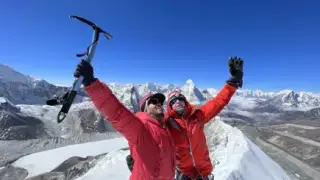
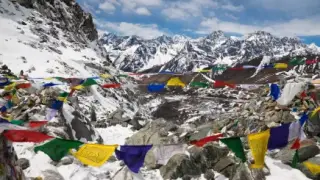


Yes, Nepal is safe for most visitors who take normal precautions. Violent crime against tourists is rare, and the risks that actually hurt people are altitude, road travel, monsoon landslides and stomach bugs. As of 25 October 2026 the US rates Nepal at Level 2, "exercise increased caution", with a Level 4 "do not travel" zone around Rasuwagadhi, Timure and Syafrubesi in Rasuwa after the August flood. This page is the general safety guide. For this month's situation, read our October 2026 safety update.
- CrimeViolent crime rare, petty theft and scams the usual problem
- Biggest risksAltitude, roads, monsoon landslides, food and water
- US advisoryLevel 2, with a Level 4 zone in northern Rasuwa
- Tourist Police1144, toll-free
- Police / ambulance100 / 102
- InsuranceCover to 6,000 m with helicopter evacuation
Nepal has a long record as one of the easier countries in South Asia to travel in safely. With a population known for extraordinary warmth and hospitality, and a tourism industry that has welcomed international visitors for decades, the country offers a safe and deeply rewarding experience for most travellers. That said, "safe" in Nepal means understanding its unique landscape and preparing accordingly.
Nepal Travel Risks at a Glance
Most of what goes wrong for visitors in Nepal has nothing to do with crime. The table below ranks the common risks by how often they affect travellers, not by how dramatic they sound.
| Risk | Level | What to do |
|---|---|---|
| Violent crime | Low | Rare against visitors. Use ordinary city sense at night. |
| Petty theft and scams | Low to moderate | Pickpockets in Thamel, Asan and on buses. Agree taxi fares first. |
| Road travel | Moderate | Travel by day, by tourist bus or private jeep, and skip night buses. |
| Altitude sickness | High above 3,500 m | Climb slowly, take rest days, descend if symptoms get worse. |
| Landslides and floods | Seasonal | Mostly mid-June to early October. Keep spare days on monsoon trips. |
| Earthquakes | Low on a short trip | Know your hotel's open assembly area. |
| Food and water | Moderate | Treat all water, and eat freshly cooked food. |
| Dengue | Seasonal, lowlands | Use repellent in Kathmandu, Pokhara and Chitwan from monsoon into autumn. |
| Domestic flights | Check | Fly in the morning and keep a buffer day for mountain airstrips. |
Political Stability and General Safety
Nepal is a federal democratic republic. The youth-led protests of 8 to 13 September 2025, in which a government committee later counted 77 deaths, brought down the government. An interim government held elections on 5 March 2026, and Balendra Shah became Prime Minister on 27 March. The tourist areas have been calm since, and our guide to Nepal after the Gen Z protests covers that period. Street crime targeting tourists is rare, and violent crime against visitors is uncommon. The primary risk for travellers is opportunistic petty crime, pickpocketing in crowded bazaars like Thamel or Asan Tole, which is easily avoided with standard precautions: use a money belt, don't flash expensive gear, and keep copies of important documents.
Demonstrations and political rallies occasionally take place in Kathmandu, particularly around national holidays and elections. Most are peaceful, but September 2025 showed how quickly they can turn violent. It is sensible to monitor local news and avoid large gatherings if any civil unrest is reported during your trip.
What Do Government Travel Advisories Say?
The US raised Nepal to Level 3 on 11 September 2025 and brought it back to Level 2 on 31 March 2026. After the August 2026 flood, several governments added warnings for the Rasuwa corridor only. Levels change, so read the official page for your country before you fly.
| Country | Nepal overall | Area-specific advice |
|---|---|---|
| United States | Level 2, exercise increased caution (since 31 March 2026) | Level 4, do not travel: the Rasuwagadhi, Timure and Syafrubesi area of Rasuwa, including the China border crossing |
| Australia | Level 2, exercise a high degree of caution | Level 3, reconsider your need to travel: areas near the Trishuli River after the flood |
| Canada | See travel.gc.ca | Avoid non-essential travel to Rasuwa and Nuwakot districts |
| United Kingdom | No advice against travel to Nepal | Rasuwa named as the flood-affected district, with Gorkha, Nuwakot and Dhading listed in September |
Checked 25 October 2026. Kathmandu, Pokhara and the Everest, Annapurna and Manaslu regions sit outside all of these zones. Our October 2026 safety update tracks changes as they happen.
Trekking Safety
The most significant risk for trekkers in Nepal is not crime but the mountain environment itself. Altitude sickness (Acute Mountain Sickness, or AMS) affects a proportion of trekkers on routes that climb above 3,500 metres, including the Everest Base Camp Trek, Annapurna Circuit, and Langtang Valley Trek. The good news is that AMS is usually manageable if you acclimatise properly:
- Ascend slowly. Do not gain more than 300–500 metres of sleeping altitude per day above 3,000 metres.
- Build in rest days. Standard itineraries include acclimatisation stops at places like Namche Bazaar or Manang.
- Know the symptoms. Headache, nausea, loss of appetite, and fatigue are early signs. If symptoms worsen, descend immediately.
- Carry a basic first-aid kit. Some trekkers take Diamox (acetazolamide) to prevent AMS, but whether you should, and at what dose, is a decision for your doctor. Our altitude sickness guide explains the warning signs.
Hiring a licensed guide through a reputable agency like Swotah Travels adds a significant layer of safety. An experienced guide knows the route, weather patterns, and signs of altitude sickness, and carries a backup plan if something goes wrong. Since 1 April 2023 a licensed guide has been required for foreign trekkers in most national parks and conservation areas, though the Khumbu local council does not enforce the rule on the Everest trails. Our guide-rule explainer sets out where it applies.
Health Precautions
Nepal's healthcare infrastructure in remote areas is limited. Before your trip, visit a travel health clinic or your GP for up-to-date vaccination advice. Commonly recommended vaccinations include:
- Hepatitis A and B
- Typhoid
- Rabies (especially if you plan extended rural travel)
- Japanese Encephalitis (for lower-altitude areas during monsoon)
- Routine vaccinations (MMR, tetanus, polio)
Dengue is a lowland risk from the monsoon into autumn. Nepal's Epidemiology and Disease Control Division counted 6,831 cases and 4 deaths in 2026 up to 2 September, with Gandaki and Bagmati provinces worst hit, so use repellent in Kathmandu, Pokhara and Chitwan.
Drinking tap water is not safe anywhere in Nepal. Use boiled or treated water, purification tablets or a UV pen, and on the Everest trails skip plastic bottles altogether, since the Khumbu has banned them since 2020. Many trekking lodges offer boiled water for a small fee. Stomach upsets are common among new arrivals, so eat at reputable restaurants, avoid raw salads, and wash your hands frequently. Our health and safety guide goes into vaccines and hygiene in more detail.
Roads, Buses and Flights
Road travel is the everyday risk most visitors underrate. Mountain roads are narrow, often unpaved and prone to landslides in the monsoon, and serious bus accidents make the news every year. Take daytime tourist buses or a private jeep with an experienced driver rather than night buses, and wear a seatbelt where there is one.
Domestic flights carry their own risk. Every Nepali airline has been on the EU Air Safety List since December 2013, and the last fatal crash of a scheduled passenger flight was the Yeti Airlines accident at Pokhara in January 2023. The higher risk sits on short mountain airstrips such as Lukla and Jomsom, so fly in the morning and keep a spare day. Our guide to flight safety in Nepal has the detail, and in peak season Lukla flights leave from Manthali, a 4 to 5 hour drive from Kathmandu, as our Lukla flight guide explains.
Natural Hazards
Nepal sits on a seismically active fault line. The magnitude 7.8 Gorkha earthquake of 25 April 2015 killed nearly 9,000 people, and a magnitude 5.7 quake in Jajarkot in November 2023 killed 153. Both were reminders that natural disasters can occur, though the country has significantly improved its building codes and disaster preparedness since then. The risk of being affected by an earthquake during a typical one- or two-week trip is low, but it is worth knowing basic earthquake safety procedures and keeping emergency contacts saved on your phone.
During the monsoon (mid-June to early October, on the Department of Hydrology and Meteorology's normal dates), landslides on mountain roads are a seasonal reality. Many trekking agencies steer people away from the main high routes in this period, or toward rain-shadow areas such as Upper Mustang, and will reroute or delay if a road closure is reported. If you travel in the monsoon window, build flexibility into your itinerary, and see our monsoon trekking guide.
Floods are the other monsoon hazard. On 26 August 2026 a debris flood on the Bhotekoshi and Trishuli rivers in Rasuwa killed at least 1,399 people, by the disaster authority's 12 October count. The Langtang trek reopened on 22 October from a new trailhead at Thulo Syabru, and our flood trekking update covers each route.
Travel Insurance Is Essential
No trekker should enter Nepal without travel insurance that explicitly covers high-altitude trekking and emergency helicopter evacuation. Helicopter rescues from remote areas can cost USD 3,000–6,000, a bill you do not want to face out of pocket. Confirm your policy's altitude limit before you depart, because some standard adventure policies cut off coverage at 4,000 or 5,000 metres, which is below the summit of Kala Patthar (5,545 m) on the EBC route. Look for cover to 6,000 m, as our insurance guide explains.
Permits and Legal Requirements
Trekking in Nepal requires permits. Most treks outside the Everest region need a TIMS (Trekkers' Information Management System) card, NPR 2,000 and issued only through a registered agency, plus an entry permit for the national park or conservation area. The Everest region uses the Khumbu municipality card and the Sagarmatha National Park permit instead of TIMS. Our 2026 permits guide lists every fee. Restricted area treks such as Upper Mustang and Manaslu Circuit require a special restricted area permit and a mandatory licensed guide. Your trekking agency handles all permit logistics. Trekking in a restricted area without the permit carries a fine and immediate removal.
Emergency Numbers in Nepal
Save these before you land. Do not rely on 112 in Nepal. Use the local numbers below, and keep your agency's 24-hour line and your embassy's number on your phone too.
| Service | Number |
|---|---|
| Tourist Police hotline | 1144 (toll-free) |
| Tourist Police, Kathmandu office | +977 1 4247041 |
| Police | 100 |
| Traffic police | 103 |
| Ambulance | 102 |
| Fire | 101 |
Source: Nepal Police tourist police page, checked October 2026.
Quick Safety FAQ
Is the tap water safe to drink?
No. Drink boiled, filtered, or treated water everywhere in Nepal, including Kathmandu hotels. On treks, refill with purification tablets or a filter bottle rather than buying plastic. The full hygiene picture is in our health and safety guide.
Is Nepal safe for women travelling alone?
Many women travel alone in Nepal without problems, and normal precautions go a long way. Our first-hand guide for female travellers covers dress norms, transport, and trail safety in detail.
What about altitude sickness?
The most real risk most visitors face, and usually manageable: ascend on a sensible itinerary (sleep no more than ~500 m higher per night above 3,000 m), build in acclimatisation days, and descend if symptoms worsen. Every reputable itinerary is built around this.
Is Nepal safe for LGBT travellers?
Generally yes. Nepal's Supreme Court has recognised sexual and gender minorities since 2007, and the first same-sex marriage was registered in November 2023. Attitudes outside the cities are conservative, so public affection is best kept low-key. Our LGBT travel guide covers more.
Is it safe to travel Nepal solo?
Yes, for city and cultural travel. For trekking, the guide rule means you go with a licensed guide in most areas, which also covers the main safety gap of walking alone. Our solo travel guide has the details.
Are scams common?
Petty rather than dangerous: inflated taxi quotes, "closed hotel" stories, gem deals too good to be true. Agree prices first, use ride-hailing apps in Kathmandu, and read our common mistakes guide before you land.
What about earthquakes?
Nepal sits in a seismic zone, and the 2015 earthquake remains in living memory, but rebuilt infrastructure, retrofitted heritage sites, and clear hotel evacuation norms mean the practical day-to-day risk to a visitor is very low. Know your hotel's open assembly area and keep your documents in one grab-able place, the same habits you would use anywhere seismic.
Is Nepal Safe Right Now? (October 2026)
One question this page's address still attracts: COVID-19. No pandemic-era entry requirements remain. Nepal no longer has any COVID vaccination or testing rules, and entry is back to the simple visa on arrival.
As of 25 October 2026, the Kathmandu Valley, Pokhara and all major trekking regions are open, including Langtang from its new Thulo Syabru trailhead. The Tamang Heritage Trail is the one trek still on hold. The only area-specific warnings cover the Rasuwa flood corridor, set out in the advisory table above, and our October 2026 safety update tracks the latest. For the most current government travel advice, check the official advisory from your home country's foreign affairs department.
The short answer: for most travellers, yes, Nepal is safe to travel. With good preparation, the right insurance, and a trusted local partner, your trip to Nepal will be one of the most meaningful journeys of your life.
Ready to plan your Nepal adventure? Contact our team to build an itinerary that matches your fitness level, timeframe, and interests, with safety built in from day one.