


Overcrowding on Everest: The Real Price of 5 Minutes on Top of the World
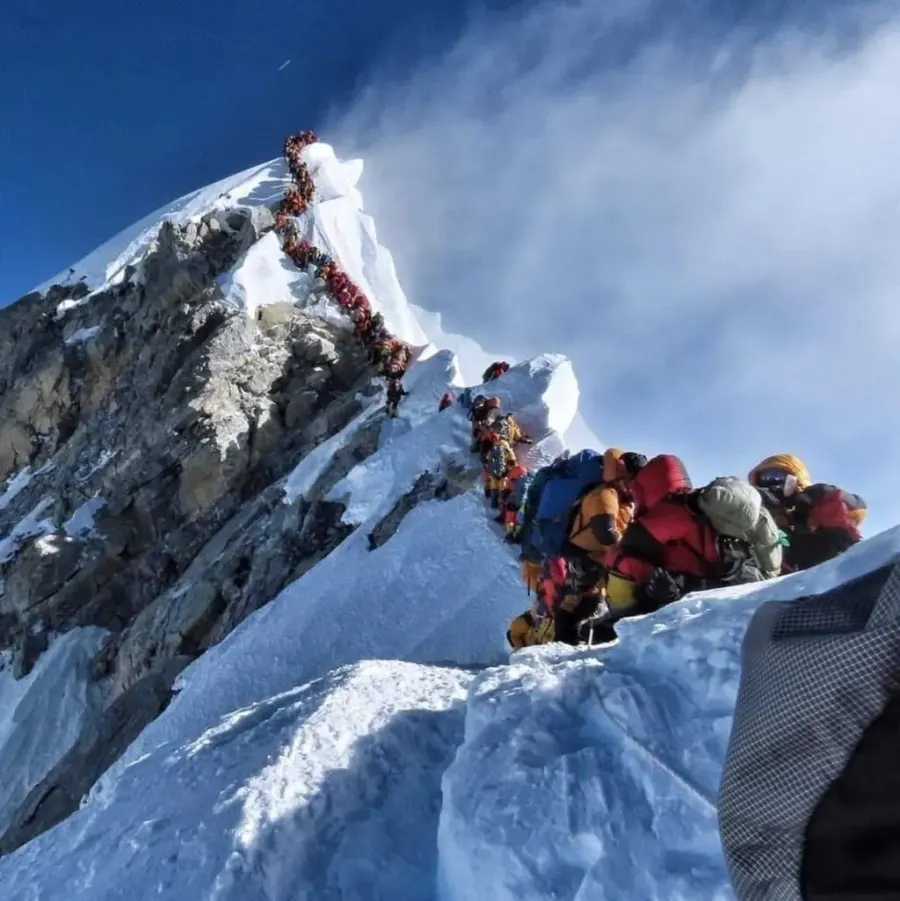
On May 23, 2019, climber Nirmal "Nims" Purja photographed a queue of hundreds of climbers on the summit ridge of Mount Everest, and the image travelled around the world. Eleven people died on the mountain that season; 2023 was worse, with 18 deaths against a record 478 permits. Nepal has since raised the Everest royalty from USD 11,000 to USD 15,000, mandated tracking devices and waste bags, and proposed an experience requirement for would-be summiteers. The question the photo raised still stands: what is the real price of five minutes on the top of the world? This article looks at what causes the crowds, what has changed since 2019, and what more can be done.
What Caused the Traffic Jam on Everest?
The 2019 season concentrated every structural problem of commercial Everest climbing into a few days, and the same pressures recur each spring. Five factors did most of the damage.
A Shortened Weather Window
Cyclone Fani, which struck India and Bangladesh in early May 2019, pushed snow and high winds onto the mountain, and an early jet stream then closed the summit ridge for most of the month. The result, according to Caroline Gleich, a professional ski mountaineer who summited that season, was a usable weather window of roughly three days. Hundreds of climbers who would normally have spread across two weeks went up at once.
Delayed Rope Fixing
The fixed ropes to the summit were completed unusually late that year. Mike Hamill, founder of the US-based company Climbing the Seven Summits, put it plainly: "Rope-fixing this year was a bit strange in that the ropes weren't fixed until late in the season." Late preparation compressed the climbing calendar further, stacking acclimatised, impatient teams at Base Camp until the mountain opened.
Record Permits, Minimal Crowd Management
Nepal issued a record 381 Everest climbing permits in 2019 with no system for spacing summit attempts, and each permit-holder climbs with at least one Sherpa, doubling the real traffic. The record did not stand long: 478 permits in 2023, 468 in 2025, and a record 492 in spring 2026 show demand still rising. Without slot management of the kind used on other crowded peaks, a short weather window turns the Hillary Step into a queue above 8,000 m, where every waiting hour burns bottled oxygen and body heat.
Price Wars and Inexperienced Clients
Everest expeditions once cost USD 65,000 and up through Western operators; budget operators now sell the same mountain for USD 30,000 to 40,000, and the price competition shifts costs away from safety margins like spare oxygen, extra Sherpa support, and client screening. Some agencies accept clients with no 8,000-metre experience at all. The mountain earns Nepal significant revenue, and high-profile disasters have historically had little effect on demand.
Climbing for Records, Not Readiness
Record-chasing puts under-prepared climbers high on the mountain every season. The steady stream of "youngest", "fastest", and "first" headlines makes the summit look routine and hides how much of many ascents is carried by Sherpa teams. Gleich described the mindset she saw: clients hand over their money and assume the operator will get them out of trouble, "as opposed to assuming liability for themselves before they go to the mountain and putting in the diligent work that is required." Self-assessment, not the invoice, is each climber's real safety equipment.
How Many People Have Died on Everest?
More than 330 people have died on Everest since the first recorded expedition deaths in 1922, according to the Himalayan Database. The recent seasons tell the story of crowding: 11 deaths in 2019, 18 in 2023 (the deadliest year on record), 8 in 2024, 5 in spring 2025, and 5 again in the record-breaking spring of 2026. Most deaths above 8,000 m involve exhaustion, altitude illness, or running out of oxygen in queues, which is why crowd management is a safety issue and not a comfort issue. Veteran climber Nirmal Purja described watching climbers die without backup in 2019 because nearby teams had no spare oxygen or staff to mount a rescue.
The 2026 Season: Records Without a Catastrophe
Spring 2026 broke every crowd record on the mountain. Nepal issued 492 Everest permits, the most in history, with China keeping the north side closed to foreign expeditions, and on May 20 alone 274 climbers reached the summit from the south side, shattering the single-day record of 223 set in the year of the famous photograph. More than 1,000 summits were recorded across the season (a record, counting guides and support climbers) against five deaths, and Kami Rita Sherpa extended his own record with a 32nd ascent on May 17, at the age of 56.
The season can be read two ways. A long, stable weather window spread the crowds across many summit days, the tracking-device and health-certificate rules completed their first full season, and the death toll stayed far below 2023's. But 2019 demonstrated what the same numbers do when the window shrinks to three days. The record traffic of 2026 met good weather, not a solved problem, and the structural pressures described above are all still in place.
| Year | South-side permits | Deaths | Season note |
|---|---|---|---|
| 2019 | 381 | 11 | The traffic-jam photograph; three-day weather window |
| 2023 | 478 | 18 | Deadliest season on record |
| 2024 | 421 | 8 | Waste carry-back and tracking rules introduced |
| 2025 | 468 | 5 | Royalty rise to USD 15,000 announced |
| 2026 | 492 (record) | 5 | 274 summits on May 20, a single-day record; north side closed |
Why Queues Kill: The Death Zone
Above 8,000 m, air pressure falls to roughly a third of sea level, and physiologists call the altitude band the "death zone" because the human body can no longer acclimatise there: it consumes itself faster than it recovers, regardless of fitness. Bottled oxygen narrows the gap but does not close it, and a standard summit-day supply is budgeted for around 12 to 16 hours of climbing. A two- or three-hour queue at the Hillary Step burns that reserve while the climber stands still, losing core heat and gaining nothing.
The bottleneck is structural. From the South Col, the route follows a single fixed line over the Southeast Ridge, so climbers ascending and descending share the same rope at the narrowest points. When 200 people attempt the summit on the same morning, the line stalls exactly where the margin for error is thinnest, and most of the queue-related deaths involve exhaustion, oxygen depletion, or altitude illness on the descent, after hours of standing in minus 30 degree cold.
What Does Climbing Everest Cost?
The permit royalty of USD 15,000 is only the entry ticket. Budget expeditions with Nepali operators run roughly USD 35,000 to 50,000 all-in, while full-service Western-led expeditions charge USD 70,000 to over USD 100,000. The gap is mostly safety margin: bottled oxygen at about USD 600 per cylinder (a climber typically uses five to seven, plus the Sherpa team's supply), the ratio of Sherpa support per client, weather forecasting subscriptions, base camp medical cover, and contingency staffing for rescues. Add the Khumbu Icefall route fee, liner flights, gear (USD 8,000 to 12,000 if bought new), insurance with high-altitude rescue cover, and two months away from work. When an operator quotes dramatically less than the market, the discount has to come out of one of those lines, and the cut-price model is one of the documented drivers of the crowding problem above. Trekking to Base Camp, by contrast, costs around a fortieth of a climb; our EBC trek cost guide breaks it down.
What Has Nepal Changed Since 2019?
Several rules have arrived since the famous photograph, most of them in 2024 and 2025:
- Royalty increase: the spring-season permit rose from USD 11,000 to USD 15,000 per climber effective September 1, 2025, the first increase in a decade.
- Tracking devices: climbers must carry tracking units so expedition teams can locate them in real time, a direct response to search-and-rescue delays.
- Waste rules: climbers must carry biodegradable bags and bring their human waste back down from the higher camps, part of a wider garbage carry-back mandate.
- Guide nationality: high-altitude guides on Everest must be Nepali citizens.
- Health certification: climbers must submit a recent medical certificate with their permit application.
- Experience requirement (proposed): Nepal's draft Integrated Tourism Bill would require proof of a prior summit above 7,000 m in Nepal before an Everest permit is issued. The proposal has been widely reported but is not yet final law, and operators expect the detail to change.
The North Side Comparison
China runs Everest's Tibetan north side on the opposite model: permits are capped at around 300 climbers per season, independent climbing is banned, teams face minimum size rules, and the regulations require one guide per climber above 8,000 m. The north-side permit package costs more (recently USD 15,800 to 18,000 for the spring window), yet the cap means the route has never produced a queue photograph like the 2019 image. China has also kept the north side closed to foreign expeditions for the 2026 season, which pushes the entire international demand onto the Nepali route and makes Nepal's own crowd management measures matter more, not less.
What More Can Be Done?
Operators Restricting Their Own Numbers
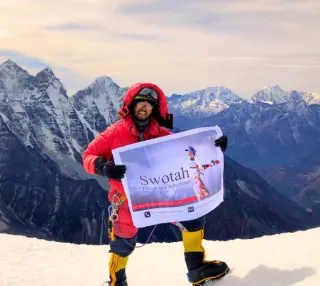
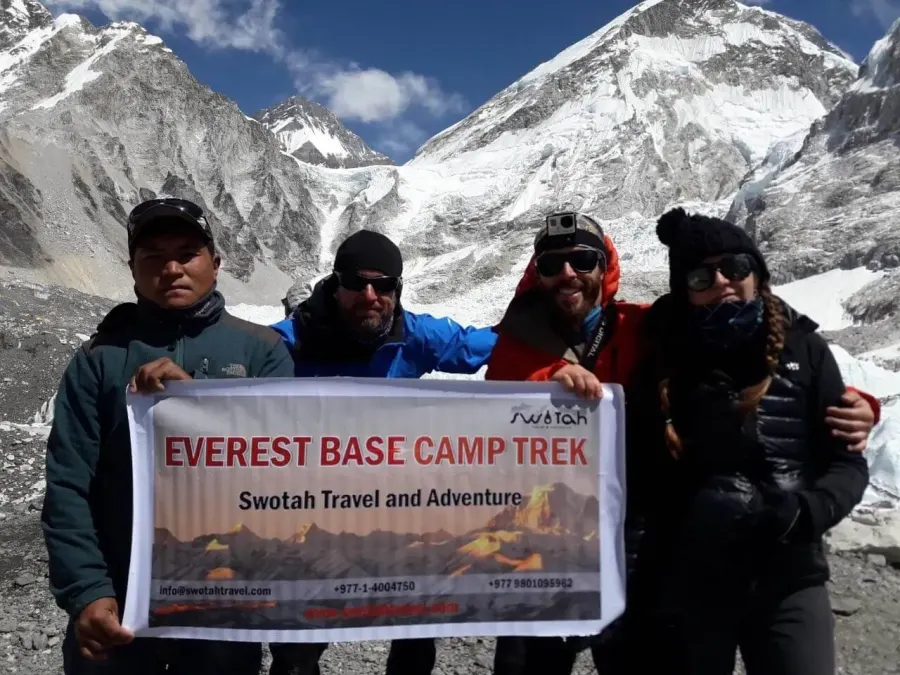
Swotah Travel and Adventure caps its Everest expeditions at 12 climbers. According to Ajay Kumar Shrestha, the company's founder, the safest clients are often returning customers or climbers recommended by past clients from the climbing network, because their experience is known rather than claimed. Small, well-screened teams are the main reason the company recorded a 100 percent summit success rate in 2018 and 2019.
Preparation Specific to Everest
A blanket "experienced climbers only" rule can misfire, Shrestha notes, because experience does not transfer cleanly between mountains: a climber who has summited Kilimanjaro (5,895 m, a non-technical walk-up) has no preparation for the Khumbu Icefall or an 8,000-metre summit day. Meaningful screening looks for high-altitude experience on comparable terrain, ideally a 7,000-metre peak in the Himalayas, plus specific training for oxygen use and fixed-line travel.
Spreading the Season
Autumn ascents could halve the spring crush, and better weather forecasting makes the post-monsoon window more usable than it was a generation ago. The infrastructure for a full autumn season (rope-fixing teams, staffed camps, rescue cover) does not yet exist, so spring concentration continues; building it is one of the few measures that would reduce crowding without reducing access.
Standing on the summit of Everest remains one of mountaineering's great achievements, and it is worth doing properly: with an honest self-assessment, a capable operator, and the patience to wait for the right year. For everyone else, standing beneath the mountain on the Everest Base Camp trek delivers most of the awe at a fraction of the risk. A human life is worth more than five minutes on the top of the world.
Also read: The Sleeping Beauty of Mount Everest and 5 Facts About Stupendous Sherpas.