





Flowers of Nepal: Rhododendrons, Orchids, Wildflowers and When They Bloom
Nepal has more than 6,000 species of flowering plants, and about 312 of them grow nowhere else on earth. The best-known is the rhododendron, or lali gurans, the national flower, which turns the mid-hills red and pink from March to April. Nepal also has around 500 kinds of wild orchid. Marigold and globe amaranth garlands fill the markets at Tihar in October and November, and alpine meadows above 3,500 m bloom with primulas, gentians and blue poppies in the July and August monsoon. For flowers on foot, the 4-day Poon Hill trek in spring is the easy choice. It starts from USD 300 per person on group departures.
- Flowering plantsMore than 6,000 species
- Found only in NepalAbout 312 endemic species (2019 study)
- National flowerRhododendron arboreum (lali gurans)
- Rhododendron speciesAbout 32
- Wild orchidsAround 500 species
- Rhododendron seasonMarch to April, later higher up
- Alpine flowersJuly and August, above 3,500 m
- Easy bloom trekPoon Hill, 4 days, from USD 300
If there is one country that can rightfully lay claim to being home to the most diverse floral place on earth, it has to be Nepal. With more than 6,000 species of flowering plants identified to date, about 312 of which are found nowhere else in the world, there is no doubt that the Nepalese flora is truly amazing to behold.
The variety of flora in Nepal is truly astounding, and it would be difficult to do it justice in the space of a single blog post.
From the delicate orchids and rhododendrons that adorn the landscape to the rare and endangered species of plants that are found in the remote regions of the country, Nepal is a country that has a wealth of flora to explore.
Today we are going to take a closer look at some of the flowers that are found in Nepal and some of the key characteristics that make them unique.
Popular Flowers of Nepal
Nepal boasts a diverse array of botanical treasures, with more than 6,000 species of flowering plants recorded so far, including about 312 endemic species found nowhere else on Earth, according to a 2019 study in Plant Diversity. Endemism peaks between about 3,800 and 4,200 m. The secret is vertical range: from subtropical lowlands barely 60 metres above sea level to alpine meadows past 4,000 metres, few countries pack so many growing zones into so little space. The lush terrain of Nepal boasts an abundance of uncommon and rare botanical species, including a plethora of plants and flowers that are indigenous to the region and cannot be discovered elsewhere on the globe. Here is a quick look at some of the most notable examples of Nepali flowers. Not all of them are native. Marigold, globe amaranth and poinsettia came from the Americas and bottlebrush from Australia, but all four are now part of everyday life and festivals in Nepal.
Rhododendron (Lali Gurans), the National Flower
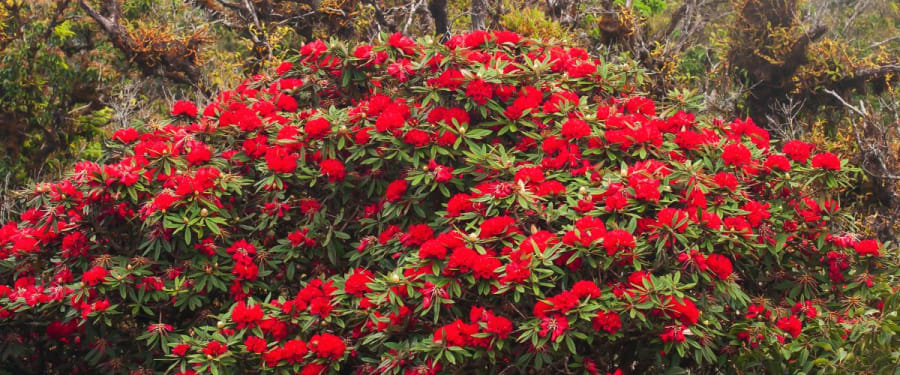
Photo: Rhododendrons (Lali Gurans)
Rhododendrons are the most celebrated flowers in Nepal. The country is home to about 32 species, and whole hillsides across the mid-hills turn red and pink during the March to April bloom. The red tree rhododendron, Rhododendron arboreum, is the national flower and grows from about 1,200 m to 3,600 m. These magnificent plants can reach over 10 metres/32 ft in height and their beautiful blooms are every bit as vibrant and colourful as you would expect. The bloom climbs the hills as spring warms up, so you can still find flowers in May if you trek higher.
Marigold (Sayapatri Phool)
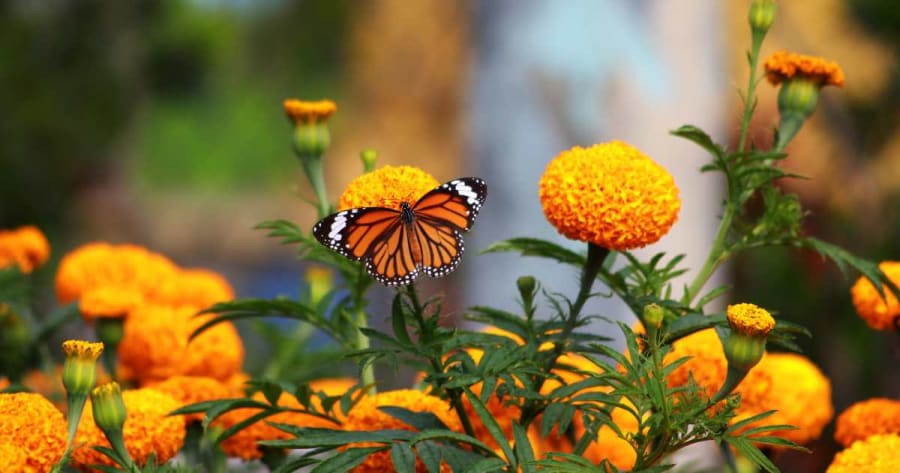
Photo: Marigold (Sayepatri)
The vivid shades of yellow adorning our homes and gardens during Dashain and Tihar are an unforgettable part of our cherished memories of these festivals. These vibrant yellow and orange flowers hold an auspicious significance and are commonly used for decoration and as offerings to the gods. Marigolds grow between 0.1 and 2.2 meters tall. Demand peaks at Tihar, when the Floriculture Association Nepal estimates the country needs millions of garlands and imports part of the supply from India.
Poinsettia (Lalupate)
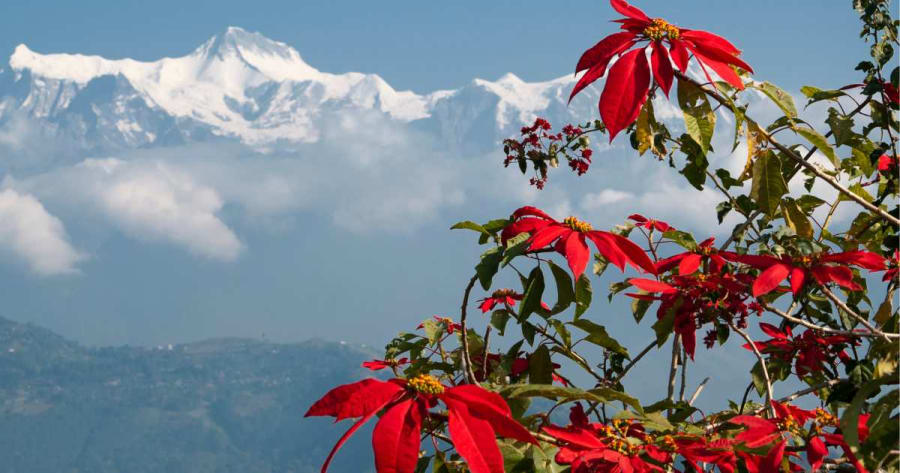
Photo: Poinsettias (Lalu Pate)
Poinsettias, also referred to as Lalupate in Nepali, reveal their vibrant red leaves (botanically called bracts) and tiny yellow flowers in their peak flowering period from November to December. These plants can grow up to 4 meters/13 ft in height and are commonly seen during the Christmas time of the year.
Globe Amaranth (Makhamali Phool)

Photo: Purple Globe Amaranth (Makhamali Phool)
The Purple Globe Amaranth, or Makhamali phool, is a special flower deeply rooted in Nepalese cultural celebrations. Sisters string it into the garland they give their brothers at Bhai Tika, the last day of Tihar, because the dried flowers last for weeks. Its deep magenta petals and mix of amber, off-white, pink, and purple florets make it a beautiful addition to any bouquet. It has a velvety texture but no scent.
Orchids (Sunakhari)
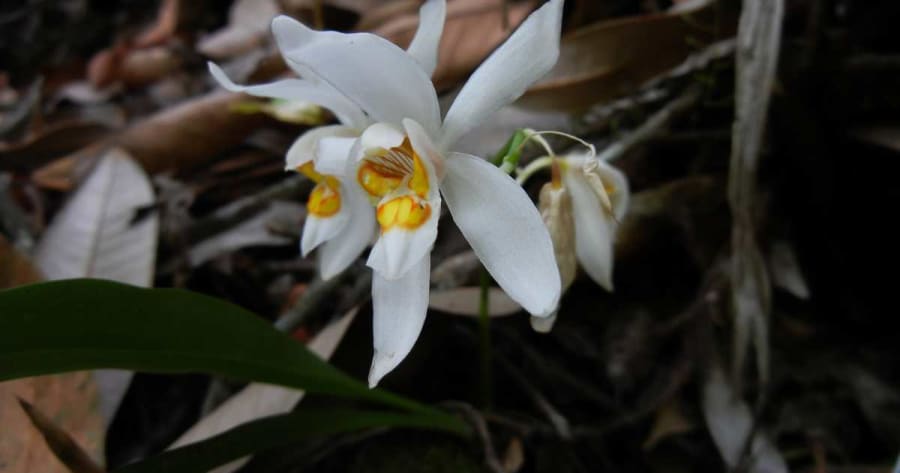
Photo: Sunakhari Phool
The Orchids, also known as Sunakhari, are a true gem of the floral kingdom in Nepal. Their numbers continue to grow as botanists describe new species, and recent checklists put the total at around 500. Some orchids fetch high prices because they are used in herbal medicine. Every orchid species is listed under CITES, the international wildlife trade treaty, so buy only nursery-grown plants and never take a wild orchid out of the country. To witness the Orchids' splendor, plan a visit to the National Botanical Garden at Godawari between March and April or July and August.
Parijat (Night-flowering Jasmine)
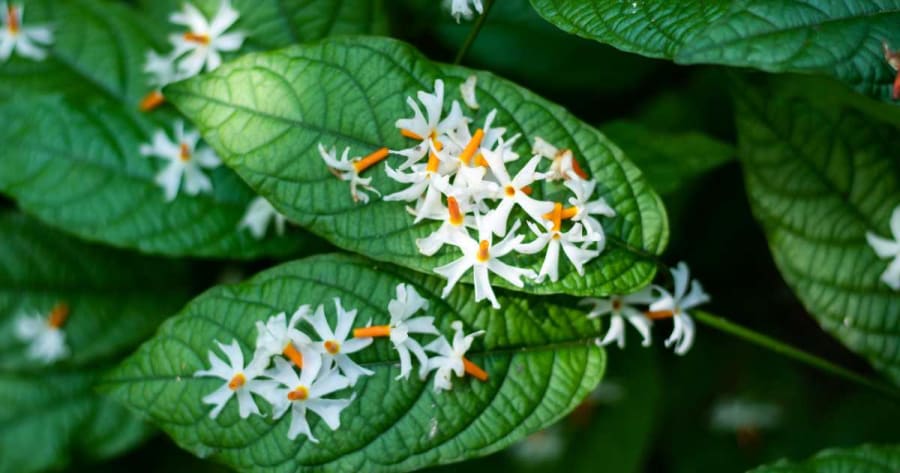
Photo: Parijat Flower
Parijat, Nyctanthes arbor-tristis, also known as night-flowering jasmine, is a gorgeous and hardy plant native to South and Southeast Asia. Its rapid propagation and ability to bloom within a mere year of planting make it a highly sought-after addition to any botanical landscape. Reaching heights of up to 10 meters/ 32 ft, it is a stunning visual display of natural beauty. The delicate, white, sweet-scented blooms of this flora gracefully flourish from July to October. In addition to its aesthetic charm, it is also renowned for its medicinal properties, specifically in easing digestive and respiratory diseases. The flowers open at dusk and drop by morning, which is why you often see a white and orange carpet under the tree at dawn.
Bottlebrush (Kalki)
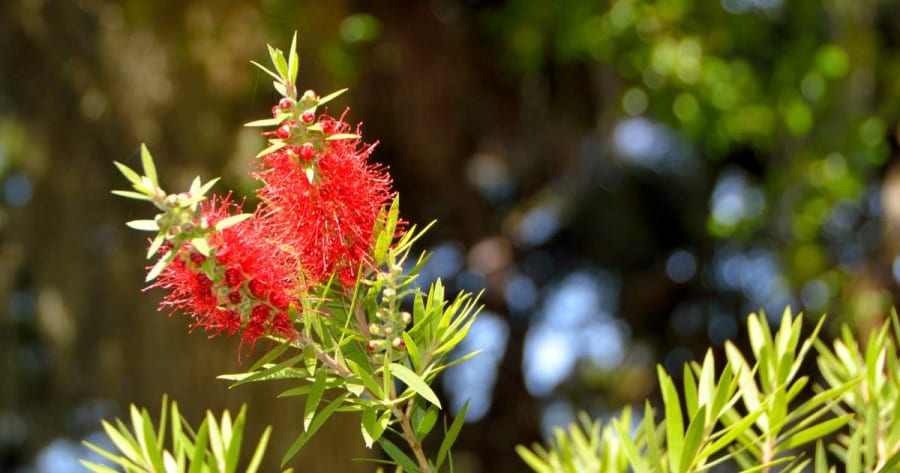
Photo: Kalki
Bottlebrush, or Kalki, is known for its brush-like red blooms. It is native to Australia but grows well in Nepal, from the lowlands up to about 1,800 meters/5,905 ft.
This flower makes an ideal addition to any home garden when it is planted from September through March. The colour of this flower varies typically from red to yellow, green, orange, or white.
Seasonal Flowers in Nepal
Throughout the Nepali year, a range of flowers is in bloom at various times. This includes flowering plants as well as wildflowers such as orchids and rhododendrons. There are also some beautiful examples of seasonal flowers in Nepal, which can be enjoyed throughout the year. Garden favourites include lilies, tulips and daffodils, which nurseries in the Kathmandu Valley grow for the spring market. Spring is a season of renewal and rejuvenation, and nowhere is this more obvious than in the vast collection of flowers that bloom between February and April.

Photo: Rhododendron blooming during spring
Nepal has mixed spring flowers, including pansies or Putali Phul, snapdragons or Khukhurmukhe Phul, dianthus, single and double petunias, gazanias, and Grecian windflowers. Gazania flowers, in particular, have the added benefit of surviving for over a year. The rest of these spring flowers usually last up to seven months. These spring flowers are beautiful as they provide energy and renewal to any space they settle.
The Autumn season has its superabundance of flowers that can be seen in vibrant shades and unique forms. Many flowers like Chrysanthemum, Tuberose, Poinsettia, Gardenia, Bougainvillea, Dahlia, Gazania, and Amaranthus bloom in Nepal, displaying a unique range of flowers from vibrant to light. The Chrysanthemum, a classic autumn flower, is large and colourful. It mainly blooms in yellow, red, white, and purple shades. Likewise, the Tuberose, with its aromatic, trumpet-shaped flowers, adds a touch of elegance to any garden. Globe amaranth and marigold, the twin stars of Tihar garlands, are also at their seasonal best. The Poinsettia, with its bright red and green leaves, is a popular indoor decor for the holiday season.
Nepal Flower Calendar
Use this calendar to match a trip to the flowers you want to see. The bars show the main flowering months from January to December. Exact timing shifts by a few weeks with altitude and weather.
| Flower | Nepali name | Main months | Where to see it | Jan to Dec |
|---|---|---|---|---|
| Rhododendron | Lali gurans | March to April (May higher up) | Mid-hills, 1,200 to 3,600 m | |
| Orchids | Sunakhari | March to April, July to August | Godawari, Panchase, eastern forests | |
| Alpine wildflowers | Various | June to August | Meadows above 3,500 m | |
| Night-flowering jasmine | Parijat | July to October | Gardens and temple yards | |
| Marigold | Sayapatri | October to November | Gardens and markets everywhere | |
| Globe amaranth | Makhamali | September to November | Gardens, Tihar garlands | |
| Poinsettia | Lalupate | November to December | Kathmandu and Pokhara gardens |
Wild Flowers of Nepal
A wildflower is not seeded or planted by people. These plants have adapted over a very long time to bloom in the harsh Himalayan ranges, and most of the species below grow above 4,000 m in places like the Khumbu. The Delphinium glaciale, or Glacier Larkspur, is a unique example of a wildflower in Nepal. It grows low and compact, which helps protect it against high winds. In local use, its juice is said to help get rid of ticks and lice.
Another wildflower found in Nepal is Senecio albopurpureus, or Scree ragwort. This hardy plant has long underground stems that let it hold on to shifting scree, and it is known for its ability to withstand harsh conditions. Its nodding flower heads give pollinators a sheltered space out of the cold and wind. This plant is considered sacred by Buddhist lamas and is used as incense for the naga deity.
The Snowball plant, or Saussurea gossypiphora, is another unique wildflower. A thick coat of cotton-like hairs wraps the flower heads like a tiny greenhouse, keeping them warmer than the air outside. A small opening at the top lets bumblebees and flies in, which matters at heights where few insects fly.
The Smooth ground daisy, or Waldheimia glabra, is a fragrant plant that can be found tucked into cracks between rocks to escape the cold winds. In Sherpa culture, dried plants give a pleasant fragrance to stored blankets or clothing. Likewise, in Rai culture, shamans are reported to make a paste from the root and put it in an amulet to protect against evil spirits and sickness.
The Mountain sorrel, or Oxyria digyna, grows across the Arctic and high mountains of the northern hemisphere. Its leaves are high in Vitamin C and oxalic acid and are used in folk medicine to treat dysentery. Lastly, the Gland-bearing sandwort, or Arenaria glanduligera, is a small, fragrant wildflower that can be found tucked into rock crevices. This flower shelters from wind and cold but risks exposure when the rocks shift.
Where to See Flowers in Nepal
You do not need to go far for flowers in spring, but the best displays are on the trails. These are the most reliable places, from an easy half day near Kathmandu to high monsoon meadows.
- National Botanical Garden, Godawari. Opened in 1962 at the foot of Phulchoki, about 15 km southeast of central Kathmandu. It has an orchid house, a fern house and rhododendron collections. Foreigners have reported fees from NPR 500 to 1,000, so check at the gate.
- Phulchoki hill (about 2,782 m). The highest point around the Kathmandu Valley. Its rhododendron forest flowers in March and April, and the hill is also one of the valley's best birding spots, with 300 or more species.
- Ghorepani and Poon Hill (3,210 m). The classic spring rhododendron walk in the Annapurna foothills, with whole forests in flower from mid-March to April.
- Mardi Himal. The trail climbs through rhododendron forest above Pokhara, which flowers in spring before the route breaks out onto open ridges. See the best time for the Mardi Himal trek.
- Milke Danda, eastern Nepal. A long ridge known for its rhododendron forests, where around 20 species have been recorded.
- Gosaikunda and Langtang. Alpine meadows around the lakes at about 4,380 m flower with primulas, gentians and edelweiss in the monsoon. The Langtang trails reopened on 22 October 2026 by the Thulo Syabru route after the summer floods.
- Khaptad National Park, far west. Rolling grassland plateaus that are famous for their monsoon wildflowers and medicinal herbs in July and August.
See Nepal's Flowers on a Trek With Swotah
Spring treks in the mid-hills give you the rhododendrons, and summer treks in the rain shadow or above the tree line give you the alpine flowers. Read our guide to monsoon trekking if you are travelling in July or August. Prices below are the From prices on each trip's booking card, per person on a group departure.
| Trip | Days | Best for | From (group departure) |
|---|---|---|---|
| Poon Hill Trek | 4 | Rhododendrons, March to April | USD 300 |
| Annapurna Poon Hill Trek | 10 | Rhododendrons and a slower pace | USD 899 |
| Mardi Himal Trek | 11 | Rhododendron forest and ridge views | USD 1,030 |
| Gosaikunda Trek | 10 | Alpine lakes and meadow flowers | USD 1,399 |
If you want to time a trek around the bloom or travel at your own pace, Swotah can arrange it as a private trip.
What Colours Are Nepal's Flowers?
Nepal's flowers come in yellow, pink, white, red and purple, among others. Altitude shapes the palette: rhododendron forests shift from deep red at lower elevations to pink and white higher up, while the alpine zone favours hardy blues and purples such as gentians, primulas, and the famous Himalayan blue poppy. Many of the flowers we see in Nepal are scented, which is one of the reasons they are used in religious ceremonies. This is pleasing to the human sense of smell and enhances the ceremony's aesthetic appeal.
Red flowers symbolize love and passion and are primarily used for romantic and auspicious occasions such as roses, poppies and hibiscus. Likewise, Pink flowered plants like lilies and lotus are commonly related to femininity and elegance and are frequently selected for weddings and other significant events. Yellow flowers, such as marigolds and sunflowers, mark the arrival of joy, happiness, and positivity, so they are mainly used for religious ceremonies.
White flowers, such as lilies and jasmine, reflect purity and innocence as they are used for religious ceremonies and as offerings to the gods.
How Much Do Flowers Cost in Nepal?
The cost of flowers in Nepal can vary depending on the type of flower and the purchase location. Generally, the prices range from NPR 50 to NPR 2,000, and they rise sharply in the week before Tihar.
Common flowers such as marigolds and roses can be purchased at a relatively low cost, with a bouquet of marigolds costing approximately NPR 50 and a bouquet of roses ranging from NPR 150 to NPR 250 in an ordinary week. At Tihar the price jumps. The Floriculture Association Nepal expected marigold garlands to sell for about NPR 90 each in 2024, and in October 2025 farmers near Bhaktapur sold marigolds for NPR 700 a kilo, with heavy one-kilo garlands reaching NPR 1,500 in local markets. In comparison, exotic flowers such as orchids and lilies can be more expensive than marigolds, with a single orchid costing approximately NPR 500 and a bouquet of lilies ranging from NPR 750 to NPR 1,000.
Flowers for special occasions, such as weddings and religious ceremonies, may also come at a higher cost, and a bouquet for a wedding can cost NPR 1,000 to NPR 2,000. Treat these figures as a rough guide, because prices vary by shop and season.
The varied flora of Nepal serves as an inspiration to botanists, nature enthusiasts, and anyone who appreciates the splendor of nature. The preservation and conservation of these precious flowers are essential for the country's sustainable development.
Frequently Asked Questions
What is the national flower of Nepal?
The national flower of Nepal is the red rhododendron, Rhododendron arboreum, also known as lali gurans. It also appears on the national coat of arms.
What is the favourite flower in Nepal?
The Lali Gurans is the favorite flower of Nepal, and it is also the National Flower of Nepal. The flower is a symbol of life, joy, and beauty.
How many types of flowers are there in Nepal?
Nepal has more than 6,000 species of flowering plants, and about 312 of them are found nowhere else in the world.
Which flowers are used for Dashain and Tihar?
The marigold flower is the most popular flower used during Dashain for decorations. At Tihar, marigold and globe amaranth garlands decorate homes, people and even dogs and cows on their festival days.
What is the Nepali name of Rhododendron?
Lali gurans is the Nepali name of Rhododendron.
When is the best time to see flowers in Nepal?
March and April are best for rhododendrons and most spring flowers. July and August bring the alpine meadow flowers above 3,500 m, and October and November are the time for marigolds and festival garlands.
Can I take orchids or seeds home from Nepal?
Not wild ones. All orchids are covered by CITES, and Nepal restricts the collection and export of wild plants. Buy nursery-grown plants with paperwork, and check your home country's import rules first.
The best way to see Nepal's flowers is on foot in spring. The Ghorepani Poon Hill trek and Mardi Himal trek tunnel through some of the country's finest rhododendron forest in March and April. See our pick of the 10 best treks in Nepal to plan a bloom-season route.