

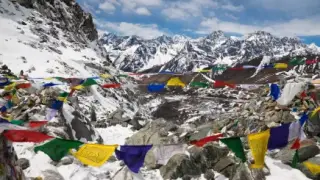


The Chepang Hill Trek is a 4 to 5 day homestay walk through Chepang and Magar villages in the Mahabharat hills between Dhading and Chitwan. It starts at Hugdi, about 80 km from Kathmandu on the Prithvi Highway, and ends at Shaktikhor near Chitwan National Park. Siraichuli, the high point, is only 1,945 m, so altitude is no worry. The trail lies outside Nepal's national parks and conservation areas, so no park permit is needed. October to April gives the clearest Himalayan views.
- Start and finishHugdi (Dhading) to Shaktikhor (Chitwan)
- Walking days4 to 5
- Highest pointSiraichuli, 1,945 m
- StaysHomestays and community lodges
- PermitsNo park permit, check locally
- Best monthsOct to Apr
Do you want the combination of culture and sightseeing experiences in a single trek? If so, join the four to five day Chepang Hill Trek with your friend, family, or partner this season.
The Chepang Hill Trek, a community homestay route in the Mahabharat hills above Chitwan, passes through Chepang villages rich in culture and tradition. Say Chitwan and most people picture rhinos, tigers, crocodiles and dense sal forest down on the plains. Climb into the hills above it and you meet the Chepang, one of Nepal's smaller indigenous groups, plus some of the best birding in the middle hills.
You sleep in village homestays and small community lodges, which is a big part of the appeal. Our guide to homestay trekking explains how that differs from teahouse trekking. Let's find out more about this trek below.
An Overview of Chepang Hill Trek
The Chepang Hill Trek presents an exceptional adventure for intrepid travellers seeking Nepal's less-trodden trekking paths. This trek offers a journey through remote villages of the distinct and indigenous Chepang community in the green mid-hills of central Nepal. The Chepang community, rich in culture, is keeping its ancient traditional practices alive. Their distinct language and lifestyle set them apart as a particular ethnic group within the region. Nepal has recorded close to 900 bird species, roughly nine percent of the world's total.
Besides the chepang's culture and tradition, lush green jungles famous for bird watching will not fail to amaze you. The sunrise from Siraichuli (1,945 m), the highest hill in Chitwan District, is the high point in every sense, with the Himalaya laid out from Dhaulagiri to Gaurishankar on a clear morning. Nepal is actively engaged in efforts to empower and uplift deprived rural communities.
The role of tourism in this initiative is paramount, as it serves as a channel for showcasing unexplored regions while promoting the socio-economic well-being of the local population. A glimpse of the traditional way of life of the Chepang people is the main highlight of this trip, where one can see how they have adapted to modern agricultural methods while being committed to their tradition and culture. The Chepang Hill Trek offers a one-of-a-kind adventure for individuals seeking an exceptional experience beyond the traditional trekking routes of Everest Base Camp and Annapurna Base Camp. It is usually combined with a visit to Chitwan National Park (a UNESCO World Heritage Site since 1984) to complete Nepal's ultimate cultural and natural experience.
Chepang Hill Trek at a Glance
| Topic | What to expect | Rating |
|---|---|---|
| Difficulty | Steep but short climbs on village trails, 4 to 7 hours a day | Moderate |
| Altitude | Never above 1,945 m | No altitude risk |
| Permits | Outside national parks and conservation areas. Chitwan National Park entry is paid separately if you add a safari. | Check locally |
| Accommodation | Homestays and small community lodges, simple rooms, shared toilets | Basic |
| Crowds | Very few foreign trekkers | Quiet |
| Combine with | Chitwan National Park safari, 1 to 3 days | Easy add-on |
Because the trail sits outside the parks and conservation areas covered by the 2023 guide rule, the permit rules in our trekking permits guide mostly do not apply here. Local fees can change, so confirm with your agency. For other easy routes with few permits, see our list of permit-free treks.
People, Festival, and Lifestyle of Chepang
The Chepang are an indigenous people of the Mahabharat hills, counted at 84,364 in Nepal's 2021 census (68,399 in 2011), mostly in Chitwan, Makwanpur, Dhading and Gorkha. Nepal officially lists them among its highly marginalised indigenous groups. They were once semi-nomadic foragers. Over the last few generations most families have moved to settled hillside farming of maize, millet and bananas, though the forest still supplies a good share of their food, and many households hold little registered land. A unique aspect of their culture is their deep respect for nature since they worship the Chiuri tree (Diploknema butyracea). They extract butter from the seeds produced by these trees, which serves a dual purpose in culinary and spiritual practice. It is a cherished tradition in the Chepang community to present young daughters with a butter tree upon marriage. School enrolment has long been low, with many children leaving early, though that is slowly changing.
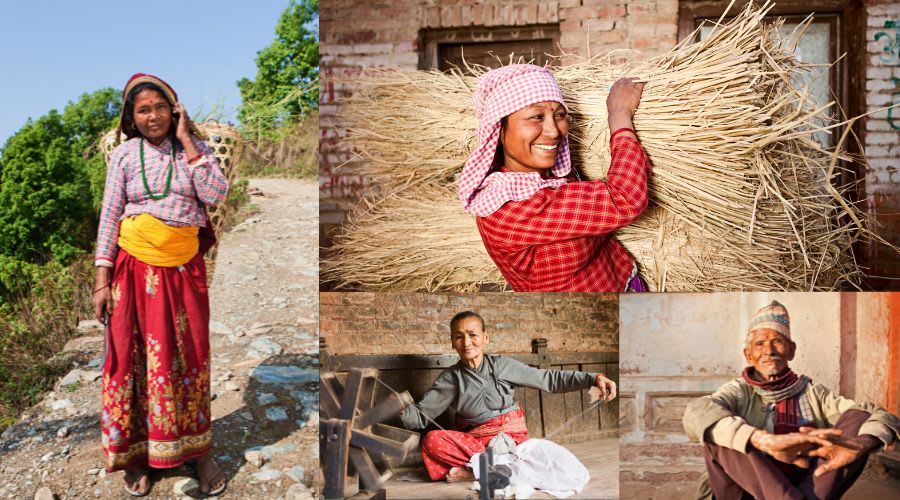
The Chepang communities have been facing many issues in access to basic household facilities due to many factors, such as poverty, illiteracy, and inadequate social services. A household survey in Chitwan by Ganesh Sharma and Badri Aryal found 27.35 percent of Chepang households with electricity and 0.85 percent with a television.
In the same survey, 58.12 percent had mobile phones and 0.43 percent had motorbikes. These figures are a few years old, so read them as a snapshot. Shifting cultivation, or slash and burn farming, was the traditional way of life, and some families still practise it on steep slopes alongside permanent fields. (Source: Household Economies of Chepang People in Chitwan by Ganesh Sharma & Badri Aryal)
Besides agriculture, they are also engaged in hunting, fishing, and collecting Githa and Vyakur (shoots and roots), catching bats, wild yams, and wild birds, as farming alone is not enough to sustain their families.
Nwagi, also called Chhonam, is the main Chepang festival. It falls on a Tuesday in the third week of Bhadra (August to September) and marks the first eating of the new crop.
According to their cultural and religious beliefs, one will suffer from disease if one eats the rewards of a new harvest without properly offering it to the departed souls of their ancestors. The Chepang speak their own language, Chepang (Chyo-bang), a Tibeto-Burman language closely related to Raute and Raji, and most also speak Nepali. Traditional belief centres on nature and ancestor worship, and many families now also follow Hindu or Christian practice.
What Is the Route of the Trek?
This Trek route takes us from Kathmandu to the hills above Hugdi. The journey begins with a bus ride from Kathmandu, which takes approximately 3-4 hours. Hugdi sits on the Prithvi Highway near Krishna Bhir in Dhading, about 80 km from Kathmandu. From there it is about five hours on foot to Hattibang (about 1,410 m). As we travel to Chepang Hill, we will see many big Himalayan peaks such as the Rolwaling range, Gaurishankar at 7,134 meters (23,406 ft), Langtang Lirung at 7,234 meters (23,734 ft), Ganesh Himal, Peak 29 at 7,871 meters (25,823 ft), Himalchuli at 7,893 meters (25,896 ft), Manaslu at 8,163 meters (26,781 ft), the Annapurnas, Dhaulagiri at 8,167 meters (26,795 ft), in the way. On the climb from Hugdi you pass Magar and then Chepang villages, and the first night is at Hattibang in a homestay or community lodge, with dinner cooked by your hosts.
The next day runs through Chepang settlements to Jyandala (about 1,600 m), known for its sunrise and sunset views. The day after, you climb to Siraichuli (1,945 meters / 6,381 feet), the highest point of the trek, before dropping through Chisapani. Far below, the Trishuli River winds along the valley floor. Some itineraries also add a rest day in a Chepang village, which is the best way to see daily life: chiuri butter pressing, field work and evening cooking. The Siraichuli day ends at Upardang Gadhi (1,275 m / 4,183 ft), an old hill fort that served as Chitwan's district headquarters until the mid-20th century. It is a moderate day of about 6 to 7 hours, with steep climbs and descents through forest. The Upardang Gadhi and Siraichuli forests are well known for birds, and a bird survey of the area was published in the journal Indian Birds. On the last walking day you descend to Shaktikhor (about 355 m) at the foot of the hills and drive on to Chitwan.
Chitwan is a popular travel destination in Nepal famous for jeep safaris, dugout canoe rides, jungle walks, and other exhilarating activities. You spend the night at a hotel or lodge in Sauraha, the usual base for Chitwan National Park. The following day, you will bid farewell to Chitwan and return to Kathmandu with all the memories and experiences. You can spend your day in Kathmandu exploring the streets of Thamel or purchasing souvenirs for your friends and family.

Chepang Hill Trek Route and Altitude Profile
Altitudes come from trek operators and travel guides and vary by 10 to 20 m between sources. Siraichuli's 1,945 m is the best attested figure.
| Day | Place | Altitude | Height | Notes |
|---|---|---|---|---|
| Day 1 | Hattibang | about 1,410 m | Drive Kathmandu to Hugdi (3 to 4 h), walk about 5 h | |
| Day 2 | Jyandala | about 1,600 m | About 4 to 5 h through Chepang villages | |
| Day 3 | Siraichuli (passed on the way) | about 1,945 m | Sunrise viewpoint, highest hill in Chitwan District | |
| Day 3 | Upardang Gadhi | about 1,275 m | About 6 to 7 h in total via Siraichuli and Chisapani | |
| Day 4 | Shaktikhor | about 355 m | Descent of about 6 h, then drive to Chitwan |
Cost and Best Month For Chepang Hill Trek
Chepang hill trek will cost you less than other popular treks like the Everest base camp or the Annapurna base camp trek. The trailhead at Hugdi is about 80 km (50 miles) from Kathmandu, so transport costs stay low, and homestays charge village rates. Organised trips cost a few hundred US dollars, depending on group size, transport and whether Chitwan is added. Swotah does not run a fixed Chepang departure, so ask us for a quote. This trek is a cost-effective option for those trekkers who want to explore Nepal without emptying their pockets.
The best months for the Chepang hill trek are autumn (October and November) and late winter to spring (February to April). October and November give the clearest mountain views. Winter (December to February) also works well at this low altitude, with mild days, cold nights and some morning haze. Spring brings warmer days and haze by May. In the monsoon (June to September) trails get muddy, leeches are out and landslides can block the roads, so it is the weakest time to go.

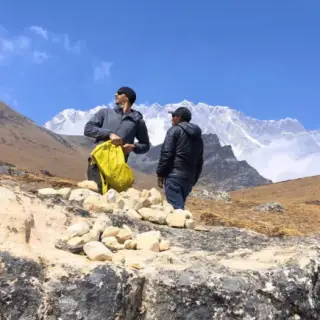
Photo: Route to Chepang Hill Trek
Importance of Travel Insurance in This Trek
Travel insurance still matters, even on a low-altitude trek. The Chepang Hill Trail tops out at Siraichuli (1,945 m / 6,381 ft), so altitude sickness is not a concern, but the villages are remote from road access and a sprained ankle or illness can still mean a complicated, expensive evacuation. Get a policy that covers trekking and medical costs.
Buy it before you leave home, and make sure evacuation is covered. See our guide to travel insurance for trekking in Nepal.
The trek is good value for a short trip. Few routes this close to Kathmandu let you spend nights in the homes of an indigenous community and finish with a jungle safari. Contact us if you would like to plan your Chepang Hill Trek.
Chepang Hill Trek: FAQs
How long is the Chepang Hill Trek?
Four to five walking days from Hugdi to Shaktikhor. Add a drive from Kathmandu at the start and one or two days in Chitwan at the end and most trips run six to ten days.
Do I need a permit for the Chepang Hill Trek?
No national park or conservation area permit is needed, since the trail lies outside them. If you go on into Chitwan National Park for a safari, the park entry fee is charged separately. Ask your agency about any local fees.
What is the highest point of the trek?
Siraichuli, at 1,945 m, the highest hill in Chitwan District. The trek stays well below the height where altitude sickness becomes a concern.
Is the Chepang Hill Trek good for beginners and families?
Yes, if you are reasonably fit. Days are 4 to 7 hours with steep sections, but the altitude is low and the homestays make it a good first trek for families with older children.
Where do you stay on the trek?
In Chepang and Magar village homestays and small community lodges at Hattibang, Jyandala and Upardang Gadhi. Rooms are simple, meals are home-cooked dal bhat and local dishes, and the money goes straight to the host families.