



Travelling to Nepal from India: Routes, Borders, and Documents
India and Nepal share a 1,751 km open border with six major crossing points, and travellers move between the two countries by air, bus, train, and private vehicle. Indian citizens need no visa for Nepal; a valid passport or an Election Commission voter ID proves nationality. Foreign nationals from other countries can obtain a Nepali visa on arrival at the main land borders for USD 30 to USD 125. Around 18 direct flights leave Indian cities for Kathmandu every day, a government bus runs directly from Delhi to Kathmandu in about 30 hours, and a cross-border passenger railway has connected Jaynagar in Bihar to Janakpur since April 2022. This guide covers the documents, the routes, and what happens at the border.
Do Indian Citizens Need a Visa for Nepal?
The 1950 India-Nepal Treaty of Peace and Friendship is the agreement that keeps the border open: citizens of both countries can enter, live, and work in either country without a visa. Indian travellers still need to prove their nationality when boarding a flight to Kathmandu or when asked at a land crossing.
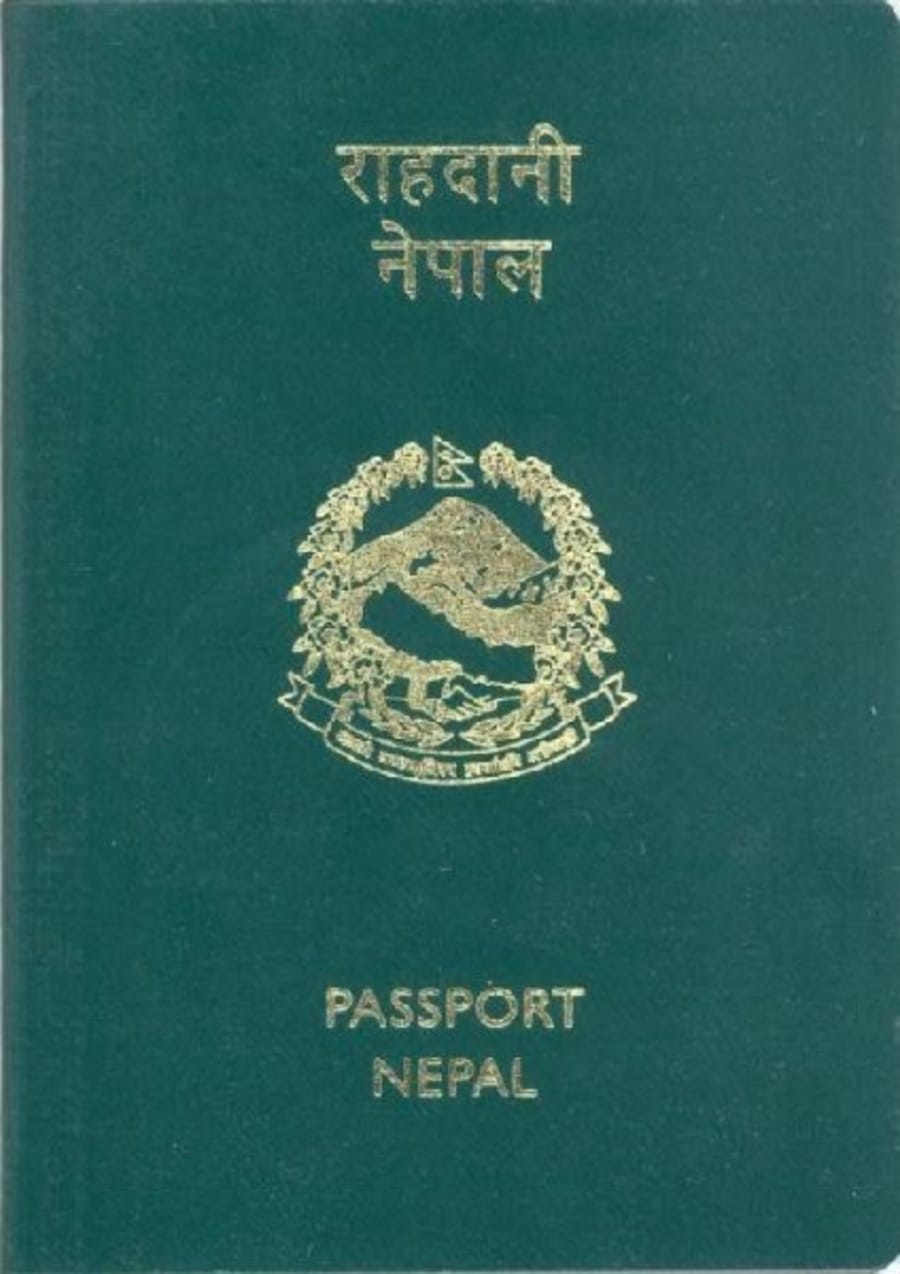
The Embassy of India in Kathmandu accepts two documents for adult travellers: a valid Indian passport or an original voter ID card issued by the Election Commission of India. An Aadhaar card is not a valid travel document for Nepal for adults. Travellers above 65 years and children below 15 years are exempt and can show any photo document that confirms age and identity. Children between 15 and 18 can travel on an identity certificate issued by their school principal.
Nepal Rastra Bank, Nepal's central bank, bans Indian currency notes of INR 200, INR 500, and INR 2,000 inside Nepal. Carrying these denominations across the border risks seizure, so bring INR 100 notes or smaller, or exchange money after crossing. The Nepali rupee is pegged to the Indian rupee at NPR 1.60 to INR 1, and exchange counters operate at every major crossing.
How Can You Travel from India to Nepal?
Four transport options link India to Nepal: direct flights, a direct Delhi to Kathmandu bus, trains to the border railheads, and your own vehicle. Cost, comfort, and your starting city decide which one fits.
Direct Flights from India to Kathmandu
Tribhuvan International Airport in Kathmandu receives non-stop flights from Delhi, Mumbai, and Bengaluru. IndiGo, Air India, and Nepal Airlines operate the Delhi route several times a day, and the flight takes roughly 1 hour 45 minutes. Mumbai and Bengaluru services run with IndiGo, Air India Express, and Nepal Airlines. One-way fares start from about INR 5,000 in the low season. Airlines accept a passport or an original voter ID for boarding; Aadhaar is not accepted on this route.
The Direct Delhi to Kathmandu Bus
Delhi Transport Corporation runs the Indo-Nepal Maitri Bus Sewa, a direct air-conditioned service from Dr. Ambedkar Stadium in Delhi to Kathmandu. The bus covers about 1,150 km in roughly 30 hours, crossing the border at Sunauli. Private operators sell similar Delhi to Kathmandu tickets with sleeper and sofa seating. Carry your passport or voter ID, since the bus stops at the border for customs and identity checks.
Trains to the Border and the Janakpur Railway
Indian Railways runs no direct Delhi to Kathmandu train, but its railheads sit close to the border. Gorakhpur, about three hours by road from the Sunauli crossing, is the busiest railhead and connects to Delhi, Mumbai, and Kolkata. Trains from Kolkata and Patna reach Raxaul, directly across the border from Birgunj.
The Jaynagar to Kurtha line is the only cross-border passenger railway between the two countries. Nepal Railways has operated it since April 2022, linking Jaynagar in Bihar with Janakpur, the city Hindu tradition honours as the birthplace of Goddess Sita. Indian and Nepali citizens ride with an ID card; other foreign nationals should avoid this route because Janakpur has no visa-on-arrival immigration office.
The Six Main India to Nepal Border Crossings
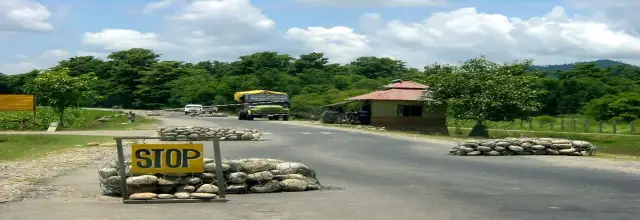
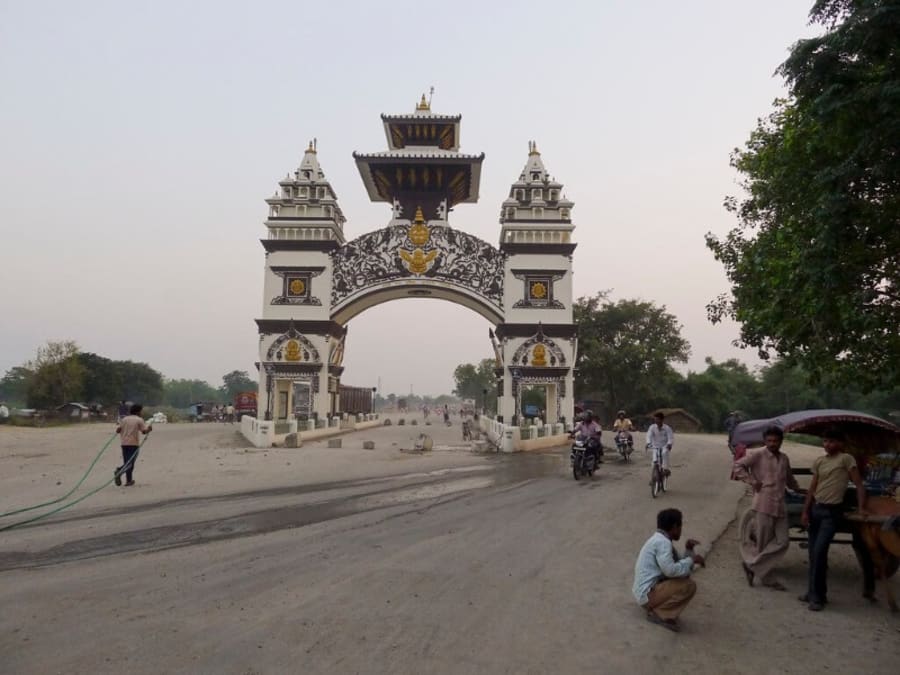
Six official crossings handle most traffic between the two countries, listed here from east to west. Foreign nationals who need a visa on arrival must use a crossing with a Nepali immigration office; Indian citizens can use any official crossing.
| Crossing (India – Nepal) | Connects from | Best for |
|---|---|---|
| Panitanki – Kakarbhitta (Jhapa) | Siliguri (36 km), Darjeeling, Sikkim | Ilam and eastern Nepal; open ~6 am–10 pm for foreigners |
| Raxaul – Birgunj (Parsa) | Kolkata, Patna | Central Nepal and Kathmandu via Hetauda |
| Sunauli – Belahiya (Bhairahawa) | Gorakhpur, Varanasi, Delhi | The busiest tourist crossing; Lumbini (25 km), Pokhara, Kathmandu |
| Rupaidiha – Jamunaha (Nepalgunj) | Lucknow, Bahraich | Bardia National Park; flights to Jumla and Rara Lake |
| Gauriphanta – Dhangadhi (Kailali) | Lakhimpur Kheri | Far-western Nepal, Shuklaphanta National Park |
| Banbasa – Gaddachauki (Mahendranagar) | Delhi (about 350 km), Uttarakhand | The westernmost entry, closest to Delhi |
Visa on Arrival at the Land Border for Foreign Nationals
Nepal issues tourist visas on arrival to most nationalities at the major land crossings, the same way it does at Kathmandu airport. The fee is USD 30 for 15 days, USD 50 for 30 days, and USD 125 for 90 days, all multiple entry. You need a passport valid for at least six months and one passport-size photo; full requirements and special cases are in our Nepal tourist visa guide.
The crossing takes two stops. First, stamp out of India at the Indian immigration post, where officers check your passport and Indian visa. Then walk across the border bridge and apply at the Nepali immigration office. Pay in US dollars cash and carry exact change, since counters rarely break large notes; Indian rupees (in 100s), Nepali rupees, and euros are usually also accepted. The whole process rarely takes more than 30 minutes outside peak hours.
Practical Notes Before You Cross
- Time zone: Nepal Standard Time is GMT+5:45, which puts Nepal 15 minutes ahead of India.
- SIM cards: Indian SIMs need international roaming to work in Nepal. Ncell and Nepal Telecom (NTC) sell tourist SIMs at the airport and in border towns against a passport copy and a photo; our Tribhuvan Airport arrival guide covers the airport counters.
- Money: ATMs operate in every border town on the Nepali side. Remember the ban on INR 200, 500, and 2,000 notes.
- Border hours: the major crossings stay open to Indians and Nepalis around the clock, but immigration offices for foreigners keep daytime hours, typically 6 am to 10 pm.
India to Nepal Travel FAQ
Can Indian citizens enter Nepal without a passport?
Yes. An original voter ID card issued by the Election Commission of India works for both land crossings and flights. Aadhaar is accepted only for travellers under 15 or over 65; everyone else needs the passport or voter ID.
How much Indian currency can I carry into Nepal?
Only INR 100 notes and smaller denominations are legal in Nepal. Notes of INR 200, 500, and 2,000 are banned by Nepal Rastra Bank and risk seizure, so exchange larger notes before or at the border.
How long can Indian citizens stay in Nepal?
There is no visa and no fixed tourist limit for Indian citizens under the 1950 treaty. Carry valid ID throughout your stay.
Which border crossing is best for reaching Kathmandu?
Sunauli–Belahiya is the most direct from Delhi and most of north India, with frequent onward buses. Coming from Kolkata or Patna, Raxaul–Birgunj is shorter.
Can foreign nationals (non-Indians) use any crossing?
No. Third-country nationals need a crossing with a Nepali immigration office for the visa on arrival; the six crossings in the table above all have one.
Once you are in Nepal, most trekking routes need one or two permits; our guide to trekking permits in Nepal lists every fee. For trip ideas, the Everest Base Camp Trek and the Annapurna Circuit Trek remain the two most requested itineraries among Indian travellers, and a Chitwan Jungle Safari works well as a short add-on near the Sunauli and Birgunj crossings.