


The Best Lakes of Nepal: A Complete Guide
Nepal is a landlocked country, but its lakes more than compensate for the absence of a coastline. Scattered from the subtropical valleys at 600 metres to the Himalayan plateau above 5,000 metres, Nepal’s lakes range from shimmering lowland fishing waters to sacred glacial tarns encircled by eight-thousanders. There are roughly 3,000 lakes in the country, and around 65 are significant enough to have earned names and dedicated trekking routes. Here are seven of the most spectacular.
Nepal’s Most Beautiful Lakes
Rara Lake
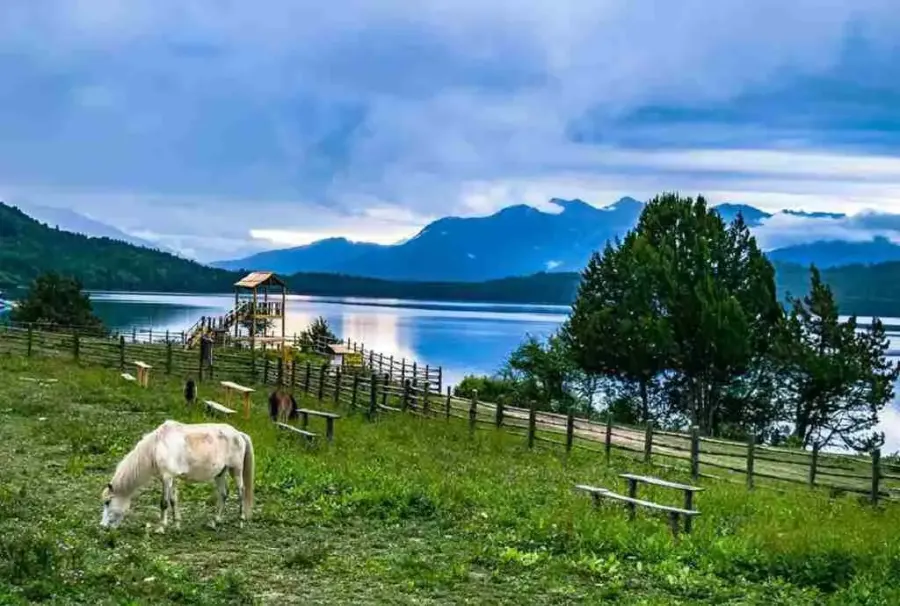
Photo: Surrounding Area of Rara Lake
Rara Lake, in the remote Mugu district of western Nepal, is the largest lake in the country, covering 10.8 square kilometres at an elevation of 2,990 m (9,810 ft). It is the main reason behind the constant flow of tourists towards Rara National Park, even though the path is tough. You must walk a long hour to end up at this spectacularly beautiful destination or you can even get here through air transportation via Talcha airport which is around 4 km east of Rara Lake. You can be keen on the pristine beauty of the lake or you can also prefer trekking and sightseeing in and around the national park.
Related Package: 7 - Days Rara Lake Trek, 14-Days Rara Lake Trek
Tilicho Lake
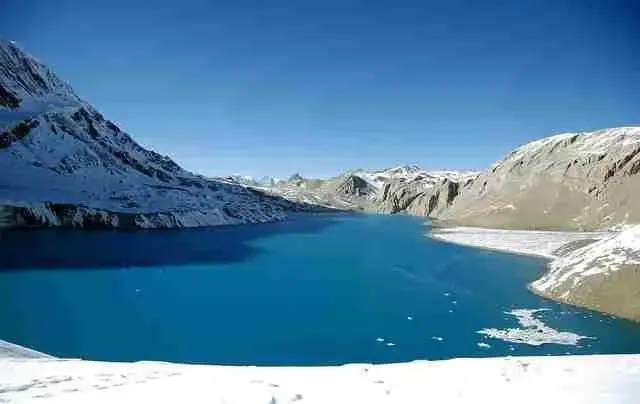
Photo: Tilicho Lake
Tilicho Lake sits in Manang district at 4,919 m (16,138 ft), making it one of the highest large lakes on Earth; the title of "world's highest lake" is debated, and nearby Kajin Sara, surveyed at around 5,200 m in 2019, is among the contenders. Tilicho is prized for its setting as much as its altitude: the lake is ringed by Khangsar, Muktinath Peak, Nilgiri, and Tilicho Peak, and it hosted one of the highest scuba dives ever recorded. Most visitors reach it as the classic side trip from the Annapurna Circuit, a demanding but spectacular detour from Manang.
Related Tour Package: Annapurna Circuit with Tilicho Lake
Shey Phoksundo Lake
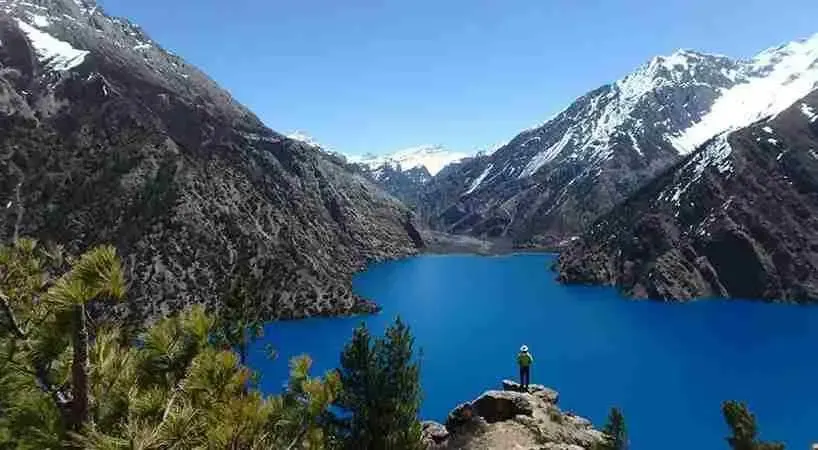
Photo: Shey-Phoksundo Lake
The lake settled at an elevation of 3611.5m (11849ft) with a maximum depth of 145m (476ft) is named after Shey Phoksundo. It is the deepest lake of Nepal, situated in the Dolpa district. In September 2007, this lake was designated as a Ramsar site. It is not only famous for its depth but also for its exotic turquoise blue colour, a greenish-blue lake. It lies in the northern part of the Dhaulagiri range and is therefore surrounded by pristine snow-capped mountains. It can be said to be a hidden gem or wonder of Nepal.
Related Tour Package: Lower Dolpo Trek
Phewa Lake
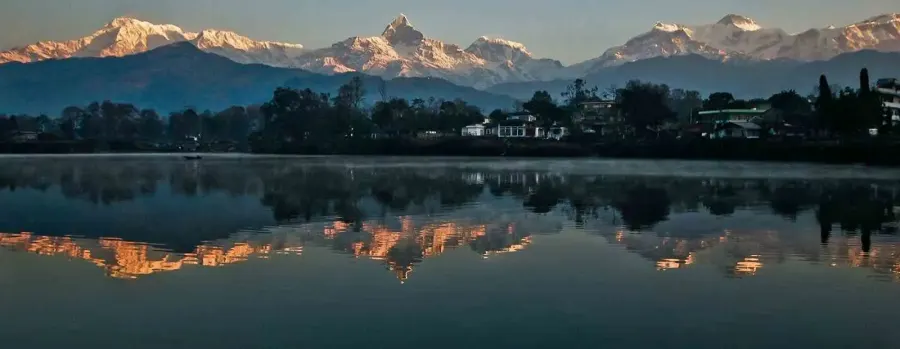
Photo: Fewa Lake
Phewa Lake is also written as Fewa Lake (Phewa Tal) and is often called Baidam Tal. Tal is a Nepali word for lakes. Phewa Lake is the second largest lake in Nepal, located in the south of the Pokhara valley. It lies at an altitude of 742m (2434 ft) and covers an area of 4.43 square kilometres. It is famous for the reflections of mountains such as Machhapuchhre and the Annapurna range on its surface, and for being the only lake in Nepal with a temple in its centre; the temple, called Tal Barahi Temple, is an island. Therefore, Phewa Lake is the most visited lake in Nepal. You can also take in the whole lake from the World Peace Pagoda, “The Shanti Stupa” or go for a walk around the lakeside in the evening.
Related Tour Package: Ghorepani Poon Hill Trek (departs from Pokhara, giving you time to explore Phewa Lake)
Begnas Lake
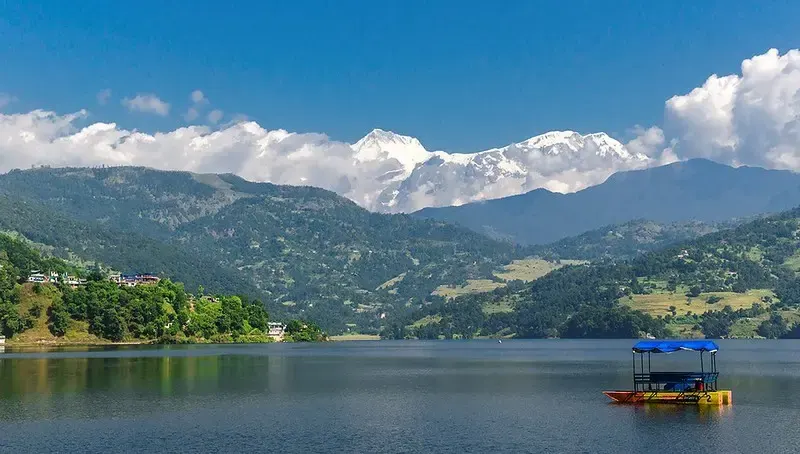
Photo: Begnas Lake
Begnas Lake is one of the freshwater lakes of Pokhara and the third-largest lake in Nepal. It is the second-largest lake of Pokhara after Phewa Lake among the eight lakes in the Pokhara valley. The elevation of the lake is 650m (2133ft), and it covers an area of 3.28 square kilometres. The water level always fluctuates seasonally due to rain and is used continuously for irrigation purposes. This is one of the popular tourist destinations of Pokhara, where some parts of the lake are still used as caged fisheries.
Gosaikunda Lake
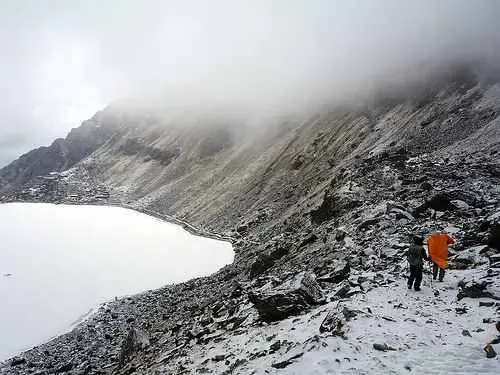
Photo: Gosainkunda Lake
Gosaikunda Lake is the main attraction of Langtang National Park, which is situated at an altitude of 4380m (14,370ft) in the Rasuwa district of Nepal. It is an alpine freshwater lake that remains frozen for six months in winter. It was also designated as a Ramsar site on 29 September 2007. There are numerous lakes in this area, about 108 in number, with diverse sizes. It is a holy lake and holds religious significance for Hindu pilgrims. All the holy books of the Hindu religion introduce this lake as the place where Lord Shiva cooled down his stinging throat after he had swallowed poison, which is mentioned in a popular Hindu mythology related to Amrit Manthana. This lake is not only important from a religious point of view but also plays a vital role in promoting the field of tourism. The Gosaikunda Trek is often known as one of the best trekking trails of Nepal.
Related Tour Package: Langtang Gosainkunda Trek
Gokyo Lakes
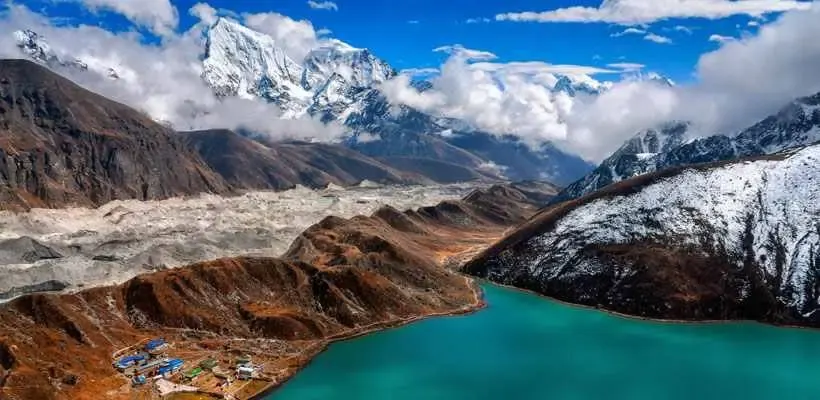
Photo: Gokyo Cho Lake
Gokyo Lakes are the world’s highest freshwater lakes system situated in Sagarmatha National Park. The lakes are at elevations of 4700-5000m (15,400-16,400ft). It comprises six main lakes, namely, Gokyo Cho, Thonak Cho, Gyazumpa Cho, Tanjung Cho, Ngojumba Cho, and Longbangu Cho, among which Thonak Lake is the largest one and Gokyo is the main lake. In September 2007, it was also designated as a Ramsar site. The lake system sits in an ecologically sensitive zone, and visitors are asked to follow Leave No Trace principles and stick to designated paths. As the lake carries religious significance, most of the people who pay a visit are Hindus. People often visit this far to take a holy bath during the Janai Purnima festival, which usually occurs in the month of August.
Related Tour Package: Gokyo Ri Valley Trek
More Lakes Worth Knowing
Three more lakes deserve a mention for travellers going deeper. Tsho Rolpa (4,580 m), in the Rolwaling Valley below Gaurishankar, is Nepal's largest glacial lake at roughly 1.5 square kilometres; it has grown dramatically with glacial melt and is one of the most closely monitored lakes in the Himalaya, with an early-warning system for the valley below. Panch Pokhari, a cluster of five sacred ponds at about 4,100 m in Sindhupalchok, draws Janai Purnima pilgrims each August and remains one of the quietest short treks from Kathmandu. And Kajin Sara, high above Manang at around 5,200 m, was only surveyed in 2019 and may yet claim the "highest lake" crown that Tilicho long wore informally.
When to Visit Nepal’s Lakes
The best time depends on altitude. Phewa and Begnas Lakes in Pokhara are enjoyable year-round. The high-altitude lakes, Tilicho, Gosaikunda, and Gokyo, are snowbound or inaccessible from December to February and are best visited in spring (March–May) or autumn (September–November). Rara and Shey Phoksundo are accessible in autumn and winter but require domestic flights to reach their remote districts.
For more on planning your Nepal trip, read our guide to 18 reasons to visit Nepal in 2026 or explore fascinating facts about Nepal. To book a lake-focused trek, browse our full range of Nepal treks and tours.