A demanding 20-day loop of the Annapurna massif over the 5,416 m Thorong La, with a side trip to Tilicho Lake (4,919 m) and a Poon Hill sunrise finish.
Duration
20 Days
Max Altitude
5,416 m / 17,769 ft
Difficulty
Hard
Group Size
Max 8 trekkers
Region
Annapurna Trekking Packages, Nepal
Best Season
Spring · Autumn
Accommodation
Teahouse & hotel
Meals
All meals on trek
Transport
Drive & jeep
Dates & Prices
Choose your date
All dates are guaranteed departures — we never cancel for low numbers. Book online or send a quick enquiry.
YearMonth
6 departures · 2026
Sep
21
Sep 21, 2026 — Oct 10, 2026
Guaranteed departure — from 2 trekkers
Available
USD1,950
per person
Oct
11
Oct 11, 2026 — Oct 30, 2026
Guaranteed departure — from 2 trekkers
Available
USD1,950
per person
Oct
31
Oct 31, 2026 — Nov 19, 2026
Guaranteed departure — from 2 trekkers
Available
USD1,950
per person
Nov
20
Nov 20, 2026 — Dec 9, 2026
Guaranteed departure — from 2 trekkers
Available
USD1,950
per person
Dec
10
Dec 10, 2026 — Dec 29, 2026
Guaranteed departure — from 2 trekkers
Available
USD1,950
per person
Can’t find a suitable date? We run private departures on any date with as few as 2 trekkers.
Trip Overview
About the Annapurna Circuit with Tilicho Lake Trek
The Annapurna Circuit with Tilicho Lake Trek is a 20-day teahouse trek that loops the Annapurna massif, crosses the Thorong La at 5,416 m, and adds a side trip to Tilicho Lake at 4,919 m, one of the highest lakes in the world. It starts low at Jagat (1,290 m) in the Marsyangdi valley and climbs steadily to the pass, so you experience the Himalaya from subtropical river gorge to high alpine desert on a single route.
Thorong La is one of the world's highest trekking passes, and crossing it is the physical and emotional high point of the circuit. The standard direction is counter-clockwise (Jagat to Manang to the pass), because climbing clockwise means a longer, steeper ascent that few trekkers manage safely. The trail passes through Gurung, Manangi and Thakali villages, the pilgrimage temple of Muktinath at 3,710 m, the hot springs at Tatopani, and a sunrise from Poon Hill (3,210 m) over Dhaulagiri and Annapurna before the descent to Pokhara.
This is a demanding trek. The trail tops out above 5,400 m, so altitude is the main risk, and anyone with a respiratory condition should consult a doctor first. No technical climbing is involved, but you need good fitness for long days and a high pass. The sections below cover difficulty, permits, the Tilicho and Thorong La crux, seasons and what to pack.
Last updated June 2026
Trip Highlights
Highlights
1
Cross the Thorong La at 5,416 m, one of the world's highest trekking passes
2
Side trip to Tilicho Lake at 4,919 m, one of the highest lakes on earth
3
Loop the full Annapurna massif from river gorge to high alpine desert
4
Reach the pilgrimage temple of Muktinath at 3,710 m
5
Sunrise over Dhaulagiri and Annapurna from Poon Hill (3,210 m)
6
Soak in the natural hot springs at Tatopani on the descent
Day by Day
Annapurna Circuit with Tilicho Lake Trek Itinerary: 20 Days
Tap any day to expand — altitudes, walking times, meals, and overnight details for every stage of the journey.
A Swotah representative meets you at Tribhuvan International Airport and drives you to your hotel by private car. Your guide runs a briefing on the trek and checks your gear, and the rest of the day is free to rest before the long road north. Overnight in Kathmandu.
Sleep at 1,350 mDinner
Tonight’s stay
Hotel
A guided day around the Kathmandu Valley's UNESCO World Heritage Sites, taking in the temple of Pashupatinath, the stupa of Boudhanath and an old royal square. It is also a chance to pick up any last trekking kit in the Thamel district before the drive to the trailhead. Overnight in Kathmandu.
Sleep at 1,350 mBreakfast
Tonight’s stay
Hotel
A long drive heads west to Besisahar, then up the rough Marsyangdi valley road by jeep to Jagat (1,290 m), around 8 to 9 hours in total. The lower valley is subtropical and green, with terraced farms and waterfalls. Jagat is a stone-built village where the walking begins. Overnight in Jagat.
Sleep at 1,290 mBreakfastLunchDinner
Tonight’s stay
Teahouse
The trail follows the Marsyangdi upstream through the village of Tal, set by a wide river flat, and a series of waterfalls and suspension bridges. The valley narrows and the forest changes from subtropical to pine as you reach Dharapani (1,860 m), the junction with the Manaslu trail. About 6 to 7 hours of walking. Overnight in Dharapani.
16.5 km~6.5 h walkingSleep at 1,860 mBreakfastLunchDinner
Tonight’s stay
Teahouse
The route climbs through Bagarchhap and Danakyu into pine and fir forest, with the first close views of Annapurna II and Lamjung Himal. Chame (2,650 m) is the headquarters of Manang district and has a small roadside hot spring. About 5 to 6 hours of steady walking. Overnight in Chame.
15.5 km~5.5 h walkingSleep at 2,650 mBreakfastLunchDinner
Tonight’s stay
Teahouse
Beyond Chame the valley narrows past Bhratang and the huge curved rock face of Paungda Danda, which rises over 1,500 m above the river. The trail enters the drier upper valley to Pisang (3,250 m), with the first wide views of Annapurna II and Pisang Peak. About 5 hours of walking. Overnight in Pisang.
13.5 km~5.0 h walkingSleep at 3,250 mBreakfastLunchDinner
Tonight’s stay
Teahouse
The high route climbs to the old villages of Ghyaru and Ngawal, a tougher but far more scenic line that aids acclimatisation, with a wall of peaks across the valley: Annapurna II, III, IV and Gangapurna. The trail then drops to Bragha (3,490 m), known for its ancient cliffside gompa. About 6 to 7 hours. Overnight in Bragha.
16.0 km~6.5 h walkingSleep at 3,490 mBreakfastLunchDinner
Tonight’s stay
Teahouse
A short walk reaches Manang (3,519 m), the largest village on the circuit and the main acclimatisation stop, with Gangapurna and its glacial lake filling the skyline. The afternoon is for a short acclimatisation walk and rest. Manang has bakeries, a small cinema and a daily altitude-sickness talk at the health post. Overnight in Manang.
8.0 km~3.5 h walkingSleep at 3,519 mBreakfastLunchDinner
Tonight’s stay
Teahouse
Leaving the main circuit, the trail branches up the Khangsar valley toward Tilicho Lake, climbing through dry, juniper-dotted slopes to Khangsar (3,760 m), the last permanent village before the lake. The Tilicho peak comes into view ahead. About 4 to 5 hours of gentle ascent. Overnight in Khangsar.
9.0 km~4.5 h walkingSleep at 3,760 mBreakfastLunchDinner
Tonight’s stay
Teahouse
The trail crosses an exposed, landslide-prone traverse below loose scree slopes, taken steadily and early in the day while the ground is stable, to reach Tilicho Base Camp (4,200 m). It is a remote spot with a couple of basic lodges below the moraine. About 5 to 6 hours. Overnight at Tilicho Base Camp.
6.0 km~5.5 h walkingSleep at 4,200 mBreakfastLunchDinner
Tonight’s stay
Teahouse
An early start climbs the moraine to Tilicho Lake at 4,919 m, one of the highest lakes in the world, frozen for much of the year and ringed by Tilicho Peak and the Grande Barrier. After time at the lake you descend the same way to base camp, a demanding day at altitude. About 6 to 7 hours. Overnight at Tilicho Base Camp.
12.0 km~6.5 h walkingSleep at 4,200 mBreakfastLunchDinner
Tonight’s stay
Teahouse
The route rejoins the main circuit and climbs gradually toward the pass, crossing high grazing pastures where yaks and blue sheep graze, to Yak Kharka (4,000 m). The landscape is open and increasingly barren as you gain height. About 5 to 6 hours. Overnight in Yak Kharka.
15.0 km~5.5 h walkingSleep at 4,000 mBreakfastLunchDinner
Tonight’s stay
Teahouse
A shorter day climbs to Thorong Phedi (4,538 m), the base of the Thorong La, crossing a couple of landslide gullies on the way. The afternoon is for rest and an early night before the pass. Some groups push on to High Camp to shorten the pass day. About 3 to 4 hours. Overnight at Thorong Phedi.
7.0 km~3.5 h walkingSleep at 4,538 mBreakfastLunchDinner
Tonight’s stay
Teahouse
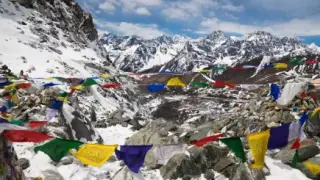
The big day starts before dawn for a steady climb to the Thorong La at 5,416 m, the high point of the circuit and one of the world's highest trekking passes, marked by prayer flags and long views. From the top the trail drops a long way west to the pilgrimage temple of Muktinath (3,710 m), sacred to Hindus and Buddhists alike. About 7 to 8 hours. Overnight in Muktinath.
15.0 km~8.0 h walkingSleep at 3,710 mBreakfastLunchDinner
Tonight’s stay
Teahouse
After visiting the Muktinath temple, the route descends into the Kali Gandaki, one of the deepest gorges in the world, through Kagbeni and Jomsom. From here you continue down the valley, partly by trail and partly by jeep on the rough road, to the hot springs at Tatopani (1,190 m), a welcome soak after the pass. Overnight in Tatopani.
12.0 km~4.0 h walkingSleep at 1,190 mBreakfastLunchDinner
Tonight’s stay
Teahouse
A long climb leaves the Kali Gandaki and ascends through Ghara and Shikha to Ghorepani (2,850 m), gaining over 1,600 m through terraced farmland and rhododendron forest. The forest is at its best in spring. About 7 to 8 hours, the steepest sustained climb of the descent. Overnight in Ghorepani.
16.0 km~7.5 h walkingSleep at 2,850 mBreakfastLunchDinner
Tonight’s stay
Teahouse
An optional pre-dawn climb reaches Poon Hill (3,210 m) for sunrise over Dhaulagiri and the Annapurnas. After breakfast the trail crosses forested ridges to Tadapani (2,630 m), under dense oak and rhododendron. About 6 hours of up-and-down walking. Overnight in Tadapani.
11.0 km~6.0 h walkingSleep at 2,630 mBreakfastLunchDinner
Tonight’s stay
Teahouse
A morning descent reaches the large Gurung village of Ghandruk, with its slate roofs and a small museum of Gurung culture, and close views of Annapurna South and Machhapuchhre. From the road head a jeep drives to Pokhara, where the trek ends by the lakeside. Overnight in Pokhara.
8.0 km~3.0 h walkingSleep at 850 mBreakfastLunch
Tonight’s stay
Hotel
A morning drive returns to Kathmandu on the Prithvi Highway, about 200 km and 6 to 8 hours through the hills along the Trishuli River, with stops for lunch. A 25-minute flight is available as an upgrade. The rest of the day is free. Overnight in Kathmandu.
Sleep at 1,350 mBreakfast
Tonight’s stay
Hotel
Your trek ends today. A Swotah representative transfers you to the airport for your onward flight. If you would like to extend your stay or add another trip, we are glad to help arrange it.
Sleep at 1,350 mBreakfast
Tonight’s stay
-
What’s included
What's included
Every cost on the trail is broken out below — no hidden fees, no surprises at the trailhead.
Included
11 items
Airport transfers
Deluxe rooms in a standard hotel in Kathmandu on twin/double sharing with breakfast
Guided sightseeing tour in Kathmandu
Accommodations during the trek
All meals (Breakfast, lunch, dinner) during the trek
Authorized English-speaking friendly guide along with Porters(3:1) for the trek
Equipment, clothing for porters and guides, including their insurance
All applicable government taxes
All expenses for all staff , meals, accommodation, salary, equipment, insurance, transportation
All necessary paperwork and Annapurna Circuit Trekking Permit, Trekkers' Information Management System fees (TIMS)
Medical kit (carried by your trek leader)
Not included
6 items
International flights; Nepalese visa fee;
Extra night accommodation in Kathmandu and Pokhara because of early arrival, late departure, or early return from the mountain due to any reason other than the scheduled itinerary;
Lunch and evening meals in Kathmandu;
Travel and rescue insurance;
Personal expenses (phone calls, laundry, bar bills, battery recharge, extra porters, bottle or boiled water, shower, etc.);
Tips for guide(s), porter(s) and driver(s);
How Hard Is the Annapurna Circuit with Tilicho Lake Trek?
This is a strenuous high-altitude trek. There is no technical climbing, but the route crosses the Thorong La at 5,416 m and reaches Tilicho Lake at 4,919 m, so altitude and long days are the real demands.
▲Strenuous. 5-8 hr days, max altitude 5,416 m (Thorong La). Good fitness essential; respiratory conditions need medical clearance. Acclimatisation days built in at Manang and Tilicho.
Overall Rating
6
Hard
out of 10 · physical effort scale
Walking hours/day~5.4 hrs
Max altitude5,416 m
Trekking days15 days
Total distance~181 km
Trip Details
Planning your Annapurna Circuit with Tilicho Lake Trek
Everything you need to plan the trek, topic by topic. Tap any one to open it.
The Annapurna Circuit with Tilicho Lake is graded strenuous, and altitude is the…
The Annapurna Circuit with Tilicho Lake is graded strenuous, and altitude is the main reason. The trail crosses the Thorong La at 5,416 m and visits Tilicho Lake at 4,919 m, both high enough that acute mountain sickness (AMS) is a real risk, which is why the itinerary builds in acclimatisation around Manang (3,519 m) and Tilicho Base Camp.
Days run 5 to 8 hours over rocky trail, and the pass day from Thorong Phedi is the longest, starting before dawn to cross in stable morning weather. No technical climbing is needed, but you should be fit enough for sustained ascent at altitude. Anyone with a respiratory or heart condition should consult a doctor before booking, drink 3 to 4 litres of water a day, and tell the guide early about any headache or nausea. Swotah guides set an acclimatisation pace and carry a first-aid kit and a pulse oximeter.
Autumn (late September to November) and spring (March to May) are the two season…
Autumn (late September to November) and spring (March to May) are the two seasons that make sense for the Annapurna Circuit, because the Thorong La needs stable weather and a clear, snow-free crossing. Autumn brings the most reliable skies of the year after the monsoon, with cold but settled high-altitude days. Spring is warmer lower down, with rhododendron in bloom, though afternoon haze can build by late May.
Winter (December to February) brings heavy snow to the Thorong La, and the pass can close for days, so it suits only experienced, well-equipped trekkers. The summer monsoon (June to August) brings rain and landslides to the lower Marsyangdi valley, although the Manang side sits in a partial rain shadow. The season cards above give the month-by-month temperature picture.
Two permits are required for the Annapurna Circuit with Tilicho Lake, the same a…
Two permits are required for the Annapurna Circuit with Tilicho Lake, the same as for any trek in the region, and both are checked at posts along the trail. The Annapurna Conservation Area Permit (ACAP), issued by the National Trust for Nature Conservation, costs NPR 3,000 for non-SAARC nationals and NPR 1,000 for SAARC nationals.
The Trekkers' Information Management System (TIMS) card, run by the Nepal Tourism Board, costs NPR 2,000 for non-SAARC and NPR 1,000 for SAARC trekkers and logs who is on the trail for safety. Swotah arranges both once you send a passport copy and photos, so bring a passport valid for at least six months. A licensed guide is mandatory in Nepal as of 2023.
Accommodation on the Annapurna Circuit is the teahouse, a family-run lodge with…
Accommodation on the Annapurna Circuit is the teahouse, a family-run lodge with twin rooms and a shared dining hall warmed by a stove. Kathmandu and Pokhara offer comfortable to luxury hotels; on the trail the rooms get simpler and colder the higher you climb toward the Thorong La.
Larger villages like Chame, Manang and Muktinath have well-equipped lodges with hot showers and a wide menu, while the high stops at Tilicho Base Camp and Thorong Phedi are basic, with shared bathrooms and limited heating. Rooms fill fast in October and November, so Swotah books ahead in peak season. A four-season sleeping bag matters at the high camps where nights drop well below freezing.
Food on the Annapurna Circuit is teahouse cooking, and dal bhat (lentil soup, ri…
Food on the Annapurna Circuit is teahouse cooking, and dal bhat (lentil soup, rice and vegetable curry) is the staple because it is fresh, refillable and built for trekking. The Thakali villages around Marpha and the Kali Gandaki are known for their Thakali set, a regional thali, and most lodges also serve noodles, momos, pasta, pancakes and porridge.
Swotah includes three meals a day on the trek. For water, aim for 3 to 4 litres a day to help prevent altitude sickness, and treat it rather than drinking untreated stream water: boiled water is sold at every lodge, and purification tablets, a filter or a UV pen all work. Carry a reusable bottle to cut plastic on the trail, and expect prices to rise with altitude.
The Annapurna Circuit with Tilicho Lake starts with a drive from Kathmandu to Ja…
The Annapurna Circuit with Tilicho Lake starts with a drive from Kathmandu to Jagat (1,290 m) in the Marsyangdi valley, the road head where the walking begins. A rough mountain road now reaches further up the valley, but the classic counter-clockwise route still starts low to aid acclimatisation.
The trek finishes on the far side of the massif at Ghandruk, from where you drive down to Pokhara, then on to Kathmandu by tourist coach or a 25-minute domestic flight. Swotah runs the road legs by private jeep or coach, with the Pokhara flight as an upgrade for trekkers short on time. Mountain roads here are slow and exposed to landslides in the monsoon, so the schedule allows realistic drive times.
Tilicho Lake sits at 4,919 m on the northern flank of the Annapurna massif, one…
Tilicho Lake sits at 4,919 m on the northern flank of the Annapurna massif, one of the highest lakes in the world, fed by glaciers and frozen for much of the year. The side trip from Tilicho Base Camp crosses an exposed, landslide-prone traverse, so it is done early in the morning while the slope is stable, and it adds a serious acclimatisation benefit before the main pass.
The Thorong La at 5,416 m is the circuit's crux and one of the world's highest trekking passes. The crossing starts from Thorong Phedi or High Camp before dawn to reach the top in calm morning air, then drops steeply to the pilgrimage temple of Muktinath at 3,710 m. Both features demand good acclimatisation, an early start, and a careful watch for altitude symptoms.
A licensed guide is mandatory on the Annapurna Circuit, a rule the Nepal Tourism…
A licensed guide is mandatory on the Annapurna Circuit, a rule the Nepal Tourism Board introduced in 2023. Swotah's guides hold trekking licences from the Ministry of Tourism, have Nepal Mountaineering Association training, and know the Thorong La crossing and the signs of altitude sickness.
A porter is included and carries your main bag, which makes the high days safer and lighter. One porter carries 20 to 25 kg, and we cap loads at that weight because porters face the same altitude as trekkers. Swotah provides a free duffel that the porter carries, and you walk with a 25 to 30 L daypack holding water, snacks, documents and a warm layer for the pass.
Mobile coverage runs along most of the Annapurna Circuit, though it thins out ar…
Mobile coverage runs along most of the Annapurna Circuit, though it thins out around the Thorong La and Tilicho Base Camp. Nepal Telecom (NTC) tends to hold signal best at altitude, while Ncell is stronger lower in the Marsyangdi valley; both sell tourist SIMs with 4G for about USD 1 to 6 plus a data plan, and Swotah provides a SIM.
Most teahouses offer Wi-Fi for a small charge, and you can charge a phone or camera at the lodge for a few rupees per device, with the cost rising higher up. A power bank or small solar charger is worth carrying for the cold high camps, where batteries drain fast overnight.
Responsible trekking keeps the Annapurna Conservation Area, Nepal's first and la…
Responsible trekking keeps the Annapurna Conservation Area, Nepal's first and largest protected area, intact for the communities along the circuit. Carry a reusable bottle and treat your own water rather than buying plastic, pack out what you bring in, and follow your guide's lead at temples like Muktinath.
Tipping is customary though not mandatory: a common guideline is around 15% of the trip cost, shared among the guide, porter and driver who work the season. Tips go directly to the workforce that makes the trek run and help keep trained guides in the country. Booking with a registered operator like Swotah also means permits, staff insurance and fair porter loads are handled properly.
What to pack
What to pack
The full kit list. Anything we loan (sleeping bag, down jacket) is called out — bring everything else.
✓Duffel bag (carried by porter)
✓Daypack (25-30L)
✓Dry bag or rain cover
✓Packing cubes
Frequently Asked
Questions & Answers
Everything trekkers ask before booking. Don't see yours? Tap Enquire — we usually reply within a few hours.
Yes. The Annapurna Circuit is one of Nepal's most popular treks, and the Tilicho Lake variant adds a side trip to Tilicho Lake at 4,919 m, one of the highest lakes in the world. The full loop crosses the Thorong La at 5,416 m and finishes with a Poon Hill sunrise, so it draws trekkers who want the classic circuit and the lake in one trip.
The Annapurna Circuit with Tilicho Lake trek is considered to be quite challenging, due to its high elevation and challenging terrain. The trek begins with a moderate ascent before reaching the highest point of the trek at Thorong La at 5,416 m. From there, trekkers will traverse the Annapurna Circuit, and the route will include some steep ascents and descents, as well as some difficult passes. Additionally, due to the high altitude, trekkers may suffer from altitude sickness. Therefore, trekkers should be well-prepared and in good physical condition before attempting this trek.
A licensed guide is mandatory on the Annapurna Circuit as of 2023, so solo unguided trekking is no longer permitted on this route. Every Swotah package includes a licensed, TAAN-registered guide. You can still travel as a solo trekker; you simply walk with a guide rather than entirely alone.
Spring (March to May) and autumn (September to November) are the two reliable seasons for this trek, because the Thorong La needs settled, snow-free weather to cross safely. Autumn has the clearest skies after the monsoon; spring is warmer with rhododendron in bloom. Winter (December to February) brings heavy snow and the pass can close for days, so it suits only experienced, well-equipped groups. The summer monsoon (June to August) brings rain and landslides to the lower valleys, though the Manang side stays drier in its rain shadow.
The ideal time to embark on a trek to Tilicho Lake is between March to May, and September to November. To ensure you get the best views, starting the trek from the Tilicho base camp in the early morning is recommended.
Dress in layers. For the lower valleys, pack lightweight trekking trousers and moisture-wicking tops. Higher up the weather changes fast, so carry a warm down jacket, thermal base layers, a waterproof shell jacket and trousers, a warm hat and gloves, and sturdy, broken-in trekking boots. You can rent down jackets and sleeping bags from us in Kathmandu. In villages, modest clothing is appreciated.
No vaccinations are required to enter Nepal, but the usual travel vaccinations are recommended: hepatitis A and B, typhoid, tetanus and diphtheria, and keeping routine vaccines such as polio and MMR up to date. Malaria is not a risk at trekking altitude, though it is worth discussing prophylaxis with your doctor if you also visit the lowland Terai. Check current advice with a travel clinic four to six weeks before you fly.
The lake on the Annapurna Circuit is Tilicho Lake, at 4,919 m. It sits in the Manang district on the northern side of the Annapurna massif, fed by glaciers off Tilicho Peak, and is reached on a side trip from Tilicho Base Camp.
To confirm your booking we ask for a deposit that depends on how far ahead you book: 10% at 366+ days before departure, 15% at 151 to 365 days, 20% at 91 to 150 days, 30% at 31 to 90 days, 50% at 15 to 30 days, and full payment within 14 days of departure. The balance is due no later than 15 days before departure by bank transfer, or in cash (USD preferred) on arrival in Kathmandu for bookings made earlier. Credit card payments carry a 4% processing fee. Cancellation refunds follow our published policy, from 90% with more than 150 days' notice down to no refund within 8 days, excluding non-refundable permit, flight and insurance costs.
We run small groups for personal attention and a flexible pace, usually between 2 and 12 trekkers, with a maximum of 14 on a scheduled departure. Private departures of any size, including solo travellers with a guide, can be arranged on request.
We customize the trip according to your preference but if you need to change plan during the trek consult the guide.
If you need extra day to complete the trekking, you'll need to inform the guide in advance and the guide will let the company know. Adding a day to trekking can result in many changes in other arrangements such as transportation, guides' schedule, flight details, hotel bookings and all, so we really don't recommend this to our clients unless there's an emergency cases. But it's true that those changes could be made but it will cost extra. The best way to do it is to inform the agent company about it.
No, you cannot use the credit card during the trekking you have to transfer the money in rupees before you start the trek. You can use the credit card only in Kathmandu and Pokhara.
Yes, our representative will be there to greet you at the airport. Upon arrival, you will be transferred to your hotel by a private car/jeep.
Yes, there is going to be a small orientation/briefing program before we embark on our adventure by the tour manager, leader/guide.
For nights in cities, we use standard/superior standard/deluxe rooms whereas, during the trek we use lodges/tea houses/guesthouses/home stay for our clients, whatever is available and accessible. We also arrange sleeping bags for our clients, on their request.
Teahouses on the Annapurna Circuit serve a wide menu. Dal bhat (rice, lentils and vegetable curry) is the trekker's staple because it is filling and refillable, and the Thakali villages around Marpha and the Kali Gandaki are known for their Thakali set. You will also find noodles, momos, pasta, soup, bread and porridge, and the local potatoes are excellent.
We use private car for sightseeing inside the Kathmandu Valley and transfer to Jagat and back from Pokhara to Kathmandu on car, van and deluxe minibus with A/C depending on the size of the group. We also drop and pick up from the starting and ending point of trek on private car or jeep.
All our Guides are trekking experts holding license from Nepal Tourism Board, Nepal Government. They are the most valuable assets of the company. Guides know the trekking route like the back of their hand and use their expertise in ensuring your safety in the mountains.
You carry only a daypack with water, snacks, a warm layer and your documents. A porter carries your main trek bag, so please keep that bag to about 12 kg. One porter carries up to 20 to 25 kg in total, and we cap loads at that weight because porters face the same altitude and trail as you do. A free duffel bag is provided for the porter to carry.
Most days involve about 5 to 7 hours of walking, with a few shorter days and one long day: the Thorong La crossing from Thorong Phedi takes around 7 to 8 hours and starts before dawn. Your guide sets a steady pace and adjusts to the group, with regular stops for tea, photos and rest.
While trekking in higher lands you need to pay for charging the electronics upon request to the owner. The best idea always is to bring your power bank with you. It's easier and cheaper.
Mobile coverage reaches most of the Annapurna Circuit, though it thins out around the Thorong La and Tilicho Base Camp. Nepal Telecom usually holds signal best at altitude, and Swotah provides a local SIM. Most teahouses also offer Wi-Fi for a small charge.
Yes, Nepal can proudly boast as one of the safest countries in South Asia for women, you will find people very friendly and respectful towards foreigners especially towards women. Annapurna is one of the most visited areas by the tourists so the service providers are professional and local people are respectful with welcoming hospitality towards the trekkers.
Your safety is our priority. We use experienced, licensed guides who know the route and the conditions, and we ask you to follow their guidance and keep your valuables with you. The Annapurna region is well travelled and considered safe, and incidents involving trekkers are rare.
Always treat your drinking water on the trek; do not drink untreated tap or stream water. Boiled water is sold at every lodge, and purification tablets, a filter or a UV pen all work well. Aim for 3 to 4 litres a day to help prevent altitude sickness. Carry a reusable bottle so you can refill and treat rather than buying plastic bottles, which also keeps the trail cleaner.
Make sure your travel insurance covers high-altitude trekking above 5,416 m and includes helicopter evacuation and medical treatment, and bring the policy details with you. If anyone develops altitude sickness or another medical problem, your guide contacts us immediately and we arrange a helicopter rescue to Kathmandu for hospital treatment. Our guides carry a first-aid kit and a pulse oximeter and watch the whole group for early symptoms.
Why Travel with Swotah
Why Book the Annapurna Circuit with Tilicho Lake Trek with Swotah
Most Nepal operators look the same from the outside. Here's what actually makes the difference.
Born in Nepal
100% locally owned since 2016. Trek profits stay with the mountain families and village schools along your route.
Guaranteed Departures
Every date on our calendar runs — no minimum group size. You never pay to be cancelled.
Certified Guides
Government-licensed, WFR-certified, English-speaking. Most were born within two valleys of the trail.
Small Groups
Small groups, never more than 8 trekkers. You get a real experience, not a convoy.
Gear Included
Sleeping bag and down jacket loaned at no extra charge — both rated to –20°C.
Flexible Payment
Deposit from 10% to confirm, balance before departure or in cash on arrival. Reschedule up to 30 days prior.
24/7 Support
Kathmandu office and dedicated WhatsApp emergency line. We answer at 2am if needed.
Hall of Fame
TripAdvisor Travelers' Choice 2023, 2024 and 2025. Hundreds of verified five-star reviews.
Get a free personalised travel brief for the Annapurna Circuit with Tilicho Lake Trek.
Tell us your travel dates and group size. Our team in Kathmandu will put together a tailored itinerary, honest costs, and practical tips — completely free, no commitment.




.webp)