


The cheapest realistic way to trek to Everest Base Camp is independently, in the shoulder months, for about USD 1,100 to 1,400 including return Lukla flights and permits. You save most by sharing or skipping a porter, treating your own water, eating dal bhat with its free refills, carrying a power bank, and renting gear in Kathmandu. Driving to Salleri and the roadhead below Lukla avoids the flight for a net saving of about USD 100 to 200, but adds one to two days each way.
- Budget totalUSD 1,100 to 1,400
- PermitsNPR 6,000, about USD 39
- Lukla flight, returnUSD 360 to 460
- Road instead of flightSaves USD 100 to 200, adds 1 to 2 days each way
- Food and roomAbout USD 25 a day low, 40 to 50 high up
- Biggest savingsShare a porter, treat water, eat dal bhat
The trek to Everest Base Camp will take you close to the highest peak possible. The Everest Base Camp trek is a way to get a taste of the distinctive Himalayan way of life. The Sherpas, who are famed for their expert climbing abilities, allow you to discover the distinctive culture of the Everest region's natives.
The trek, which follows in the footsteps of the first climbers, is essential for any adventurer. Due to Buddhist chanting, prayer wheels, prayer flags, and various Buddhist temples along the route, the trek allows pilgrims the opportunity to make their way to the Khumbu region in addition to the ability to view its natural beauty.
The Everest Base Camp Budget Trek is designed specifically for people who want to make the most of their trek to Everest Base Camp on a limited budget. On a budget trek you sleep in the same teahouses and walk the same trail as everyone else. You just pay for less of the extras.
On the 12-day economic trek, you'll pass through towns tucked behind enormous glaciers. The villages sit below some of the highest peaks on Earth.
The beautiful ascent will also reward you at Kala Patthar, the trek's highest point (5,545 m). From the top you see Pumori, Everest, Nuptse and Lhotse close up.
Overcome the Budget restraint
Are you planning to go to Everest Base Camp and worrying about the high budget it costs? It might come as a surprise, but it is possible to complete the Everest Base Camp trek while on a budget.
You may travel on a budget Everest base camp trek and see one of the most popular destinations in the world. You will go on an adventure-filled voyage filled with intriguing encounters and challenging trails. You also climb Kala Patthar, at 5,545 meters, for the best view of Everest's summit on the trek.

Where does the Everest Base Camp lie?
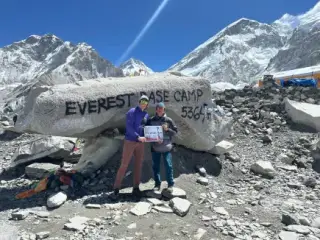
Mount Everest has two base camps, one on each side. Nepal's South Base Camp is located there at a height of 5,364 meters (17,598 feet). It is situated below the Khumbu Icefall and above the Gorakshep plains. It is roughly 63 kilometers by foot to the closest airport, Tenzing-Hillary Airport (Lukla Airport). And on the other hand, Tibet is the home of the North Base Camp.
Duration of Budget Everest Base Camp trek
The average trekking duration to Everest Base Camp lasts 12 days, plus an additional two days for acclimatization. The brief flight to Lukla is included in this itinerary's planning. Be aware that flight delays are not taken into account in this schedule. Trekkers in a rush can finish the route in 10 days by slashing the allotted time for acclimation, although this is not advised owing to the risks involved.
How to travel to Everest base camp on a budget?
The Budget Everest Base Camp trek is the best choice for you if you believe you can manage or perhaps save some money being in charge of your expenses like food and accommodation. By not using a porter and carrying your own belongings, you can also save the expense on this trek. You still gain from using a business to plan your vacation and from trekking in the Everest zone, though.
EBC trek is one of the most expensive treks in Nepal on average is the Everest Base Camp Trek. But, the views are magnificent. The experience you get to have in this trek is just incomparable to the cost. And, Yes, you get to go view the tallest mountain in the world. However, the cost is undoubtedly higher compared to other Nepal treks. You may save a lot of money and receive unlimited refills by eating dal bhat!
How can the Everest Base Camp trek be made more affordable? The biggest fixed costs are the return Lukla flight and the two permits, which everyone pays. On the ground, the big costs are food and a guide, and those are where you can save. Our EBC cost breakdown lists every price if you want to build a budget first.
Go in the shoulder season
Nepal's peak seasons are in the spring and fall, and as the EBC trip is the most popular in Nepal, the paths might get overcrowded during these periods. There is no chance that you will have the main trails to yourself, and it can be difficult to get the lodging of your choice.
Trekking with a guide is usually a good option, but it's significantly better during the busiest time of year because they can arrange for lodging that could be challenging if you are traveling alone. The Everest climbing season runs from April to early June. Though you don't want to ascend the peak, this trek route is going to be very crowded in this region at this time.
The traditional EBC trek is best completed in spring or autumn for the weather, but those weeks also bring the crowds and the highest prices. Late February to early March and late November to early December sit just outside the peak. Agencies often discount departures then, lodges are quieter and more willing to give you a free room if you eat with them, and the skies are usually still clear. You will need warmer kit for the nights.
Trek independently
Only individuals with prior trekking experience in Nepal should use this approach as it is the least expensive way to reach Everest Base Camp. There are no porters, guides, or guide-porters, just you. Apart from lodging, meals, drinks, permits, and flights, there are no further costs. Budget about NPR 6,000 (roughly USD 39) for permits: the Khumbu Pasang Lhamu Rural Municipality fee (NPR 3,000) and the Sagarmatha National Park entry (NPR 3,000). No TIMS card is needed in the Everest region.
Walking in from Jiri or Salleri rather than flying to Lukla saves the flight, though it adds about a week of food and lodging. A fully solo trek to Everest Base Camp would be one benefit here besides lower prices. Negatives include the fact that anyone with little to no prior experience trekking in Nepal should avoid choosing this option.
The fact that you really are on your own in the event of an accident or difficulty is a secondary drawback. Do not forget to get trekking insurance for Nepal before your trip. Independent trekking, starting and ending in Kathmandu, costs around USD 1,100 to 1,400 including return Lukla flights, which alone run about USD 360 to 460.
Take the road instead of the Lukla flight
The return Lukla flight costs about USD 360 to 460, the single biggest fixed cost of the trek. A jeep road now runs from Kathmandu through Salleri, the district headquarters of Solukhumbu, and on to Surke, the roadhead just below Lukla, opened in January 2025. From there it's a walk of 1 to 2.5 hours up to Lukla, or 3 to 4 hours straight on to Phakding.
The first leg, Kathmandu to Salleri, is about 267 km and takes 8 to 12 hours by shared jeep. The second, Salleri to Surke, is 4 to 5 hours of rough, unpaved 4WD road. Some jeeps run straight through in 10 to 14 hours, and others stop in Salleri for the night. A shared jeep seat costs roughly USD 25 to 65 per person each way depending on how far you ride, and a private jeep runs USD 200 to 500.
| Pros of going by road | Cons of going by road |
|---|---|
| Saves about USD 250 to 350 on transport for the round trip | Adds 3 to 4 days, and each costs USD 40 to 60 in food and lodging |
| No Lukla flight cancellations from cloud or wind | Landslides close the road, especially in the June to September monsoon |
| Climbing slowly from about 2,400 m helps acclimatisation | Long, dusty, bumpy rides, hard on anyone prone to motion sickness |
| Quiet lower Solukhumbu villages that few trekkers see | Ends with a steep walk up to Lukla before the main trek even starts |
Once you count the extra days, the road saves most budget trekkers around USD 100 to 200. A popular compromise is to drive in, which helps with altitude, and fly out from Lukla when you're tired. Check the road before you leave. Floods on the Rosi Khola closed sections of the BP Highway in September 2024 and again in October 2025, sending jeeps on long detours, so ask about the road a few days before you leave. Our guide to getting to Lukla without flying covers the Jiri walk-in as well.
Trek In Group
Despite the fact that the EBC Trek is well-known, many lone trekkers lack knowledge and sufficient instruction regarding the Everest Base Camp Group Trek. To reduce the expense of EBC for individual trekkers, every trekking service arranges the group joining the trek on set departure date.

Reaching the base camp will require 8 days of hiking, but returning will require 3 days of hiking along the same route to reach Lukla. On a subsequent morning, you will take a flight return to Kathmandu to wrap up the Everest base camp group trip.
A group trek with a Nepal agency typically costs about USD 1,200 to 1,800 per person, including flights, permits, guide, porter and meals. Solo travellers can join Swotah's weekly departures.
Stay in homestays and local guesthouses
Finding the right lodging is an important element of the Everest Base Camp expedition. Lack of comfortable lodging might have a significant negative effect on your expedition. Due to the high volume of trekkers, securing superior lodging during the peak trekking season is much more challenging.
The traditional style of hiking lodging along the EBC trail is the teahouse. Most of the tea shops along the route to Everest Base Camp are constructed and run by nearby communities.
These tea houses are specifically made to offer trekkers the fundamental comforts they need to rest. Additionally, it is an opportunity to support the local economy by giving back to the neighborhood. On the trekking routes, a bed typically costs around USD 10 per night per person and USD 15 for a homestay with two beds.
Eat Dal Bhat and Teahouse Meals
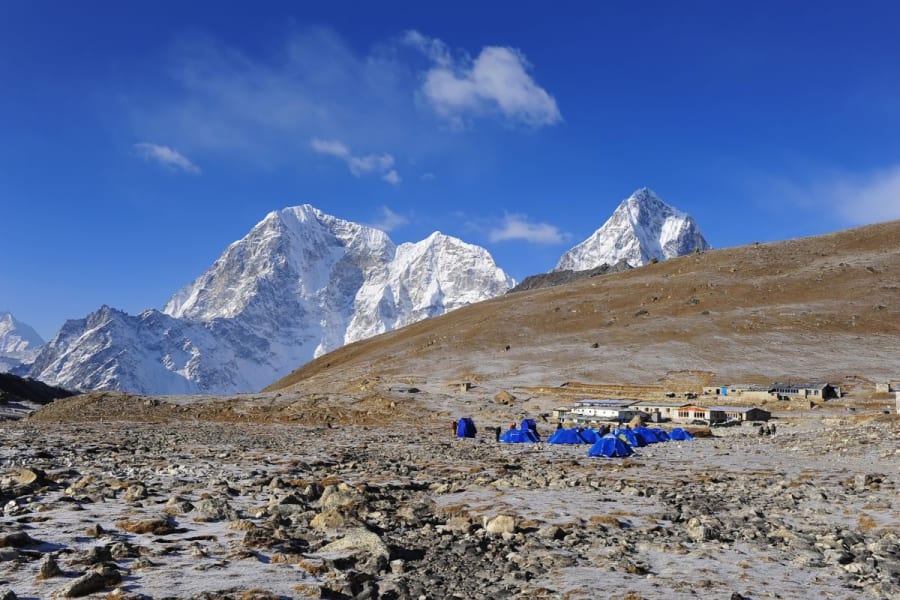
You will find a lot of tea houses and small lodges throughout the EBC trek. In small towns along the trail, trekkers stay in teahouses, which are guesthouses created for this purpose. If you eat there, staying in teahouses costs only a few dollars per night if you eat your meals there. You may trek from teahouse to teahouse without carrying any camping or cooking equipment, which is really convenient.
Most teahouses have a pretty similar menu. When compared to the cheap lodging on EBC and the fact that the porters and yaks must carry all the food up the mountain, the cuisine in the tea houses is decent and reasonably priced.
Thukpa (noodle soup), Momos (dumplings), Sherpa stew, a range of soups, macaroni and cheese, spaghetti, potatoes, pizza, sandwiches, yak steak, rice, hamburgers with chips, and spring rolls are among the foods that can be found on the menus of most tea houses. Additionally, there are other breakfast alternatives, including Tibetan bread, Chapatti, toast with jam or honey, French toast, pancakes, porridge with milk, and boiled or fried eggs. Around USD 25 a day covers three meals below Namche Bazaar. Higher up, budget USD 40 to 50 a day, because every meal costs more the further it has been carried. Dal bhat is the best value at any height. Refills are free.
More Ways to Cut Your Everest Base Camp Costs
Small charges add up. These are the ones most trekkers can avoid over 11 days on the trail, with a rough idea of what each saves on a 14-day trip.
| Saving | How | Typical saving |
|---|---|---|
| Treat your own water | Filter or purification tablets instead of bottled or boiled water | USD 30 to 60 |
| Carry a power bank | Charge in Namche and Lukla, skip per-device fees higher up | USD 20 to 40 |
| Share one porter between two | One porter carries both duffels, about 20 kg in total | USD 100 to 170 |
| Rent gear in Thamel | Sleeping bag and down jacket hire instead of buying | USD 100 or more |
| Buy an Everest Link card | One data card instead of paying lodge Wi-Fi every night | USD 20 to 50 |
| Drive in by jeep | Shared jeep to Salleri and the roadhead instead of flying one way | USD 50 to 100 after extra days |
| Bring snacks from Kathmandu | Chocolate and energy bars cost far more on the trail | USD 20 to 40 |
Two things are never worth cutting. Keep travel insurance that covers helicopter evacuation to 6,000 m, and keep both acclimatisation days. A rescue flight costs thousands of dollars, and skipping a rest day is how most people end up needing one.
Everest Base Camp on a Budget: FAQs
What is the cheapest month to trek to Everest Base Camp?
Late November to early December and late February to early March. They sit just outside the peak seasons, so agencies discount departures and lodges are emptier, while the weather is usually still clear and dry.
Can you get to the Everest Base Camp trek by road?
Yes, partly. Shared jeeps run from Kathmandu to Salleri in 8 to 12 hours and on to Surke, the roadhead below Lukla, in another 4 to 5 hours. You walk the last 4 to 8 hours. No road reaches Lukla itself, and the road can close in the monsoon.
Can you do the Everest Base Camp trek for under USD 1,000?
Only if you skip the Lukla flight and walk in from Jiri or Salleri, travel without a guide or porter, and eat mostly dal bhat. With return flights, the realistic floor is about USD 1,100. Few people go lower.
Is it cheaper to book the trek in Kathmandu?
Usually. A Nepal-based agency charges less, because international companies subcontract the trek to a local agency anyway. Booking on arrival saves a little more. It's a gamble in October and April, when Lukla flights and good lodges fill up.
Do I need to pay for a guide on the Everest Base Camp trek?
No. The Everest region is exempt from Nepal's guide rule, so you can trek on your own with the two local permits. A guide costs about USD 25 to 40 a day and is worth it on your first high-altitude trek. See solo trekking to EBC.
How much money do I need per day on the trail?
About USD 30 to 40 a day below Namche Bazaar and USD 50 to 70 a day higher up, for a room, three meals, water and small extras. Carry rupees. Namche has the last ATMs.