


How Much Does the Everest Base Camp Trek Cost? 2026 Breakdown
A 14-day Everest Base Camp trek costs about USD 1,100 to 1,400 per person if you go independently, USD 1,200 to 1,800 with a standard local-agency package, and USD 3,000 to 4,500 for a premium trip with better lodges. The fixed costs are the return Lukla flight (about USD 360 to 460) and two permits (NPR 6,000, about USD 45). International flights, travel insurance and tips come on top.
So you've decided on the Everest Base Camp Trek, or you're finally ready to cross it off your bucket list. The dream of reaching the base camp of the world’s highest peak comes at a cost, and how big that cost is depends on the route, the guides and the tour operator. Most trekkers spend roughly USD 1,100 to 4,500 per person.
EBC Trek Cost at a Glance (2026)
| Style | Typical total (12–14 days) | What it covers |
|---|---|---|
| Independent-style (guide only) | USD 900–1,200 | Flights, permits, guide; you pay food and rooms as you go (~USD 40–50/day up high) |
| Standard local-agency package | USD 1,200–1,800 | Lukla flights, permits, guide, porter, rooms, main meals |
| Premium / luxury package | USD 3,000–4,500 | Best lodges, oxygen backup, smaller groups, often a heli return |
The fixed costs everyone pays: the Lukla flight at roughly USD 180–230 each way, from Kathmandu or from Manthali in Ramechhap in peak season, the Sagarmatha National Park permit (NPR 3,000), and the Khumbu Pasang Lhamu municipality fee (NPR 3,000, or NPR 2,000 for SAARC and Chinese nationals, bought in Lukla or Monjo). No TIMS card is needed in the Everest region. Full permit detail is in our permits guide, and the route itself in our guide to planning the EBC trek. If you want to spend less, read how to trek to Everest Base Camp on a budget.
Everest Base Camp Trek Costs, Item by Item
These are typical 2026 prices per person. Costs on the trail rise the further you walk from Lukla, because everything above the airstrip is carried up by porters or yaks.
| Item | Typical cost | Notes |
|---|---|---|
| Nepal tourist visa | USD 30 (15 days) or USD 50 (30 days) | Paid on arrival at Kathmandu airport |
| Return Lukla flight | USD 360 to 460 | From Manthali in spring and autumn, Kathmandu otherwise |
| Sagarmatha National Park permit | NPR 3,000 (about USD 22) | Kathmandu or Monjo |
| Khumbu municipality trek card | NPR 3,000 (about USD 22) | NPR 2,000 for SAARC and Chinese nationals |
| Teahouse room | USD 5 to 10 a night | Cheap or free if you eat your meals there |
| Meals | USD 25 to 50 a day | Rises with altitude, highest at Gorak Shep |
| Boiled drinking water | NPR 100 to 150 a litre, more higher up | Or treat tap water yourself |
| Hot shower | About USD 3 | Fewer places offer them above Dingboche |
| Wi-Fi | USD 3 to 10 a day | Everest Link data cards are an alternative |
| Charging a device | USD 3 to 6 a time above Namche | Free in some lower lodges |
| Licensed guide | USD 25 to 40 a day | Plus their food and room |
| Porter | USD 20 to 30 a day | Carries about 20 kg, often shared by two trekkers |
| Sleeping bag or down jacket rental | About USD 2 a day each | Thamel shops, Kathmandu |
| Travel insurance to 6,000 m | Roughly USD 100 to 250 | Depends on age, country and trip length |
| Tips | Customary, not fixed | Usually pooled and handed over on the last evening |
Total trip cost by travel style
Each bar shows the usual range for a 14-day trip from Kathmandu, excluding international flights and insurance, on a scale up to USD 4,500.
| Travel style | Typical total per person |
|---|---|
| Independent, no guide | USD 1,100–1,400 |
| Standard agency package | USD 1,200–1,800 |
| Premium package | USD 3,000–4,500 |
Independent and agency trips end up close in price. Lukla flights and permits cost the same either way, so what a package mostly adds is the guide, a porter, and someone to sort out delays.
An overview of EBC Trek:
Trek to Everest Base Camp, or EBC, is One of the world’s best and most well-known treks. You will see breathtaking mountain views, have a peek at the Sherpa people, explore Sagarmatha National Park, and stop by high-altitude Buddhist monasteries during our 14-day Everest Base Camp Trek.
The Everest Base Camp Trek offers a great glimpse into Sherpa culture and Tibetan Buddhism at high altitude, as well as stunning views of rhododendron forests and the Himalayas, including the tallest mountain in the world, Mt. Everest. Many of us would adore the chance to stand 8,849 meters above sea level on the summit of Mount Everest in an ideal world.
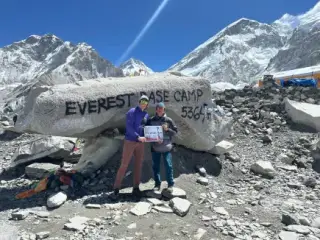
The trek begins at Lukla (2,860 meters) after you arrive in Kathmandu. It continues to Phakding (2,610 meters), Namche Bazaar (3,440 meters), Tengboche (3,867 meters), Dingboche (4,410 meters), Dughla (4,620 meters), Lobuche (4,940 meters), Gorak Shep (5,170 meters), Everest Base Camp (5,364 meters) and Kala Patthar (5,545 meters).
Realistically, most of us won't be able to accomplish this! However, if you have good physical condition and a strong will to succeed, you can reach Everest Base Camp! And if you ask me, Kala Patthar offers the best Everest views you can see without spending weeks slogging up to the summit.

Why is the EBC Trek so costly?
The cost of the Everest Base Camp Trek is affected by the route, travel company, service, and several other elements. In essence, a cost estimate can be made based on trekkers' choices. Most trekkers spend between USD 1,100 and USD 4,500. You may learn how to calculate the cost of the Everest Base Camp Trek from this blog. This is the typical starting price to budget for when undertaking the trek in the various ways covered in this article.
Nevertheless, the Everest Base Camp trek is quite a bit more expensive than other well-known hiking routes in Nepal, like the Annapurna Circuit or the Annapurna Base Camp trek, because of pricey transportation (a round-trip flight from Kathmandu to Lukla).
First, many aspects might affect your price. It’s crucial to remember the following:
-
How many days are you planning to trek? - EBC might range from 12 to 15 days.
-
What time of year do you intend to travel? Peak season costs more than off-peak.
-
Where do you purchase the trek? Travel agent, online group travel agent, local guide, and in-country guide.
-
What kind of trek are you looking to go on? All-inclusive, merely a guide, or on your own?
Food and Accommodation:
Your only lodging options along the EBC Trek route will likely be teahouses. Nepal's modest, nice, and comfortable teahouse accommodation is made especially for travelers. Most of the rooms are modest. Low-rise beds with foam mattress toppers, plastered or wood-paneled walls, and, for the most part, just one window is all that can be found in them.
While some teahouses have central burners lit at night, others have in-room heaters. Most lodges offer hot showers for a small fee, though fewer do above Dingboche. Electrical charging is available almost everywhere, usually for a fee above Namche.
At Everest Base Camp, food can cost anywhere between $5 and $15 USD. As a result, it will cost you $40 to $50 USD daily for food. But if you want to enjoy upscale dining while on the Everest Base Camp trek, a single meal at one of the upscale hotels in Lukla, Phakding, or Namche would set you back at about USD $35. Water and hot beverages, however, are a tad pricey in this area. A cup of hot beverages can cost up to NPR 100-350.
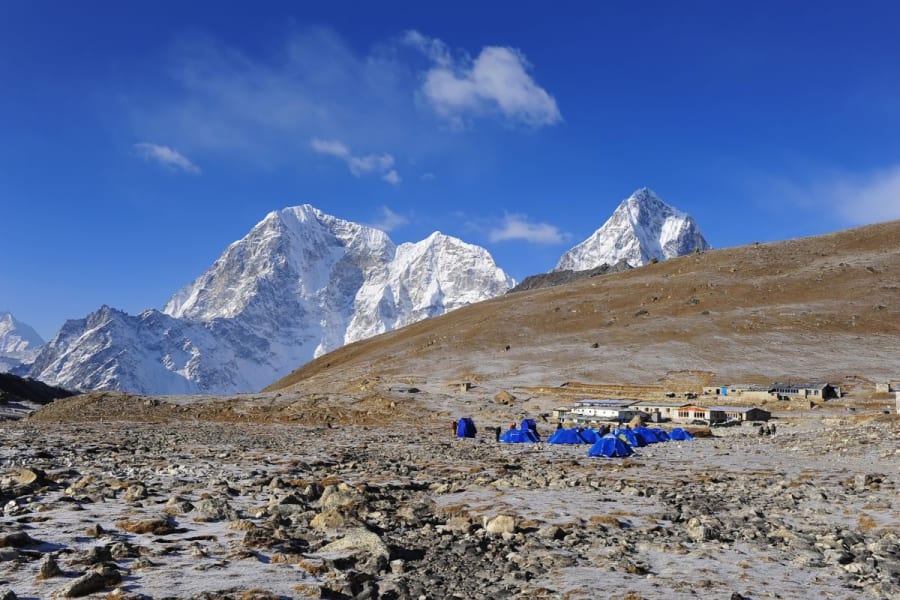
Accommodations for the Everest Base Camp Trek range from five-star hotels to teahouses. And each of them falls into the moderate to premium category. You can select whichever you like, between a low price of USD $5 and a maximum price of USD $250.
You will have three meals daily throughout the day (breakfast, lunch, and dinner). Tea houses and lodges both offer dining options. Any meal is available for selection from the menu.
Pro Tips for Food:
Noodles, soups, stews, and other soupy meals are advised since they are suitable for high elevations. You make no concessions about the meals at any point during your Everest Base Camp Trek. A wide range of alternatives is available, including typical Nepali fare like dal-bhat, soups, snacks, momos, and fried rice as well as Chinese and western fare, including noodles, spaghetti, spring rolls, and steak.
You should eat more carbs (energy bars, rice, pasta, dry fruits, wheat foods, etc.), drink for hydration (at least 4 liters of liquid is advised every day), try the garlic soup that every lodge serves (trekkers swear by it, though there's no proof it prevents altitude sickness), and avoid alcohol, which dehydrates you and worsens altitude symptoms. Tea and coffee in normal amounts are fine.
Choosing the best Guide Options for EBC Trek:
The major determinant of your expedition's cost will be the crew you select and the way you trek. You have three options for your Himalayan adventure: book a package tour through an agency, where everything is planned out for you; hire your crew, including a guide and porters if needed; or go on the trek by yourself. No matter which direction you choose to trek, the food and facilities along the way will be relatively similar because, in most settlements, everyone lodges in and eats at the identical tea houses.
Do-It-yourself
If you want to take everything on your shoulder. You can opt for managing everything on your own from the start to the end of this trek. Booking the Lukla flight is the trickiest part of doing it yourself, since no road reaches Lukla. The alternative is a shared jeep to Surke, a couple of hours' walk below Lukla. Lodges are plentiful, but in the October and April peaks the popular ones fill by early afternoon, so phone ahead or arrive early.
Hiring A Local Guide
A local guide and porter will ask for less money than a package trip while going on a trek. In Kathmandu, it is simple to find porters and guides; simply visit any local agency, and they will help you organize people for your needs.
Go For a Local Agency
If you are traveling alone, and unsure about your capability to complete the trek without help, or don't feel like spending hours organizing your Everest Base Camp trek itinerary, taking an organized tour through an agency is a smart alternative. Though much more expensive, it is a simpler and safer alternative.
And, for that reason, it is wise to choose a local agency instead of an international agency. The benefit of choosing a local agency is that all proceeds benefit the neighborhood. You'll get to see your guide before the trek, whether in person or virtually, building trust from the very start. The guide makes all of your airline arrangements and obtains the necessary licenses. You can talk about the route, the kind of accommodations you want, and any dietary restrictions you may have. They frequently come with stuff like sleeping bags or trekking poles.
Numerous hotels have their travel agents, and the costs are comparable to those of local agencies. Ask at your accommodation and several agencies as you roam the area. It's ideal to spend a few days in a hotel, utilize their reliable guides and services, and then check out.

Packages:
A mid-range tour includes two nights at a mid-range hotel in Lukla, round-trip transportation from Kathmandu to Lukla, a guide, a porter, lodging, and meals. It may cost you around $1300- $2000.
The premium packages include luxury lodging in Kathmandu, Lukla, Namche Bazaar, and Teng Boche, as well as more expensive meals. However, I believe the rest of your tour will be relatively similar because the tea houses in the other villages are just as comfortable for sleeping and eating. It is also important to note that if more people travel on these package trips, the cost decreases slightly. The cost of premium packages may range from US$ 3000 to US$ 4500.
The local operator is one of the travel agencies headquartered in Nepal. Hundreds of trekking firms in Nepal offer a conventional 12-15 day Everest Base Camp Trek route.
Local operators are privately owned, legally registered travel agencies with offices in Kathmandu or other regions of Nepal. They run all of the treks in Nepal, maintain a major office in Nepal (mainly in Kathmandu), and employ local guides full-time. Nothing is outsourced to them; everything is done in-house.
How Much Cash to Carry on the Everest Base Camp Trek
Plan on carrying almost everything in Nepali rupees. Namche Bazaar has the last ATMs on the route, and they run out of cash in peak season, so draw what you need in Kathmandu. Independent trekkers usually carry NPR 60,000 to 90,000 for 11 days on the trail. On an all-inclusive package you only need money for showers, Wi-Fi, charging, snacks, drinks and tips, which is closer to NPR 15,000 to 25,000.
Everest Base Camp Cost FAQs
How much does the Everest Base Camp trek cost in 2026?
About USD 1,100 to 1,400 for an independent trek and USD 1,200 to 1,800 for a standard package from a Nepal agency, for 14 days from Kathmandu. Premium trips with better lodges run USD 3,000 to 4,500. International flights and insurance are extra.
How much is the flight to Lukla?
Roughly USD 180 to 230 each way for foreign passengers. In spring and autumn the flights leave from Manthali in Ramechhap, a 4 to 5 hour drive from Kathmandu, and the transfer adds to the cost unless your package covers it.
What is the cheapest way to do the Everest Base Camp trek?
Trek independently in the shoulder months, share a porter with a friend or skip one, and eat dal bhat with its free refills. Our guide to doing EBC on a budget lists more ways to save.
Are tips included in Everest Base Camp packages?
Usually not. Tipping guides and porters is customary in Nepal, and groups normally pool tips and hand them over on the last evening. Ask your agency what's typical for your group size.
Is Everest Base Camp more expensive than the Annapurna treks?
Yes, mainly because of the Lukla flight. Annapurna Base Camp and the Annapurna Circuit start by road from Pokhara, so the same number of days usually costs a few hundred dollars less.
Conclusion
The Everest Base Camp Trek must be accomplished at least once in a lifetime. The price of an EBC Trek usually ranges from USD 1,100 to 4,500. The typical or budget-friendly trek is reasonably priced, but the luxurious trek is significantly more. But that also offers luxurious choices. You can take an individual trip to Everest Base Camp if you like to travel on your own. Or, for convenience, you might pay a guide and porter.