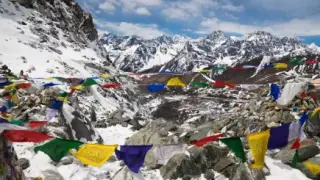
A 25-day pilgrimage to Mount Kailash (6,638 m) and Lake Mansarovar via Nepal's restricted Limi Valley, crossing the Dolma La (5,630 m) on the sacred Kora.
Duration
25 Days
Max Altitude
5,630 m / 18,471 ft
Difficulty
Hard
Group Size
Max 18 trekkers
Region
Lhasa, Nepal
Best Season
Spring · Summer · Autumn
Accommodation
Teahouses & guesthouses; camps in Limi
Meals
Full board on trek; meals included in Tibet
Transport
Flights to Simikot & Nepalgunj; Land Cruisers in Tibet
Trip Overview
About the Kailash Mansarovar via Limi Valley
Kailash Mansarovar via Limi Valley is a 25-day pilgrimage and trek to Mount Kailash (6,638 m), the most sacred mountain in Asia, and Lake Mansarovar (4,590 m) in the Ngari region of western Tibet. The route begins with a flight to Simikot in far-western Nepal, then treks through the restricted Limi Valley, crossing the Nyalu La (4,990 m) and the remote Humla borderlands before entering Tibet at Hilsa. Mount Kailash is revered by four religions: Hinduism, Buddhism, Jainism and Bon, and it stands as the source region of four of Asia's great rivers, the Indus, Sutlej, Karnali and Brahmaputra.
Lake Mansarovar (4,590 m) is a high-altitude freshwater lake in Tibet, considered by Hindu pilgrims to be the abode of purity and directly north of Kailash; circumambulating its shore is a separate act of devotion from the mountain kora. The Kailash Kora is a 52 km circumambulation of the mountain over three days, crossing the Dolma La (Drolma La) at 5,630 m, the highest point of this route and one of the highest trekking passes in the world. The Limi Valley in Humla district is a restricted Himalayan enclave of Tibetan-Buddhist culture, home to the ancient monastery villages of Halji and Til, rarely visited and requiring special permits.
This is a strenuous, remote pilgrimage crossing two countries, with several nights above 4,500 m on the Tibetan plateau and the Dolma La crossing at 5,630 m as the physical and spiritual high point. The Nepal side needs a Humla restricted-area permit and conservation permits arranged through a registered agency; the Tibet side requires a Chinese group visa processed in Kathmandu plus the Tibet Travel Permit and Ngari area permits, with all travel run as a guided group. The best season runs from May to September, with the Saga Dawa festival in May or June bringing tens of thousands of pilgrims. The sections below cover permits, altitude, the Kora, Limi Valley, the Dolma La and the best time to travel.
Last updated June 2026
Trip Highlights
Highlights
1
Circumambulate Mount Kailash (6,638 m), sacred to four religions, on the 52 km Kora
2
Bathe at Lake Mansarovar (4,590 m), the high-altitude freshwater lake below Kailash
3
Cross the Dolma La (Drolma La) at 5,630 m, the Kora's spiritual and physical high point
4
Trek the restricted Limi Valley through Halji and Til, ancient Tibetan-Buddhist villages in Humla
5
Time the pilgrimage to coincide with Saga Dawa, the holiest festival on the Kailash calendar
6
Full Nepal and Tibet permit chain handled by Swotah: group visa, Tibet Travel Permit, Ngari area permits
Day by Day
Kailash Mansarovar via Limi Valley Itinerary: 25 Days
Tap any day to expand — altitudes, walking times, meals, and overnight details for every stage of the journey.
A Swotah representative meets you at Tribhuvan International Airport and transfers you to your hotel in Kathmandu at 1,400 m. Your guide introduces the 25-day route over a welcome dinner and runs through the permit requirements for both Nepal and Tibet. Overnight in Kathmandu.
Sleep at 1,400 m
Tonight’s stay
Hotel
Kathmandu is the processing hub for the Chinese group visa required for Tibet entry. The morning is spent at the Chinese Embassy or with Swotah's permit agent, submitting group passport details and photos for the group-visa application. Processing takes several working days, so documents are submitted today without delay. The afternoon is free for rest or sightseeing at Boudhanath or Swayambhunath. Overnight in Kathmandu.
Sleep at 1,400 mBreakfast
Tonight’s stay
Hotel
A 45-minute domestic flight from Kathmandu reaches Nepalgunj at 150 m in the southern Terai plains, the main staging hub for flights into Humla district. Nepalgunj's airport handles mountain routes to Simikot and Dolpo. The afternoon allows time to check final permit documents and prepare gear for the trekking section ahead. Overnight in Nepalgunj.
Sleep at 150 mBreakfast
Tonight’s stay
Hotel
Simikot (2,985 m) is the district headquarters of Humla and the highest airstrip served by scheduled mountain flights; the 40-minute flight from Nepalgunj on Twin Otter or similar aircraft follows the Karnali gorge into the far-western hills. After landing and collecting permits, the trek drops steeply from the airstrip down to Dharapori (2,360 m) along the Humla Karnali river, through oak and pine forest. Walking time is about 2 to 3 hours. Overnight in Dharapori.
Sleep at 2,985 mBreakfastLunchDinner
Tonight’s stay
Hotel
Kermi (2,690 m) is a larger Humla village on the Karnali river, about 5 to 6 hours walk from Dharapori along the narrow river gorge trail. 3 hot springs are located just below Kermi village at the river's edge, and pilgrims and locals bathe in them throughout the season. The trail passes through terraced fields of barley and buckwheat, with the river roaring below. Overnight in Kermi.
Sleep at 2,690 mBreakfastLunchDinner
Tonight’s stay
Camping
Today's route leaves the main Humla Karnali and climbs the side valley of the Salle Khola to a camp at around 3,400 m, the first significant altitude gain of the trek. The climb takes 5 to 6 hours through forest and open grazing pasture, with views back down the Karnali valley. The temperature drops noticeably at camp. Overnight at the Salle Khola valley camp.
Sleep at 3,400 mBreakfastLunchDinner
Tonight’s stay
Camping
Dharmasala (4,200 m) is the last camp before the Nyalu La, a high stone shelter used by Humla traders and pilgrims. The 4 to 5 hour climb follows the Salle Khola up through dwarf juniper and open scree above the treeline, gaining 800 m. Views open out toward the high ridges of the Humla-Tibet border zone. Tonight is the first night well above 4,000 m; take it easy, drink plenty of water and eat a full meal. Overnight at Dharmasala.
Sleep at 4,200 mBreakfastDinner
Tonight’s stay
Camping
The Nyalu La at 4,990 m is the main border ridge between Humla and the Limi Valley, a high open pass strung with prayer flags. The ascent from Dharmasala takes 3 to 4 hours on rocky switchbacks with widening views toward Tibet. After the pass, the route descends 600 m to the camp at Talung (4,380 m) on the upper edge of the Limi Valley. The descent is steep and loose in places. Total walking time is 6 to 8 hours. Overnight at Talung camp.
Sleep at 4,380 mBreakfastDinner
Tonight’s stay
Camping
Jang (4,070 m) is the first of the Limi Valley's permanent villages, a compact settlement of flat-roofed stone houses with a small gompa and mani walls lining the entrance path. The 4 to 5 hour descent from Talung follows the Limi Khola downstream through open plateau landscape that already feels Tibetan in character. The valley floor at Jang is wide and grassy. Overnight in Jang.
Sleep at 4,070 mBreakfastDinner
Tonight’s stay
Camping
Halji (3,670 m) is the main monastery village of Limi Valley and home to Halji Gompa, the oldest monastery in Humla and one of the most significant Drukpa Kagyu gompas in far-western Nepal. The walk from Jang takes 3 to 4 hours along the valley floor. The gompa complex holds ancient thangkas, a large Maitreya statue and historic murals; entry is with your guide, who arranges the visit respectfully. Overnight in Halji.
Sleep at 3,670 mBreakfastDinner
Tonight’s stay
Camping
Halji at 3,670 m is the acclimatisation stop for the Nepal section of the route, giving the body time to adjust before the trek climbs back above 4,000 m toward the Tibet border. The day is free for a second visit to Halji Gompa, a walk to nearby mani walls and chortens, or simply resting and hydrating. A rest day here also provides a buffer for anyone who found the Nyalu La day hard. Overnight in Halji.
Sleep at 3,670 mBreakfastLunchDinner
Tonight’s stay
Camping
Til (3,600 m) is the second main monastery village in Limi Valley, about 3 to 4 hours walk from Halji along the valley. Til's gompa is smaller than Halji's but sits at the centre of a tight cluster of stone houses; the village follows the same Tibetan-Buddhist traditions as Halji, including a community vow of non-violence toward animals. The landscape between the two villages is open and dry, with the Tibetan plateau ridgeline visible to the north. Overnight in Til.
Sleep at 3,600 mBreakfastLunchDinner
Tonight’s stay
Camping
Manepeme (3,970 m) is a high camp above Til on the route toward the Nepal-Tibet border at Hilsa, a steady 3 to 4 hour climb on open hillside above the Limi Valley floor. The trail passes a series of mani stone walls and a small abandoned settlement. From Manepeme the Tibetan plateau and the upper Karnali drainage come into clear view. Tonight's camp is the last in Nepal before crossing into Tibet. Overnight at Manepeme.
Sleep at 3,970 mBreakfastLunchDinner
Tonight’s stay
Camping
Hilsa (also called Sher, at about 3,720 m) is the Nepal border post on the Karnali River where the bridge leads directly into Tibet. The 2 to 3 hour walk from Manepeme reaches the border by mid-morning. Passport and permit checks are completed on both sides before the group crosses. In Tibet, a convoy of Land Cruisers and the Tibetan licensed guide are waiting at Taklakot (Purang, 3,930 m), the first Tibetan town, about 30 minutes drive from the border. The afternoon is free to explore Taklakot's market and its hilltop monastery ruins. Overnight in Taklakot.
Sleep at 3,930 mBreakfastLunchDinner
Tonight’s stay
Camping
Darchen (4,558 m) is the base town for the Kailash Kora, a 3 to 4 hour drive from Taklakot across the Tibetan plateau on rough roads. At Darchen the first close views of Mount Kailash (6,638 m) open to the north, the mountain's distinctive pyramid shape rising above the plateau. The afternoon allows time to check permits for the Kora, arrange yak and porter loads if required, and rest before the three-day circuit begins. Overnight in Darchen.
Sleep at 4,558 mBreakfastLunchDinner
Tonight’s stay
Hotel
Lake Mansarovar (Mapam Yumco) at 4,590 m lies about 30 km southeast of Darchen on the plateau. 4 sacred bathing ghats are used by Hindu pilgrims who complete a ritual bath in the lake's cold, clear water. The drive takes about 45 minutes each way. The morning is spent at the lake for prayer, bathing and time on the shore; the southern bank gives the best views of both Kailash and the Gurla Mandhata (7,694 m) massif across the water. Return to Darchen in the afternoon for a final equipment check before the Kora begins. Overnight in Darchen.
Sleep at 4,590 mBreakfast
Tonight’s stay
Hotel
Yamadwar (about 4,700 m), the traditional start gate of the Kailash Kora, is a short drive from Darchen. The clockwise circuit begins here, following the Lha Chu river valley north along the western face of Kailash. The 22 km walk to Derapuk Monastery (4,890 m) takes 5 to 7 hours, climbing gradually with the first full views of Kailash's imposing north face emerging at around kilometre 15. Derapuk is a small monastery and pilgrim guesthouse; the dormitory beds here are basic but give shelter at nearly 4,900 m. Overnight at Derapuk (4,890 m).
Sleep at 4,890 mBreakfast
Tonight’s stay
Guesthouse
The Dolma La (Drolma La) at 5,630 m is the high point of the Kora and the highest point of this entire 25-day route, a pass covered in prayer flags, silk scarves and stone cairns. The day begins before dawn at Derapuk (4,890 m), climbing about 740 m on a steep, rocky path over 3 to 4 hours to the pass. At 5,630 m the air holds roughly half the oxygen of sea level; the guide sets a deliberate pace. The descent from the Dolma La to Zuthul Puk (about 4,790 m) is steep and long, dropping 840 m in about 2 to 3 hours on rocky trail. Total day: 7 to 9 hours, about 22 km. Overnight at Zuthul Puk.
Sleep at 5,630 mBreakfast
Tonight’s stay
Guesthouse
Kora day 3 completes the eastern section of the circumambulation, walking about 8 km from Zuthul Puk back to the Kora finishing point near Darchen in 3 to 4 hours, following the Dzong Chu valley south. The final kilometres return to the plateau at Darchen, closing the 52 km clockwise circuit of Mount Kailash. The afternoon allows rest and a celebratory meal in Darchen. Overnight in Darchen.
Sleep at 4,558 mBreakfast
Tonight’s stay
Hotel
Saga (about 4,600 m) is a Tibetan plateau town on the Yarlung Tsangpo (Brahmaputra) river, the main waypoint on the road east toward the Nepal border at Kyirong. The drive from Darchen covers approximately 460 km on the plateau highway and takes 7 to 9 hours. The road crosses wide, flat grassland at consistent elevation above 4,400 m, with distant views of the Himalayan chain to the south. Overnight in Saga.
Sleep at 4,600 mBreakfast
Tonight’s stay
Hotel
Kyirong (Gyirong, about 2,700 m) is the border town where the Tibet-Nepal highway descends sharply from the plateau into a deep river valley before reaching the Rasuwagadhi border crossing back into Nepal. The drive from Saga takes 6 to 8 hours. The descent into Kyirong is dramatic, dropping roughly 1,900 m from the plateau within a short distance, and the valley's lower altitude and warmer air come as a noticeable relief after two weeks above 3,500 m. Overnight in Kyirong.
Sleep at 2,700 mBreakfast
Tonight’s stay
Hotel
Kyirong at 2,700 m gives the body a full day at lower altitude before the final crossing back to Nepal and the drive to Kathmandu. The town has a small market, guesthouses and several cafes. Permits and passports are checked in preparation for tomorrow's border crossing at Rasuwagadhi. The rest day also provides a contingency buffer for any minor delays at the Kyirong checkpoint. Overnight in Kyirong.
Sleep at 2,700 mBreakfast
Tonight’s stay
Hotel
The Rasuwagadhi border crossing (about 1,900 m) connects Tibet to Nepal's Rasuwa district, where the road descends through the Trishuli river valley to Kathmandu. Total drive time from Kyirong to Kathmandu is approximately 6 to 8 hours depending on the border queue. The final stretch enters Kathmandu from the north through Nuwakot and Trishuli Bazar. A Swotah vehicle meets the group at the border and drives through to the hotel. Overnight in Kathmandu.
Sleep at 1,400 mBreakfast
Tonight’s stay
Hotel
Kathmandu at 1,400 m offers the first full rest at low altitude since the trip began 22 days earlier. The day is free for recovery, shopping in Thamel, a final visit to Boudhanath or Pashupatinath, or simply sleeping and eating well. Your guide is available for any last-minute questions about the pilgrimage. Swotah arranges a farewell dinner if the group wishes. Overnight in Kathmandu.
Sleep at 1,400 mBreakfast
Tonight’s stay
Hotel
A Swotah representative transfers you to Tribhuvan International Airport for your onward international flight. Departure time permitting, the morning is free in Kathmandu. Swotah can arrange extensions to Pokhara, the Annapurna region, Chitwan or a shorter Nepal trek if you wish to add time before flying home.
Breakfast
What’s included
What's included
Every cost on the trail is broken out below — no hidden fees, no surprises at the trailhead.
Included
16 items
04 Nights' accommodation in Kathmandu at 4-Star Category with breakfast on a sharing basis.
Nepal Side Full board(Breakfast, Luch, Dinner) on Guest house/ Campingfrom Simikot.
All Accommodation in Tibet with breakfast in a 3-star hotel except Derapuk and Zuthal Puk.
2 Night Accommodation in a basic Guesthouse in Derapuk and Zuthal Puk (shared bathroom)
Airfare Kathmandu/ Nepalgunj/ Simikot
Kathmandu arrival and departure transfers by private A/C coach.
Kathmandu sightseeing tours by private A/C coach.
Licensed Local Guide during Sightseeing.
Kathmandu-Syabrubeshi- Rasuwa Gadhi-kerung- Kathmandu transfer by private coach.
Private land transfer in Tibet.
Highly qualified and experienced Tibetan guide on the Tibet Side.
Nepali Sherpa team (Guide, Cook and porters) in Nepal Side
Tibet permit and Tibet Group Visa.
Nepal Restricted Area Trekking Permits.
All Tibet Monastery Entrance fees.
Camping Equipments and horses(Nepal Side).
Not included
7 items
Meals (Lunch and Dinner) in Kathmandu and Tibet Side.
Entrance fee(s) during sightseeing in Kathmandu.
Travel and medical insurance;
Horse riding expenses during the Mount Kailash Circuit (Kora)
International flights and visa fee on arrival;
Expenses of a personal nature bar bills, laundry personal gratuities, etc;
Extra night accommodation because of early arrival or late departure;
How Hard Is the Kailash Mansarovar via Limi Valley?
The Kailash Mansarovar via Limi Valley pilgrimage is strenuous and very high altitude. Several nights are spent above 4,500 m on the Tibetan plateau, and the Dolma La crossing on the Kora day reaches 5,630 m. Long drives on rough roads, two-country permit logistics and remote terrain add to the commitment.
▲Strenuous. Max altitude 5,630 m (Dolma La). Multi-night stays above 4,500 m, remote two-country route, long drives on the Tibetan plateau. Very good fitness required.
Overall Rating
6
Hard
out of 10 · physical effort scale
Max altitude5,630 m
Trekking days13 days
Trip Details
Planning your Kailash Mansarovar via Limi Valley
Everything you need to plan the trek, topic by topic. Tap any one to open it.
The Kailash Mansarovar via Limi Valley pilgrimage is graded strenuous, with alti…
The Kailash Mansarovar via Limi Valley pilgrimage is graded strenuous, with altitude as the defining challenge. The Dolma La (Drolma La) at 5,630 m is the physical and spiritual high point of the entire trip, crossed on Kora day 2 in a single long push from Derapuk. Several nights on the Tibetan plateau (Darchen at 4,558 m, Mansarovar at 4,590 m) keep the body at altitude for an extended stretch, and acclimatisation days are built in at Halji and Kerung to reduce the risk of acute mountain sickness (AMS).
The Nepal section of the trek through Limi Valley involves 5 to 7 hours of walking per day on remote, rough trails, crossing the Nyalu La at 4,990 m before descending to Hilsa on the border. There is no technical climbing anywhere on this route, but the combination of very high altitude, remoteness, cold nights, long Land Cruiser drives and two-country logistics makes it a serious undertaking. A pre-trip cardiovascular health check is strongly advised. Swotah guides carry a pulse oximeter and a first-aid kit, and supplemental oxygen is available at the Derapuk base camp for the Dolma La day.
May to September is the open season for the Kailash Mansarovar route, when the H…
May to September is the open season for the Kailash Mansarovar route, when the Humla passes, the Nyalu La and the Dolma La are all free of snow and the Tibet border at Hilsa is accessible. The Saga Dawa festival, which falls on the full moon of the fourth Tibetan lunar month (usually May or June), is the holiest time to complete the Kora, and the mountain draws tens of thousands of Hindu and Buddhist pilgrims during this period; circumambulating Kailash during Saga Dawa is said to multiply the merit of the act. Expect more company and some crowding at Derapuk and on the Dolma La ascent if you travel during the festival.
June to August offers warmer days and the highest probability of stable weather on the Tibetan plateau, though some afternoon cloud is normal. September brings cooler, crisp conditions and thinner crowds. The route is completely closed from October to April: the Nyalu La and the Dolma La are buried under snow, and the Tibet side imposes seasonal restrictions. Swotah can advise on Saga Dawa dates each year before booking.
The Nepal section of this route passes through the Limi Valley in Humla, a restr…
The Nepal section of this route passes through the Limi Valley in Humla, a restricted area requiring a Humla Restricted Area Permit plus the local conservation and entry permits. These permits are issued only to guided groups travelling with a registered Nepali agency; independent trekking in the restricted zone is not permitted. Swotah arranges all Nepal permits on receipt of your passport copy and photos, and confirms the current applicable fees before departure.
The Tibet and China side has a separate, more complex permit layer. All foreign visitors to Tibet must travel as part of a licensed guided group and require a Chinese group visa, which is distinct from an ordinary Chinese tourist visa and is arranged at the Chinese Embassy or Consulate in Kathmandu as a group application. In addition, a Tibet Travel Permit is required, plus the Ngari region permit and the alien travel permit for the Kailash area; these are arranged in Lhasa by the appointed Tibetan partner agency and collected at the border or Taklakot. Processing the group visa in Kathmandu typically takes several days, which is why the itinerary begins with a visa preparation day. Independent travel on the Tibet side is not allowed under any circumstances, and Swotah handles the full permit chain across both countries.
Accommodation varies significantly along this two-country route. In Simikot and…
Accommodation varies significantly along this two-country route. In Simikot and the Humla valley villages, small local teahouses and basic guesthouses provide a bed and meals. The Limi Valley villages of Halji and Til have simple homestay-style lodges. At Hilsa and into Tibet, guesthouses at Taklakot (Purang) and Darchen are basic but reliable, with electricity and heated rooms in the main pilgrim facilities.
On the three days of the Kailash Kora, accommodation is in the established pilgrim guesthouses at Derapuk and Zuthul Puk; these are simple but functional, with dorm-style beds, and represent the most remote and basic nights of the trip. Kathmandu at the beginning, middle and end offers comfortable hotel accommodation. Swotah books all accommodation in advance, which is particularly important during the Saga Dawa period when Derapuk fills rapidly.
Food on this trip crosses two distinct culinary zones. In the Nepal section thro…
Food on this trip crosses two distinct culinary zones. In the Nepal section through Simikot and Limi Valley, teahouse and home-cooked Nepali and Tibetan food is the staple: dal bhat, tsampa (roasted barley flour), butter tea and noodle dishes. The higher and more remote the village, the more limited the menu. In Tibet, food at the guesthouses in Taklakot, Darchen and along the Kora route is Tibetan-Chinese: noodles, fried rice, momos and local bread, with tea widely available.
Water safety is critical at altitude, where dehydration accelerates altitude sickness. Aim for 3 to 4 litres of water per day, and treat or boil all water in both Nepal and Tibet. Bottled water is available in Darchen and at the larger Tibetan settlements. On the Kora days carry enough treated water for the Dolma La crossing, where there is no resupply point near the pass. Swotah includes all meals on the trek and Tibet segments as full board.
The route involves three distinct transport modes. Kathmandu to Nepalgunj (150 m…
The route involves three distinct transport modes. Kathmandu to Nepalgunj (150 m) is a short domestic flight; Nepalgunj to Simikot (2,985 m) is a second short mountain flight on Twin Otter or similar aircraft, weather-dependent and operated by Nepal Airlines or a charter carrier. The mountain airstrip at Simikot has limited daily capacity, and weather delays are common; Swotah builds a buffer day into the logistics.
From Hilsa on the Nepal-Tibet border, a Tibetan guide and a convoy of Toyota Land Cruisers take over for the Tibet section. The plateau roads from Taklakot through Darchen and on to Saga and Kyirong cover long distances on rough high-altitude tracks; a single driving day can run 6 to 8 hours. On the Kora itself, all walking is on foot, with yak-carried bags available to hire at Darchen for the three-day circuit. The return from Kyirong to Kathmandu is by Land Cruiser through the Rasuwagadhi-Rasuwa border crossing, completing the full loop.
The Kailash Kora (Parikrama) is the 52 km circumambulation of Mount Kailash comp…
The Kailash Kora (Parikrama) is the 52 km circumambulation of Mount Kailash completed over three days, beginning at Yamadwar (the Gate of Death, about 4,700 m) and following a clockwise route around the mountain. Day 1 of the Kora covers the western face to Derapuk Monastery at about 4,890 m, with views of the north face of Kailash. Day 2 is the hardest and highest: from Derapuk the route climbs to the Dolma La (Drolma La) at 5,630 m, a pass hung with prayer flags and sacred to pilgrims of all four traditions, before descending steeply to Zuthul Puk at about 4,790 m. Day 3 completes the eastern side and returns to Darchen.
Pilgrims who are unable to cross the Dolma La on foot due to altitude can arrange yak transport to the pass for the day 2 crossing; Swotah can organise this in Darchen. The entire Kora is done at very high altitude, and a proper acclimatisation stop at Darchen before starting is non-negotiable. One full Tibetan circuit is called a parikrama; some Hindu pilgrims complete 108 circuits over a lifetime, though the three-day circuit is the standard for most travellers.
Limi Valley in Humla district is one of the most remote and least-visited valley…
Limi Valley in Humla district is one of the most remote and least-visited valleys in Nepal, a high-altitude Tibetan-Buddhist enclave that sits in a restricted area requiring special permits. The valley runs at around 3,600 to 4,000 m and contains three medieval monastery villages: Halji, Til and Jang, each with old gompas, mani walls and a way of life largely unchanged from the neighbouring Tibetan plateau culture. Halji Gompa is the oldest monastery in the Humla region.
Trekking from Simikot to Hilsa via Limi Valley takes about 11 days and crosses the Nyalu La at 4,990 m, a high, open pass with views across the Tibetan plateau. This Nepal section provides a slow, genuine altitude acclimatisation profile before the group crosses into Tibet, where the nights are even higher. Very few independent trekking groups enter the Limi Valley compared with the Everest or Annapurna circuits, and Swotah's small groups keep the impact on the villages minimal.
A licensed guide is mandatory on both sides of the border. On the Nepal section,…
A licensed guide is mandatory on both sides of the border. On the Nepal section, Swotah's Humla-experienced guides hold Ministry of Tourism licences and are familiar with the restricted-area protocols for Limi Valley. At the Tibet border, a Tibetan licensed guide joins the group and leads all activities on the Chinese side; Tibetan regulations require a licensed local guide at all times and no foreign visitor can move independently in the Ngari region.
Porters carry loads in the Nepal section; yaks and pack animals are used in the Limi Valley and on the Kora approach. Swotah caps porter loads at 20 to 25 kg and provides a free duffel for each porter. The Land Cruiser drivers in Tibet are experienced on the plateau roads. A group of at least two travellers is required for the restricted Nepal permits; Swotah can match solo travellers with other bookings on the same dates.
Mobile coverage in Humla district is very limited; Nepal Telecom (NTC) has a par…
Mobile coverage in Humla district is very limited; Nepal Telecom (NTC) has a partial signal in Simikot but connectivity is unreliable or absent in Limi Valley and at Hilsa. Tibet has its own network (China Mobile / China Unicom) which foreign SIM cards do not roam onto reliably; Swotah advises buying a local Chinese SIM in Kathmandu or Taklakot for basic connectivity in the Tibetan towns.
Power supply is limited throughout. Simikot has solar-charged electricity and some lodges have charging points for a small fee. In Tibet, guesthouses in Taklakot and Darchen have mains power, but supply can be intermittent. On the Kora, Derapuk and Zuthul Puk have minimal charging. A power bank of at least 20,000 mAh and a small solar panel are strongly recommended, and treat the Limi Valley days and the Kora as essentially off-grid.
Mount Kailash and Lake Mansarovar are among the most sacred sites on earth, and…
Mount Kailash and Lake Mansarovar are among the most sacred sites on earth, and the conduct expected of all visitors, pilgrim and trekker alike, is that of a respectful guest. The Kora is always walked clockwise; Bon practitioners walk counter-clockwise, but follow the clockwise direction unless your guide instructs otherwise. Do not attempt to climb Kailash: the mountain has never been summited and the approach is considered sacrilegious by the four traditions that hold it sacred.
In Limi Valley, walk clockwise around mani walls and chortens, ask before photographing gompa interiors, and follow your guide's instructions at active monasteries. Carry all non-biodegradable waste out of both Nepal and Tibet; the Dolma La is a sacred point and leaving offerings is customary, but leaving waste is not. In Tibet, photography at military checkpoints and certain government sites is prohibited; follow the Tibetan guide's instructions without exception.
What to pack
What to pack
The full kit list. Anything we loan (sleeping bag, down jacket) is called out — bring everything else.
✓Duffel bag (carried by porter or yak)
✓Daypack (25-30L)
✓Dry bag or rain cover
✓Packing cubes
Frequently Asked
Questions & Answers
Everything trekkers ask before booking. Don't see yours? Tap Enquire — we usually reply within a few hours.
The Nepal section passes through Limi Valley in Humla district, which is a restricted area. You need the Humla Restricted Area Permit, which is issued only to members of a guided group travelling with a registered Nepali agency. You also need the associated local conservation and entry permits for the Humla region. Independent travel in the restricted zone is not allowed. Swotah arranges all Nepal permits on receipt of your passport copy and photos, and confirms the current applicable fees before your departure date.
Entering Tibet requires a separate and more complex set of permits than a standard Chinese tourist visa. All foreign visitors must travel as part of a licensed guided group. You need a Chinese group visa (not an independent tourist visa), which is applied for at the Chinese Embassy in Kathmandu as a group application through a registered Nepali agency. In addition, a Tibet Travel Permit and the Ngari region permit covering the Kailash area are arranged by the appointed Tibetan partner agency. Processing the group visa in Kathmandu takes several days, which is why day 1 of the itinerary is a visa preparation day. Swotah handles the full permit chain on the Tibet side.
Saga Dawa is the holiest festival in the Tibetan Buddhist calendar, celebrated on the full moon of the fourth Tibetan lunar month. It commemorates the birth, enlightenment and parinirvana of the Buddha, and completing the Kailash Kora during Saga Dawa is considered by pilgrims to multiply the merit of the circumambulation enormously. Saga Dawa typically falls in May or June, but the exact date changes each year with the lunar calendar. Swotah confirms the Saga Dawa date for the relevant year before booking. Expect significantly larger numbers of pilgrims at Derapuk and on the Dolma La during the festival period, and book well in advance if you want to travel at this time.
The Dolma La (also spelled Drolma La) sits at 5,630 m (18,471 ft), making it the highest point on this entire route and one of the highest trekking passes routinely crossed in Asia. Kora day 2 begins at Derapuk (about 4,890 m) and climbs roughly 740 m to the pass, then descends steeply about 840 m to Zuthul Puk. The day runs 7 to 9 hours. At 5,630 m the air has about half the oxygen of sea level, so the exertion required is much greater than at lower altitudes. The night before at Derapuk is already at 4,890 m, so your body has minimal adjustment time. Swotah's guides carry a pulse oximeter and supplemental oxygen is available at Derapuk for those who need it on the crossing.
The Kailash Mansarovar via Limi Valley route is open from approximately May to September only. The Nyalu La (4,990 m) and the Dolma La (5,630 m) are both snow-blocked from October through April, and the Tibet side enforces its own seasonal entry restrictions in winter. The Hilsa border crossing also closes in the off-season. Attempting this route outside the May to September window is not possible. Within the open season, May and June catch Saga Dawa; July and August are warmest and most stable on the plateau; September is quieter and crisp. Contact Swotah for specific season-by-season advice.
Book at least 12 weeks (3 months) in advance, and ideally 4 to 5 months ahead if you want to travel during Saga Dawa. The China group visa application in Kathmandu requires a completed group list, and processing takes approximately 5 to 7 working days once submitted. Tibet Travel Permits and Ngari area permits are arranged by the Tibetan partner agency in parallel and also need lead time. Nepal restricted-area permits require your passport copy and photos before the trek departure. For the Saga Dawa period (May to June), Derapuk guesthouse fills quickly and some groups are turned away; early booking secures priority allocation. Swotah begins the permit and visa process immediately on receipt of your confirmed deposit.
This trip requires a minimum of 2 travellers to qualify for the Nepal Humla Restricted Area Permit. Maximum group size is typically 12 to 16 for logistical reasons on the Tibetan plateau and on the Kora. Smaller groups of 4 to 8 provide more flexibility at the border crossings and guesthouses. Private departures for 2 travellers are available. Contact Swotah if you are travelling solo; we can match you with other bookings on compatible dates so that the minimum group requirement is met.
The trip includes: airport transfers in Kathmandu, domestic flights Kathmandu to Nepalgunj and Nepalgunj to Simikot, all accommodation in Nepal and Tibet as described in the itinerary, all meals on the trek and Tibet segment (full board), licensed Nepali guide for the Nepal section, licensed Tibetan guide for the Tibet section, Land Cruiser transport in Tibet, all Nepal permits (Humla Restricted Area Permit, conservation permits), the Tibet and Ngari area permits, and the China group visa processing assistance. International flights to and from Kathmandu, travel insurance, personal items and tips are not included. Swotah provides a full cost breakdown at the time of enquiry.
Yes, but the Nepal Humla Restricted Area Permit requires a minimum group of 2 trekkers. If you are travelling solo, Swotah will match you with other solo or small-group bookings on the same departure dates to fulfil this requirement. Tibet regulations also require group travel, so no part of this route is available for fully independent travellers regardless of nationality. Solo traveller supplements apply for single room use in Kathmandu. Contact Swotah to discuss availability for your preferred travel window.
The Kailash Kora (also called Parikrama in Sanskrit) is the ritual circumambulation of Mount Kailash, a clockwise circuit of about 52 km completed over 3 days. Day 1 walks the western face from Yamadwar to Derapuk Monastery (about 4,890 m), with the first close view of Kailash's striking north face. Day 2 is the hardest, crossing the Dolma La at 5,630 m before descending to Zuthul Puk (about 4,790 m). Day 3 completes the eastern section back to Darchen. The Kora is a physical challenge and a religious act: all four traditions (Hinduism, Buddhism, Jainism and Bon) hold that completing the circuit brings great spiritual merit. The walk is always done clockwise, following the direction of the sun.
Lake Mansarovar (Mapam Yumco in Tibetan) is a freshwater lake at 4,590 m, about 30 km southeast of Mount Kailash. It is considered one of the most sacred lakes in Asia. In Hindu tradition, Mansarovar was created in the mind of Brahma and its waters are said to wash away the sins of a hundred lifetimes. Buddhist and Bon traditions also venerate it as a place of immense spiritual power. Many pilgrims bathe in the lake, which is cold even in summer, and some complete a separate circumambulation of the lake shore (about 88 km). The itinerary includes a full day at Mansarovar for prayer, bathing and time on the shore.
Halji (about 3,670 m) and Til (about 3,600 m) are the two main village monasteries in Nepal's Limi Valley. Halji Gompa, the larger of the two, is considered the oldest monastery in Humla and dates back several centuries; it belongs to the Drukpa Kagyu lineage of Tibetan Buddhism and has been the subject of international conservation efforts after earthquake damage. Til is a smaller, quieter village with its own gompa and mani walls. Both villages follow a traditional Tibetan-Buddhist way of life largely insulated from modern Nepal. The itinerary includes a rest day at Halji, which gives time to visit the gompa with your guide and to observe daily village life without rushing.
Mount Kailash stands at the centre of a vast hydrological region on the western Tibetan plateau. Four of Asia's greatest rivers have their source region within a relatively short distance of the mountain: the Indus River (flowing northwest to Pakistan), the Sutlej River (flowing west to India), the Karnali River (flowing south through Nepal into the Ganges system) and the Brahmaputra (Yarlung Tsangpo, flowing east across Tibet before turning south into India and Bangladesh). This concentration of major river sources in one region is a large part of the mountain's sacred identity across all four religions that venerate it. The rivers are not all sourced from the mountain itself but from the broader Kailash-Mansarovar plateau watershed.
The altitude profile on this trip is severe and sustained. Several nights are spent above 4,500 m (Darchen 4,558 m, Mansarovar 4,590 m, Derapuk 4,890 m), and the Dolma La crossing reaches 5,630 m. Acute mountain sickness (AMS) at this altitude can become life-threatening if ignored. Before departure, have a full cardiovascular health check and discuss acetazolamide (Diamox) with your doctor as a prophylactic option. During the trip, ascend slowly and use the acclimatisation days built into the itinerary (Halji rest day, Kerung rest day) before moving higher. Drink 3 to 4 litres of water per day, avoid alcohol on the first nights at high altitude, and report any headache, nausea, dizziness or confusion to your guide immediately. Swotah's guides carry a pulse oximeter; supplemental oxygen is available at Derapuk for the Dolma La day.
Swotah requires comprehensive travel insurance for all travellers on this itinerary. The policy must cover: trekking and walking at altitudes above 5,500 m, emergency medical evacuation by helicopter (minimum USD 100,000 cover), trip cancellation and curtailment, and medical expenses. Standard travel policies exclude high-altitude trekking; read the policy altitude limits carefully and use a specialist adventure travel insurer if needed. On the Tibet side, helicopter evacuation is more complex than in Nepal due to Chinese airspace regulations, so ground evacuation to Darchen or Taklakot may be the first response; insurance cover must reflect this. Proof of insurance is required before Swotah confirms your booking.
Why Travel with Swotah
Why Book the Kailash Mansarovar via Limi Valley with Swotah
Most Nepal operators look the same from the outside. Here's what actually makes the difference.
Born in Nepal
100% locally owned since 2016. Trek profits stay with the mountain families and village schools along your route.
Guaranteed Departures
Every date on our calendar runs — no minimum group size. You never pay to be cancelled.
Certified Guides
Government-licensed, WFR-certified, English-speaking. Most were born within two valleys of the trail.
Small Groups
Small groups, never more than 8 trekkers. You get a real experience, not a convoy.
Gear Included
Sleeping bag and down jacket loaned at no extra charge — both rated to –20°C.
Flexible Payment
Deposit from 10% to confirm, balance before departure or in cash on arrival. Reschedule up to 30 days prior.
24/7 Support
Kathmandu office and dedicated WhatsApp emergency line. We answer at 2am if needed.
Hall of Fame
TripAdvisor Travelers' Choice 2023, 2024 and 2025. Hundreds of verified five-star reviews.
Get a free personalised travel brief for the Kailash Mansarovar via Limi Valley.
Tell us your travel dates and group size. Our team in Kathmandu will put together a tailored itinerary, honest costs, and practical tips — completely free, no commitment.