An 11-day heli-assisted yatra to Mount Kailash and Lake Mansarovar, covering the Parikrama circuit and Dolma La (5,630 m) in Tibet.
Duration
10 Days
Max Altitude
5,630 m / 18,471 ft
Difficulty
Moderate
Group Size
Max 7 trekkers
Region
Lhasa, Nepal
Best Season
Spring · Summer
Accommodation
Hotels in KTM & Nepalgunj; camps/guesthouses on plateau
Meals
Breakfast incl.; full board on Tibet plateau; Tibetan food
Transport
Domestic flights + heli Simikot-Hilsa; 4WD on Tibet plateau
Dates & Prices
Choose your date
All dates are guaranteed departures — we never cancel for low numbers. Book online or send a quick enquiry.
YearMonth
4 departures · 2026
Oct
9
Oct 9, 2026 — Oct 18, 2026
Guaranteed departure — from 2 trekkers
Available
USD4,010
per person
Oct
11
Oct 11, 2026 — Oct 20, 2026
Guaranteed departure — from 2 trekkers
Available
USD4,150
per person
Nov
8
Nov 8, 2026 — Nov 17, 2026
Guaranteed departure — from 2 trekkers
Available
USD4,010
per person
Nov
13
Nov 13, 2026 — Nov 22, 2026
Guaranteed departure — from 2 trekkers
Available
USD4,150
per person
Can’t find a suitable date? We run private departures on any date with as few as 2 trekkers.
Trip Overview
About the Kailash Mansarovar Heli Tour
Kailash Mansarovar Heli Tour is an 11-day pilgrimage (yatra) to two of the world's most sacred sites: Mount Kailash (6,638 m) and Lake Mansarovar (approximately 4,558 m) in the remote western corner of the Tibetan Plateau. The tour uses helicopters for the Nepal-Tibet crossing at Hilsa, cutting the overland drive to Simikot and saving two to three days of arduous road travel so you arrive at the plateau rested and ready for the high altitude.
Mount Kailash is revered by four faiths: Hindus regard it as the abode of Lord Shiva; Tibetan Buddhists venerate it as the seat of Buddha Demchok; Bon followers believe the founder Tonpa Shenrab descended from heaven upon this peak (known to them as Meru); and Jains regard the nearby Ashtapada as the site where the first Tirthankar, Rishabhadev, attained liberation. No one climbs Kailash; the sacred practice is the Parikrama, a 52 km circumambulation of the mountain over three days, crossing the Dolma La (approximately 5,630 m), the highest point of the circuit.
The route from Kathmandu runs to Nepalgunj, then by helicopter to Simikot and onward to Hilsa on the Nepal-Tibet border. From Hilsa you drive across the plateau via Taklakot (Purang, 3,900 m) to Lake Mansarovar and Darchen (4,620 m), the base for the Kailash Parikrama. The guide sections below cover permits, altitude safety, the best travel season, accommodation, food and what to expect on the Parikrama.
Last updated June 2026
Trip Highlights
Highlights
1
Parikrama of sacred Mount Kailash (6,638 m) over three days
2
Ritual visit and snan at Lake Mansarovar, the world's highest freshwater lake
3
Helicopter crossing at Hilsa, cutting the Nepal-Tibet overland approach
4
Crossing Dolma La (approximately 5,630 m), the high point of the Kailash circuit
5
Multi-faith pilgrimage site: Hindu, Buddhist, Jain and Bon sacred ground
6
Full permit handling: Chinese Group Visa, TTP and ATP arranged from Kathmandu
Day by Day
Kailash Mansarovar Heli Tour Itinerary: 11 Days
Tap any day to expand — altitudes, walking times, meals, and overnight details for every stage of the journey.
A Swotah representative meets you at Tribhuvan International Airport (1,400 m) and transfers you to your hotel in Thamel or the tourist district. The evening is your orientation: your lead guide reviews the full yatra itinerary, explains the Tibet permit paperwork already in process and runs a health briefing covering altitude awareness, the acclimatisation schedule and what to expect at 3,900 m and above. Dinner is a welcome meal of Nepali cuisine. Overnight in Kathmandu.
Sleep at 1,400 mDinner
Tonight’s stay
Hotel
Kathmandu Valley holds 7 UNESCO World Heritage Sites within a 15 km radius. Your guide leads a morning circuit: the great stupa of Boudhanath (one of the largest Buddhist stupas in the world), the Hindu temple complex of Pashupatinath on the banks of the Bagmati, and Swayambhunath, the 'Monkey Temple', a hilltop complex with a 2,000-year-old stupa and panoramic valley views. After lunch and permit collection, you take an afternoon domestic flight south to Nepalgunj (165 m) in the Terai lowlands, the transit hub for Humla-bound flights. Overnight in Nepalgunj.
Sleep at 165 mBreakfastLunchDinner
Tonight’s stay
Guesthouse
An early morning domestic flight covers the 440 km north to Simikot (2,956 m), headquarters of Humla district and the last airstrip before the Tibetan border. After a brief rest at Simikot, you board the helicopter for the approximately 2-minute crossing to Hilsa (approximately 3,770 m) on the Nepal-Tibet frontier, crossing the Himalayan ridgeline at speed. Hilsa is a small border settlement on the Karnali River gorge; your Tibet guide and 4WD vehicles meet you here. Passports and permits are checked at the Chinese border post, then a jeep road climbs the plateau to Taklakot (Purang, 3,900 m), a small Tibetan town with a monastery above the valley. This day involves a rapid altitude gain from 165 m to 3,900 m, so drink plenty of water, eat lightly and avoid exertion on arrival. Overnight in Taklakot.
Sleep at 3,770 mBreakfastLunchDinner
Tonight’s stay
Hotel
Taklakot (also called Purang) sits at 3,900 m and is the essential acclimatisation stop before ascending further to Mansarovar and Darchen. The rule on the plateau is the same as any high-altitude environment: do not ascend with a headache. This day is spent at a gentle pace, walking around the small Tibetan town, visiting the Korchag Gompa (monastery) above the settlement, or resting at the guesthouse. Your guide monitors the group's oxygen saturation with a pulse oximeter at morning and evening checks. The local market at Taklakot sells Tibetan handicrafts, dried fruit and Chinese goods; currency here is Chinese yuan. Drink at least 3 to 4 litres of water during the day. Overnight in Taklakot.
Sleep at 3,900 mBreakfastLunchDinner
Tonight’s stay
Hotel
After breakfast, the group drives approximately 110 km north-east across the Tibetan Plateau to Lake Mansarovar (4,558 m), taking about 2.5 hours on the plateau road. The altitude gain from Taklakot to Mansarovar is about 650 m, gradual enough by road but still significant. Mansarovar is one of the highest freshwater lakes on Earth and is considered the most sacred lake in Asia: Hindus believe a bath here washes away the sins of a hundred lifetimes; Tibetan Buddhists regard it as the lake of the divine mind, Anavatapta. The lake is approximately 90 km in circumference and sits at an elevation where the sky is a deep, saturated blue. The afternoon is spent at the lakeside in prayer, ritual snan (holy bath) in the cold waters and quiet reflection. Overnight in a camp or guesthouse at Mansarovar.
Sleep at 4,558 mBreakfastLunchDinner
Tonight’s stay
Guesthouse
The morning at Mansarovar begins before sunrise, when the light on the lake surface and the distant outline of Kailash (visible on clear days from the eastern shore) produce a scene of singular stillness. Many pilgrims complete a second snan or a short pradakshina (circumambulation) of the lakeside camp area. After a late breakfast, the group drives approximately 35 km south-west to Darchen (4,620 m), the base village for the Kailash Parikrama. Darchen is a small settlement with a handful of guesthouses, teahouses and a permit-checking post where Parikrama entry is registered. Your yaks (pack animals) and yak handlers for the circuit are arranged here. Spend the afternoon preparing your Parikrama day pack, checking boots and poles and attending a route briefing. Overnight in Darchen.
Sleep at 4,620 mBreakfastLunchDinner
Tonight’s stay
Guesthouse
Day 1 of the Kailash Parikrama covers approximately 20 km from Yama Dwar to Diraphuk camp (4,860 m). A short drive from Darchen (approximately 45 km, 1 hour 45 min) reaches Yama Dwar, the 'Gate of Death', the traditional starting point of the circuit and a spot where yatris make offerings and mentally commit to the Parikrama. From here the trail follows the Lha Chu (river) north-west along a broad, open valley. The north face of Mount Kailash dominates the view for the final kilometres, its 2,000 m vertical wall of black rock streaked with ice rising from the valley floor. Yaks carry the main packs. Diraphuk camp (4,860 m) sits directly below the north face and is one of the most iconic positions in the pilgrimage world. The walk takes 6 to 7 hours at a devotional pace. Overnight at Diraphuk camp.
Sleep at 4,860 mBreakfastLunchDinner
Tonight’s stay
Guesthouse
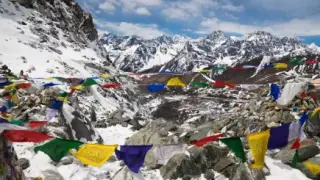
Day 2 of the Parikrama is the hardest and most spiritually charged day of the yatra. The trail starts at 4,860 m and climbs steeply for 4 to 5 hours to Dolma La (approximately 5,630 m), the highest point of the circuit. The pass is a rocky saddle decorated with thousands of prayer flags, kata scarves and personal offerings. 21 Tara, the female aspect of compassion in Tibetan Buddhism, is said to reside at the pass; Hindus regard the ascent as the symbolic death of ego and the descent as rebirth. Many pilgrims leave an item of old clothing at the pass as an act of release. From Dolma La the trail descends for approximately 3 hours to the small Gauri Kund (sacred lake) at around 5,250 m and continues down to Zuthulphuk (approximately 4,760 m), where a cave gompa marks the meditation site of the Tibetan saint Milarepa. Total walking: 22 km, 8 to 10 hours. Start before dawn. Overnight at Zuthulphuk camp.
Sleep at 5,630 mBreakfastLunchDinner
Tonight’s stay
Guesthouse
Day 3 of the Parikrama is the completion leg: approximately 10 km on a winding, gradual downhill trail from Zuthulphuk back to Darchen (4,620 m), taking about 3 hours. The trail passes the western face of Kailash and rejoins the valley road at Darchen, closing the circuit. Completing the Parikrama is called Parikrama Poorna; pilgrims of all four faiths believe it erases the sins of a lifetime. After a meal and rest at Darchen, the group boards 4WD vehicles for the return drive approximately 145 km back to Hilsa (3,770 m) via Taklakot, retracing the plateau road along the Humla-Tibet border. The drive takes approximately 3.5 to 4 hours. Overnight near Hilsa or Taklakot.
Sleep at 3,770 mBreakfastLunchDinner
Tonight’s stay
Guesthouse
In the morning, the group takes the helicopter from Hilsa back to Simikot (2,956 m), then connects by domestic airline to Nepalgunj and onward to Kathmandu (1,400 m), arriving in the valley by evening. The descent from 3,770 m to 1,400 m in a single day is a welcome relief after days above 4,500 m, and many yatris notice the air feeling noticeably thicker again. The rest of the day in Kathmandu is free: a final dinner together is optional. Note that helicopter and domestic flights are weather-dependent; delays of one day are possible at Hilsa and Simikot, so do not book onward international flights departing the same evening as this leg. Overnight in Kathmandu.
Sleep at 1,400 mBreakfastLunchDinner
Tonight’s stay
Hotel
After breakfast, a Swotah representative transfers you to Tribhuvan International Airport at least 3 hours before your international flight. If you have time before your flight, a final morning walk around Thamel or Boudhanath is a quiet way to close the yatra. Swotah is available to help arrange any post-trip extension in Nepal, including additional days in Kathmandu, a Pokhara visit or connecting treks. Safe travels.
Sleep at 1,400 mBreakfast
Tonight’s stay
-
What’s included
What's included
Every cost on the trail is broken out below — no hidden fees, no surprises at the trailhead.
Included
18 items
2 nights accommodation with breakfast, lunch & dinner (pure veg meals) in Kathmandu on a twin sharing basis in a 5-star hotel;
1-night accommodation with breakfast, lunch & dinner (pure veg meals) at the best available hotel in Nepalgunj on a twin sharing basis;
Accommodation in Tibet with breakfast, lunch & dinner (pure veg meals) at guesthouses on a sharing basis as mentioned above;
Mineral water throughout the Kailash Yatra;
Airport transfers;
One half-day Kathmandu sightseeing covering Pashupatinath & Budanilkantha by coach;
Kathmandu / Nepalgunj / Simikot / Nepalgunj / Kathmandu transfer by domestic flight;
Simikot / Hilsa / Simikot by helicopter;
In Tibet, the overland transfer is by luxury bus.
Supporting truck to carry luggage, food, equipment, etc.;
Yak & Yakmen for trekking equipment and food during Kailash Parikarma;
Highly qualified and experienced Sherpa staff throughout the trip;
Tibetan guide;
Air compressor bag (gammo Bag);
First aid kit;
Oxygen cylinder;
Tibet & Simikot permits;
Normal Chinese Visa fee.
Not included
11 items
International flights;
Nepalese visa fee.
Excess baggage charge(s) for the domestic flight;
Extra night accommodation in Kathmandu because of early arrival, late departure, to any reason other than the scheduled itinerary;
Nepal entry visa fee for NRIs;
Horse riding expenses during the Mount Kailash Circuit (Kora);
Lunch and evening meals in Kathmandu;
Travel and rescue insurance;
Entrance fees for sightseeing;
Personal expenses (phone calls, laundry, bar bills, battery recharge, extra porters, bottle or boiled water, shower, etc.);
Tips for guide(s), porter(s) and driver(s).
How Hard Is the Kailash Mansarovar Heli Tour?
Kailash Mansarovar Heli Tour is rated moderate to challenging because of the altitude, not because of technical difficulty. The Parikrama is a three-day walk of about 52 km at elevations between 4,620 m and 5,630 m (Dolma La). The helicopter route means you ascend quickly, making the acclimatisation day at Taklakot (3,900 m) essential. You need reasonable fitness and the ability to walk 15-18 km per day on rough trails, but you do not need trekking or mountaineering experience.
▲Moderate to challenging. Walking 52 km over 3 days at 4,620-5,630 m. Helicopter approach. No technical skill needed; altitude is the main challenge.
Overall Rating
4
Moderate
out of 10 · physical effort scale
Max altitude5,630 m
Trekking days8 days
Trip Details
Planning your Kailash Mansarovar Heli Tour
Everything you need to plan the trek, topic by topic. Tap any one to open it.
The Kailash Mansarovar Heli Tour is rated moderate to challenging on account of…
The Kailash Mansarovar Heli Tour is rated moderate to challenging on account of the altitude. The Parikrama circuit covers approximately 52 km over three days at elevations between 4,620 m at Darchen and 5,630 m at Dolma La. Day 2 of the Parikrama (Diraphuk to Zuthulphuk via Dolma La) is the hardest, with a 970 m climb to the pass followed by a long descent to roughly 4,760 m. Each day you walk 15 to 18 km on rocky, uneven trails at an elevation where the air contains about 55 per cent of the oxygen available at sea level.
No technical skill or mountaineering experience is needed. The route is a well-established pilgrimage trail used by thousands of devotees each season. Yaks and yak handlers are available to carry packs and, if necessary, assist pilgrims who need help. Physical fitness, a slow pace and willingness to acclimatise properly are the main requirements for completing the yatra safely.
May to September is the main season for the Kailash Mansarovar Heli Tour, with t…
May to September is the main season for the Kailash Mansarovar Heli Tour, with the peak window running from late May to mid-September. During these months the Dolma La pass is free of heavy snow, daytime temperatures at Darchen (4,620 m) reach 10 to 15 degrees C and the Parikrama trail is fully open. June, July and August bring occasional afternoon rain but the trails stay manageable, and the plateau grass is green around Mansarovar.
May and September offer the most stable weather and clearest skies for Kailash views; both months are recommended for first-time yatris. The Chinese authorities open the Tibet border for the season roughly from May, and Swotah advises on the exact permit window each year as regulations can shift. Travel before May risks snow on Dolma La, and after mid-October the pass can close and temperatures drop sharply to minus 10 degrees C or below at night.
Tibet is administered by China, so entering requires a Chinese Group Visa plus a…
Tibet is administered by China, so entering requires a Chinese Group Visa plus a separate Tibet Travel Permit (TTP) and, for western Tibet near Kailash, an Alien Travel Permit (ATP). Individual tourist visas for Tibet are not issued; all pilgrims must travel as part of an officially organised group. Swotah arranges the full permit package from Kathmandu, which typically takes 10 to 15 business days before departure.
You will need to submit your passport (with at least six months validity and a blank page for the group visa sticker), two passport-size photographs and a completed application form. Indian nationals require an additional Border Pass (No Objection Certificate) from the Indian Embassy in Kathmandu before Tibet permits can be processed. Swotah guides you through every step and covers the logistical coordination, but note that Tibet can restrict or delay permit issuance, particularly around politically sensitive dates, so booking well in advance is essential.
Accommodation across the Kailash Mansarovar Heli Tour ranges from comfortable ho…
Accommodation across the Kailash Mansarovar Heli Tour ranges from comfortable hotels in Kathmandu and Nepalgunj to basic but adequate guesthouses on the Tibetan Plateau. In Kathmandu you stay at a 3-star hotel with private bathroom, hot water and Wi-Fi. Nepalgunj offers a standard hotel overnight.
On the plateau, Taklakot (Purang) has simple Chinese-run guesthouses with twin-share rooms and basic facilities. At Mansarovar and Darchen, accommodation is in fixed tent camps or basic lodges; bedding is provided but the rooms are small and heating is minimal. During the Parikrama, nights at Diraphuk and Zuthulphuk are in basic trail guesthouses or camps at over 4,800 m. Expect shared bathrooms and limited electricity. Carry a warm sleeping bag liner for additional warmth on cold plateau nights.
Food on the Tibetan Plateau is simple but adequate. Tibetan staples include tsam…
Food on the Tibetan Plateau is simple but adequate. Tibetan staples include tsampa (roasted barley flour), thukpa (noodle soup), momos (dumplings) and butter tea, which provides warmth and calories at altitude. Most guesthouses serve rice, lentils and basic vegetable dishes. Full board is provided from Day 2 onward on the plateau, included in the tour price.
Water safety is critical at this altitude. Drink 3 to 4 litres daily to combat altitude dehydration. Use water purification tablets or a filter for tap and stream water; do not drink untreated water at Mansarovar or on the Parikrama trail. Bottled water is available at Taklakot and Darchen, though it can be expensive and supply is not guaranteed on the trail. Carry a 2-litre insulated bottle and purification drops as backup. Avoid alcohol at altitude as it accelerates dehydration.
The standard Kailash Mansarovar Heli Tour route from Kathmandu uses domestic fli…
The standard Kailash Mansarovar Heli Tour route from Kathmandu uses domestic flights to Nepalgunj, then an early morning flight to Simikot (2,956 m) in the Humla district, followed by a helicopter flight of approximately 2 minutes from Simikot across the border to Hilsa on the Nepal-Tibet frontier. From Hilsa, a 4WD jeep road leads to Taklakot (Purang, 3,900 m), and from there onward to Mansarovar and Darchen. The helicopter crossing eliminates several days of rugged overland driving through the Humla valleys.
On the return leg, you drive from Darchen back to Hilsa, then helicopter to Simikot and fly Simikot to Nepalgunj to Kathmandu by domestic airline. All helicopter and domestic flight bookings are handled by Swotah. Note that helicopter flights in Nepal are weather-dependent and can be delayed or rescheduled at short notice; build at least one buffer day into your international onward travel after the trip ends.
The Kailash Parikrama is the heart of the yatra. 52 km of circuit trail encircle…
The Kailash Parikrama is the heart of the yatra. 52 km of circuit trail encircle Mount Kailash, taking three days at a devotional pace. Day 1 of the Parikrama runs from Yama Dwar to Diraphuk (4,860 m), approximately 20 km, with Mount Kailash's north face directly ahead for much of the walk. Day 2 is the most demanding: an early start for the ascent to Dolma La (approximately 5,630 m), the highest point of the circuit and a site of great religious significance, where pilgrims leave offerings and old clothing as symbolic shedding of past sins. The descent reaches Zuthulphuk (approximately 4,760 m). Day 3 completes the circuit back to Darchen (approximately 10 km).
Lake Mansarovar (approximately 4,558 m) is the world's highest freshwater lake and holds deep significance for all four faiths linked to Kailash. Pilgrims perform ritual bathing (snan) in the lake's cold waters; even cupping a handful of water is considered a blessing. The lake is about 90 km in circumference. Most yatris spend a morning at the lakeside in prayer and ritual before driving to Darchen for the Parikrama start.
Altitude is the primary challenge of the Kailash Mansarovar Heli Tour. The helic…
Altitude is the primary challenge of the Kailash Mansarovar Heli Tour. The helicopter approach means you ascend from Kathmandu (1,400 m) to Taklakot (3,900 m) in a single day, and then to Mansarovar (4,558 m) and Darchen (4,620 m) within 48 hours. An acclimatisation rest day at Taklakot (Day 3 of the itinerary) is built in for this reason and must not be skipped. Symptoms of Acute Mountain Sickness (AMS) include headache, nausea, fatigue, dizziness and poor sleep; these are common and manageable with rest, hydration and, if prescribed, acetazolamide (Diamox).
Swotah trek leaders carry pulse oximeters and a basic first-aid kit. Any pilgrim showing signs of severe AMS, High-Altitude Pulmonary Oedema (HAPE) or High-Altitude Cerebral Oedema (HACE) will be evacuated to lower altitude immediately. Do not ascend if you have a persistent headache that does not respond to rest and ibuprofen. Consult your doctor at least four weeks before travel, discuss the use of Diamox, and disclose any heart, lung or blood-pressure conditions. People over 70 and those with pre-existing cardiovascular conditions should obtain medical clearance before booking.
The Kailash Mansarovar Heli Tour is open to all faiths and nationalities, though…
The Kailash Mansarovar Heli Tour is open to all faiths and nationalities, though the practicalities of high altitude mean that not everyone is a suitable candidate. You should be reasonably fit, able to walk 15 to 18 km per day on rough terrain at high altitude, and comfortable with basic accommodation and simple food for several days. There is no minimum age, but pilgrims under 12 or over 70 should discuss suitability with Swotah and a doctor before booking, as AMS risk increases at the extremes of age.
Indian nationals have traditionally formed the largest group of yatris, and Swotah has specific experience managing the Border Pass process for Indian pilgrims through the Indian Embassy in Kathmandu. The tour runs in groups of 10 to 15 people, which is required for the Chinese Group Visa. Solo travel to Tibet is not permitted; all participants travel together as a registered group, and Swotah coordinates the group paperwork. If you are travelling independently, Swotah can place you in an existing group departure.
Mount Kailash is sacred, and visiting with respect is not optional: it is the fo…
Mount Kailash is sacred, and visiting with respect is not optional: it is the foundation of the yatra. Do not remove rocks, earth or plant material from the Kailash circuit or Mansarovar shore. Carry all rubbish out of the Parikrama trail; the plateau ecosystem is fragile and slow to recover. Photography of local people, monks or religious ceremonies should only happen with explicit permission. Dress modestly, remove footwear before entering gompas (monasteries) and keep your voice low at religious sites.
The local economy around Kailash and Purang depends heavily on pilgrimage tourism. Buying local goods, hiring local yak handlers and staying at locally run guesthouses where possible supports the Tibetan communities on the plateau. Swotah works with registered Tibetan and Nepali operators, contributing to the local economy at both ends of the route. Tipping your guide, driver and yak handler at approximately 10 to 15 per cent of your tour cost is customary and appreciated.
What to pack
What to pack
The full kit list. Anything we loan (sleeping bag, down jacket) is called out — bring everything else.
✓Thick wool or synthetic trekking socks (at least 4 pairs)
Frequently Asked
Questions & Answers
Everything trekkers ask before booking. Don't see yours? Tap Enquire — we usually reply within a few hours.
Yes, our representative will be there to greet you at the airport. Upon arrival, you will be transferred to your hotel by a private car/jeep.
Yes, there is going to be a small orientation/briefing program before we embark on our adventure by the tour manager, leader/guide.
Kailash Manasarovar Tour is specifically designed for religious people who want to visit mount Kailash and Manasarovar Lake. However, this tour is not just for pilgrimage but for those enthusiasts who want to see Tibet and it’s beautiful views and panorama. Kailash is the ultimate pilgrimage for Hindus and Jains all over the world and is highly accolade by the religious people. This trip is also called spiritual by many religious gurus.
Kailash Manasarovar Tour can be done every season excluding monsoon season. March, April, September and October are the best time to do this tour although in winter it’s difficult to trek in snow and harsh cold.
We customize the trip according to your preference but if you need to change plan during the trip, consult the guide.
If you need extra day, you will need to inform the guide in advance and the guide will let the company know. Adding a day to the tour can result in many changes in other arrangements such as transportation, guide’s schedule, flight details, hotel bookings and all. So, we really do not recommend this to our clients unless there is an emergency case. But it is true that those changes could be made but it will cost extra. The best way to do it is to inform the agent company about it.
To confirm your booking, a deposit of 15% of total trip amount is required if you are booking at least a year in advance before trip departure date. If booking is made between 100-364 days before the trip departure, you'll need to pay 20% to confirm the trip. If payment is made between 99-60 days, 25% of the total trip amount will need to be paid and if booked between 59-30 days, 50% of the total trip amount needs to be paid and finally, if you are booking 29 days prior to trip departure, then 100% payment should be made. The payments can be easily made by the bank transfer. The due balance is payable on arrival in Kathmandu with cash (preferably USD/EURO) or card on POS/credit card machine. Please note that non refundable fee is 10% or $200 whichever is greater.
You cannot use the credit card during the trip. You have to withdraw the money before you start this tour. You can use the credit card only inside Kathmandu Valley.
We believe in operating small intimate group to provide personal attention and services to our guests. Small groups can enjoy the tour hassle free and enjoy the customized trip according to their need and suitability. We do not incorporate more than 14 People in a group, unless we get special requests from our clients.
Nepal is a safe country for anyone who wants to explore on their own although professional guidance is highly recommended by our team for the safety ans security.
We contact the hotel owner for the reservation of room as per your own personal desire. We also contact the guesthouse owner for reservation of the room before this trip on a particular day.
For nights in cities, we use standard/superior standard/deluxe rooms whereas, during the trek, we use lodges/tea houses/guesthouses/home stay for our clients, and whatever is available and accessible. We also arrange sleeping bags for our clients, on their request.
This region provides few western meals like Pasta, noodles, bread, soup etc. Dal Bhat (Rice, Lentils and Vegetables) are great way to gain energy for the strenuous trek.
There are plenty of water stations where you can easily get drinking water. We recommend that you bring water purifier tablets with you in case you need it for yourself. You have to buy it for yourself.
We use private transportation for sightseeing inside Kathmandu Valley. We fly to Nepalgunj and helicopter ride to Hilsa and Simikot. We use private transportation as per comfort of the client.We do pick up and drop from starting point till the end on private car/ jeep.
Trekking is a tiresome activity that requires a lot of physical movement so pack your active wears and trekking pants for at lower altitudes. Weather at high altitude is unpredictable so carry a light weight waterproof jacket along with thick down jacket, pant and thermal inner wear to escape severe cold. Needless to say that, good shoes are very important for trekking in rough and snowy terrain, so invest on good quality shoes or rent it from us in a minimum price. As you are trekking in remote village, try to wear modest clothes to quickly gel up with the local people without hesitation.
You can charge your electronics in the hotel where you stay and spend your nights by paying minimum amount. While trekking in higher lands, you need to pay for charging the electronics upon request to the guesthouse owner. The best idea always is to bring your own power bank with you. It's easier and cheaper.
Yes, you will get telephone service which is available in the hotel you will be staying at inside the Kathmandu Valley. While during the trip, you can make local and international call from the telephone that is provided by the guesthouse owner after paying him certain amount. In case of emergency, you can also ask your guide for his/her help.
You have to carry your personal bags with water bottle and medicines remaining bags will be carried by porters to make you easy to walk. The weight limit for porters is 15 KG.
Usually it takes about 4-5 hrs of walk each day during this trip. But it depends upon the walking speed of the client during the trip. So it is really relative.
Yes, Nepal can boast as one of the safest country in South Asia for women. You will find people very friendly and respectful towards foreigners especially towards women. As this tour is not so hard to finish, it is mostly done. You won’t be having any difficulty while doing this tour.
We make sure to take security measures during the trip to make your trip delightful. We hire experienced and license holding guides to safeguard your life in mountains. We suggest you to follow the guide’s instruction carefully and take responsibility for personal belongings. Always keep your valued belongings near you and lock the door from inside during the night.
Before coming to Nepal, make sure you are covered for diphtheria & TB, hepatitis A, hepatitis B, malaria, typhoid, polio and tetanus. Make sure you are in best shape to complete the tour without any complication.
Before coming to Nepal, make sure that you are covered by insurance policy for the altitude of 5500 meters. In the case of any emergency like altitude sickness, dehydration or any medical conditions, ask your tour leader/guide to contact us as soon as possible so that we can manage/arrange helicopter for the rescue. Then you will be transferred to hospital for the treatment.
All our guides are trekking experts holding license from Nepal Tourism Board, Nepal Government. They are the most valuable assets of the company. Guides know the trip route like the back of their hand and use their expertise in ensuring your safety in the mountains.
Why Travel with Swotah
Why Book the Kailash Mansarovar Heli Tour with Swotah
Most Nepal operators look the same from the outside. Here's what actually makes the difference.
Born in Nepal
100% locally owned since 2016. Trek profits stay with the mountain families and village schools along your route.
Guaranteed Departures
Every date on our calendar runs — no minimum group size. You never pay to be cancelled.
Certified Guides
Government-licensed, WFR-certified, English-speaking. Most were born within two valleys of the trail.
Small Groups
Small groups, never more than 8 trekkers. You get a real experience, not a convoy.
Gear Included
Sleeping bag and down jacket loaned at no extra charge — both rated to –20°C.
Flexible Payment
Deposit from 10% to confirm, balance before departure or in cash on arrival. Reschedule up to 30 days prior.
24/7 Support
Kathmandu office and dedicated WhatsApp emergency line. We answer at 2am if needed.
Hall of Fame
TripAdvisor Travelers' Choice 2023, 2024 and 2025. Hundreds of verified five-star reviews.
Get a free personalised travel brief for the Kailash Mansarovar Heli Tour.
Tell us your travel dates and group size. Our team in Kathmandu will put together a tailored itinerary, honest costs, and practical tips — completely free, no commitment.