


How Many People Die on Mount Everest Each Year? Death Toll Explained
Mount Everest: The Deadly Reality
The world's tallest peak, Mount Everest (8848 m), attracts thousands of adventurers each year who try to reach its summit. While some are successful in their attempts, a growing number of them don't make it back down alive.
It's impossible to ignore the alarming death toll that has been associated with the mountain over the years. Hence, many people want to know: how many people die on Everest every year?
In this blog article, we'll look at the gloomy response to that query and examine the factors that led to these tragedies.
An overview of how many people have died on Everest
The Himalayan Database, the authoritative record of Himalayan climbing kept since the work of archivist Elizabeth Hawley, counts more than 340 deaths on Everest between 1921 and the 2026 season. The deadliest single year was 2023, with 18 deaths. The season-by-season records behind all of these figures are maintained in the Himalayan Database, the archive founded on Elizabeth Hawley's expedition records.
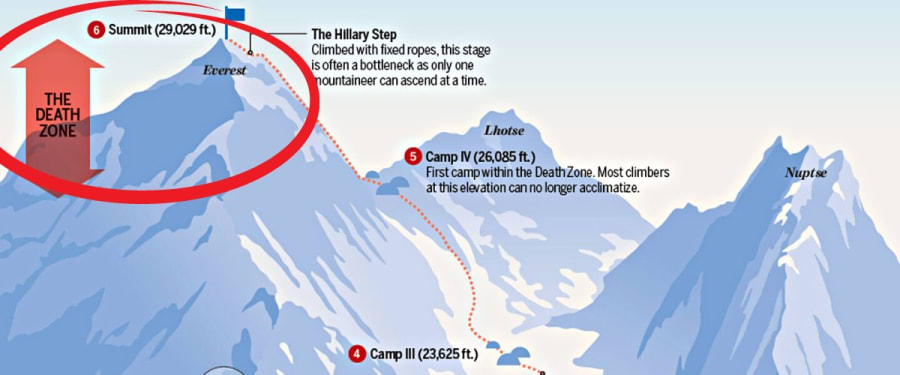
Photo: Everest Death Zone
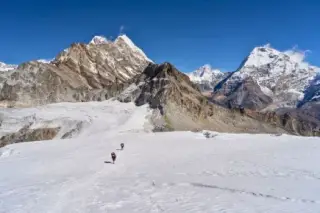
Most of the deaths on Everest have occurred in the "death zone," which is above 8,000 meters (26,247 feet) in elevation. At this altitude, the air is thin, and oxygen levels are dangerously low, making it extremely difficult for climbers to breathe and remain conscious. The extreme weather conditions and treacherous terrain can also make it difficult to stay safe.
The most common cause of death on Everest is from avalanches, followed by falls and hypothermia. However, heart attacks, altitude sickness, frostbite, and exposure have also been known to take their toll on climbers who push themselves too hard or venture out unprepared.
In recent years, overcrowding on the mountain has become a concern, as there have been reports of climbers queuing up for hours in order to summit. This has resulted in many climbers becoming too exhausted to reach the peak before succumbing to altitude sickness.
Given the number of deaths on Everest, it's easy to see why summiting the world's highest mountain has come with a significant cost. For those who attempt the feat, taking appropriate safety measures is essential in order to ensure a safe return home.
Note: This table is based on Wikipedia.
|
Years |
Total no. of deaths |
Cause of death |
|
1920-1930 |
11 |
Avalanche - 7 Pneumonia, brain hemorrhage, injury - 3 Unknown -1 |
|
1930-1940 |
1 |
Possibly exhaustion and starvation |
|
1940-1950 |
0 |
N/A |
|
1950-1960 |
1 |
Crushed by ice block |
|
1960-1970 |
6 |
Mountain sickness, crushed by ice, fall into glacier crack, fall from height - 4 Unknown - 2 |
|
1970-1980 |
28 |
Avalanche - 15 Crushed under serac - 2 exhaustion/fall - 3 exposure/exhaustion- 2 heart attack, drown - 2 Fall into crevasse - 3 Disappearance - 1 |
|
1980-1990 |
59 |
Fall- 19 Crushed under serac - 3 Avalanche - 17 Disappearance - 9 Drown - 1 Hemorrhage, thrombosis - 2 Exposure - 5 Heart attack - 2 Altitude sickness - 1 |
|
1990-2000 |
60 |
Avalanche - 8 Disappearance - 6 Exposure/exhaustion - 16 Fall - 18 Heart attack - 2 Altitude sickness - 2 Cerebral Oedema - 1 Coma - 1 Unknown - 2 Others - 4 |
|
2000-2010 |
49 |
Unknown - 8 Hypothermia - 3 Altitude sickness, oxygen problems - 7 Heart attack - 2 Avalanche -4 Exhaustion/exposure - 14 Fall - 8 Cerebral Oedema - 1 Snowboarding Accident - 1 Disappearance - 1 |
|
2010-2020 |
89 |
Avalanche - 16 Nepal earthquake - 16 Injuries from earthquake - 1 Altitude sickness - 20 Exhaustion/exposure - 10 Heart attack - 7 Cerebral apoplexy - 1 Stroke - 5 Fall - 9 Dispapperance - 1 Unknown - 1 Cerebral oedema - 1 Hypothermia - 1 |
|
2020 - Till date |
23 |
Exhaustion - 3 Fall - 4 Sickness - 6 Hace- 2 Serac Collapse- 3 Disappeared- 3 other-2 |
During the 2023 season, 17 climbers tragically lost their lives ascending to and from the summit.
| Year | Deaths | What happened |
|---|---|---|
| 1996 | 15 | The May storm chronicled in Into Thin Air |
| 2014 | 16 | Khumbu Icefall avalanche killed 16 Nepali workers |
| 2015 | 18+ | Earthquake-triggered avalanche struck Base Camp |
| 2019 | 11 | Record crowds, three-day weather window |
| 2023 | 18 | Deadliest year on record; 478 permits issued |
| 2024 | 8 | Calmer season; tracking and waste rules introduced |
| 2025 | 5 | Royalty rise to USD 15,000 announced |
| 2026 | 5 | Record 492 permits and 1,000+ summits |
How many people have conquered Mt. Everest?
The first two people who successfully climbed Mt. Everest were Tenzing Norgay Sherpa and Sir Edmund Hilary on May 29, 1953. After their expedition, a number of people have reached the summit. The first woman to conquer the peak was Junko Tabei from Japan on May 16 1975.
Through 2024 the Himalayan Database recorded more than 12,000 summits by over 6,500 individual climbers, and the record spring of 2026 added more than 1,000 summits in a single season. In records, there has been a total of 11,346 successful summits by these individuals.
For season-by-season context: 2023 saw roughly 600 summits against a record 478 permits, and 2026 set the all-time mark with 492 permits and over 1,000 summits. This figure encompassed roughly 350 Sherpas, who provided assistance to around 250 clients.
The highest number of summits recorded per individual is Kami Rita Sherpa who has visited the peak for a record number of 26 times. Additionally, most ascents by a female is 10 by Lhakpa sherpa. Interestingly, ascent without the use of an oxygen tank is an unbelievable feat achieved by Ang Rita Sherpa. He has a record of doing so for 10 times.
The record for the fastest conquest of Everst was set by Lhakpa Gelu Sherpa in 10 hrs 56 mins and 45 secs.Additionally, the oldest person to reach the peak is Yūichirō Miura.
The Dangers of Mount Everest: Why So Many People Die Trying to Conquer It?
The world's tallest mountain, Mt. Everest, stands at a towering 8,848 meters (29,029 feet) high, making it one of the most dangerous mountains to climb in the world. Every year, hundreds of climbers attempt to summit the peak and unfortunately, many do not make it. In 2019, the year of the famous summit-ridge traffic jam, 11 people died. The years since tell the recent story: 18 deaths in 2023, 8 in 2024, 5 in 2025, and 5 in the record-crowded spring of 2026.

So why do so many people die on Everest? There are a variety of factors that contribute to the danger of climbing the peak. First and foremost, the climate is incredibly harsh and unforgiving. Temperatures drop below -20 degrees Celsius (-4 degrees Fahrenheit) even during the day, and there is very little oxygen available as you ascend. The lack of oxygen can cause altitude sickness, and climbers often experience symptoms such as dizziness, nausea, and difficulty breathing. Furthermore, icy winds and powerful snowstorms can strike quickly and without warning, making navigation difficult and dangerous.
Climbers must also contend with a multitude of other risks. Accidents involving crevasses, avalanches, and falling rocks can cause serious injury or death. The psychological strain of climbing Everest is also immense as many climbers suffer from fatigue, anxiety, and even depression while on the mountain. Finally, there are inherent dangers associated with commercial expeditions. Large teams of climbers can become clogged up on narrow pathways, leading to bottlenecks at key points on the mountain. This increases the risk of overcrowding and exhaustion.
Overall, summiting Mt. Everest is a massive undertaking and requires climbers to be both physically and mentally prepared for the challenge ahead. Despite this, however, the mountain continues to take lives every year due to its formidable conditions and unpredictable weather.
What Happens to the Bodies of Those Who Die on Everest?
Sadly, those who pass away on Everest have limited alternatives for what to do with their remains. The dead are rarely attempted to be recovered because it is both extremely risky and expensive to do so. As a result, many dead bodies are still on the mountain, waiting to be rescued.
The majority of bodies are actually merely left behind, frequently in a location where climbers passing by on their ascent or descent of the peak might witness them. In an effort to give the dead the sense of a decent burial, it has become customary to cover them with rock or stones. However, because of the gritty weather and varying snow patterns, the remains are frequently still evident.

Photo: The corpse of Tsewang Paljor, also known as “Green Boots”.
Although some families have made an effort to locate their loved ones' remains, it is not always practicable. In some instances, it might be impossible or unsafe to find the remains. In other instances, the costs of recovery may be astronomically high.
There are organizations devoted to recovering and conserving the bones of individuals who lost their life on the mountain in an effort to uphold the honor of those who have died on Everest.
To make certain that the bodies are revered and treated with dignity, these organizations collaborate with expedition teams, sherpas, and other climbers. Additionally, they gather money to assist in covering the costs of removing the dead from the mountain's remote regions.
Who Are the Victims of Everest's Death Toll?
The victims of the death toll on Everest range from experienced mountaineers to novice adventurers, from locals to internationals, from all ages and backgrounds. Every year, climbers from all around the world attempt to summit the world’s highest mountain, but not everyone makes it to the top and back safely.
Over the years, professional climbers, expert guides, and novices alike have been among the fatalities. Experienced climbers often overestimate their abilities and fail to take the necessary precautions in order to stay safe. Others succumb to altitude sickness or fall while attempting difficult terrain. In addition to these, there are those who become exhausted due to high winds, hypothermia, and other external factors.
For native guides and sherpas, climbing Everest poses additional dangers. Despite their reputation for being skilled at negotiating the dangerous terrain, the locals are nevertheless susceptible to altitude sickness and poor weather. They've even been compelled to make impossibly difficult choices in some situations to save the lives of their customers.
Sadly, many young climbers who are anxious to reach the peak are among the Everest casualties. With the advancement of technology, inexperienced climbers can now buy specialized equipment and employ knowledgeable guides to assist them on the mountain.
This makes it possible for more people to undertake the climb, but it also increases the danger to which they are exposed.
All in all, the number of people who have died on Everest serves as a tragic reminder that the mountain should never be taken lightly. No matter how skilled you are as a climber, it's critical to keep in mind that the mountain can be deadly and unpredictable. Nevertheless, one may safely climb Everest with the right guidance and equipment.
The Real Cost of Summiting Everest
It takes great skill and sacrifice to conquer Mount Everest, both financially and in terms of safety.
Depending on the route taken and the services used, an expedition to the top of Everest in general can cost anywhere between $30,000 and $100,000 . The cost of the tools, food, oxygen tanks, and other materials required to make the ascent are not included in the cost.
The cost of summiting Everest isn't just measured in dollars, though. Every year, dozens of people risk their lives to reach the summit. Records begin with the British expeditions of the 1920s, and the deadliest years each have a distinct cause: 18 died in 2023 amid crowding and a fickle jet stream, 16 Nepali workers were killed by a single Khumbu Icefall avalanche in 2014, at least 18 died when the 2015 earthquake swept Base Camp, and the 1996 storm made famous by Into Thin Air claimed 15 across that year. Even today, climbing Everest remains an incredibly dangerous endeavor, with an estimated one death for every 10 successful summits.
Because of this, it's crucial to examine the actual cost of climbing Everest. It concerns not just money but also life. The potential reward of reaching the summit and conquering one of the most famous peaks in the world must be weighed against the climber's own safety.
Why Do People Climb Everest?
It’s a question many of us have asked ourselves. Why do people risk their lives to climb the world’s highest mountain? After all, it’s an extreme undertaking that takes months of preparation and even then, the odds are not in anyone’s favor. The simple answer is that climbing Everest is a challenge like no other. It requires physical, mental and emotional strength.
For some, it’s a chance to prove to themselves that they can accomplish something difficult and unique. For others, it’s an opportunity to conquer something that few have done before. For still others, it’s an adventure that combines exploration with an element of danger and thrill.
In addition to the personal rewards, climbing Everest provides a sense of accomplishment on a larger scale. Reaching the summit of the world’s highest mountain is an achievement that can be shared with family, friends, and future generations. It’s a story that will be told over and over again, inspiring others to push their boundaries and follow their dreams.
Climbing Everest is also about making history. Those who reach the summit of Everest become part of a very select group of individuals who can call themselves “Everesters”. Their names will forever be linked to the mountain and its challenges.
Finally, for many, Everest is a spiritual experience. There is something magical about standing on the roof of the world, surrounded by vast open skies and immense glaciers. It’s a chance to connect with nature and yourself in a way that isn’t possible anywhere else.
No matter what the reason, there is no doubt that climbing Everest is an endeavor that requires courage, dedication and commitment. Those who make the summit will never forget the experience and will always cherish it as one of the most important events of their lives.
What Is the “Death Zone” On Everest?
The “death zone” on Everest is an area above 8,000 meters (26,000 feet) that has extremely low levels of oxygen. This makes it difficult for climbers to perform even basic functions like thinking and speaking clearly, let alone climbing. The reduced oxygen levels also increase the risk of altitude sickness and hypothermia, which can lead to death in a very short amount of time.
Climbers who venture into this region must use supplemental oxygen if they are to have any chance of survival. Even then, the effects of altitude sickness can be extreme and deadly if not treated properly. To make matters worse, the death zone is one of the most remote and difficult regions of the mountain to reach, meaning that even if you are able to get help, it could take days or even weeks before you receive it.
While the death zone is a dangerous place, the fact that so many people choose to attempt to climb the world’s highest mountain despite the risks speaks volumes about their bravery and commitment. It’s a testament to the strength of the human spirit and our desire to explore and experience the unknown.
Is There Any Hope for Reducing the Number of Deaths on Everest?
Yes is the simplest response to this query. To lower the number of fatalities on Everest, numerous initiatives have been made in recent years. For instance, Nepal has raised the requirements for those wishing to attempt the mountain's peak.
Before trying Everest, each climber must have at least two years of experience and have conquered at least one peak higher than 6,500 meters. Before being permitted to ascend, climbers must also pass a medical examination.
The Sagarmatha Pollution Control Committee (SPCC), which is in charge of keeping an eye on and managing trash, human waste, and other pollutants on the mountain, was also established by the government of Nepal.
Finally, there are a number of non-profit organizations and charities that have been established to help provide education, training, and support for aspiring Everest climbers.These organizations provide resources and guidance to help ensure that climbers are properly prepared and equipped for their journey up the mountain.
By tightening regulations, increasing awareness about the dangers of summiting Everest and providing resources for climbers, it is possible that the death toll on Everest can be reduced in the future. While it may not be possible to completely eliminate the risks associated with summiting the world's highest peak, these efforts should help to ensure that future generations can continue to pursue this amazing adventure safely.
Nepal is also acting on the mountain itself. Since 2019 the Nepali Army has run an annual Mountain Cleanup Campaign, and the 2024 operation, 12 soldiers supported by 18 Sherpas, brought down 11 tonnes of garbage, four bodies, and one skeleton from Everest, Lhotse, and Nuptse. In late 2025 the government unveiled its first five-year Everest Cleaning Action Plan (2025-2029) and began testing heavy-lift drones that can carry 15 kg loads from the high camps to Base Camp in minutes, work that previously cost Sherpas hours in the Icefall.
Best season for Climbing Mount Everest
The optimum time to attempt to climb Mount Everest for the majority of climbers is between April and June. A multitude of variables, including the climate and the accessibility of support personnel and resources determines this. Spring is considered the ideal period for climbing in the Himalayas. This is due to the fact that the weather is typically more consistent during this time of year, with clear sky and calm winds. It is simpler to acclimate to the high altitude because the temperatures are also milder. The earliest expeditions usually start climbing the mountain in April, and May and June are seen to be the best months for reaching the summit.
Although April and May are typically regarded as the optimum months for climbing, there are a few factors to take into account when organizing your excursion.
It is crucial to remember that storms and strong winds can occur at any moment due to the unpredictability of the weather. Additionally, there may be delays because of congestion as these months are popular.
Another excellent time for climbers to travel is in the fall, specifically in September and October.
There are fewer people and generally nicer weather than in the spring during this time. However, avalanches and snow storms are more likely to occur during these months. In addition, it is harsher during this time of year, which can make it harder for climbers to acclimatize.
No matter when you decide to attempt the ascent of Mount Everest, it is crucial to make the necessary preparations and plans. As you ascend at a high altitude, it's crucial to be aware of any potential risks and to have adequate medical insurance in case anything goes wrong.
Is Mount Everest Safe to Climb?
Mount Everest is not a safe place to climb, and many have paid the ultimate price for attempting the summit.
Over 300 people have died on the mountain since 1922, when records began, and the majority of these fatalities occurred in the last decade.
Climbing Everest requires great physical and mental strength, and climbers must be prepared to face extreme weather conditions, avalanches, hypothermia, frostbite, exhaustion, altitude sickness, and more. Although precautions can be taken to ensure safety, climbing Everest is still a risky endeavor and should only be attempted by experienced mountaineers.
Conclusion
The fatalities on Everest serve as a heartbreaking reminder of the risks climbers undergo to reach the summit of the tallest mountain in the world. Although it can be difficult to estimate the actual number of fatalities each year, there is no denying that the number is rising.
The risks of climbing Everest can be fatal as more individuals seek to do so by underestimating the risks.
Related Reading
This article is part of our series on the human history of Everest: how many people die on Everest each year, why the bodies cannot be brought down, the story of Green Boots, Francys Arsentiev, the Sleeping Beauty of Everest, Rainbow Valley, and why Everest gets deadly traffic jams.