


The way to avoid altitude sickness on the Everest Base Camp trek is to climb slowly. Above 3,000 m, don't raise the height you sleep at by more than about 500 m a day, and take a rest day every three or four days, which the standard 14-day itinerary does at Namche Bazaar and Dingboche. Walk at a pace where you can talk, drink 3 to 4 litres a day, skip alcohol, and ask your doctor about acetazolamide (Diamox). If symptoms get worse, stop climbing. If they keep getting worse, go down.
- Sleep gain above 3,000 mNo more than about 500 m a day
- Rest daysEvery 3 to 4 days, at Namche and Dingboche
- Water3 to 4 litres a day
- Highest nightGorak Shep, 5,170 m
- DiamoxAsk your doctor
- If symptoms worsenStop climbing, then go down
People from all over the world have travelled to Nepal to climb Mount Everest. Since it is the tallest mountain in the world, many people visit its peak to either live out their mountaineering in the wilderness or just to enjoy life. Regardless of the cause, a lot of people have been visiting the area. Many individuals cannot climb such a massive peak, but they can walk at least as far as its base camp. As a result, thousands of people set out on the Everest Base Camp Trek every year. There are many obstacles for the trekkers to overcome as they deal with the cold weather and higher altitude.
With Mt. Everest, the highest mountain in the world, standing at 8,848.86 meters, the Everest region is the highest trekking region in Nepal, with most of the route lying between 2,800 and 5,500 meters. Dealing with high-altitude sickness is one of the greatest difficulties trekkers encounter when attempting to reach Everest Base Camp or any other high-altitude trek. Altitude sickness becomes common above about 2,500 meters, and almost everyone notices the thinner air by the time they reach Namche Bazaar at 3,440 meters.
The journey typically takes place in the two altitude regions, "high altitude" and "very high altitude," rising from a starting elevation of 2,860m at Lukla Airport to a high point of slightly over 5,500m at Kala Patthar.
The danger of altitude-related illnesses such as acute mountain sickness, high-altitude cerebral edema (HACE), and high-altitude pulmonary edema is present in certain high-altitude zones (HAPE). To protect both your safety and the safety of others, you must comprehend the dangers associated with different types of altitude sickness and how to recognize symptoms and respond to them.
What Is High Altitude Acclimatisation?
The longer it takes you to rise to a high altitude, the longer your body will become used to the decreased oxygen levels, known as acclimatization. It describes how the body adjusts to the adverse effects of high elevations, such as decreased oxygen levels and air pressure. If you took a helicopter from Kathmandu straight to 5,000 m and stayed there, you would very likely develop altitude sickness within hours, and it could become serious without descent or bottled oxygen.
This information is extremely valuable. Our guides, several of whom grew up in the Khumbu, use the same strategies on every high-altitude trek we run, and they work. Please remember, though, that anyone can get altitude sickness. Altitude sickness can affect anyone, including people who were born and raised in high-altitude areas.
Never be reluctant to seek out immediate medical attention if you become ill with such a disease. You can employ a variety of methods when trekking to Everest Base Camp. You can either request a medical helicopter rescue or hire a pony or porter to transport you to a lower altitude. Obtain adequate insurance that covers medical care and helicopter rescue up to at least 6,000 metres.
Without getting too scientific, a brief explanation of the physiological changes that occur in the body at high altitudes may help you comprehend the significance of the acclimatisation process and why it cannot be hurried or skipped.

What are the symptoms of Altitude Sickness?
Headache is the main symptom, usually with one or more of loss of appetite, nausea, unusual tiredness, dizziness and poor sleep. Breathlessness on exertion and a fast heartbeat are normal at altitude on their own. Since each person's body responds differently to unfamiliar situations, not everyone experiences altitude sickness.
Why does it even matter?
The Everest Base Camp Trek is a tremendously exhilarating and well-known trekking route in Nepal, but it is also very dangerous. The foliage begins to fade as treks ascend. They must ascend to the summit of Kalapathar, which is 5545 meters high. Every night, there is an average elevation difference of around 300 m. Trekkers depart from Kathmandu at 1,400 meters and fly straight to Lukla (2,860 m). They will need to acclimate their bodies to 3,440 m at Namche after Lukla, which will take roughly two days. As a result, there is a good probability that trekkers will get altitude sickness.
How to avoid altitude sickness on the Everest base camp trek?
1. Climb Slowly
Our bodies must acclimatize to the oxygen level over time. Trekkers can modify their bodies more easily by moving gently and climbing. The hasty walking can also be a main contributing aspect of altitude sickness.
2. Rest after a proper acclimatization
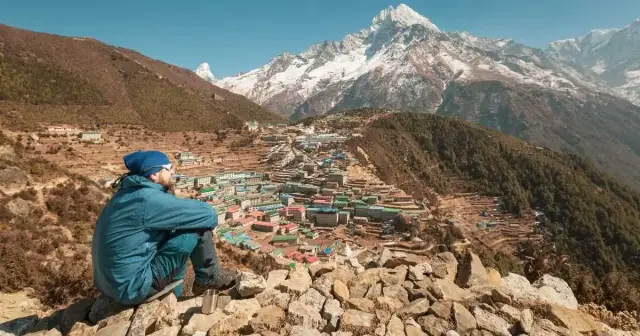
The Everest Base Camp route needs at least two acclimatization days. You should trek as high as possible during the acclimatization break and then return to a lower location for the night's sleep. The first acclimatization stage occurs at Namche Bazaar (3,440 m), from which trekkers ascend to Everest View Hotel (3880 m) and return to Namche for the night.
The main rule of achieving good acclimatization rest is to get higher and rest lower, therefore, don't be afraid to stroll on your rest day. The second acclimatization stop is Dingboche (4,410 m). Trekkers can hike up Nangkartshang Peak, 5,083 m, after resting here.
Most people spend half an hour or so at the top before descending to 4,410 meters to rest for the night. Acclimatization rest not only assists in preventing altitude sickness but also aids in the body's recovery of its worn-out muscles and adaptation to the altering oxygen level.
3. Don't consume tobacco, alcohol, or cigarettes
The air holds less usable oxygen the higher you go. Alcohol makes it worse in two ways: it dehydrates you, and it slows your breathing while you sleep, which is exactly when oxygen levels at altitude dip lowest. Smoking adds carbon monoxide to your blood, which takes up space the oxygen needs. Save the beer for Namche on the way down.

4. Drink enough warm water
Aim for 3 to 4 litres a day, sipped steadily, and warm drinks count. Water doesn't prevent altitude sickness on its own, but dehydration causes headaches and tiredness that look just like it, and the dry mountain air takes a lot of fluid out of you. Don't force down much more than that. Drinking huge amounts can dilute the salt in your blood, which is dangerous in its own right. Pale yellow urine is the sign you're getting it right.
5. Eat a lot and well
During high-altitude trekking, a lot of people experience appetite loss and end up eating very little. Your body needs the energy, so eat anyway. Soups, dal bhat and carbohydrates go down most easily, and keeping your strength up makes every day easier.
6. Be Prepared Mentally
Many people worry that they might become altitude-sick. Anxiety can make sleep worse and make normal breathlessness feel alarming, so go in knowing what's normal and what isn't. Instead of thinking negatively, take in the beautiful surroundings. Talk more to your guide or fellow trekkers, and always maintain a pleasant attitude.
Benefits of a 14-Day Trek to Everest Base Camp
Beyond acclimatization, a longer route to Everest Base Camp has advantages. More days mean more "buffer days" in case of delays throughout the course of the journey. In case of inclement weather, flights from Kathmandu to Lukla Airport are frequently delayed. A group could not safely complete the 12-day trek if one day is lost waiting for the planes to fly. A 14-day trip reaches base camp on Day 10, which leaves room to slow down if someone needs it.
There have been other instances where having extra days has allowed group members to reach Base Camp. It has happened that someone will become ill from AMS or contract a virus. While the rest of the company proceeded higher, they spent a rest day in the lodge with one of our guides. They made the trek to the higher lodges the following day after feeling better.
Recommended Acclimatisation Schedule for EBC
The most effective way to avoid altitude sickness on the Everest Base Camp Trek is following a structured acclimatisation itinerary. A standard 14-day EBC trek from Kathmandu is built around two key rest days:
- Namche Bazaar (3,440 m), Day 5: Rest and acclimatise. Take a day hike to the Hotel Everest View (3,880m) for a higher altitude exposure before descending to sleep.
- Dingboche (4,410 m), Day 8: Rest day. Short hike to Nangkartshang Peak (5,083 m) and return to Dingboche to sleep, the "climb high, sleep low" principle in action.
The golden rule: do not gain more than 500 metres of sleeping altitude per day above 3,000 metres.
Medications: Diamox (Acetazolamide)
Diamox (acetazolamide) is the most commonly prescribed medication to prevent and treat AMS. For prevention, the Wilderness Medical Society guideline dose is 125 mg twice a day, usually started the day before you climb, with higher doses used for treatment. It works by stimulating faster breathing, helping your body acclimatise to lower oxygen levels more rapidly. Common side effects include increased urination, tingling in the fingers and toes, and fizzy drinks tasting flat. People with a sulfa-drug allergy should discuss it carefully with their doctor first.
Diamox requires a prescription in most countries. Consult your GP or a travel medicine clinic at least 4–6 weeks before departure. It is not a substitute for a proper acclimatisation schedule, it is a supplement to good planning.
Altitude Sickness Warning Signs and What to Do
The rule on the trail is simple. You can walk with mild symptoms, but you never go higher with them, and you go down if they get worse.
| What you notice | What it may be | What to do |
|---|---|---|
| Breathless on climbs, broken sleep, fast heartbeat | Normal acclimatisation | Carry on at a gentle pace |
| Headache with nausea, poor appetite, tiredness or dizziness | Mild acute mountain sickness (AMS) | Stop climbing, rest at the same height, tell your guide |
| Headache that painkillers don't touch, vomiting, symptoms worse the next morning | Worsening AMS | Descend 300 to 1,000 m |
| Stumbling, confusion, unusual drowsiness | HACE (fluid on the brain) | Descend immediately, oxygen, call for rescue |
| Breathless at rest, wet cough, blue lips | HAPE (fluid in the lungs) | Descend immediately, oxygen, call for rescue |
Medical note. This guide is general information based on the Wilderness Medical Society's clinical practice guidelines for acute altitude illness (2024 update). It isn't a substitute for advice from your own doctor, especially if you have a heart or lung condition or take regular medication.
Recognising Serious Altitude Illness: HACE and HAPE
Beyond standard AMS, two life-threatening conditions can develop at altitude:
- HACE (High Altitude Cerebral Edema): Fluid on the brain. Signs include severe headache that does not respond to paracetamol, loss of coordination (ataxia, walk a straight line test), confusion, and altered consciousness. Requires immediate descent.
- HAPE (High Altitude Pulmonary Edema): Fluid in the lungs. Signs include persistent dry cough that progresses to a productive cough, extreme breathlessness even at rest, and blue-tinged lips. Also requires immediate descent and is life-threatening.
The Himalayan Rescue Association (HRA) operates aid posts at Pheriche (EBC route) and Manang (Annapurna Circuit) staffed by volunteer physicians during peak seasons. If in doubt, descend first and seek medical advice.
Altitude Sickness on the Everest Base Camp Trek: FAQs
At what altitude does altitude sickness start on the EBC trek?
Usually above about 2,500 m, so it can start as early as Namche Bazaar (3,440 m). Most cases appear between Dingboche (4,410 m) and Gorak Shep (5,170 m), where the gain in sleeping height bites hardest.
Who gets altitude sickness?
Anyone, regardless of fitness, age or gender. Being fit doesn't protect you, and fit people sometimes climb too fast for that reason. A history of altitude sickness on earlier trips is the best predictor that you'll get it again.
Should I take Diamox for Everest Base Camp?
Many trekkers do, as a preventive, after talking to their doctor. It speeds up acclimatisation and works alongside a slow itinerary. Get a prescription at home and try a dose before you travel to check for side effects.
Does drinking a lot of water prevent altitude sickness?
No. Staying hydrated helps because dehydration mimics altitude symptoms, but extra water won't stop AMS, and drinking far beyond thirst can be harmful. Three to four litres a day is enough for most people.
Is the 14-day itinerary enough to acclimatise for Everest Base Camp?
For most people, yes. It has rest days at Namche and Dingboche and keeps the daily gain in sleeping height close to guideline limits. If you've had altitude sickness before, add a third rest day at Dingboche or Lobuche.
Conclusion
Altitude sickness is the main reason people turn back before Everest Base Camp, and nearly all of it comes from climbing too fast. Keep both rest days, walk slowly, tell your guide the truth about how you feel each evening, and go down when the warning signs say so. For what each height feels like, see Everest Base Camp elevation and oxygen levels.