


Easiest 8,000 m Peaks in Nepal (2026): Ranked by Difficulty and Death Rate
Cho Oyu (8,188 m) and Manaslu (8,163 m) are the easiest 8,000 m peaks in Nepal, with about 1.3 and 2.4 deaths per 100 summits on Himalayan Database figures. Cho Oyu is climbed from Tibet, and China kept it closed in autumn 2026, so Manaslu in autumn is the usual first eight-thousander. Lhotse and Everest come next. Makalu, Kanchenjunga, Dhaulagiri and Annapurna are far harder and deadlier. None of them is easy, and Nepal's 2025 rules ban solo climbs on all of them.
- EasiestCho Oyu, then Manaslu
- Usual first 8,000erManaslu in autumn
- DeadliestAnnapurna I, then Dhaulagiri
- Royalty (most 8,000ers)USD 3,000 spring, 1,500 autumn
- Everest royaltyUSD 15,000 spring, 7,500 autumn
- Solo climbingBanned on 8,000 m peaks since 2025
- Guide ratioOne guide for every two climbers
When you talk about Nepal, the main thing that comes to mind is the Himalayas. It's fun to know that the country offers its natural beauty to travelers and a platform for climbers. But the important thing that any climber has to know is the mapping of the difficulty level of the mountains they climb.
For prior information, no mountains over 8000 meters are so easy to summit. But according to the difficulty level, some of the peaks are easier than others. We have ranked Nepal's eight-thousanders from the least to the most demanding, weighing how technical the normal route is against how many climbers have died for every 100 who reached the top, using the Himalayan Database figures to February 2025.
Nepal's 8,000 m Peaks Compared
Deaths per 100 summits are cumulative Himalayan Database figures to 7 February 2025, as published by Guinness World Records, except Everest, where the rate is the end-2025 figure used in our death-toll guide. Royalties are per foreign climber in US dollars, spring and autumn, under the schedule in force since 1 September 2025 (see our peak permit fees). Manaslu is the odd one out, with autumn the dearer season.
| Peak | Height | World rank | Normal route from | Deaths per 100 summits | Rate | Deaths / summits | Royalty USD (spring / autumn) |
|---|---|---|---|---|---|---|---|
| Cho Oyu | 8,188 m | 6th | Tibet (northwest ridge) | 1.3 | 52 / 4,081 | 3,000 / 1,500 (Nepal side) | |
| Lhotse | 8,516 m | 4th | Nepal (Lhotse Face) | 1.7 | 25 / 1,473 | 3,000 / 1,500 | |
| Manaslu | 8,163 m | 8th | Nepal (northeast face) | 2.4 | 90 / 3,750 | 1,500 / 3,000 | |
| Everest | 8,849 m | 1st | Nepal (South Col) | 2.5 | 339 deaths, 1922 to 2025 | 15,000 / 7,500 | |
| Makalu | 8,485 m | 5th | Nepal (northwest ridge) | 5.7 | 51 / 891 | 3,000 / 1,500 | |
| Kanchenjunga | 8,586 m | 3rd | Nepal (southwest face) | 7.8 | 54 / 690 | 3,000 / 1,500 | |
| Dhaulagiri | 8,167 m | 7th | Nepal (northeast ridge) | 13.0 | 92 / 707 | 3,000 / 1,500 | |
| Annapurna I | 8,091 m | 10th | Nepal (north face) | 13.4 | 75 / 559 | 3,000 / 1,500 |
A low rate does not make a mountain safe. Everest and Manaslu look gentle in the table because thousands of people summit them, and both still kill climbers most seasons.
1. Cho Oyu (8,188 m)
Cho Oyu, the sixth tallest peak, stands at 8,188 meters (26,864 feet) above sea level. It is located on the border between Nepal and Tibet. It is considered one of the easiest 8000-meter peaks to climb due to its relatively low difficulty and relatively easy access from the base camp. That base camp is in Tibet. The normal route climbs the northwest ridge from the Chinese side, and the Nepal face above the Gokyo valley is steep and technical, with no regular commercial route despite several attempts by Nepali companies.
That makes access the real catch. China kept Cho Oyu closed to foreign teams for autumn 2026, as it has for most recent seasons, so check whether permits are being issued before you plan around it. When it is open, about 1.3 climbers have died for every 100 summits (Himalayan Database, February 2025), the lowest of the eight-thousanders on this list.
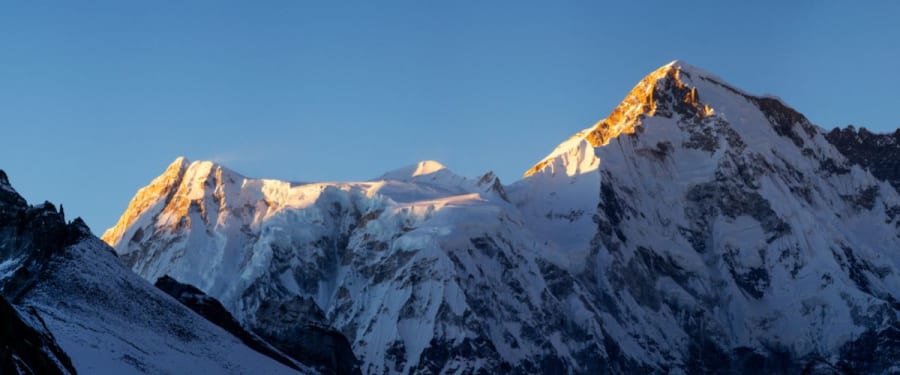
Cho Oyu was first climbed in 1954 by Joseph Jöchler and Herbert Tichy, and Pasang Dawa Lama on 19 October, and it has since become a famous mountain for professional climbers and high-altitude mountaineers.
The mountain is known for its long, gradual slopes and relatively stable weather, although it can still present significant challenges due to its high altitude and harsh environmental conditions. The spring and fall have stable climates, and the snow conditions are more favorable. So it's the best time to climb the mountain.
2. Manaslu (8,163 m)
Mount Manaslu, the eighth peak, has an elevation of 8,163 meters (26,781 feet) above sea level. It is located in the Mansiri Himalayas in the west-central part of Nepal and is part of the Nepalese Himalayas. The mountain was first climbed on 9 May 1956 by a Japanese expedition team of Toshio Imanishi and Gyalzen Norbu and is now the busiest eight-thousander in autumn. Trekkers know the same valleys from the Manaslu Circuit.
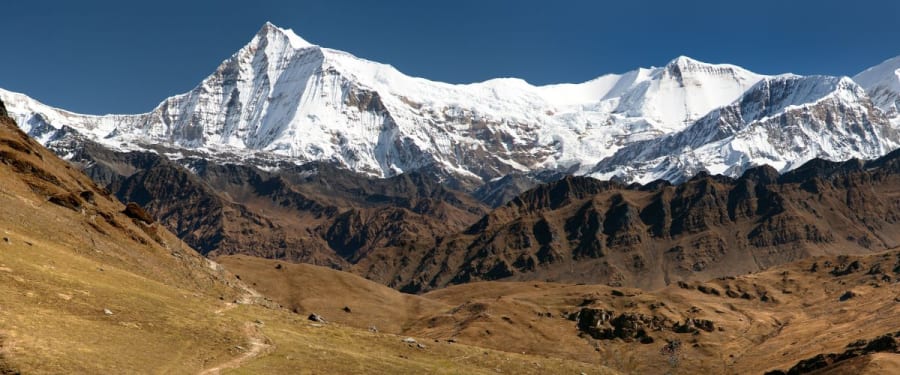
The difficulty level of climbing this peak is challenging due to the harsh weather conditions on the mountain. But comparatively, it's not as challenging as climbing Annapurna. The Himalayan Database counts about 2.4 deaths per 100 summits. Avalanches are the main danger, and the worst, in September 2012, killed 11 climbers near Camp 3.
There is one catch on summit day. For decades most climbers stopped at a foresummit, where the fixed ropes ended. In October 2021 the Himalayan Database ruled that from 2022 onward only the true summit, a short and exposed ridge beyond it, counts as a Manaslu ascent. Ask any operator whether they fix rope all the way to the top.
3. Lhotse (8,516 m)
Lhotse is the fourth-highest mountain in the world at 8,516 meters (27,940 feet), is located in the Khumbu region of Nepal, and is part of the Himalayan mountain range. The mountain is known for its steep faces and technical climbing routes, and it is often climbed as part of an expedition to Mount Everest.
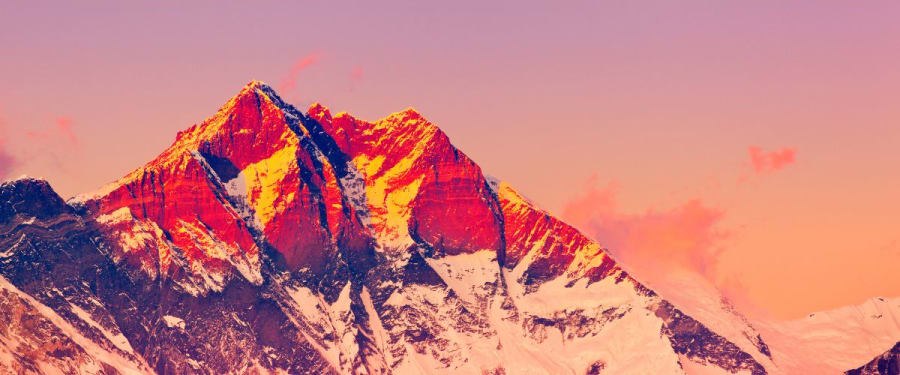
The first ascent of Lhotse was made on 18 May 1956 by the Swiss climbers Fritz Luchsinger and Ernst Reiss.
Climbing Lhotse is challenging due to the high altitude, extreme weather conditions, and technical difficulty of the routes. The mountain requires a high level of physical fitness and experience in high-altitude mountaineering.
Several routes have ascended Lhotse. The normal route shares Everest's line through the Khumbu Icefall and up the Lhotse Face, then turns off below the South Col into the Reiss couloir, a narrow gully that leads to the summit. Sharing ropes and camps with the Everest teams helps keep its death rate low, about 1.7 per 100 summits on Himalayan Database figures.
The South Face is the opposite case. It is one of the biggest walls in the Himalaya, more than 3,000 m from foot to summit, and it took until 1990 for a Soviet team to climb it. Commercial teams never go near it.
Also Read: Easiest 7000m Peaks Nepal
4. Mount Everest (8,848.86 m)
Everybody knows the highest peak in the world, Mount Everest is 8,848.86 meters (29,031.7 feet), and it sits in the Himalayas on the border between Nepal and China.
Climbing Mount Everest is not an easy job - it requires a high level of physical fitness, endurance, and mental strength. It is only suitable for experienced climbers who are well-trained and well-equipped.
It sits this high on the list because the South Col route is not very technical, and the fixed ropes, Sherpa support and bottled oxygen are the most developed anywhere. The death rate is about 2.5 per 100 summits. Height is the problem. The summit is higher than any other, so summit day keeps you longer in the thinnest air, the spring permit costs USD 15,000, and queues on summit day add their own risk, as our piece on overcrowding on Everest explains. In total 339 people died on the mountain between 1922 and 2025, a figure covered in our Everest death toll guide.
5. Makalu (8,485 m)
Makalu, the world's fifth-highest mountain, sits at an altitude of 8,485 meters (27,838 feet) above sea level. It is located in the Mahalangur Himalayas, on the border between Nepal and China, about 19 km (12 miles) southeast of Mount Everest. Makalu is a technical climb considered one of the challenging 8,000-meter peaks. The normal route up the northwest ridge crosses steep rock and ice above the Makalu La, and fewer teams share the rope fixing than on Everest or Manaslu. The Himalayan Database puts the death rate at about 5.7 per 100 summits.
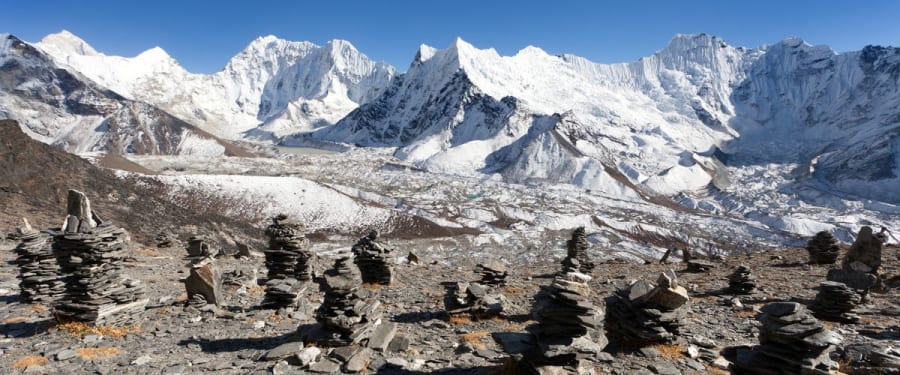
It was first climbed on 15 May 1955 by a French team, Lionel Terray and Jean Couzy, and has since been climbed by many other mountaineers worldwide. The surrounding Makalu-Barun National Park is, in turn, named after the mountain, and protects one of the wildest valleys in Nepal.
6. Kanchenjunga (8,586 m)
Kanchenjunga, the third-highest mountain, stands at an altitude of 8,586 meters (28,169 feet). It is located in the eastern Himalayas, on the border between Nepal and India.
Climbing Kanchenjunga is a challenging undertaking that requires a high level of physical fitness, climbing skills, and experience. The mountain has several routes to the summit, but almost all modern expeditions climb the southwest (Yalung) side from Nepal. Every route involves sustained, steep, and glaciated terrain above 8,000 metres.
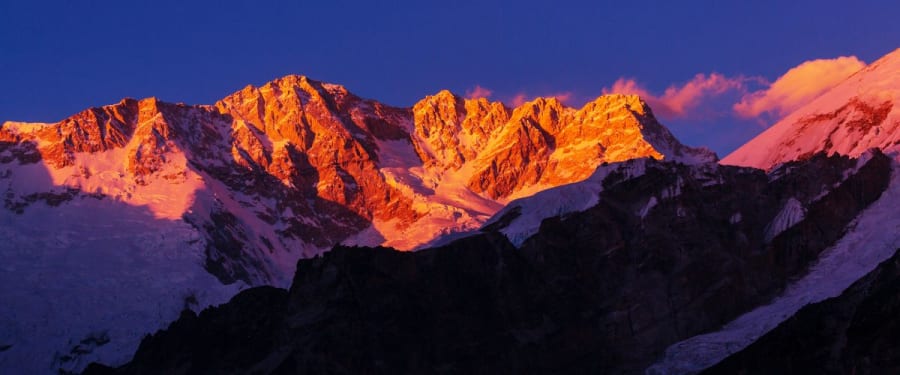
About 8 climbers have died for every 100 who reached the top (54 deaths against about 690 summits, Himalayan Database, February 2025). Only Annapurna and Dhaulagiri are deadlier among Nepal's eight-thousanders, which is why it sits this far down the list. The long walk-in from Taplejung and small number of teams each season add to it.
7. Dhaulagiri (8,167 m)
Dhaulagiri, 8,167 meters (26,795 feet), is the seventh-highest peak on the planet. It is located in the Dhaulagiri Himalaya range in Nepal.
Dhaulagiri is known for its dynamic weather, which can be harsh - so it's better to know that it's not everyone's cup of tea. It will be wise if you have prior mountaineering experience.
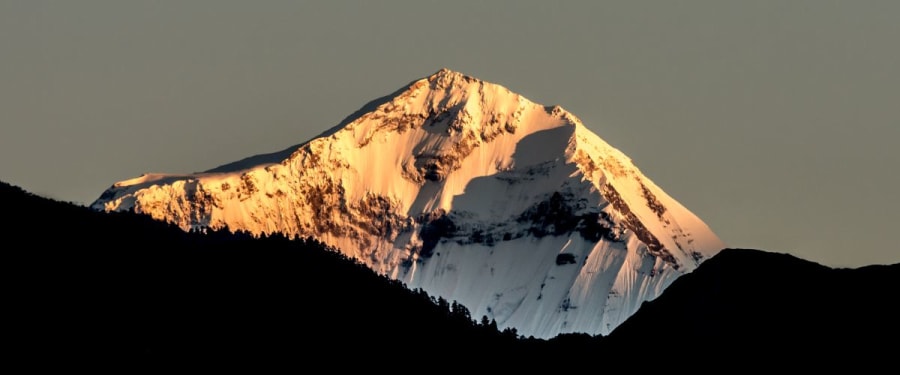
There are several routes to the summit of Dhaulagiri, including the Southwest Ridge, the Northeast Ridge, and the East Face. The Northeast Ridge is the standard route today, a long, exposed snow climb first used by the 1960 Swiss-Austrian first-ascent team, who reached the top on 13 May 1960.
The Southwest Ridge and East Face are far more difficult alternatives that are rarely attempted.
Even the normal route is dangerous. The Himalayan Database counts 92 deaths against 707 summits to February 2025, about 13 per 100, close to Annapurna's rate. Avalanche-prone slopes and the fast-changing weather described above account for most of the accidents.
Where Is Annapurna on This List?
Deliberately absent. Annapurna I (8,091 m) is the most dangerous 8,000-metre peak ever measured, with a historical fatality ratio of roughly 13 percent of summits (75 deaths against 559 summits, Himalayan Database, February 2025), driven by enormous avalanche exposure on every route. No ranking of "easiest" peaks can honestly include it, although improved forecasting and fixed-rope seasons have made recent years far safer than the historical average. Read more in our Annapurna vs K2 danger comparison.
How to Choose Your First 8,000er
Climbers usually step up through Nepal's trekking peaks and an easier 7,000-metre summit before attempting an 8,000er. Manaslu in autumn is the classic first choice, and Cho Oyu was too in the seasons China issued permits, thanks to moderate technical demands and well-established commercial support. Expect to budget roughly USD 15,000 to 30,000 for a guided Manaslu expedition, depending on the operator and how much oxygen and Sherpa support you buy, and remember that "easiest" is relative: every mountain on this list reaches into the death zone, where weather, not difficulty ratings, decides outcomes. See our guides to the easiest 7,000 m peaks and the best climbing seasons to plan the progression, or jump straight to our Manaslu Expedition and Everest Expedition pages.
The 2025 Rules for Climbing 8,000 m Peaks in Nepal
The Sixth Amendment to Nepal's mountaineering regulations, gazetted in February 2025, banned solo climbs on Everest and every other 8,000 m peak. Teams now need one licensed guide for every two climbers. A 2025 tourism bill also proposed that Everest climbers first summit a 7,000 m peak in Nepal, but that rule had not been passed by October 2026. Royalties rose on 1 September 2025, to USD 3,000 in spring for most eight-thousanders and USD 15,000 for Everest. Every permit goes through a registered agency, and you need insurance that covers helicopter rescue at your peak's altitude.
Frequently Asked Questions
What is the easiest 8,000 m peak in Nepal?
Cho Oyu, on both technical difficulty and death rate, but its normal route starts in Tibet and China kept it closed in autumn 2026. Of the peaks climbed from Nepal, Manaslu is the usual first choice.
Which 8,000 m peak is the most dangerous?
Annapurna I, with about 13 deaths per 100 summits. Dhaulagiri is close behind at about 13, and Kanchenjunga is next at about 8.
How much does it cost to climb an 8,000 m peak?
A guided Manaslu expedition usually costs USD 15,000 to 30,000. Everest costs far more, mainly because its spring royalty alone is USD 15,000. The royalty on most other eight-thousanders is USD 3,000 in spring.
Can I climb an 8,000 m peak solo in Nepal?
No. Since February 2025 solo climbs are banned on all 8,000 m peaks in Nepal, and teams need one guide for every two climbers.
What should I climb before my first 8,000 m peak?
Most climbers work up through trekking peaks such as Island Peak or Mera, then a 7,000 m summit like Himlung Himal, before an eight-thousander.