
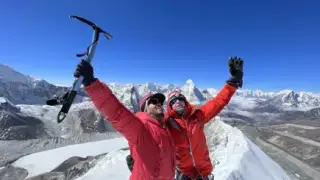
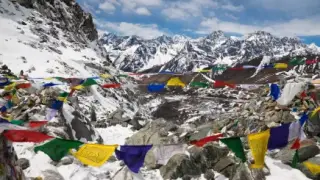

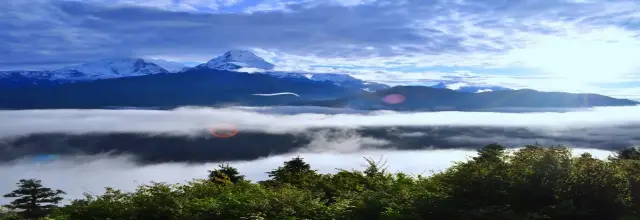

The easiest mountains to climb in Nepal are the trekking peaks run by the Nepal Mountaineering Association. Yala Peak in Langtang (about 5,500 m) and Pokalde in the Everest region (5,806 m) are steep walks with a short rocky or snowy finish. Mera Peak (6,476 m) is the easiest 6,000 m summit, a long glacier climb that ends on a short roped slope, while Island Peak (6,189 m) and Lobuche East (6,119 m) add steeper snow and ice on fixed ropes. The next steps up are Himlung Himal (7,126 m) for a first 7,000 m peak, and Manaslu (8,163 m) or Cho Oyu (8,188 m) for a first 8,000 m peak. Since September 2025 a permit for a peak under 6,500 m costs USD 350 in spring and USD 175 in the other seasons, and every climb goes through a registered agency with a licensed guide.
- Easiest overallYala Peak, about 5,500 m, grade F
- Easiest 6,000 m peakMera Peak, 6,476 m, grade PD
- Classic first climbIsland Peak, 6,189 m, grade PD+
- Permit under 6,500 m (since 1 Sep 2025)USD 350 spring, USD 175 other seasons
- A first 7,000 m peakHimlung Himal, 7,126 m
- A first 8,000 m peakManaslu 8,163 m, or Cho Oyu 8,188 m from Tibet
- Who issues the permitNMA for trekking peaks, Department of Tourism for expedition peaks
For those intending to experience the thrill of climbing but do not want to deal with all the hassle involved in mountaineering, climbing peaks or trekking peaks in Nepal are just what you are looking for.
Nepal has dozens of trekking peaks, spread from Langtang to the Everest and Annapurna regions, and they range from walk-ups to properly technical climbs. The government opened its first list of 18 trekking peaks in 1978. In 2002 the list grew and was split into Group A and Group B, and today the Nepal Mountaineering Association issues the permits. You will see totals anywhere from 27 to about 33, because sources count the two groups differently.
Height is the main attraction. Most NMA trekking peaks stand between about 5,500 m and 6,600 m, high enough to feel like real mountaineering. The easier ones need no previous rope or climbing experience, only fitness, good acclimatisation and a skills session with your guide before the climb.
Don’t be too quick to celebrate as the term trekking can be quite misleading. Some of the trekking peaks in Nepal are quite difficult and require significant technical climbing skills.
Worry not, we are here to guide you to the easiest climbing peaks in Nepal. Check the list below for the easiest trekking peaks perfect for beginners waiting for their first exposure to mountaineering.
| Peak | Height | Region | Grade (approx.) | Typical days | Character |
|---|---|---|---|---|---|
| Mera Peak | 6,476 m | Everest (Hinku) | PD | 16 to 18 | Highest trekking peak, long glacier climb with a short roped finish |
| Island Peak | 6,189 m | Everest | PD+ | 16 to 18 | Classic first 6,000er, steep headwall on fixed ropes |
| Lobuche East | 6,119 m | Everest | PD+ | 16 to 18 | Rock slabs, then snow and ice on fixed ropes |
| Chulu West | 6,419 m | Annapurna | PD+ | 18 to 20 | Rock band and fixed ropes, combines with the Annapurna Circuit |
| Pharchamo | 6,187 m | Rolwaling | PD | 16 to 18 | Remote camping climb near the Tashi Lapcha pass |
| Pokalde | 5,806 m | Everest | F to PD- | 14 to 17 | Short rocky scramble, an ideal taster |
| Yala Peak | About 5,500 m | Langtang | F | 10 to 14 | Easiest of all, barely more than a steep trek |
Grades use the French alpine scale most operators quote: F (facile, easy), PD (peu difficile, a little difficult), PD+ and AD (assez difficile, fairly difficult). They are approximate, and fresh snow or a dry season can move a peak up or down a step.
Permits for these peaks come from the Nepal Mountaineering Association. Since 1 September 2025 the royalty for any peak under 6,500 m is USD 350 per climber in spring and USD 175 in autumn, winter and summer, up from USD 250, 125 and 70. Add a refundable garbage deposit of about USD 500 and the normal park permits for the region. Our peak climbing permits guide has the full royalty table, and the trekking permits guide covers the park fees.
The Climbing Ladder: From Trekking Peaks to 8,000 m
Most climbers in Nepal move up one rung at a time. A first trekking peak teaches crampons, the ice axe and the jumar at altitude. Harder 6,000 m peaks add steeper ice, and a 7,000 m expedition brings high camps and weeks on the mountain. Only after that do most guides suggest an 8,000 m peak. The table shows where each mountain sits.
| Peak | Height | Rung | What it adds | Spring royalty (2026) |
|---|---|---|---|---|
| Yala Peak | About 5,500 m | Trekking peak | Steep walk, maybe crampons near the top | USD 350 |
| Pokalde | 5,806 m | Trekking peak | Rocky scramble on an exposed ridge | USD 350 |
| Mera Peak | 6,476 m | Trekking peak | Glacier travel, roped finish, first 6,000 m night | USD 350 |
| Island Peak | 6,189 m | Trekking peak | Crevasse ladders, steep headwall on fixed ropes | USD 350 |
| Lobuche East | 6,119 m | Trekking peak | Rock slabs, then long fixed-rope snow and ice | USD 350 |
| Himlung Himal | 7,126 m | 7,000 m expedition | High camps, weeks on the mountain | USD 800 |
| Manaslu | 8,163 m | 8,000 m expedition | Supplementary oxygen, a month or more at altitude | USD 1,500 (autumn USD 3,000) |
| Cho Oyu | 8,188 m | 8,000 m expedition | Same as Manaslu, usually climbed from Tibet | China permit if climbed from Tibet |
Royalties are per foreign climber, from the Department of Tourism schedule in force since 1 September 2025. Bars are scaled to Cho Oyu. The rungs above 6,500 m get their own guides: the easiest 7,000 m peaks in Nepal and the easiest 8,000 m peaks in Nepal.
Mera Peak
Location: Hinku Valley, Makalu Barun National Park (Solukhumbu)
Altitude: 6,476 m at Mera North. Most teams summit Mera Central, 6,461 m
Difficulty: PD on the alpine scale
Number of climbing days: 3
Best Season: October and November, or April and May
Accommodation: Lodges and Camping to Mera Peak / Camping during the 3 days climbing
Duration: 16 to 18 days from Kathmandu
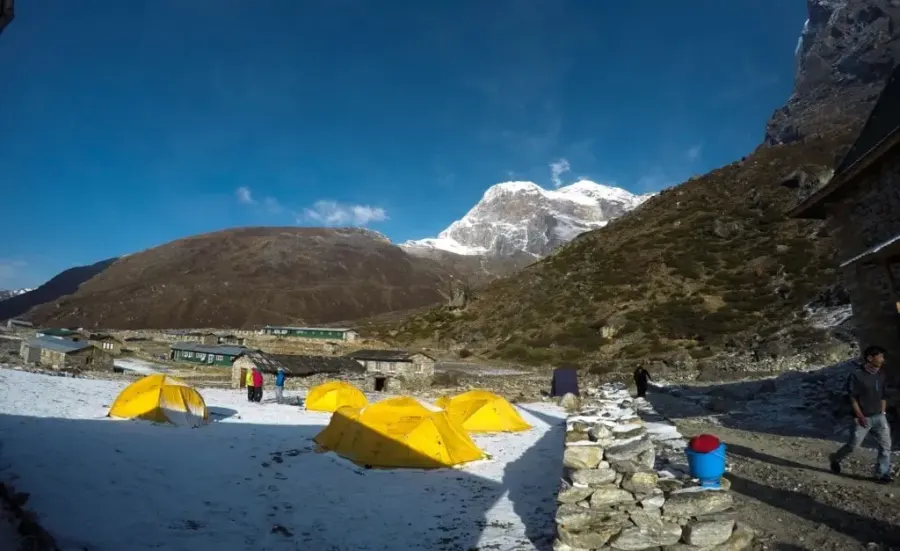
Mera peak is the highest trekking peak in Nepal. Don’t misinterpret it! Though called a trekking peak, it, in fact, is a climb. Perfect for beginners awaiting their first foray into mountaineering as the ascent requires a basic ice axe and crampon skills.
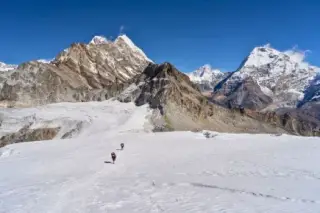
Mera Peak lies in the Hinku Valley, about 30 km south of Everest and east of Lukla. It is the second most popular trekking peak after Island Peak, and it is still a real climb. You walk up the Mera Glacier to High Camp at about 5,800 m, leave around 2 am, and spend 8 to 12 hours on summit day. The last section is a short, steep snow slope, often climbed on a fixed rope with a jumar when conditions demand it.
The peak has three summits: Mera North (6,476 m), Mera Central (6,461 m) and Mera South (6,065 m). Most groups stop on Mera Central, first climbed on 20 May 1953 by Jimmy Roberts and Sen Tenzing. Fewer carry on to Mera North, the true high point, which has a more exposed finish. Our Mera Peak climbing guide covers both routes in.
While experience isn’t compulsory to go on this trek, it always adds to have that little bit of familiarity with high altitude and camping conditions. One can also gain technical skills on Mera itself. As a rough guide, anyone who has been above 5,500 m, on Kilimanjaro (5,895 m) for example, is ready for Mera.
This towering trekking peak opens up to the majestic views of five out of the six highest mountains on Earth- Cho Oyu (8,188 m), Lhotse (8,516 m), Everest (8,849 m), Makalu (8,485 m) and, on a clear day, Kanchenjunga (8,586 m) far to the east on the border with Sikkim. One of the major reasons behind the peak’s popularity.
Although termed the easiest climbing peak, many fail to summit because they undermine altitude and the need for acclimatization. Any mountain of this height requires proper acclimatization, there aren’t any shortcuts to get there.
Want to Book this Package? Click here: Mera Peak Climbing
Island Peak
- Location: Everest / Solu Khumbu region
- Altitude: 6,189 m
- Difficulty: PD+ on the alpine scale, with a steep headwall
- Number of climbing days: 1-2 (including Island peak base camp)
- Best Season: April-May, October-November
- Accommodation: Guesthouses & Lodges to Island peak or Camping / Camping at Island peak Base Camp
- Duration: 16 to 18 days. Our Island Peak trip is 18 days
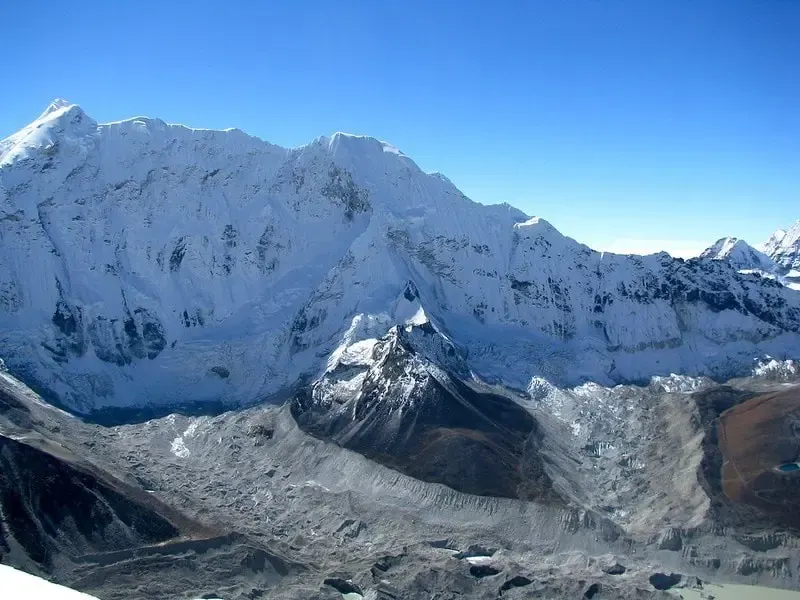
Island Peak is a fantastic experience in the Himalayas of Nepal, designed for energetic and physically fit trekkers with little or no experience in mountain expedition.
Island Peak (6,189m/20,305ft) also known as Imja Tse is one of the main climbing peaks in the Everest Region of Nepal rising out of the Imja Valley between the Imja and Lhotse Shar glaciers. Most of the route is a walk and a glacier crossing, sometimes on ladders over crevasses. Then comes the headwall, steep snow and ice on fixed ropes, and that is the part that makes Island Peak a real climb for beginners.
It's advisable to get some ice climbing experience before attempting Island peak. Though called a trekking peak, classify it as mountaineering as it requires technical equipment, glaciers, and high altitude.
The trek to Island Peak starts in Lukla, the gateway to the Everest region, and follows the Everest Base Camp trail. On our 18-day itinerary you reach Everest Base Camp and Kala Patthar (5,545 m) first, which does your acclimatisation, then turn up the Imja Valley to Chhukung and Island Peak Base Camp. Longer itineraries sometimes add the Cho La (about 5,420 m) or the Renjo La (5,360 m). This climb to Island peak is full of excitement, thrill, adventure and memories that last forever.
Interested in Island Peak Climbing? Book here: Island peak Climbing
Yala Peak
- Location: Langtang region
- Altitude: about 5,500 m (sources range up to 5,732 m)
- Difficulty: F on the alpine scale
- Number of climbing days: 1
- Best Season: March-May and October – November
- Accommodation: Guesthouses & Lodges
- Duration: 10 to 14 days, including the trek up the Langtang Valley
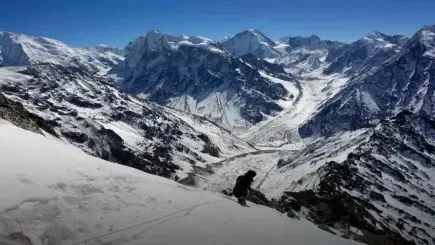
Yala peak climbing is quite popular among peak climbers as it is one of the easiest and best-known trekking peaks, which makes it a good first climb. It stands above Kyanjin Gompa in the upper Langtang Valley, close to the Tibet border, at about 5,500 m.
As it is a non-technical peak, one does not require previous mountaineering experience. It doesn't mean you don’t require to be fit. You require a high level of fitness and stamina as the trail is strenuous.
From Yala base camp you look across to Langtang Lirung (7,234 m), Leonpo Gang, Dorje Lakpa and the fluted ridge of Gangchempo. On a clear morning the summit also shows Shishapangma (8,027 m) in Tibet.
Access in late 2026: the 26 August 2026 flood closed the road to Syabrubesi. Langtang reopened on 22 October 2026 from a new trailhead at Thulo Syabru, so read our flood trekking update before you book.
Excited for Yala Peak Expedition? Register Here: Yala Peak Expedition
Lobuche East Peak
- Location: Everest / Solu Khumbu region
- Altitude: 6,119 m
- Difficulty: PD+ on the alpine scale, one of the harder trekking peaks
- Number of climbing days: 3
- Best Season: Mid-March to May and October to Mid- December
- Accommodation: Lodges and Camping to Lobuche East Peak / Camping on Lobuche peak
- Duration: 16 to 18 days, usually combined with Everest Base Camp. Our trip is 18 days

Often climbed as acclimatization practices by Everest teams, Lobuche East is one of the most popular trekking peaks in Nepal. Located close to the Everest Base Camp, this summit gives one of the closest views of Everest and other mountains such as Lhotse, Nuptse, Ama Dablam, Cholatse, Pumori and Makalu.
Lobuche East peak is quite technical compared to other trekking peaks in Nepal. Though technical, this peak is absolutely doable by novice or beginner climbers with some alpine skills: ice axe and crampons, abseiling and climbing on a fixed rope. Summit day runs 8 to 12 hours from high camp, and many teams turn at a false summit a short way below the top. Our Lobuche Peak guide has the route in detail.
Related Package: Lobuche Peak Climbing
Chulu West Peak
- Location: Annapurna region
- Altitude: 6,419 m
- Difficulty: PD+ on the alpine scale, among the harder trekking peaks
- Number of climbing days: 6
- Best Season: October/November and March/April
- Accommodation: Lodges and Camping
- Duration: 18 to 20 days, usually combined with the Annapurna Circuit and the Thorong La (5,416 m)
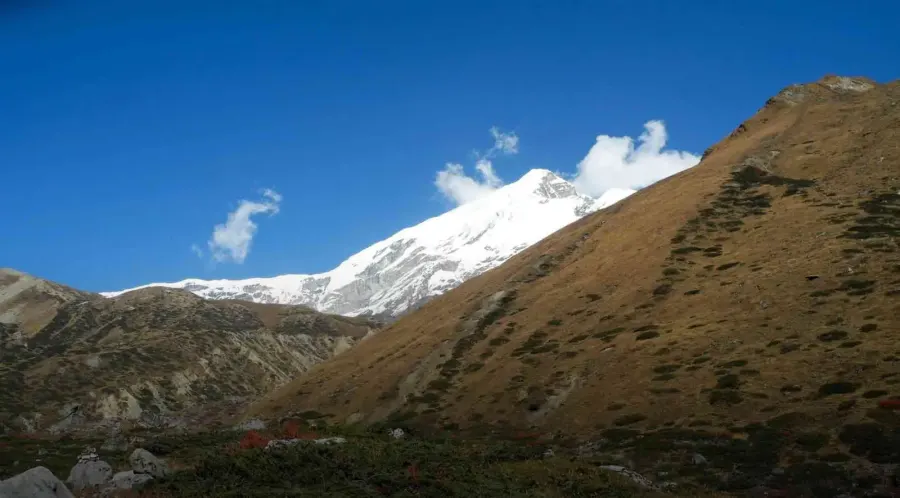
Chulu West, part of the Manang Himal north of the Annapurna Circuit, is one of the harder peaks on this list. The normal route crosses a loose rock band and steep snow where guides fix ropes, so you need basic crampon, ice axe and jumar skills before you go. For climbers who already have some rope practice, it makes a good Annapurna-side alternative to Mera.
Chulu west summit opens up to the magnificent views of Dhaulagiri, Nilgiri, Annapurna, and other Himalayan peaks. The summit day is long, so fitness and stamina count as much as technique.
Interested in Chulu West? See our Chulu West Peak Climbing trip.
Pharchamo Peak
- Location: Gaurishankar Conservation Area
- Height: 6,187 m (other surveys give 6,273 to 6,279 m)
- Difficulty: PD on the alpine scale
- Number of climbing days: 1
- Best Season: Mar-Apr and Oct-Nov
- Accommodation: Lodges and Camping
- Duration: from 15 days and above, pending itinerary
Pharchamo Peak is a beautiful snow peak located to the south of the glaciated Tashi Lapcha pass (5,755 m) connecting the Thame and Khumbu Valleys with the Rolwaling Valley.
First climbed on 18 April 1955 by Dennis Davis and Phil Boultbee of a British expedition led by Alfred Gregory, the face of the ridge of the peak forms a uniform slope broken by seracs and crevasse. Lower reaches aren’t the problem. The real difficulty is towards the summit, depending on seasonal conditions, open crevasses and ice-steps often present some challenges. It is a remote camping climb through Rolwaling, and we don't run a fixed departure for it.
Pokalde (Pokhalde) Peak
- Location: Everest / Solu Khumbu region
- Altitude: 5,806 m
- Difficulty: F to PD- on the alpine scale, mostly a rocky scramble
- Number of climbing days: 1
- Best Season: April-May and October-November
- Accommodation: Lodges and Camping
- Duration: 14 to 17 days, usually combined with Everest Base Camp
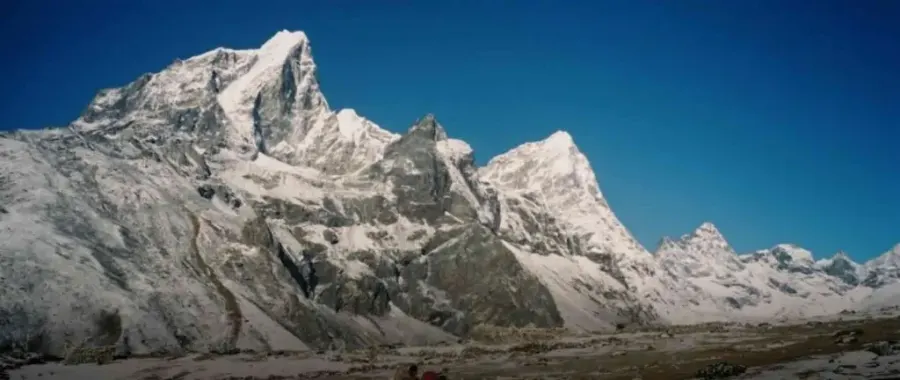
Pokalde, also called Dolma Ri, is the shortest and easiest of the Everest-region trekking peaks. It rises to 5,806 m above the Kongma La (about 5,535 m), between Chhukung and Lobuche. In a dry season most of the climb is a scramble on rock and no crampons are needed, but snow on the summit ridge turns it into a crampon climb, so carry them. Base camp sits by the lake just below the Kongma La.
Pokalde was first climbed on 15 April 1953 by Tom Bourdillon, Wilfrid Noyce and Michael Ward of John Hunt’s Everest expedition, up the north ridge from the Kongma La. This Peak is also known as the rocky peak for it has very little snow during the trekking season and can be done in half a day by a fit group. The summit provides a spectacular view of different mountains including Makalu, Ama Dablam, and Pumori. The best months are April to May and October to November.
See our Pokalde Peak Climbing trip.
Want fuller skill-by-skill detail on each? Our companion guide to the 7 easiest trekking peaks for new climbers goes deeper on each summit.
Beyond 6,500 m: Your First 7,000 m and 8,000 m Peaks
Once a trekking peak has gone well, the usual next step is a 7,000 m expedition. Himlung Himal (7,126 m), near the Nar Phu valley, is the one most often recommended, with Putha Hiunchuli (7,246 m) in western Nepal as a quieter option. Both are long glacier climbs with fixed ropes and two or three high camps, and they take about four weeks. In the Everest region the equivalent step is Baruntse (7,162 m), which is steeper. The royalty for a 7,001 to 7,500 m peak is USD 800 in spring and USD 400 in autumn.
Manaslu (8,163 m) and Cho Oyu (8,188 m) are the 8,000 m peaks most often called the easiest. Manaslu is climbed from Nepal, costs USD 1,500 in spring and USD 3,000 in autumn, its busy season, and takes six to seven weeks. Cho Oyu is mostly climbed from the Tibet side under a Chinese permit. Since the February 2025 amendment to Nepal's mountaineering rules, solo climbs on 8,000 m peaks are banned and teams need one guide for every two climbers. More on both rungs in our guides to the easiest 7,000 m peaks and the easiest 8,000 m peaks.
How to Pick Your First Peak
If you have never worn crampons, start with Yala Peak or Pokalde. If you want a 6,000 m summit and don't mind a long glacier day, Mera is the natural pick. Island Peak and Lobuche East suit fit trekkers who are comfortable on a steep rope, and both slot onto the Everest Base Camp trek, which does the acclimatisation for you. Chulu West and Pharchamo are for climbers with some rope practice already. Whatever you choose, buy insurance that covers climbing and helicopter evacuation to the right height, as set out in our trekking insurance guide. Every climb also needs a licensed guide booked through a registered agency.
Frequently Asked Questions
What is the easiest mountain to climb in Nepal?
Yala Peak in Langtang, at about 5,500 m, is usually rated the easiest. It is grade F, a steep walk with crampons sometimes needed near the top, and it fits into a 10 to 14 day trip. Pokalde (5,806 m) in the Everest region is a close second.
What is the easiest 6,000 m peak in Nepal?
Mera Peak (6,476 m). It is a long glacier climb at grade PD with a short roped finish, and most people need 16 to 18 days from Kathmandu.
Do I need climbing experience for Island Peak?
No previous climbing is required, but you need to be fit and to learn crampons, the ice axe and the jumar before summit day. The headwall near the top is steep snow and ice on fixed ropes. Most teams run a skills session at base camp.
How much does a trekking peak permit cost in 2026?
For any peak under 6,500 m, USD 350 per climber in spring and USD 175 in autumn, winter and summer, the rates in force since 1 September 2025. A refundable garbage deposit and the park permits come on top.
What is the easiest 8,000 m peak to climb?
Manaslu (8,163 m) and Cho Oyu (8,188 m) are the two usually named. Manaslu is climbed from Nepal and Cho Oyu mostly from Tibet. Most operators want a 7,000 m climb or similar experience first, and both take about six to seven weeks.