


The easiest treks in Nepal for beginners are Ghandruk, the Royal Trek, Dhulikhel to Balthali and Panchase, which all stay below about 2,500 m, so altitude is not an issue. Ghorepani Poon Hill (3,210 m, 4 days from Pokhara) is the classic first trek with mountain views. Mardi Himal (about 4,500 m) and Gosaikunda (4,380 m) are on this list too, but they are high enough for altitude sickness and suit fit beginners who go slowly with a guide. Gosaikunda reopened on 22 October 2026 after the August flood, with access via Dhunche and Thulo Syabru.
- Treks covered10, from 2 to about 10 days
- No altitude worriesGhandruk, Royal Trek, Balthali, Panchase
- Best first trekPoon Hill, 4 days, from USD 300
- Highest on the listLaurebina La, about 4,610 m (Gosaikunda)
- GuideLicensed guide required on most trails since 1 Apr 2023
- Best monthsMar to May, Oct to Nov
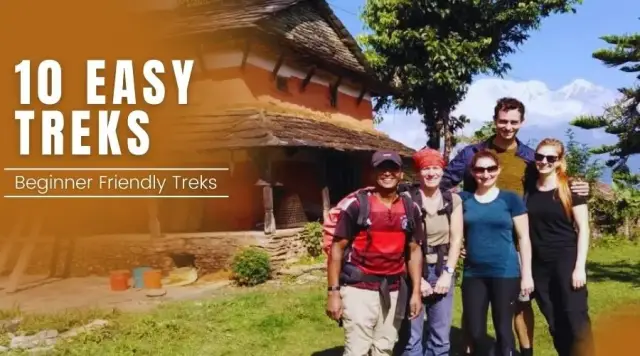
Since there are way too many trekking destinations in Nepal, people who are new to trekking might feel overwhelmed choosing the right one for them. Some treks require specific skills and training, making them unsuitable for those new to trekking. Therefore, it's best for first-timers to opt for beginner-friendly treks with less risky paths and lower elevations.
To make it easier, we've compiled a list of 10 easy treks in Nepal for beginners. One housekeeping note: since April 2023, Nepal requires a licensed guide on most established trekking routes, including several below, so plan on trekking with a guide or through an agency. See our explainer on the solo trekking rule.
What are the top 10 easiest beginner-friendly treks in Nepal?
Here are the ten, with the details a first-timer needs. Days are days on the trail. Add a day or two for getting to and from Kathmandu or Pokhara. Bars show each trek's highest point, scaled to Laurebina La on the Gosaikunda trek at about 4,610 m.
| Trek | Days on trail | Highest point | Walking per day | Difficulty | Permits | |
|---|---|---|---|---|---|---|
| Ghandruk | 2 to 4 | Ghandruk, about 1,940 m | 4 to 5 h | Easy | ACAP, TIMS | |
| Mardi Himal | 5 to 7 | Base camp, about 4,500 m | 5 to 7 h | Moderate (altitude) | ACAP, TIMS | |
| Royal Trek | 3 to 4 | Syaklung, about 1,730 m | 4 to 6 h | Easy | Check with agency | |
| Ghorepani Poon Hill | 4 to 5 | Poon Hill, 3,210 m | 5 to 6 h | Easy to moderate | ACAP, TIMS | |
| Gosaikunda | 5 to 7 | Laurebina La, about 4,610 m | 5 to 7 h | Moderate (altitude) | Langtang NP, TIMS | |
| Balthali village | 2 to 4 | Namo Buddha, about 1,750 m | 3 to 5 h | Easy | None | |
| Khumai Danda | 3 to 4 | Khumai Danda, 3,245 m | 4 to 6 h | Easy to moderate | ACAP, TIMS | |
| Rara Lake | 7 to 14 | Danphe Lagna, about 3,690 m | 5 to 7 h | Moderate (long, remote) | Rara NP, TIMS | |
| Panchase | 3 to 4 | Panchase, about 2,500 m | 4 to 5 h | Easy | Check with agency | |
| Helambu | 4 to 7 | Tharepati, about 3,650 m | 5 to 6 h | Easy to moderate | Shivapuri NP, Langtang NP, TIMS |
A word on "easy". Four of these treks (Ghandruk, the Royal Trek, Balthali and Panchase) stay below about 2,500 m, where altitude sickness is rare. Poon Hill, Khumai Danda, Rara and Helambu go above 3,000 m, so you may feel the height, but they are short or gradual enough for most beginners. Mardi Himal and Gosaikunda climb past 4,000 m. They need no climbing skills, yet they carry a real risk of altitude sickness, so treat them as a step up and walk them with a guide. Prices and permit rules change, so check our trekking permits guide before you book.
1. Ghandruk Village Trek
- Days2 to 4 from Pokhara
- Highest pointAbout 1,940 m
- DifficultyEasy
- PermitsACAP, TIMS
Ghandruk is a really alluring village situated in Kaski, Nepal, at an altitude of about 1,940 m / 6,365 ft. It is well known for its spectacular view of the Annapurna range, Hiunchuli, Gangapurna, and Machhapuchre (Fishtail) Himal.
The Ghandruk village trek starts from “the city of lakes,” Pokhara. The trail from Pokhara to Nayapool is a blacktop road, so there is no problem throughout the year. However, the road connecting Pokhara to Naya Pool is quite bumpy but not risky at all. One starts trekking on foot from the Naya pool until one reaches Ghandruk. A jeep road now climbs all the way to Ghandruk too, so plenty of people ride up and walk the old stone trail back down. The trail is a mixture of graveled paths, stoned paved paths, and a few steep paths, but most of the trail is plain and easy to walk, making the trek one of the easiest and beginner-friendly.
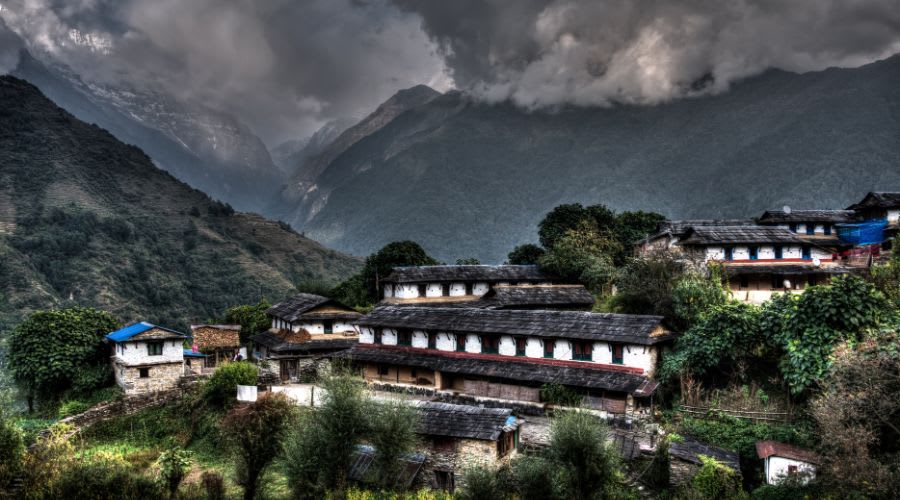
Photo: Beautiful Ghandruk Village
Altitude sickness is rare below about 2,500 m / 8,202 ft. Since the Ghandruk trek tops out around 1,940 m / 6,365 ft, altitude sickness is not a problem. This means even people with zero previous trekking experience won’t have any problem. Our bodies can adapt very well to the changing surroundings throughout the Ghandruk trek easily.
What are the main attractions of the Ghandruk village trek?
-
Views of Annapurna, Hiunchuli, Machhapuchre and Gangapurna.
-
The beautiful forest of rhododendron (the national flower of Nepal) during the Spring season.
-
The fascinating culture of the local Gurung people.
-
Picturesque views of villages, hills, and mountains all in one frame.
-
Small villages of Nepal that lead a simple lifestyle
2. Mardi Himal Trek
- Days5 to 7
- Highest pointBase camp, about 4,500 m
- Sleep highestHigh Camp, about 3,580 m
- DifficultyModerate, altitude
- Swotah trip6 days, from USD 550
Mardi Himal is located in the Annapurna region of Nepal. The peak itself, Mardi Himal, is 5,587 m / 18,330 ft tall and sits below Mt. Machhapuchre. The trek traverses through the beautiful villages of the Annapurna region, namely Kande, Pothana and Deurali on the way up and Siding on the way down, villages mostly of Gurung and Magar people. Forest Camp and High Camp, higher up, are lodge stops. So, one witness their beautiful culture and simple way of living in the trek.

Photo: The Mardi Himal panorama
The trail of the Mardi Himal trek is relatively secluded (less crowded than Poon Hill or Annapurna Base Camp), but the climb to base camp is steep.
Starting from Pokhara, the trek moves to Kande. The trail to Kande is a pitched road that is in very good condition. From Kande to Mardi base camp, the trail is a combination of steep ascents and descents, with few paths that are narrow and rocky, but with a little caution, anyone can easily walk through them. All in all, the complete trail is moderately difficult and does not require any climbing skills, so fit beginners with a guide can manage it. No trail is completely safe, though. The upper ridge gets icy after snow, and wind can be strong above High Camp.
The highest altitude of the trek is at the Mardi Himal base camp. The base camp is at an altitude of about 4,500 m / 14,764 ft above sea level, reached on a day hike from High Camp (about 3,580 m), where most groups sleep. The altitude goes quite high, so there are chances of getting altitude sickness, and the risk drops if you climb slowly, sleep no higher than High Camp, drink plenty of water and turn back if a headache gets worse.
What are the main attractions of the Mardi Himal trek?
-
Panoramic view of the Himalayan giants, namely Mt. Machhapuchre, Annapurna South, Mt. Hiunchuli and Mardi Himal itself.
-
Pass through rhododendron forests and Gurung villages.
-
Peaceful off the beaten trails.
-
The exotic wildlife of the Annapurna region, like langur monkeys, barking deer and the Himalayan monal, Nepal's national bird.
-
The hospitality, culture, and traditions of the local villagers.
3. The Royal Trek
- Days3 to 4 walking
- Highest pointAbout 1,730 m
- DifficultyEasy
- StartBijayapur, near Pokhara
The Royal Trek is yet another beautiful trek in the Annapurna foothills, east of Pokhara. It is one of the shortest but most visually satisfying treks in Nepal. The trek got its name from Prince Charles (now King Charles III), who walked this route with a large party in 1980. It starts at Bijayapur and passes Kalikasthan, Syaklung and Chisapani.

Photo: Gazing at the awe-inspiring scenery of the Royal Trek
The trail of the Royal Trek is one of the least dangerous and perfect for amateurs. You drive from Kathmandu to Pokhara, then about half an hour to the trailhead at Bijayapur. The foot trail gets narrow in some places, but other than that, there is nothing concerning. Just be cautious of landslides during the monsoon / rainy season.
The maximum altitude on the Royal Trek is about 1,730 m / 5,676 ft, near Syaklung. There is no need to worry about altitude sickness. Having good physical health is enough to complete the Royal trek, hence one of the easiest treks in Nepal.
What are the main attractions of the Royal Trek?
-
Views of mountains like Lamjung Himal, Himalchuli, Fishtail and Manaslu.
-
Trekking through colorful villages and terrific landscapes.
-
Retracing the 1980 route of Prince Charles.
-
Quieter trekking trails make the experience pleasant for those who like solitude.
-
Indulging in local food and cultural practices of the Gurung and Magar communities.
4. Ghorepani Poonhill Trek
- Days4 to 5
- Highest pointPoon Hill, 3,210 m
- DifficultyEasy to moderate
- PermitsACAP, TIMS
- Swotah trip4 days, from USD 300
Poon Hill is in Myagdi district, just above Ghorepani village, close to the border with Kaski. People also know this trek as the Annapurna sunrise trek for the sunrise view seen from the viewpoint of Poon Hill. This trekking destination has a wide range of ethnic diversity: Chhetri, Brahmin, Dalits, etc., but the most prominent here are Gurung and Magar communities. The trek takes you through places like Tikhedhunga, Ulleri, Ghorepani, Tadapani and Ghandruk. Our 4-day Poon Hill trek takes a jeep to Ghandruk (1,940 m) on day 1, walks to Ghorepani (2,860 m) on day 2, climbs Poon Hill at dawn on day 3 and then goes down the steps to Tikhedhunga.

Photo: A surreal view during the Poon Hill Trek
The Ghorepani Poonhill trek starts from Pokhara. Following the classic route, a well-paved and safe road stretches from Pokhara to Nayapul. The trail connecting Nayapul to Tikhe Dhunga is quite bumpy and not black-topped. Tikhedhunga to Poon hill the trail is not passable to vehicles. The route is not difficult. The hardest part is the stone staircase between Tikhedhunga and Ulleri, about 3,000 steps. Except for a few steep paths, the complete trail is danger free and safe for the first-time trek.
The highest landmark of the Ghorepani Poon Hill trek is the viewpoint at Poon Hill (3210 m / 10531 ft). A mild headache at Ghorepani (2,860 m) is possible, but serious altitude sickness is rare at this height.
What are the main attractions of the Ghorepani Poonhill trek?
-
The most surreal view of sunrise along with Mt.Dhaulagiri, MT. Annapurna South, Mt. Fishtail, etc.
-
Trekking through a wide variety of floras and faunas.
-
Exploring the lifestyle of the Annapurna region, enjoying their food and their cultures.
-
Walking from one beautiful village to another with warm people.
-
Wide range of wildlife and vegetation.
5. Langtang Gosaikunda Trek
- Days5 to 7 from Dhunche
- Highest pointGosaikunda 4,380 m, Laurebina La about 4,610 m
- DifficultyModerate, altitude
- AccessOpen since 22 Oct 2026, via Dhunche
Langtang Gosaikunda trek is popular with first-time trekkers, but it is the highest trek on this list and needs the most care with altitude. The trek leads to the astonishing Langtang region’s Rasuwa district of Nepal.
The main highlight of the trek is the Gosaikunda lake. It is a beautiful alpine lake, and its water is holy to Hindus and Buddhists. Thousands of pilgrims walk up for the Janai Purnima festival in August.
The road from Kathmandu reaches Dhunche (about 2,000 m) before it drops on to Syabrubesi, and the Gosaikunda walk starts from Dhunche. The trails have rocky paths, a few ascents, and a few downhill walks. The trail is pretty muddy and hard to walk on during monsoon. All in all the route is not technical. Just walk slowly and steadily.
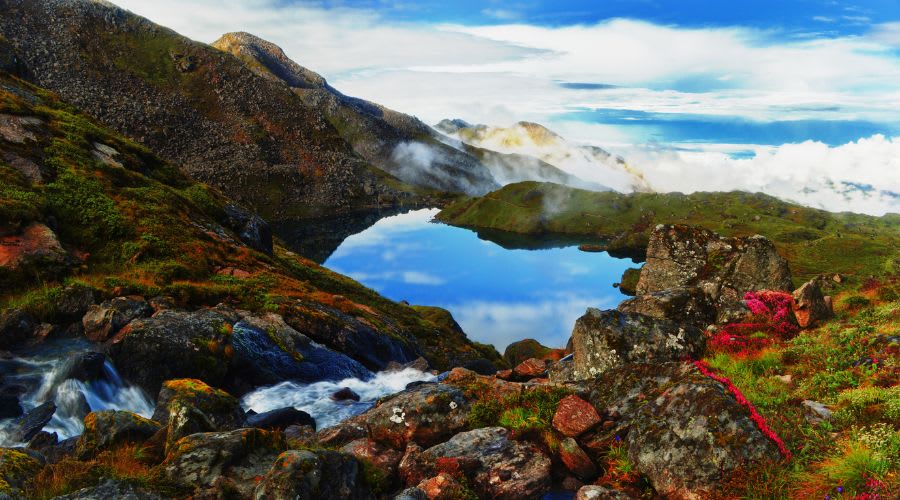
Photo: Goshaikunda in Spring
Access in autumn 2026: the 26 August 2026 flood in Rasuwa took out bridges at Betrawati and Syabrubesi and closed the road to Dhunche. TAAN reopened the area for trekking on 22 October 2026, after a Bailey bridge went in at Betrawati. Our Langtang-area departures are running again, starting from Thulo Syabru or Dhunche. Read our flood trekking update for the latest before you plan this one.
The highest point of the Langtang Gosaikunda trek is the Gosaikunda Lake (4,380 m / 14,370 ft). If you trek further ahead, the highest point is the Laurebina La pass at about 4,610 m / 15,125 ft. Altitude sickness is a real risk here. The lake sits about 2,400 m above Dhunche, and severe forms of altitude sickness (HACE and HAPE) can happen at this height. Spread the climb over at least two nights, usually Sing Gompa (about 3,330 m) and Laurebina (about 3,900 m), and go down if symptoms get worse. So, beginners, just pay attention to the altitude you are gaining and have some medicines to control nausea, headache, etc.
What are the main attractions of the Langtang Gosaikunda trek?
-
First and foremost, the holy Gosaikunda Lake.
-
The sacred shrines and smaller lakes near Gosaikunda, such as Bhairab Kunda and Saraswati Kunda.
-
Walking through the Langtang National Park.
-
Watching mountains like Ganesh Himal (mountain), Langtang range, and Mt. Manaslu.
-
Terrific land structures, terrains, and landscapes.
6. Balthali Village Trek
- Days2 to 4
- Highest pointAbout 1,750 m
- DifficultyEasy
- Distance from KathmanduAbout 40 km
Balthali village is located in the Kavrepalanchowk district. It is just about 40 km / 25 miles away from Kathmandu. This 3 to 4 days trek takes you through traditional Newari villages, terraced farmlands, and green forests. This is another beginner-friendly trek that does not have complexity and technicality.
For trekkers planning to embark on this trek, the trail is well-established and has a minimal record of accidents. The journey from Kathmandu to Dhulikhel is accessible via a well-maintained road. The trek from Dhulikhel to Namobuddha and from Namobuddha to Balthali, is considered easy and straightforward.
However, the path from Balthali to Panauti is a dirt road. The highest elevation of the entire Balthali village trek is about 1,750 m / 5,740 ft, around Namo Buddha, which is below the altitude sickness threshold of 2500 m / 8202 ft. Thus, trekkers need not worry about altitude sickness. Overall, this trek is safe and suitable for trekkers of all ages.
What are the main attractions of the Balthali village trek?
-
Witness the magical view of Mt. Langtang, Mt.Dorje Lakpa and Mt. Gaurishankar.
-
Trekking to Namo Buddha. It is one of the most important Buddhist pilgrimage sites in Nepal, often named alongside Swayambhunath and Boudhanath.
-
Visit the Thrangu Tashi Yangtse monastery. It is a working monastery where monks study and meditate, and visitors can walk round it quietly.
-
Trek through Tamang and Newari villages. Both groups keep their own festivals, crafts and food.
-
A peaceful trekking experience that gets you close to hills and mountains.
7. Khumai Danda Trek
- Days3 to 4 from Pokhara
- Highest point3,245 m (Korchon about 3,680 m)
- DifficultyEasy to moderate
- PermitsACAP, TIMS
Khumai Danda trek has the most magical views to offer. Some operators sell it as part of the Machhapuchre Model Trek area. It is short and traverses through easy walking paths, which makes it an easy trek that suits fit kids and older walkers, though the ridge does reach 3,245 m. From the viewpoint of the Khumai Danda, one witnesses the most surreal view of clouds, mountains, and surrounding covered by snow (during the winters).

Photo: View from Khumai danda
The trek starts with a drive of about two hours from Pokhara to the trailhead, and the walk climbs through Hile Kharka to the ridge. The trail is super easy and does not have very hard climbs and dangerous climbs.
The Khumai Danda viewpoint, located at 3,245 m / 10,646 ft, is the highest point of the standard trek. Some itineraries add the Korchon viewpoint on the last morning, at about 3,680 m (sources vary). As you ascend, you may experience mild symptoms of altitude sickness, but generally, beginners are able to adapt well and complete the trek without difficulty.
What are the main attractions of the Khumai Danda trek?
-
Close views of Mt. Machhapuchre, Mardi Himal and Mt. Annapurna.
-
The golden sunrise and sunset view reflecting on the mountains around amidst the clouds are seen from Korchon.
-
Beautiful sceneries that are unexplored and stay unharmed to date.
8. Rara Trek
- Days7 to 14 from Jumla
- Highest pointDanphe Lagna, about 3,690 m
- LakeAbout 2,990 m, 10.8 km²
- PermitsRara NP NPR 3,000, TIMS
The Rara trek, although longer than other beginner-friendly treks, is still considered easy and suitable for first-time trekkers. It leads to Rara Lake, which is the largest freshwater lake in Nepal (about 10.8 km², at about 2,990 m) and is located in the Mugu district. Some people also refer to the lake as Mahendra Tal.
To embark on the traditional Rara trek route, one can either drive or fly from Kathmandu to Nepalgunj and then fly from Nepalgunj to Jumla. From Jumla the walk to the lake takes three to five days each way, with no technical sections. While the daily walking hours may be long, the trek is generally considered easy to moderately difficult. However, trekkers should exercise caution while traversing the steep trails between Sinja and Ghorosingha.
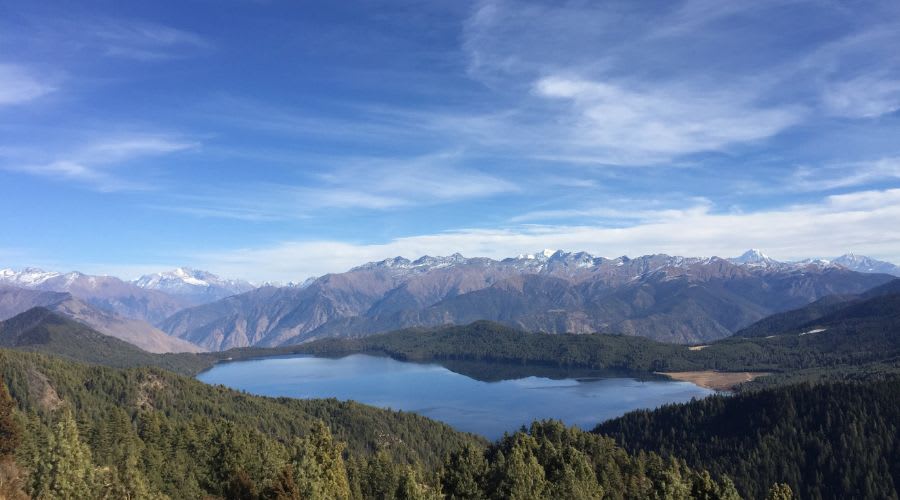
Photo: A mesmerizing view of Rara Lake
During the Rara trek, the highest altitude on most itineraries is about 3,690 m / 12,110 ft, at the Danphe Lagna pass. That is above 3,000 m, so take the climb slowly, but it stays well below Mardi Himal or Gosaikunda. Mild symptoms usually ease with rest, and going down is the cure if they don't. You need the Rara National Park fee (NPR 3,000) and a TIMS card.
What are the main attractions of the Rara trek?
-
First and foremost, the largest freshwater lake, Rara.
-
Walk through Rara national park and explore its wildlife and vegetation.
-
The sight of mountains: Kanjiroba Himal, Sisne Himal and the Chuchemara ridge above the lake.
-
Trek through birch, rhododendron, and pine forests.
-
Indulge in the remote lifestyle of Nepal.
-
Walk to beautiful places like Sinja village, Chere Chaur and Ghorosingha.
9. Panchase Village Trek
- Days3 to 4
- Highest pointAbout 2,500 m
- DifficultyEasy
- StartPokhara
Panchase lies near Pokhara city. The Panchase village trek is typically completed in 3 days to 4 days. As it is one of Nepal's shortest and easiest treks, beginners should definitely opt for it.
It lets one explore all the aspects of Nepal: cultural diversity, mountains, forests, villages, and Nepali cuisine.
There are several routes up to Panchase. All of them are easy, with gentle climbs, and the routes are well looked after and walked on a lot, so it is an effortless walk for anyone.
The highest point is Panchase peak, about 2,500 m / 8,200 ft. The trek is short, and altitude gain is very slow. Therefore, you do not need to worry about altitude sickness.
What are the main attractions of the Panchase village trek?
-
Views of Dhaulagiri, Annapurna and Machhapuchre, with Manaslu far to the east on clear days.
-
The Siddha Baba temple, Mahadev temple, and Barah temple.
-
Wide varieties of wildlife, birds, and forests.
10. Helambu Trek
- Days4 to 7
- Highest pointTharepati, about 3,650 m
- DifficultyEasy to moderate
- StartSundarijal, under 1 h from Kathmandu
Helambu is in the Sindhupalchowk district. The trek usually takes 4 to 7 days on the trail (our Helambu Valley Trek runs 10 days with the Kathmandu days). The altitude gain is gradual, which makes it a gentle way to start trekking.
The starting point is Sundarijal, at the edge of Shivapuri Nagarjun National Park, under an hour's drive from Kathmandu. Further ahead, the Helambu trail climbs steadily rather than steeply. The highest point is Tharepati at about 3,650 m / 11,975 ft. That is high enough for a headache or a poor night's sleep, so take the climb from Kutumsang slowly. There is no rapid gain and loss of altitude, so relax and enjoy trekking to Helambu. The Sundarijal side doesn't use the Rasuwa road, so the August 2026 flood doesn't affect it. Upper Helambu is inside Langtang National Park, so you pay that park fee (NPR 3,000) as well as the Shivapuri entry fee and TIMS.
What are the main attractions of the Helambu trek?
-
The magnificent Mt. Gaurishankar, the Rolwaling range, Mt. Manaslu, and Mt. Ganesh.
-
Beautiful rhododendron forests in the trail to Helambu.
-
Walking through the Shivapuri National Park.
-
Monasteries and gompas.
-
Tamang and Hyolmo (Helambu Sherpa) villages.
Are You Ready? A Beginner's Checklist
You don't need to be an athlete for any trek on this list. You do need to walk for 5 to 6 hours a day, several days in a row, on stone steps and uneven paths, carrying a daypack of 5 to 8 kg while a porter takes the rest. If you can hike for half a day on hilly ground and feel fine the next morning, you are close. Six to eight weeks of regular walks with some climbing, plus stairs, will get most people ready.
Altitude is the part beginners underestimate. The Wilderness Medical Society and the US CDC both advise that above 3,000 m you raise your sleeping altitude by no more than about 500 m a day and take a rest day every three to four days. Headache, nausea and poor sleep are early signs. If they get worse, stop climbing, and if they keep getting worse, go down. Our guide to avoiding altitude sickness covers the symptoms in more detail.
Since 1 April 2023, Nepal requires foreign trekkers to walk with a licensed guide on most trails in its national parks and conservation areas, including Annapurna and Langtang. Your agency arranges the guide, the TIMS card (NPR 2,000) and the permits. For a first trek a guide is worth having anyway. They pick the lodges, read the weather and spot altitude trouble before you do. Travel insurance should cover trekking to the highest point on your route and helicopter evacuation.
Easy Treks in Nepal: FAQs
What is the easiest trek in Nepal for a first-timer?
Ghandruk and the Royal Trek are the easiest, at under 2,000 m and only a few days long. If you want big mountain views on your first trek, Ghorepani Poon Hill is the usual pick: 4 days from Pokhara with a top height of 3,210 m.
Can a beginner do Mardi Himal or Gosaikunda?
Yes, if you are reasonably fit and go slowly with a guide. Both climb above 4,000 m, so altitude sickness is possible. Sleep at Mardi's High Camp (about 3,580 m) rather than higher, and take at least two nights to reach Gosaikunda from Dhunche. Gosaikunda reopened on 22 October 2026 via Dhunche and Thulo Syabru, so check our flood update for the latest access.
Do I need a guide for an easy trek?
On most trails in Annapurna, Langtang and other protected areas, yes. A licensed guide has been mandatory for foreign trekkers since 1 April 2023. Short village walks near Kathmandu, such as Dhulikhel to Balthali, have no permit checkpoints, though a local guide still helps with directions.
Which easy treks start from Kathmandu?
Dhulikhel to Balthali and Helambu both start within about an hour or two of Kathmandu. Gosaikunda also starts from the Kathmandu side, via Dhunche.
When is the best time for an easy trek in Nepal?
October and November give clear skies, and March to May brings rhododendrons. The low treks such as Balthali, Panchase and the Royal Trek also work from December to February. In the June to September monsoon, trails get muddy and leeches come out on the lower routes.