GUARANTEED DEPARTURES
Check upcoming trip dates, availability & prices. If you can't see dates that suite you, contact us we will do our best to assist you.
| GUARANTEED DEPARTURES | PRICE | AVAILABILITY | |
| Mar 5, 2026 - Mar 13, 2026 | $2328 | High | |
| Mar 7, 2026 - Mar 16, 2026 | $2328 | High | |
| Mar 19, 2026 - Mar 28, 2026 | $2328 | High | |
| Mar 20, 2026 - Mar 28, 2026 | $2328 | High | |
| Apr 4, 2026 - Apr 13, 2026 | $2328 | High |
Trek Highlights
- The mountains: Stand at the foot of the highest mountain in the world – Mount Everest at 8,848m / 29,028 ft. Marvel at other giants such as Ama Dablam, Lhotse and Nuptse.
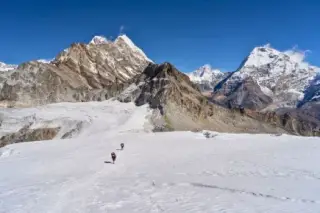
- The landscape: Hike through the forests of Sagarmatha National Park. Cross fast-flowing rivers by a suspension bridge. See the infamous Khumbu Ice Falls and Khumbu Glacier.
- The people: Meet the Sherpas – local to this area and world-class climbers. Experience Sherpa hospitality at Namche Bazaar and other settlements.
- The culture: Visit the serene high mountain Buddhist monastery of Tengboche. Surrounded by mountains, the atmosphere is serene, sprinkled with the laughter and chanting of the monks.
- The views: Hike up Kala Patthar (5,555 m / 18,225 ft). Also known as the Everest Viewpoint, the views of Everest from the top of this peak are outstanding. Feel as if you can touch Everest from here.
- Aerial views: Fly by helicopter from Gorakshep to Kathmandu. Not onlya unique aerial panorama of the mountains but views of the hills and valleys en route. Plus, the added thrill of a helicopter ride.
- True adventure: Enjoy the adventure of trekking through the Himalayas with the knowledge there is a less strenuous homeward journey!
The Everest Base Camp Trek with Return by Helicopter saves time. Less physical stress. The location. The extra thrill of arial views. Satisfy all your trekking aspirations. Plus, a dream helicopter flight.
You may not be a world-class mountaineer but the Everest Base Camp Trek with Helicopter Return provides the same adrenaline to the average person as an 8,484 m summit does to skilled mountaineers. This tour also gives you all the experiences the traditional Everest Base Camp Trek provides without those extra days on the trail. Perfect for those short of time or who may not be confident trekking for longer. Or who simply want to experience that amazing return trip by helicopter!
Photo Gallery
Dive into our gallery to get a glimpse of the awe-inspiring vistas waiting for you on our guided treks across stunning landscapes.
Brief Itinerary
Day
1
Arrival Day
Day
2
Fly to Lukla and Trek Lukla (2,840 m / 9,318 ft) to Phakding (2,610 m / 8,563 ft) – approximately 4 hours
Day
3
Hike Phakding (2,610 m / 8,563 ft) to Namche Bazaar (3,440 m / 11,286 ft) – 5 to 6 hours
Day
4
Acclimatization day at Namche Bazaar (3,440 m / 11,286 ft)
Day
5
Trek to Tengboche (3,860 m / 12,664 ft) from Namche Bazaar – 5 to 6 hours
Day
6
Trek to Dingboche (4,410 m / 14,469 ft) from Tengboche – 5 to 6 hours
Day
7
Acclimatization day at Dingboche (4,410 m / 14,469 ft)
Day
8
Trek to Lobuche (4,910 m / 16,109 ft) from Dingboche – 5 to 6 hours
Day
9
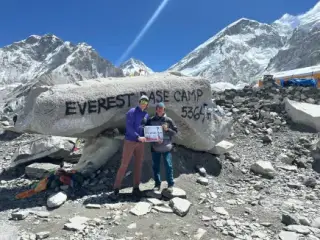
Trek to Everest Base Camp (5,364 m / 17,598 ft) from Lobuche and return Gorka Shep (5,170 m / 16,962 ft) - 8 to 9 hrs
Day
10
Trek from Gorak Shep to Kala Patthar (5,555 m / 18,225 ft), return to Gorak Shep 4 to 5 hour
Comprehensive Trek Guide
Everest Base Camp is situated, as you may expect, at the foot of Mount Everest - the highest point on earth. While this area of the country is often called the Everest Region, locally it is known by its Sherpa name of the Khumbu. Here also lies the Sagarmatha National Park, Sagarmatha being the Sherpa name for Mt Everest. Interestingly Mt Everest lies in the far north east of Nepal, and it straddles both Nepal and China. Having been measured by the British Surveyor General of India in 1865, the mountain was given the name Everest after an earlier British Surveyor General, Sir George Everest. Whether this name was intended to be permanent is debateable, but the Royal Geographic Society made it official, and the rest, as they say, is history.
It was not until the early 1920s that the first attempts to summit this mighty giant took place. In 1924 George Mallory and Andrew Irvine made their way up the North Col but it remains a mystery whether they actually made it to the summit or not. The mountain's reputation of unclimbable remained until the famous day of 29 May 1953, when Edmund Hillary and Tenzing Norgay claimed the title of the first people to successfully climb Everest.
Hillary went on to ensure the opening up of the area by establishing a school for Sherpa children and also being instrumental in the formation of the Tenzing-Hillary Airport at Lukla. Until then, with no road or air transport, it was a three weeks' walk from Kathmandu to Namche Bazaar over farmlands and along yak trails. Thanks to these intrepid men the Everest Region today not only attracts serious climbers but also trekkers and adventurers from all over the world. Including, perhaps, you.
The Sherpa Museum in Namche Bazaar will show you more about the culture, religion and people of the area. While in Namche , also enjoy a short hike to Khumjung village where Sir Edmund Hillary set up the first school. Or hike to Hotel Everest View for stunning views while sipping hot coffee and listening to your guide's experience in the region. Tengboche Monastery provides a deeper insight into the Buddhist religion that is practiced in this area. Sitting high in the Himalayas it's not hard to see why this location, surrounded by mountains, was chosen long ago as a centre of religious practice and learning. These are just some of the ways to learn and experience the unique Sherpa culture that tourism and mountaineering have helped to protect today.
This Everest Base Camp Trek with Helicopter Return takes only 10 days instead of the usual 15 required to trek both ways. And yet this trip still offers the trekking experience of a lifetime from Lukla (2,840 m / 9,318 ft) to Phakding (2,610 m / 8,563 ft) and on to Namche Bazaar (3,440 m / 11,286 ft). Then onwards to the likes of Tengboche Monastery (3,860 m / 12,664 ft), Dingboche (4,410 m / 14,469 ft), and Lobuche (4,910 m / 16,109 ft). All the time following the footsteps of those intrepid mountaineers.
Overall, this is a strenuous trek. For any trek in the Himalaya is best if the trekker has a general overall good fitness. In areas of high altitude, such as the Everest Region, it is best to have great overall fitness, enhanced by a few weeks of physical preparation! With Kala Patthar being the highest altitude on this trek at 5,555 m / 18,225 ft and Everest Base Camp itself being 5,364 m / 17,598 ft, the body naturally feels the change. These changes include less oxygen due to high attitude, the number of steps taken daily, and the overall challenge of the environment. That said, the sheer exhilaration of being here and achieving your dream makes it all worthwhile.
Extra thrills:
That helicopter ride back to Kathmandu is not only thrilling, scenic and quite an experience, it also takes the weight off your body and mind of having to trek back down to Lukla!
You may not be a world-class mountaineer but the Everest Base Camp Trek with Helicopter Return provides the same adrenaline to the average person as an 8,484 m summit does to skilled mountaineers. This tour also gives you all the experiences the traditional Everest Base Camp Trek provides without those extra days on the trail. Perfect for those short of time or who may not be confident trekking for longer. Or who simply want to experience that amazing return trip by helicopter!
Everest Base Camp Trek with Helicopter Return Difficulty
The Everest Base Camp Trek with Helicopter Return is a challenging trek, and yet for those with generally good health and fitness, it is completely doable. There is no requirement to have technical skills (such as using ropes or having a history of climbing).
What Makes it so Challenging?
This is the Himalayas - for every up there is a down. And for every down there is an up!
On average, 6 hours a day is spent on the trail. And while most people can walk 6 hours on the flat with ease, those ups and downs make it seem harder and longer! And that is without taking the altitude into account.
It is unfortunate that we never know who will suffer from altitude and who will not. It doesn't go by age or sex. We have built two acclimatization days into our itinerary to reduce the possibility of altitude related problems.
Is There an Age Limit for this Tour?
People of all ages and walks of life can reach to Everest Base Camp, as we know from experience. What is wonderful about this tour is that the number of days on the trail are shorter (10 instead of the usual 15 on the EBC Trek) making it less of a stress on the body.
We do not, however, recommend children under the age of five years for this trek, including the helicopter ride, due to the difficulty in logistics. For example, a very young child cannot communicate well if they are having altitude problems. And helicopter seatbelts are not designed for small bodies.
Do I Need Prior Trekking Experience?
No, you do not need prior trekking experience. It would be useful to have but if you are fit and enthusiastic, you can manage this tour.
How Can I be Sure This Trek is Right for Me?
Assess your own fitness and ability. Remember, you can prepare your body a few weeks in advance. Cardio exercise, whether at the gym or outside, and strength training are recommended. Don't forget to hike uphill in your home area, if possible. With regards to experience - this is an amazing opportunity to visit the world's highest mountain, explore the landscape and meet the local Sherpa community. Culturally and physically, it opens up a new world.
Is it Safe on the Everest Base Camp with a Helicopter Return?
Yes. If you are physically fit, adventurous, determined and don't have any prohibitive pre-existing medical conditions, the trek is safe. Having said that, there are no guarantees on the mountains. Weather can change instantly, trails get washed away, medical facilities are scares. To offset that, porters and guides are trained for environmental difficulties. Your guide will also carry a first aid kit. Your insurance cover is a final safety net.
For more information about safety check the Health and Safety section.
Accommodation and Food
During your trek, you will sleep in what is called a teahouse.
In trekking areas in Nepal a teahouse is similar to a simple guest house in that it provides sleeping accommodation and meals. Bedrooms can be quite basic - twin rooms or even dormitories. They do provide blankets, but we recommend you bring a sleeping bag for extra warmth and hygiene. Do note there is no heating in the sleeping rooms.
The teahouse will have a communal dining room which is heated by a stove. This is where you will spend your evenings and mornings.
The food is simple but nutritious. Breakfast and dinner are taken in the teahouse. Lunch is taken on the trail.
The staple food is Dal Bhat (rice and lentil soup) which is very nutritious and filling. It is also a good source of carbohydrates and protein. Other food available includes noodles, pasta, rice dishes, and some western food.
We recommend you drink plenty of water to avoid dehydration and altitude sickness. Bottled water is available for purchase, but we recommend you bring a water filter or purification tablets to reduce plastic waste.
Do not drink tap water.
Health and Safety
Altitude Sickness
Altitude sickness is a serious concern on this trek. We have built in two acclimatization days to help your body adjust to the altitude.
Symptoms of altitude sickness include headache, nausea, dizziness, and loss of appetite. If you experience any of these symptoms, please inform your guide immediately.
The best way to prevent altitude sickness is to ascend slowly, drink plenty of water, and avoid alcohol and smoking.
Insurance
It is mandatory to have travel insurance that covers emergency helicopter evacuation up to 6,000 meters. Please ensure your policy covers this.
Medical Conditions
If you have any pre-existing medical conditions, please consult your doctor before booking this trek.
Best Time to Trek
The best time to trek to Everest Base Camp is during the spring (March to May) and autumn (September to November) seasons.
Spring (March to May): The weather is mild, and the rhododendrons are in bloom. The skies are generally clear, offering stunning views of the mountains.
Autumn (September to November): This is considered the best time for trekking. The weather is stable, and the skies are clear. The temperatures are moderate.
Winter (December to February): The weather is cold, and there is a high chance of snow. However, the trails are less crowded, and the views are spectacular.
Monsoon (June to August): The trails are wet and slippery, and the views are often obscured by clouds. This is the least popular time for trekking.
Visa and Permits
You will need a visa to enter Nepal. You can obtain a visa on arrival at Tribhuvan International Airport in Kathmandu.
You will also need two permits for the Everest Base Camp Trek:
- Khumbu Pasang Lhamu Rural Municipality Entrance Permit: This is purchased in Lukla or Monjo.
- Sagarmatha National Park Entry Permit: This is purchased in Monjo.
Your guide will assist you with obtaining these permits.
Guide and Porter
Your guide is an experienced professional who will lead you on the trek, manage logistics, and ensure your safety.
A porter will carry your main luggage. Porters are an essential part of the trekking experience, and we ensure they are treated fairly and ethically.
Porter Weight Limit: Porters cannot carry more than 20 kg / 44 lbs. Please respect this limit.
Essential Packing List
This is a comprehensive list of items you will need for the trek.
Clothing and Footwear
- ✓ Trekking boots (well broken-in)
- ✓ Thermal base layers
- ✓ Fleece jacket or down jacket
- ✓ Waterproof and windproof outer shell
- ✓ Trekking trousers and shorts
- ✓ Warm hat, gloves, and scarf
- ✓ Wool or synthetic socks
- ✓ Sunglasses (UV protection)
Gear and Equipment
- ✓ Backpack (main luggage)
- ✓ Day pack (for personal items)
- ✓ Sleeping bag (rated to -10°C or lower)
- ✓ Trekking poles
- ✓ Headlamp or flashlight
- ✓ Water bottle or hydration pack
- ✓ Camera and extra batteries
- ✓ Power bank or solar charger
Medical Kit and Toiletries
- ✓ Sunblock.
- ✓ Lipsalve
- ✓ Purifying water tablets / drops
- ✓ Medicines you regularly take. Plus, extras in case of the unforeseen.
- ✓ Diarrhoea medicine
- ✓ Throat lozenges
- ✓ Cough drops
- ✓ Eye drops
- ✓ Blister pads
- ✓ Headache tablets
- ✓ Antiseptic cream or liquid
- ✓ Bandages. In case of sprains.
- ✓ Elastoplast. In case of small cuts or to secure blister pads.
- ✓ Safety pins.
- ✓ Body / hair soap
- ✓ Body / face lotion
- ✓ Sanitary items.
- ✓ Toilet paper. Teahouses will not supply this.
- ✓ Plastic bags. For keeping wet / dirty clothes separate.
- ✓
Extra Items for the Monsoon and Winter Seasons
- ★ Long rain coat or poncho
- ★ Rain hat
- ★ Waterproof trousers
- ★ Waterproof gloves
- ★ Crampons. While you may never need them, it's better to bring if you can.
Day Pack Items
- ✓ Sun block
- ✓ Lip salve
- ✓ Water bottle and purifying liquid / drops
- ✓ Camera
- ✓ Phone
- ✓ Swiss army knife
- ✓ Whistle
- ✓ Sun / warm hat
- ✓ Medicines you need on a daily basis.
- ✓ Headache tablets.
- ✓ Sanitary wear (if necessary)
- ✓ Snacks
Pack Light
While the list seems long these are the basics you will need for this length of trek. But please try to keep the weight down. If you are planning to carry your own pack you should practice hiking up and down hills in your home town. If you are planning to hire a porter (recommended for the majority of us) please remember porters cannot carry more than 20 kg / 44 lbs.
Also note, airlines allow only 10 - 15 kg / 22 - 33 lbs per person. So, aim for that. For the return helicopter flight, it is advisable to keep your main pack down to 10kg / 22 lbs as this, plus your day pack will then reach the 15kg / 33 lb limit.
You will be carrying your own day pack. Keep that as light as possible also.
Flight Information
To avoid overcrowding at the Tribhuvan International Airport Domestic Terminal, during peak trekking season (March - May, September - November) the fixed wing flight to Lukla leaves from Ramecchap (a 6 hour drive from Kathmandu). Which means you will be leaving Kathmandu in the early hours of the morning to reach Ramecchap for the early flight into the mountains.
In other months (January, February, June, July, August, December) the flight to Lukla takes leaves from Kathmandu itself. This is a government decision, out of our hands so please think of it as an added experience to your Nepal adventure! Please ask us if you have any questions on this.
The helicopter will bring you from Gorak Shep to Kathmandu on your final day. The helicopter seats up to 5 people.
Changes to the Itinerary
While it is rare to have to change the itinerary in any way, events out with our control do happen. Like bad weather coming in. The fixed wing flights to Lukla are the most impacted by weather and there can be delays - sometimes of a day or more.
Helicopters do not have the same weather-bound problems, so it is unlikely to cause delays on your return trip.
Important Note on Delays:
We recommend you do not book your international flight out of the country the day after the scheduled return to Kathmandu. Please allow at least two extra days in case of weather or other delays. For example, if you are due to arrive in Kathmandu on the Monday, schedule your international flight for the Thursday or later. There certainly is plenty of sightseeing and shopping to do in Kathmandu to keep you occupied!
Culture of the Area
The Everest Region, or Khumbu as it's known locally, is where the Sherpa people are from. Originally having migrated down from Tibet hundreds of years ago, they practice Tibetan Buddhism and have a similar lifestyle and traditions.
Sherpa homes are traditionally built of stone, and their traditional occupation is farming and yak herding. More recently, a large percentage of the people are involved in tourism. As trekking guides, mountaineering guides, porters or by owning and working in the many teahouses on the trails.
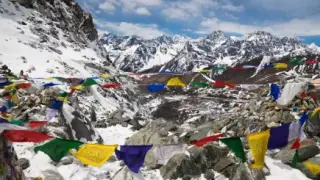
On the trails you will see their religion reflected in the chortens, prayer flags and monasteries. Tengboche Monastery is one of the places you will visit. Known as Sagarmatha in Nepali and Chomolungma in Tibetan, for Sherpas Mt Everest is sacred. You may notice locals and guides giving prayers at chortens and stupas along the trail. Indeed guides will pray to Mother Goddess of the World (Chomolungma) before attempting to climb her vast height.
Be Culturally Aware
Please respect local customs. Dress modestly in villages and monasteries. While long shorts (if it is warm enough) may be fine on the trail, if visiting monasteries or while in teahouses, long pants please. Ladies, no low cut tops please.
Remove your shoes in the monasteries or peoples' homes. In the teahouses you can enter with your trekking boots on as it may be impractical not too. But wear your sandals in the evenings to gives relief to your feet!.
Be aware where your feet are! Do not point your feet (even unwittingly) at religious objects or people.
Ask before taking someone picture.
Be polite and respectful at all times - even when exhausted after a long day's trek. Interacting with locals is part of the adventure!
Responsible Eco-Conscious Trekking
We at Swotah Travels do our best to preserve the culture and environment of the areas we trek through. We request our clients to do the same.
Positive Tourism
It is clear to see how tourism has positively impacted the lives of those in the Everest Region. With the opening of the airport at Lukla (thanks partly to Sir Edmund Hillary) in 1971, goods could then be more easily brought into the area.
Also thanks to Sir Edmund the first school for Sherpa children opened in Khumjung village in 1961. The first of many he was instrumental in setting up in this area.
The Sherpa people have embraced tourism and have become world-renowned for their mountaineering skills and hospitality.
Eco-Conscious Trekking
Please help us keep the Khumbu clean and pristine.
- ✔ Do not litter. Carry out all your rubbish.
- ✔ Do not use plastic bottles. Use a reusable water bottle and purification tablets.
- ✔ Do not pick flowers or disturb the wildlife.
- ✔ Do not throw anything into the rivers or streams.
- ✔ Do not draw on or disfigure mani walls or any other buildings / chortens / shrines etc.
- ✔ Do not pull down or take away prayer flags. Prayer flags are available for sale in various places for you to take home.
- ✔ Do be respectful in monasteries.
- ✔ If in doubt, ask your guide.
Supporting Local Communities
Simply by choosing to come to the Everest Region you are doing your bit to support local communities.
- ★ The fee you pay for the Khumbu Pasang Lhamu Rural Municipality Permit goes directly for conservation and to support local communities in the area.
- ★ The money you pay at teahouses goes directly to the community via trickle down such as buying vegetables and other goods etc.
- ★ The souvenirs made locally that you buy go to help local community women.
- ★ The porter that you hire brings your money home to feed and clothe his family.
- ★ The entrance fee to the Sherpa Museum in Namche Bazaar goes towards preserving Sherpa culture.
- ★ If you visit Khumjung village, please give a donation to the school there which will help educate more young Sherpa children. Do not give money directly to any children on the trail.
- ★ In any monastery you visit it is normal and expected to give a donation which goes towards the upkeep of the monastery and the monks. Locals also give a donation on each visit.
Money on the Trek
Are there ATMs?
In Kathmandu and other large towns you can find ATMs which will accept your international credit or debit card. They only give rupees, and only up to a certain amount (currently Rs50,000 - approximately USD 350) per day.
On the trekking trails you will not be able to use your cards or international currencies. Nepali rupees should be used for any purchases.
How Much Money Should I Bring on the Trek?
Your flights, accommodation and meals are already covered in the total cost of the trek.
You should however bring money for such things as cold drinks, charging your devices in teahouses, taking showers in teahouses, purchasing any snacks or souvenirs, donations, tipping your guide and porter.
As a rough indication you should carry around Rs3,000 (approx. USD 21) per day to cover charging devices, showers, soft drinks, simple snacks. More if you intend to buy more soft drinks or beer!
Donations to monasteries should be around Nrs 200 - 500 (max USD4).
Overall, to be comfortable calculate around USD 25 to 30 (Nrs 3,500 - 4,000) per day.
Please keep some money for contingencies such as flight delays. And note this does not include tipping your guide and porter.
How Much Should I Tip the Guide and Porter?
Tipping is a way of showing your appreciation for the hard work your guide and porter has done to help make your trek successful.
As a rough guide, it is now widely accepted that the guide should be tipped 10% of your total trip cost. This is divided by the number of people on your tour. For example if you tour cost USD 1,500 then USD 150 is the tip, divided by the number of people on the tour. Guides can be paid in USD.
For your porter similar applies.
More information on tipping will be given at your briefing in Kathmandu.
Money Matters
This is your dream adventure! Maybe you saved all year to accomplish it. The flight, the trek and any additional tours add up.
However, the majority of Nepalis - particularly in the villages your will pass through - could not even dream of international travel for pure enjoyment. So be realistic when bargaining for that handicraft item. Bargaining is considered usual in Nepal but unlike some countries we won't mention (!) it's not a case of the real price being 50% less than the starting price! If something costs Rs1,000 and you think its worth it for you (memories, pieces of art, gifts) then pay that or bargain down one or two hundred rupees.
Detailed Itinerary
Meals: N/A
Accommodation: Hotel
Meals: lunch and dinner
Accommodation: teahouse
Meals: breakfast, lunch and dinner
Accommodation: N/A
Meals: breakfast, lunch and dinner
Accommodation: Teahouse
Meals: breakfast, lunch and dinner
Accommodation: Teahouse
Meals: breakfast, lunch, dinner
Accommodation: Teahouse
Meals: breakfast, lunch, dinner
Accommodation: teahouse
Meals: N/A
Accommodation: N/A
Meals: N/A
Accommodation: N/A
Meals: breakfast and lunch
Accommodation: N/A
What's Included
- Airport transfers by private vehicle
- Deluxe rooms in a standard hotel in Kathmandu on twin/double sharing with breakfast
- Accommodations during the trek
- All meals (Breakfast, lunch, dinner) during the trek
- Authorized English-speaking friendly guide along with Porters(3:1) for the trek
- Equipment clothing for porters and guides, including their insurance
- All applicable government taxes
- All expenses for all staff – meals, accommodation, salary, equipment, insurance, transportation
- All necessary paperwork and Sagarmatha National Park Trekking Permit, local government permit.
- Medical kit (carried by your trek leader)
What's not Included
- International flights; Nepalese visa fee;
- Extra night accommodation in Kathmandu because of early arrival, late departure, or early return from the mountain due to any reason other than the scheduled itinerary;
- Lunch and evening meals in Kathmandu;
- Travel and rescue insurance;
- Personal expenses (phone calls, laundry, bar bills, battery recharge, extra porters, bottle or boiled water, shower, etc.);
- Tips for guide(s), porter(s) and driver(s);
- Hot and cold beverages throughout the tour (except what comes with a main
course meals);
Got a question about this tour?
Or looking for customize trip, reach out to our travel experts
Company Reviews
Similar Trips
Related Trips
Let your travels tell a story—crafted by locals, inspired by mountains, and lived by you.


