
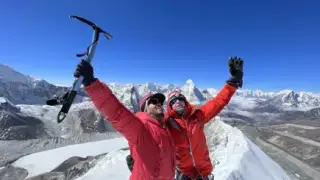
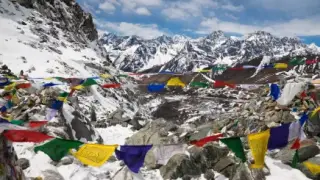

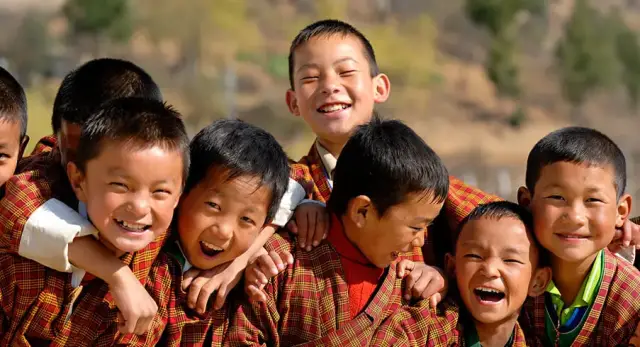

Bhutan measures progress by Gross National Happiness, keeps about 70% of its land under forest and absorbs more carbon than it emits. Its capital, Thimphu, has no traffic lights, television and the internet only arrived in 1999, and its highest mountain, Gangkhar Puensum (7,570 m), is the highest peak in the world that nobody has climbed. A few popular "facts" are out of date: Bhutan is not ranked the world's happiest country, and its tobacco sales ban was lifted in 2021.
- PopulationAbout 780,000 to 800,000 (727,145 at the 2017 census)
- Forest coverAbout 70% of the land, with 60% required by the Constitution
- Carbon statusCarbon negative, one of three countries with Suriname and Panama
- DemocracyFirst elections 2007 to 2008, Constitution signed July 2008
- Highest unclimbed peakGangkhar Puensum, 7,570 m, climbing banned since 2003
- TobaccoSales banned 2004, ban lifted 2021, growing it still illegal
- Tourist feeUSD 100 a night for most visitors until 31 August 2027
Bhutan, a small country in the eastern Himalayas, is often called the "Land of the Thunder Dragon." Despite its size, Bhutan is a country with a rich culture and history. Isolated from the rest of the world for centuries, Bhutan has been largely closed off to outsiders until recently, and even today, tourism is tightly regulated.
Here are ten surprising facts about Bhutan that you may not know, checked against current sources, with the popular myths corrected along the way.
-
Bhutan measures progress by Gross National Happiness.
-
Bhutan is one of only three carbon-negative countries.
-
The capital, Thimphu, has no traffic lights.
-
Bhutan is one of the world's youngest democracies.
-
Isolated from the World Until the 1970s
-
A King Who Gave Up Power to Bring in Democracy
-
Plastic bags are banned in Bhutan.
-
The Highest Unclimbed Peak in the World is in Bhutan.
-
Basic Healthcare and Schooling are Free in Bhutan.
-
The First Country to Ban Tobacco Sales
Bhutan in Numbers
A quick sheet of the figures behind the facts below. Population figures are estimates, since Bhutan last held a full census in 2017.
| Measure | Figure | Source |
|---|---|---|
| Area | About 38,394 sq km | National Statistics Bureau |
| Population | 727,145 in the 2017 census, about 780,000 to 800,000 today | NSB census, UN 2024 estimates |
| People per sq km | About 20 | Worked from the figures above |
| Thimphu population | Over 110,000 | 2017 census |
| Forest cover | About 70 to 71% | National forest inventories, World Bank |
| Minimum forest by law | 60% for all time | Constitution of 2008 |
| Monarchy | Wangchuck dynasty since 1907 | Historical record |
| Television and internet | Both from 1999 | Bhutan Broadcasting Service |
| First paying tourists | 1974 | Tourism Council of Bhutan |
| Highest peak | Gangkhar Puensum, 7,570 m | Survey figures |
1. Bhutan Measures Progress by Gross National Happiness
In Bhutan, happiness is more than just a feeling. It's part of the government's policy! The concept of Gross National Happiness (GNH) is usually traced to the early 1970s and Bhutan's fourth king, Jigme Singye Wangchuck. GNH is based on the idea that material wealth is not the only source of happiness and that factors like good governance, health, education, and environmental conservation are just as important. The government uses GNH alongside GDP to judge progress. Article 9 of the 2008 Constitution tells the state to promote the conditions for GNH, and the Centre for Bhutan Studies runs a national GNH survey, with rounds in 2010, 2015 and 2022.
Bhutan also took the idea to the world. Its 2011 resolution at the UN General Assembly led to the first World Happiness Report in 2012. That report does not put Bhutan near the top, though. Bhutan ranked 95th of 156 countries in 2019 and has not appeared in recent editions for lack of survey data, so "world's happiest country" is a slogan rather than a ranking.

2. Bhutan Is One of Only Three Carbon-Negative Countries
Bhutan is one of only three countries that call themselves carbon negative, together with Suriname and Panama. The three formed a carbon-negative group at the COP26 climate talks in Glasgow in 2021. That means that Bhutan absorbs more carbon dioxide than it emits. There are a few reasons for this. First, about 70% of Bhutan is forest (survey figures range from about 70 to 72%), and the Constitution requires at least 60% to stay forested for all time. These forests soak up roughly 9 million tonnes of carbon a year, against about 2 million tonnes emitted by the economy on 2020 figures. Second, almost all of Bhutan's electricity comes from hydropower, and much of it is sold to India, where it replaces power from coal. Dams take energy to build, but they burn no fuel once they are running. Finally, Bhutan has a very low population density, so there are fewer people emitting greenhouse gases per square kilometer than in other countries. As a result of these factors, Bhutan plays an important role in the fight against climate change.
3. The Capital, Thimphu, Has No Traffic Lights
With roughly 780,000 to 800,000 people (727,145 at the 2017 census), Bhutan is one of the smallest countries in Asia. It is also one of the most sparsely populated, with about 20 people per square kilometre.
Thimphu, a city of over 110,000 people, still runs without traffic lights. Accounts say a set went up in the mid-1990s and came down within days after residents complained, and a white-gloved traffic officer went back to directing cars from a small pavilion at the busiest junction. You will often read that Bhutan is the only country with no traffic lights at all. That is hard to prove, so we stick to what we can stand behind: the capital has none, and drivers rely on the police, a few signs and a lot of courtesy.
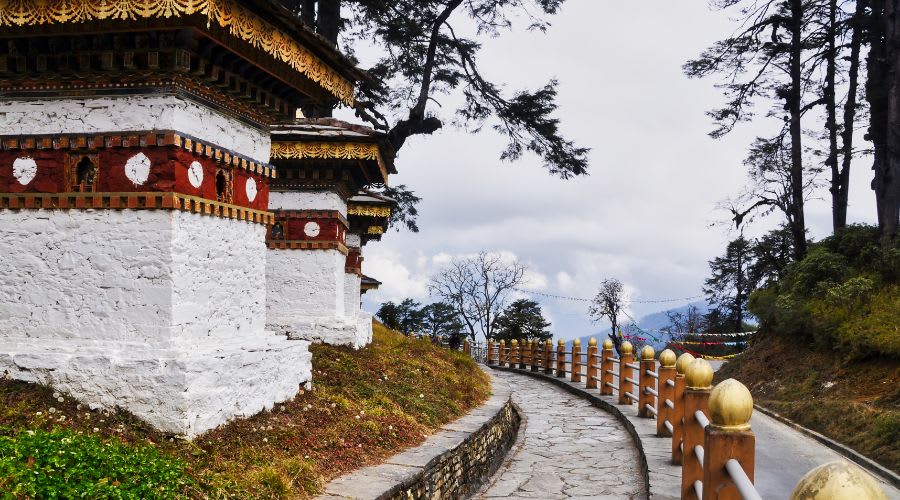
4. Bhutan Is One of the World's Youngest Democracies
The country itself is old. It was unified in the 17th century and has been ruled by the Wangchuck dynasty since 1907. Its democracy is new, and nobody was deposed to get it. The monarchy led the change, and Bhutan held its first parliamentary elections in 2007 and 2008.
The transition was peaceful. The first National Assembly election, in March 2008, made Jigmi Y. Thinley the first elected Prime Minister. Tshering Tobgay won the next election in 2013 and became Prime Minister again in January 2024.
5. Isolated from the World Until the 1970s
Bhutan was an isolated kingdom for centuries. It wasn't until the 1970s that Bhutan began to open up to the outside world. The first paying tourists came in 1974, the year of the fourth king's coronation. Radio broadcasts started in 1973, but television and the internet only arrived in 1999. Visitors no longer have to buy a fixed-price package, a rule that ended in 2022, but they pay a daily Sustainable Development Fee (USD 100 a night for most nationalities until 31 August 2027) and must have a licensed guide with them at all times once past the first checkpoint, under a Department of Tourism notice of April 2026. Our Bhutan travel guide covers the current rules. These rules help to keep Bhutan's unique culture and environment intact.

6. A King Who Gave Up Power to Bring in Democracy
King Jigme Singye Wangchuck had said he would step down when elections were held in 2008. In December 2006 he handed the throne early to his son, Jigme Khesar Namgyel Wangchuck. The move was widely seen as an effort to promote democracy in Bhutan, which had been a monarchy for centuries. Under King Wangchuck's leadership, Bhutan had begun to take steps towards democratization, which led to the first elections in 2007 and 2008. However, many felt that the country was not ready for full democracy and that the monarchy still had an important role in Bhutanese society. King Wangchuck's abdication was, therefore seen as a way of ensuring that democracy would continue to progress in Bhutan.
Since taking the throne, King Khesar has continued his father's work. In July 2008 he signed Bhutan's first written constitution, which set up a parliamentary democracy, and he was crowned that November. The King remains head of state and keeps some reserved powers, while day-to-day government sits with the Prime Minister and Cabinet. Bhutan remains a constitutional monarchy, but its move toward democracy is evident.
7. Plastic bags are banned in Bhutan.
To reduce its environmental impact, Bhutan has banned plastic bags. The ban on plastic carry bags was first introduced in 1999, making Bhutan one of the first countries in the world to do so. Enforcement has been patchy at times, and the government has relaunched the ban more than once. Since then, other nations have followed suit, with many developed countries now having similar bans.
8. The Highest Unclimbed Peak in the World is in Bhutan.
At 7,570 meters, Gangkhar Puensum is the highest unclimbed peak in the world. It stands on or near Bhutan's border with Tibet, where the exact line is disputed, and is often listed as about the 40th highest mountain in the world. Bhutan opened to mountaineering in 1983, and four expeditions tried and failed in 1985 and 1986. It stays unclimbed because Bhutan banned climbing peaks above 6,000 m in 1994, out of respect for local beliefs that the mountains are home to protective deities, and stopped all mountaineering in 2003. The terrain is also extremely rugged. A 1999 Japanese team climbed the subsidiary peak Liankang Kangri from the Tibetan side, but the main summit has never been reached, which makes it a mountain climbers talk about but cannot touch. While it may never be climbed, Gangkhar Puensum remains one of the most fascinating mountains on earth.
9. Basic Healthcare and Schooling Are Free in Bhutan
Education and healthcare are two of the most important factors in ensuring a high quality of life for citizens of any country. In Bhutan, the 2008 Constitution commits the state to free basic public health care, in both modern and traditional medicine, and to free schooling up to class X, which the government later extended to class XII. This ensures that everyone has access to a good education and basic healthcare, regardless of their socioeconomic status. The government of Bhutan recognizes that investing in its citizens is essential for the country's long-term success. Bhutan is laying the foundation for a bright future by providing free education and healthcare.
10. The First Country to Ban Tobacco Sales
In 2004 Bhutan became the first country in the world to ban the sale of tobacco. The 2010 Tobacco Control Act added tough penalties, though smoking itself was never fully banned and visitors could bring in a small allowance for their own use. This ban was implemented to protect Bhutanese citizens' health and preserve the country's natural beauty. Tobacco use is considered harmful to both individual and environmental health, and Bhutan's leaders felt that a ban was necessary in order to protect their people and their land. The ban cut legal sales, but people still found ways to obtain and use tobacco products. Enforcement was difficult along such a porous southern border, and in 2021, with smuggling seen as a COVID-19 risk, Parliament passed the Tobacco Control (Amendment) Act and legalised the sale of tobacco again. Growing and manufacturing tobacco is still banned.
Also Read: Best Trekking Peaks in the Himalayas for New Climbers
Also Read: The Living Goddess of Nepal
Bhutan Facts: True, Partly True or Myth?
Many lists about Bhutan repeat the same lines. Here is how the common ones hold up in 2026.
| Claim | Verdict | What is actually the case |
|---|---|---|
| Bhutan is the world's happiest country | Myth | Bhutan invented Gross National Happiness, but it ranked 95th in the 2019 World Happiness Report and has not appeared in recent editions. |
| Bhutan is the only carbon-negative country | Partly true | It is carbon negative, but Suriname and Panama make the same claim. |
| There are no traffic lights in the whole country | Partly true | The capital Thimphu has none, and police direct traffic at the main junction. A nationwide claim is hard to prove. |
| Bhutan banned all tobacco | Myth | It banned sales in 2004, never fully banned smoking, and legalised sales again in 2021. |
| Bhutan is a young country | Myth | The country dates to the 17th century. Its democracy is young, from 2008. |
| You can only visit on a fixed-price package | Myth | That rule ended in 2022. You pay the daily fee and must have a licensed guide with them at all times once past the first checkpoint, under a Department of Tourism notice of April 2026. |
| Gangkhar Puensum has never been climbed | True | Four attempts failed in 1985 and 1986, and climbing has been banned since 2003. |
| Television arrived only in 1999 | True | Television and the internet both arrived in 1999. |
Bhutan is a fascinating country with a rich culture and history. It was the first country to ban tobacco sales, and it still runs on several policies you will not find anywhere else. Bhutan's commitment to democracy, environmental protection, and social welfare makes it an interesting place to live and visit. Its move toward a parliamentary system of government shows that it is committed to progress and modernization.
If you're looking for an interesting travel destination that's off the beaten path, be sure to add Bhutan to your list!
Planning to see it yourself? Start with our 10 best things to do in Bhutan and the complete travel guide covering the USD 100 a night Sustainable Development Fee, visas and the guide rule.
Bhutan Facts: Questions Travellers Ask
Is Bhutan the happiest country in the world?
Not by the main global ranking. Bhutan gave the world the idea of Gross National Happiness and runs its own national GNH survey, but it placed 95th of 156 countries in the 2019 World Happiness Report and has not been ranked in recent editions because of missing survey data.
Is smoking banned in Bhutan?
No. Bhutan banned the sale of tobacco in 2004 but lifted that ban in 2021. Growing and manufacturing tobacco is still illegal, and smoking in public places is restricted, so check the rules before you light up.
Does Bhutan really have no traffic lights?
Thimphu, the capital, has none. A set was reportedly tried in the mid-1990s and removed after residents complained, and traffic police in white gloves still direct cars at the busiest junction.
Can you climb mountains in Bhutan?
No. Bhutan banned climbing peaks above 6,000 m in 1994 out of respect for local beliefs and stopped mountaineering altogether in 2003. Trekking is allowed with a licensed guide.
How much does it cost to visit Bhutan?
Most visitors pay a Sustainable Development Fee of USD 100 per adult per night until 31 August 2027, plus the visa fee, hotels, guide and transport. Indian nationals pay INR 1,200 a night. Our Bhutan trip cost guide breaks it down.