



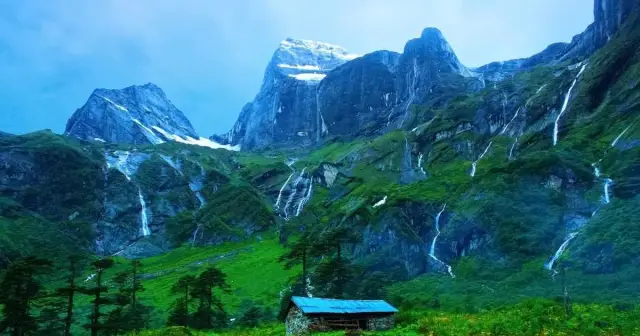

Makalu Barun National Park is a 1,500 sq km park in eastern Nepal, set up in 1992, that climbs from about 400 m in the Arun valley to the 8,485 m summit of Makalu. It holds around 440 bird species, red pandas, snow leopards and 25 kinds of rhododendron. Entry costs NPR 3,000 for foreigners (NPR 1,500 for SAARC nationals), and the Makalu Base Camp trek also needs a TIMS card and a licensed guide. Go in March to May or October to November. Most people reach it by flying to Tumlingtar and walking in from Num, and the base camp trek takes 18 to 22 days.
- Established1992 (buffer zone 1999)
- Area1,500 sq km + 830 sq km buffer
- ElevationAbout 400 m to 8,485 m
- Entry feeNPR 3,000 (SAARC NPR 1,500)
- GatewayTumlingtar, then Num and Seduwa
- Best monthsMar to May, Oct to Nov
Makalu Barun National Park is one of Nepal's most biodiverse and remote national parks. Situated on the trekking route to Mt. Makalu Base Camp, this area covers 1,500 sq km and stretches across the Solukhumbu and Sankhuwasabha Districts of Nepal.
This park is home to some of the world's rarest animals, including the red panda, snow leopard, and musk deer, along with Asiatic black bear. You are far more likely to see birds, langurs and pheasants than the big cats, but the park's range of wildlife is a big part of why nature lovers make the long trip east.
Makalu Barun National Park at a Glance
The park packs almost every climate zone in Nepal into one valley system. The bars show roughly where each forest zone sits on the slope, using the zone bands in park and Wikipedia sources.
| Zone | Altitude band | Range | What grows there |
|---|---|---|---|
| Tropical | 400 to 1,000 m | Sal forest, Arun valley | |
| Subtropical | 1,000 to 2,000 m | Schima and chestnut, terraced farms | |
| Temperate | 2,000 to 3,000 m | Oak, maple and rhododendron | |
| Subalpine | 3,000 to 4,000 m | Fir, birch and rhododendron | |
| Alpine | 4,000 to 5,000 m | Meadows and shrubs, Barun Valley | |
| Rock and ice | 5,000 to 8,485 m | Glaciers, Chamlang, Makalu |
| Park fact | Figure | Source |
|---|---|---|
| Bird species | About 440 (348 in a 1999 survey) | Wikipedia, BirdLife |
| Mammal species | About 88 | Wikipedia |
| Flowering plants | More than 3,000 | Wikipedia |
| Rhododendron species | 25 of Nepal's 30 | Wikipedia, park sources |
| Orchid species | 47 | DNPWC brochure, Wikipedia |
| Highest point | Makalu, 8,485 m | Survey figure used by Nepal |
Here are some things you need to know before visiting Makalu Barun National Park:
1. History
The Makalu-Barun Conservation Area was gazetted in 1991, and the national park was established in 1992 as an eastern extension of Sagarmatha National Park, with an area of 1,500 sq km. The surrounding conservation area became an 830 sq km buffer zone in 1999 (DNPWC).
Limbu, Sherpa, Yakkha, Gurung, Tamang, Magar, Newar, Brahmin, and Chhetri are some of the main ethnic groups in the buffer zone around the park, and on the Makalu Base Camp trail most villages you pass are Rai and Sherpa.
Makalu Barun National Park is named after Mt. Makalu (the world's fifth-highest mountain) and the Barun River, a glacier-fed tributary of the Arun that drains the valley below Makalu's south face.
2. A Protected Area With More Than 8,000 m of Elevation Gain
Makalu Barun National Park is often described as the only protected area in the world with an elevation gain of more than 8,000 m. The land climbs from the Arun valley floor (sources give 344 to 435 m) to the summit of Mt. Makalu (8,485 m), the fifth highest mountain in the world and the fourth highest in Nepal. Other big peaks inside the park include Mt. Chamlang (7,319 m), Mt. Baruntse (7,129 m) and Mera Peak (6,476 m), a popular trekking peak on the park's western edge.
3. The Arun Valley: One of the Deepest in the Himalaya
The Arun Valley, which runs along the park's eastern side, is often described as one of the deepest river valleys in the world, although the Kali Gandaki gorge usually gets that title. The trek up from the Arun brings views of Mt. Makalu, Mt. Chamlang and Mt. Baruntse, and on clear days Everest and Lhotse appear from the upper Barun Valley near Makalu Base Camp.
The Arun valley is also an old walking route into the Everest region, used by trekkers who start at Tumlingtar and walk west to Lukla.
4. Getting There
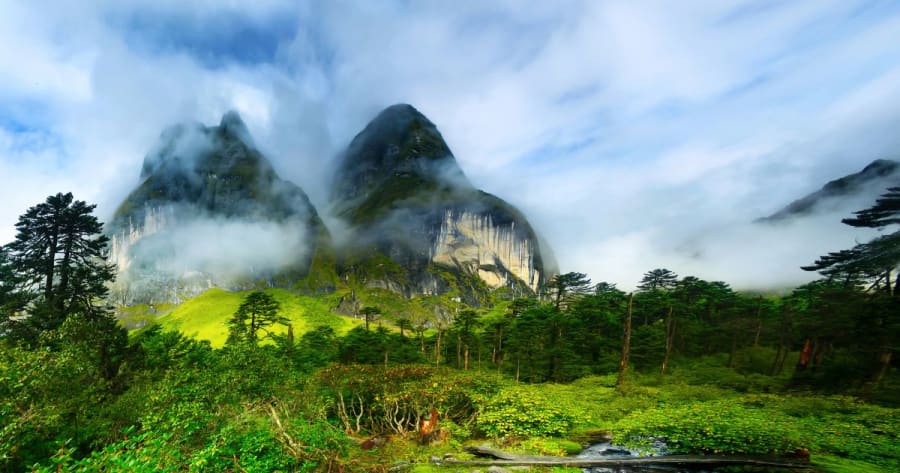
Most visitors fly from Kathmandu to Tumlingtar in the Arun valley, then take a jeep towards Num and walk in via Seduwa, where the park entrance is. Lukla and Phaplu are used for the western side of the park, such as the Hinku valley and Mera Peak. Access takes planning, so see our guide on how to reach Makalu Barun National Park for routes, flights and drive times.
5. When to Go
Makalu Barun National Park is open year-round, but the best time to visit is from March to May and October to November. Daytime temperatures in the lower valleys reach 20 to 25 degrees Celsius in these months, while nights near Makalu Base Camp drop well below freezing. The park experiences its heaviest rainfall from June to September, when trails are muddy, leeches are common and cloud hides the peaks. In winter, snow often closes Shipton La and Keke La on the way to base camp.
6. Wildlife and Vegetation
Makalu Barun National Park is home to some of the world's rarest and most endangered animals. The park is also an important repository of Nepal's rich biodiversity. About 440 species of birds have been recorded in the park, including many migratory species (Wikipedia, citing park data), and a 1999 BirdLife survey of the park and buffer zone listed 348. Around 88 mammal species live here. Rare and threatened mammals include the snow leopard, red panda, clouded leopard, Asiatic black bear, and musk deer. The park's vegetation is equally diverse, with more than 3,000 flowering plants, 25 of Nepal's 30 rhododendron species and 47 orchids, spread across forest zones that run from tropical sal forest below 1,000 m to subalpine fir and birch above 3,000 m.
7. Entry Fees and Permits for Makalu Barun National Park
The entry fee is NPR 3,000 per person for foreign visitors and NPR 1,500 for citizens of the other SAARC countries (Afghanistan, Bangladesh, Bhutan, India, Maldives, Pakistan and Sri Lanka). The DNPWC brochure lists NPR 100 for Nepali citizens. Some counters add 13% VAT, so budget about NPR 3,390 if you are not from South Asia. The permit is sold at the DNPWC counter in Kathmandu and at the park entrance at Seduwa, and it is valid for a single entry.
For the Makalu Base Camp trek you also need a TIMS card (NPR 2,000, SAARC NPR 1,000), which only a registered agency can issue, and a licensed guide has been compulsory since 1 April 2023. The base camp route itself is not a restricted area, but some northern wards of Sankhuwasabha near the Tibetan border are, and those need a restricted area permit of USD 20 per person per week (see our Nepal trekking permits guide).
| Permit or rule | Makalu Base Camp trek | Cost (foreigners) |
|---|---|---|
| Makalu Barun National Park entry | Required | NPR 3,000 (SAARC NPR 1,500) |
| TIMS card (through an agency) | Required | NPR 2,000 (SAARC NPR 1,000) |
| Licensed guide | Required | USD 25 to 40 a day |
| Restricted area permit | Some areas | USD 20 a week, northern border wards only |
| Khumbu municipality fee | Not needed | Only if you enter from the Everest side |
8. Lodges and Campsites in the Park
Facilities inside the park are basic. Simple teahouses run as far as Khongma, Mumbuk and Yangle Kharka in the trekking seasons, but above that the lodges are few and small, and many groups camp in the upper Barun Valley. Swotah's itinerary uses teahouses up to Mumbuk and tents beyond. Make sure porters have proper shelter, warm clothing and fuel on the high section, because firewood collection is restricted inside the park.
The main overnight stops on the base camp route are Khongma (about 3,560 m), Dobato (about 3,650 m), Yangle Kharka (about 3,600 m), Langmale (about 4,410 m) and Shershong (about 4,660 m), with Makalu Base Camp at about 4,870 m. Altitudes vary by a few dozen metres between sources.
Things to do in Makalu Barun National Park
Makalu Barun National Park is a protected area in the Himalayas of Nepal that encompasses the Barun Valley and the adjoining buffer zone. The park is also home to Makalu Base Camp, the starting point for expeditions to Mount Makalu, the fifth highest mountain in the world. Makalu Barun National Park offers a variety of activities for visitors, including trekking, camping, bird watching, and wildlife viewing.
Trekking
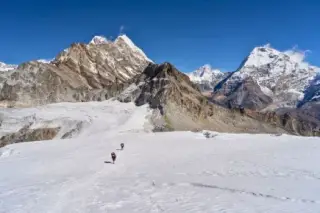
The Makalu Barun trek starts with a flight from Kathmandu to Tumlingtar and a drive towards Num, then climbs through Seduwa, Tashigaon and Khongma, crosses Shipton La (about 4,200 m) into the Barun Valley and reaches Makalu Base Camp at about 4,870 m. Swotah runs it in 22 days with an acclimatisation day at Khongma. The trail goes through dense rhododendron, oak, and pine forest. The best time to do this trek is from March to May and October to November.
Bird Watching
Makalu Barun National Park is home to hundreds of bird species, including Hill Partridge, Himalayan Bulbul and Red-vented Bulbul lower down and pheasants such as the Himalayan monal higher up. The best time to go bird watching is from March to May, when resident birds are breeding and migrants pass through.
Experience Sherpa culture and visit monasteries
Sherpa families live in the upper villages on the edge of the park, such as Tashigaon, and Rai communities farm the hillsides lower down. The Sherpa people are known for their mountaineering skills and their Buddhist religion. On the way to the park you can visit village gompas and see Rai and Sherpa farming life up close.

Makalu Barun National Park: FAQs
Is Makalu Barun National Park open all year round?
Yes, the park is open throughout the year. In winter, snow can close Shipton La and Keke La on the base camp route, and in the monsoon some trails become muddy and slippery.
What is the best time to visit Makalu Barun National Park?
October and November give the clearest views and most stable weather, and March to May brings rhododendron blooms and the best bird watching.
How much is the Makalu Barun National Park entry fee?
NPR 3,000 per person for foreigners and NPR 1,500 for SAARC nationals, with 13% VAT added at some counters. The Makalu Base Camp trek also needs a TIMS card and a licensed guide.
Do I need a guide for Makalu Barun National Park?
Yes. A licensed guide has been compulsory on Nepal's trekking routes outside the Everest region since 1 April 2023, and the TIMS card is only issued through a registered agency.
What should I bring with me when visiting Makalu Barun National Park?
Bring plenty of warm clothing, because nights near base camp fall well below freezing, and a sleeping bag rated to about minus 15 degrees Celsius. In the lower Arun valley in the warm months, insect repellent and leech socks help.
Is Makalu Barun National Park Worth the Trip?
Makalu Barun National Park suits anyone who wants to see Nepal's biodiversity away from the crowds. With around 440 bird species and forests that run from the tropical Arun valley to alpine meadows below Makalu, there is plenty for trekkers, bird watchers and photographers.
Entry to the park costs NPR 3,000 for foreigners, and the Makalu Barun trek runs 18 to 22 days through some of Nepal's remotest country. See the Makalu Barun trek itinerary and our permits guide for the paperwork.