


Solo Trekkers Can Still Trek to the Everest Region Without a Guide, Despite New Rule
Nepal’s 2023 guide rule came with one major exception that still stands today: the Everest region. While the Nepal Tourism Board requires foreign solo trekkers to hire a licensed guide across most trekking regions, the local government of the Khumbu never adopted the restriction.
Click here to see the list of destinations that require a mandatory Guide.
However, foreign tourists visiting the Everest region will be exempt from this new law.
The Khumbu Pasang Lhamu Rural Municipality has issued a notice stating that solo trekkers in the Everest area do not need to hire a trekking guide.

Trekkers can go on a solo journey up the Phakding trail by obtaining a trekking card from the permit office and showing it at the checkpoint. The trek card now costs NPR 3,000 (the municipality has raised it from the original NPR 2,000), in addition to the NPR 3,000 entry fee for Sagarmatha National Park (SNP).
Manoj Kumar, information officer at SNP, said that the national park has already welcomed solo travelers and has not received any official notice regarding entry restrictions for solo travelers who have not hired a trekking guide.
From April, Nepal Tourism Board (NTB) has resolved to suspend issuing Free Individual Trekker (FIT) cards, aiming to improve safety, streamline the trekking sector, and generate more employment opportunities within the nation.
Independent trekkers who wish to explore the Everest region can acquire the necessary permits from the Sagarmatha National Park (SNP) and the local government's trek card in order to access and trek in the designated areas.
The TREK CARD, an updated version of the digital entry pass for the Everest Region, will be implemented by the Khumbu Pasanglhamu Rural Municipality and Sagarmatha National Park starting on April 14, 2023, Nepali New Year 2080.
This new system will offer convenience and ease to Free Independent Travelers (FITs) wishing to explore the region. The TREK CARD can be easily obtained at the Lukla counter for those traveling by air or in Jorsale for those traveling by land.
The combined entry fees for the national park and local government are now NPR 6,000 (NPR 3,000 municipality fee and NPR 3,000 national park fee) for international visitors, and NPR 4,500 for citizens of SAARC countries (NPR 3,000 municipality fee and NPR 1,500 national park fee).
The TREK CARD will provide a number of benefits, including a more efficient and cost-effective entry process. It will also facilitate the creation of an online registration system to enable trekkers to submit their details and pay the fees online easily.
Furthermore, the card will provide a secure and convenient way to access the region, as it will validate and authenticate the trekker’s identity and travel.

Is Solo Trekking to Everest Base Camp Still Allowed?
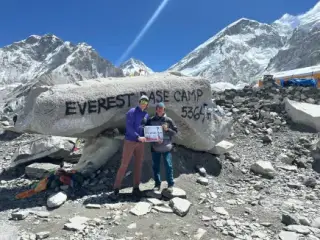
Yes. The Khumbu Pasang Lhamu Rural Municipality has maintained its position ever since the 2023 announcement, and independent trekkers continue to walk to Everest Base Camp without guides every season. The municipality argues that the Khumbu’s busy, well-marked trails, dense network of lodges, and strong local rescue infrastructure make the blanket guide requirement unnecessary, and that the trek card system already records every visitor for safety purposes. The exception applies only to the Everest region: the moment you cross into other regions, or attempt side objectives like Island Peak, which is a climbing peak, the standard guide and permit rules kick in.
What Solo Trekkers Still Need
Going guideless does not mean going paperwork-free. Before setting off on the Everest Base Camp trek, make sure you have the municipality trek card (NPR 3,000, bought on arrival in Lukla or at Monjo if you walk in), the Sagarmatha National Park permit (NPR 3,000, available at Monjo or in Kathmandu), and travel insurance that explicitly covers trekking to 6,000 metres and helicopter evacuation, since a rescue flight from Gorak Shep can cost thousands of dollars paid upfront without it. Book Lukla flights early in peak season, carry cash for the whole trek (there are ATMs in Namche, but they are unreliable), and leave your itinerary with someone at home.
Should You Hire a Guide Anyway?
Even where it is legal to trek alone, a guide is worth serious consideration. Altitude sickness judgement calls are far easier with an experienced companion, teahouses in peak season hold rooms for guided groups first, and a licensed guide costs only USD 25 to 35 per day, a small share of the trip’s total cost. Our guide on how to hire a trekking guide in Nepal covers rates, licence checks, and where to find one, and if you are weighing up other regions, see where the TIMS card is and is not required.
Solo Trekking to EBC: A Quick Reality Check
Trekking without a guide in the Khumbu is legal, but go in with clear eyes. In the main October-November and March-May seasons you will rarely be out of sight of other trekkers between Lukla and Gorak Shep, the trail is broad and obvious, and every village has lodges and food, so navigation is the least of your worries. The real risks are altitude and weather: build in acclimatization days at Namche Bazaar (3,440 m) and Dingboche (4,410 m), learn the symptoms of acute mountain sickness, and be ready to descend if a headache refuses to fade. Budget roughly NPR 6,000 for the two entry fees plus USD 30 to 45 per day for food and lodging, more as you climb higher, and remember that Lukla flights are weather-dependent, so leave at least two buffer days before any international connection. Winter and monsoon solo trips are a different game entirely: quiet trails are lovely, but empty lodges and snowed-over paths leave far less margin for error.