



Nepal Visa on Arrival and Visa Extension: Complete 2026 Guide
The Nepal visa on arrival takes three steps at Kathmandu's Tribhuvan International Airport: fill the form at a kiosk or online, pay the fee (USD 30, 50, or 125), and get the visa stamped at the immigration desk. The whole process takes 45 to 90 minutes in peak season, and completing the official online form before you fly cuts out the kiosk queue. Extensions cost USD 45 for the first 15 days plus USD 3 per additional day, are processed at the immigration offices in Kathmandu and Pokhara, and can stretch your stay to a maximum of 150 days per calendar year. This guide walks through both procedures step by step.
How Does the Visa on Arrival Work?
Visa on arrival is the standard entry route for most nationalities landing in Nepal, and the procedure is the same at Tribhuvan, Gautam Buddha, and Pokhara international airports. Three steps stand between the plane and the arrivals hall.
Step 1: Fill the Tourist Visa Form
- Fill in the arrival card, which most airlines hand out on the plane.
- Fill in the online tourist visa form, either before you fly at nepaliport.immigration.gov.np or at the self-service kiosks in the arrival hall. The online submission produces a barcode receipt; print it or save it on your phone. The receipt is valid for 15 days, after which you simply fill the form again.
Step 2: Pay the Visa Fee
- Pay at the bank counter and keep the receipt. The fee is USD 30 for 15 days, USD 50 for 30 days, or USD 125 for 90 days, all multiple entry.
- Carry cash in US dollars with exact change. The counters accept several major currencies and sometimes cards, but the card machines fail often enough that cash is the only reliable plan.
Step 3: The Immigration Desk
Proceed to the immigration desk with your passport, the barcode receipt or kiosk slip, and the payment receipt, and the officer stamps the visa into your passport. Counters are split between "foreigners with visa" and "foreigners without visa", so join the second queue if you are getting the visa on arrival.
Extra tip: carry several passport photos and passport photocopies when you arrive in Nepal. You will need them for trekking permits, SIM cards, and other paperwork; our post on surviving your first arrival at Tribhuvan Airport covers everything after the visa desk.
Nepal Visa Extension: Fees and Rules
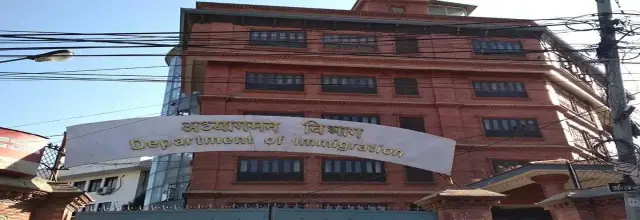
Tourist visa extensions are processed at the Department of Immigration in Kalikasthan, Kathmandu, and at the Pokhara immigration office; some border offices, including Kakarbhitta, Birgunj, and Belahiya, also extend tourist visas. The rules in 2026:
| Rule | Detail |
|---|---|
| Minimum extension | USD 45 for 15 days or less |
| Longer extensions | USD 3 per day beyond the first 15 (30 days costs USD 90) |
| Multiple re-entry add-on | Around USD 20–25 for the extended period |
| Late fine | USD 5 per day on top of fees if you apply after expiry |
| Annual ceiling | 150 days of total stay per calendar year (January–December) |
| Payment | Nepali rupees only |
How Do You Apply for an Extension?
The online application is mandatory: fill the extension form at nepaliport.immigration.gov.np before visiting the office. The form asks for your current address in Nepal with a ward number; your hotel or guesthouse reception can tell you theirs in a few seconds. The submission is valid for 15 days.
Bring these documents to the immigration office:
- The printed submission slip from the online form
- Your passport, plus a photocopy
- A photocopy of your current Nepali visa
- One passport-size photo
- The fee in Nepali rupees
Photo shops in Kathmandu and Pokhara produce eight passport photos for around NPR 300 to 400 within a day if you arrive without spares. Straightforward applications are usually processed the same day; submit in the morning and collect in the afternoon.
Office Hours and Timing Tips
The Department of Immigration sits at Kalikasthan, Dillibazar in Kathmandu, with the second main office on Ratna Rajmarg in Pokhara. Since April 6, 2026, Nepali government offices, immigration included, follow a two-day Saturday-Sunday weekend with hours of 9 am to 5 pm (a change made to ease fuel consumption, and one Nepal has reversed before, so confirm locally); offices also close on public holidays, and the long Dashain and Tihar festival closures in October and November catch many travellers out, so check the holiday calendar before your visa edges toward expiry.
Submit your application in the morning. Straightforward extensions submitted before midday are normally stamped and returned the same afternoon, while afternoon submissions roll to the next working day. Apply two or three days before your visa expires rather than on the final day: it costs nothing extra (the extension runs from the old expiry date, not the application date) and it absorbs any surprise closure or system outage.
Visa Extension FAQ
Does the extension start from the day I apply?
No. Extensions run from the expiry date of your current visa, so applying early never costs you days.
What happens after 150 days?
Immigration does not extend beyond 150 days of stay in a calendar year. You must leave Nepal; the counter resets on January 1, and you can return in the new visa year.
I renewed my passport in Nepal. Is my visa still valid?
The visa belongs to you, not the old booklet, but it must be formally transferred: take both passports (or the police report and emergency document, if the old one is lost) to the Department of Immigration in Kathmandu.
Can I extend anywhere other than Kathmandu and Pokhara?
The border immigration offices at Kakarbhitta, Birgunj, and Belahiya handle tourist visa extensions, which is useful if you are exiting overland, but the two main offices process the volume and are the safer choice for anything unusual.
What Happens If You Overstay?
Overstaying a Nepali visa costs USD 5 per day in fines plus the unpaid extension fees, and immigration collects the total at departure. Long overstays risk larger penalties and future entry bans, so extend before the expiry date; the immigration offices process extensions in a single visit, and there is no benefit to waiting.
Planning a Long Trip to Nepal?
A 30-day visa covers most single treks, but combining two routes or adding a Chitwan safari often makes the 90-day visa the better buy. Our team at Swotah Travel can shape an itinerary that fits your visa window, or advise on when and how to extend. Get in touch to start planning, and see the full fee tables in our Nepal tourist visa guide. If a trek is the goal, budget permit time too: our trekking permits guide lists every fee and where to get it.