An 11-day Nepal culinary tour: cooking classes and food workshops across five regions, from Kathmandu and the Khumbu to Mustang and the Pokhara hills.
Duration
11 Days
Max Altitude
2,897 m / 9,505 ft
Difficulty
Easy
Group Size
Max 8 trekkers
Region
Everest Tour Packages, Nepal
Best Season
Spring · Autumn
Accommodation
3-star hotels + Sherpa and Thakali guesthouses
Meals
Breakfast daily; cooking-class meals included
Transport
Private vehicle; domestic flights to Lukla and Jomsom
Dates & Prices
Choose your date
All dates are guaranteed departures — we never cancel for low numbers. Book online or send a quick enquiry.
YearMonth
7 departures · 2026
Oct
7
Oct 7, 2026 — Oct 17, 2026
Guaranteed departure — from 2 trekkers
Available
USD2,999
per person
Oct
12
Oct 12, 2026 — Oct 22, 2026
Guaranteed departure — from 2 trekkers
Available
USD2,999
per person
Oct
20
Oct 20, 2026 — Oct 30, 2026
Guaranteed departure — from 2 trekkers
Available
USD2,999
per person
Nov
3
Nov 3, 2026 — Nov 13, 2026
Guaranteed departure — from 2 trekkers
Available
USD2,999
per person
Nov
17
Nov 17, 2026 — Nov 27, 2026
Guaranteed departure — from 2 trekkers
Available
USD2,999
per person
Can’t find a suitable date? We run private departures on any date with as few as 2 trekkers.
Trip Overview
About the Himalayan Food Exploration Tour
Himalayan Food Exploration Tour is an 11-day culinary and cultural tour of Nepal that moves through five distinct food regions: the Kathmandu Valley, the Khumbu Sherpa highlands near Lukla, the Mustang rain-shadow around Jomsom and Marpha, and the Gurung and Magar hill country above Pokhara. Each region carries a different food culture, and the tour pairs hands-on cooking classes and community food workshops with the sightseeing and short walks that give those dishes their context.
In Kathmandu, a cooking class covers momos (steamed dumplings), thukpa (noodle soup), gundruk (fermented leaf vegetable) and sel roti (rice doughnut). A Newari food workshop in Kirtipur and a traditional-sweets walk in Bhaktapur, including the famous juju dhau (king curd), extend the valley food arc. A short flight to Lukla at 2,840 m opens the Khumbu section: a Sherpa settlement serves tsampa (roasted barley flour), buckwheat pancakes and butter tea. After returning to Kathmandu the tour flies to Jomsom at 2,720 m for the Thakali and Tibetan-influenced food of Mustang, where the apple orchards of Marpha at 2,670 m provide the region's most-exported product. The final section visits the hill village of Kolmakot near Pokhara for Gurung and Magar home cooking.
The highest point on the tour is the Khumbu section at around 2,897 m, so this is mild altitude, not a high trek. There are no long uphill days; the physical demand is light village walks and cooking-class standing time. Three permits are required because the route crosses both the Sagarmatha and Annapurna conservation zones, and Swotah arranges all of them. The sections below cover permits, the best season, dietary needs and what to pack.
Last updated June 2026
Trip Highlights
Highlights
1
Hands-on Kathmandu cooking class: momos, thukpa, gundruk, sel roti
2
Newari food workshop in Kirtipur and Bhaktapur juju dhau walk
3
Fly to Lukla for Sherpa home cooking and tsampa in the Khumbu
4
Thakali and Tibetan-influenced food in Mustang: Jomsom and Marpha
5
Gurung and Magar home cooking in the hill village of Kolmakot
6
Five food cultures, mild altitude, no trekking, all ages welcome
Day by Day
Himalayan Food Exploration Tour Itinerary: 11 Days
Tap any day to expand — altitudes, walking times, meals, and overnight details for every stage of the journey.
A Swotah representative meets you at Tribhuvan International Airport and transfers you to your hotel in Kathmandu at 1,400 m. After settling in, the afternoon opens with a 3 to 4 hour hands-on cooking class at a Thamel kitchen: momos (wheat-flour dumplings, folded and steamed), thukpa (Tibetan-origin noodle broth with vegetables), gundruk (sun-dried fermented mustard greens, a Nepali preservation staple) and sel roti (ring-shaped deep-fried rice bread, a festival food eaten with pickle). You eat what you cook as a group dinner. Overnight in Kathmandu.
Sleep at 1,400 m
Tonight’s stay
Hotel
Kirtipur is a Newari hill town 5 km southwest of Kathmandu at 1,371 m, older than the capital and still largely medieval in its lanes and architecture. The morning is a Newari food workshop: chatamari (thin crispy rice crepe topped with egg and minced meat or vegetables, called the 'Newari pizza'), wo (fried black-lentil patty) and a guided tasting of bara accompaniments and aila (Newari grain distillate). The afternoon is free to walk Kirtipur's ridge, visit Uma Maheshwar Temple and explore the weaving quarter. Overnight in Kathmandu.
Sleep at 1,400 m
Tonight’s stay
Hotel
Bhaktapur is a medieval Newar city 13 km east of Kathmandu at 1,401 m and a UNESCO World Heritage Site. The day is a guided food walk through Taumadhi Tole, Pottery Square and the old market lanes: yomari (rice-flour parcels stuffed with molasses and sesame, a festival sweet), juju dhau (the city's signature king curd, set in unglazed clay pots from buffalo milk, notably thicker and richer than Kathmandu yoghurt) and traditional sesame and molasses sweets from the street vendors around Nyatapola Temple. The guide explains the Newar food calendar and the role of fermentation and preservation in Bhaktapur's cuisine. Overnight in Kathmandu.
Sleep at 1,400 m
Tonight’s stay
Hotel
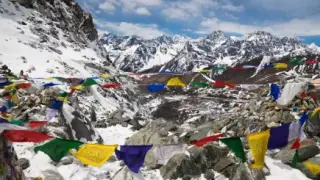
An early morning domestic flight from Kathmandu to Lukla (Tenzing-Hillary Airport, 2,840 m) takes approximately 35 minutes. Flights are scheduled early to use the clearest part of the day at the mountain strip. From Lukla a short, mostly flat walk of about 45 minutes reaches a Sherpa settlement in the lower Khumbu. The afternoon is a first look at the settlement: stone and timber construction, Buddhist prayer flags and mani walls, and the kitchen culture of a community that has lived above 2,800 m for generations. A light introductory meal of buckwheat pancakes and sweet tea is arranged on arrival. Overnight in Lukla or the settlement guesthouse.
Sleep at 2,840 m
Tonight’s stay
Teahouse
The morning centres on a Sherpa household cooking session at roughly 2,897 m: tsampa (roasted barley flour, the region's daily staple, prepared as a thick porridge mixed with butter tea or yak milk), butter tea (po cha, churned salted black tea with yak butter), and buckwheat pancakes with wild honey. A local Sherpa guide explains the food's role in altitude life, its caloric density and the seasonal variation between summer yak-dairy abundance and winter dried provisions. The afternoon is free for a short walk around the settlement and the mani stone walls before returning to Lukla. Overnight in Lukla.
Sleep at 2,897 m
Tonight’s stay
Teahouse
An early morning flight returns from Lukla to Kathmandu, again using the clearest morning window. After landing, a private vehicle drives west to Pokhara at 822 m on the Prithvi Highway, a journey of roughly 6 to 7 hours with a lunch stop en route. Pokhara sits on the north shore of Phewa Lake with Annapurna South and Machhapuchhre visible above the town on clear evenings. The evening is free for lakeside restaurants and a first look at the Pokhara food scene, which blends Nepali dal bhat with Tibetan and Gurung influences. Overnight in Pokhara.
Sleep at 822 m
Tonight’s stay
Hotel
A morning domestic flight from Pokhara to Jomsom Airport at 2,720 m takes about 20 minutes; the route follows the Kali Gandaki gorge, one of the world's deepest valleys, with Dhaulagiri (8,167 m) and Nilgiri visible from the aircraft window on clear days. From Jomsom a short drive south reaches Marpha at 2,670 m, a tightly packed stone-paved village known across Nepal for its apple orchards. Marpha produces dried apples, apple jam, apple brandy (distilled from local varieties) and cider. A Thakali cooking session in the afternoon covers the seven-curry dal bhat structure that makes Thakali food Nepal's most cited regional cuisine, plus an apple-product tasting with the village's orchard cooperative. Overnight in Marpha or Jomsom.
Sleep at 2,720 m
Tonight’s stay
Teahouse
Jomsom is the administrative centre of Mustang district at 2,720 m, a whitewashed town in a wide, wind-carved valley with a strong Tibetan cultural overlay. The morning is free to visit the local market, the Thakali cultural museum and the monastery above town. Afternoon options include a walk to the ancient walled village of Kagbeni at 2,810 m, a short distance north of Jomsom, for a deeper look at Tibetan-influenced architecture and food stalls selling tsampa-based sweets and dried yak meat. The evening meal is a guided Thakali dinner in Jomsom, reviewing the dishes from Marpha and adding a local wheat bread (roti) and tongba comparison to the Khumbu fermented-millet version. Overnight in Jomsom.
Sleep at 2,720 m
Tonight’s stay
Teahouse
A morning flight from Jomsom returns to Pokhara, then a private vehicle drives north into the hills above the Pokhara Valley toward Kolmakot, a Gurung and Magar village at roughly 1,050 m. The drive takes about 1.5 to 2 hours on paved and then dirt road. Kolmakot is a working hill-farming community; the afternoon is an immersive home-kitchen session with a Gurung family producing dhido (thick buckwheat or millet porridge, stirred continuously over a wood fire, the daily staple in hill villages), gundruk soup (using the same fermented greens made in Kathmandu on day one, now tasted in the community that produces it), and a tasting of tongba, the warm fermented millet drink served in a bamboo vessel with a bamboo straw. Overnight in Kolmakot village guesthouse.
Sleep at 822 m
Tonight’s stay
Teahouse
A morning walk around Kolmakot before the drive back down to Pokhara, arriving mid-morning. A Pokhara lakeside lunch is the final regional meal stop, with Newari and Gurung dishes available along the Lakeside strip. After lunch, a private vehicle or a domestic flight returns to Kathmandu (the 6 to 7 hour drive or a 25-minute flight, arranged at booking based on preference). The evening in Kathmandu is free for any last purchases of Nepali tea, spices, dried food or cooking equipment in the Thamel market. Overnight in Kathmandu.
Sleep at 822 m
Tonight’s stay
Hotel
A Swotah representative transfers you to Tribhuvan International Airport for your onward flight. If your flight allows, the Thamel area has early-opening cafes and spice shops for a final browse. Swotah can arrange extensions to the Annapurna Base Camp trek, the Everest region or a longer culinary programme in the Kathmandu Valley if you would like more time in Nepal.
What’s included
What's included
Every cost on the trail is broken out below — no hidden fees, no surprises at the trailhead.
Included
8 items
Airport Transfers: Comfortable transfers from and to the airport in Kathmandu at the beginning and end of the tour.
Accommodations: Quality hotel stays in Kathmandu, Pokhara, and Jomsom, including traditional Newari and Gurung homestays in Kritipur and Kolmakot for an authentic local experience.
Meals: All three Meals (Breakfast, Lunch, Dinner) during the Trek (Lukla, Mustang and Kolmokot).
Domestic Flights: All domestic flights within Nepal as per the itinerary, including Kathmandu to Lukla, Pokhara to Jomsom, and returns.
Cooking Classes: Guided cooking classes in Kathmandu and Kritipur, offering hands-on experience with Nepali and Newari cuisines.
Guided Tours: Professional guided tours in Kritipur, Bhaktapur, and the Sherpa settlement, including any entrance fees to historical sites.
Transportation: All ground transportation within Nepal, including jeep rides to Marpha and Kolmakot.
Support Staff: Experienced local guides and support staff throughout the tour, ensuring a rich and immersive experience.
Not included
9 items
International Airfare: Flights to and from your home country to Nepal are not included.
Appreciation contribution to host Family ($50-$100 per Host)
Travel Insurance: Comprehensive travel insurance is required but not included, covering medical, trip cancellation, and personal belongings.
Meals: Meals (Lunch and Dinner) during your stay in Kathmandu and Pokhara not included.
Visa Fees: Nepal visa fees for the duration of your stay (visa on arrival is available for many nationalities).
Personal Expenses: Expenses of a personal nature such as souvenirs, laundry, tips, and telephone calls.
Optional Activities: Costs related to optional activities not included in the tour itinerary.
Excess Baggage Charges: Any excess baggage fees imposed by airlines.
Extended Stays: Additional nights' accommodation before or after the tour dates.
How Hard Is the Himalayan Food Exploration Tour?
Himalayan Food Exploration Tour is an easy, low-altitude tour. The Khumbu and Mustang sections reach roughly 2,840 to 2,897 m, which is mild altitude. Physical activity is limited to short village walks and cooking-class time; no trekking experience is needed.
▲Easy. Max altitude about 2,897 m (9,505 ft). Short village walks and cooking classes. Suitable for most ages; no trekking experience required.
Overall Rating
2
Easy
out of 10 · physical effort scale
Max altitude2,897 m
Trekking days2 days
Trip Details
Planning your Himalayan Food Exploration Tour
Everything you need to plan the trek, topic by topic. Tap any one to open it.
Himalayan Food Exploration Tour is easy and low-altitude. The highest point is a…
Himalayan Food Exploration Tour is easy and low-altitude. The highest point is around 2,897 m in the Khumbu, which is mild altitude: visitors may feel slightly short of breath on the first day in Lukla but no acclimatisation schedule is required. Physical demand consists of short village walks of 30 to 90 minutes and time standing in cooking classes or workshops. None of the days involve steep trekking.
The pace is designed to give enough time at each food stop to cook and eat, not just observe. Classes in Kathmandu and Kirtipur are scheduled for the morning, leaving afternoons free for sightseeing. In the Khumbu and Mustang the rhythm slows slightly as Swotah's local partners arrange home-hosted meals and market visits. Families, older travellers and solo food enthusiasts all travel comfortably on this itinerary.
Spring (March to May) and autumn (September to November) are the two best season…
Spring (March to May) and autumn (September to November) are the two best seasons. Both give clear skies for the Lukla flight and the Jomsom flight, dry village paths for the short walks, and comfortable temperatures at 2,700 to 2,900 m. Autumn is particularly reliable for mountain views in the Khumbu and for the apple harvest at Marpha.
Winter (December to February) is cold but clear in the highlands, and the Kathmandu and Pokhara sections remain pleasant; the Mustang rain-shadow means Jomsom stays drier than most of Nepal even in winter. The monsoon (June to August) brings heavy rain to the Kathmandu Valley and Pokhara, but Jomsom and Marpha sit behind the Annapurna massif and stay relatively dry; however, Lukla flights are more often delayed or cancelled in the monsoon. The season cards above give the month-by-month picture.
Most visitors enter Nepal on a tourist visa on arrival at Kathmandu airport, ava…
Most visitors enter Nepal on a tourist visa on arrival at Kathmandu airport, available for 15, 30 or 90 days. Bring a passport valid for at least six months, a passport photo and the fee in cash (USD, EUR or GBP are accepted). Swotah advises on the current visa fee and rules before you travel.
Because this tour crosses two separate protected areas, it requires three permits, all arranged by Swotah. For the Lukla and Khumbu section the route needs the Sagarmatha National Park entry permit and the Khumbu Pasang Lhamu Rural Municipality permit. For the Jomsom and Marpha section the route needs the Annapurna Conservation Area Permit (ACAP). Fees for these permits can change; Swotah confirms current amounts at booking and includes them in the trip cost so there are no surprises.
Accommodation in Kathmandu and Pokhara is comfortable 3-star hotels with private…
Accommodation in Kathmandu and Pokhara is comfortable 3-star hotels with private bathrooms, hot water and Wi-Fi. In Lukla (2,840 m) and the Khumbu settlement, Jomsom (2,720 m) and Marpha (2,670 m) you stay in clean, well-run mountain guesthouses: smaller than the city hotels but warm, with proper beds and hot food available. In Kolmakot the stay is a community guesthouse or home-stay with local Gurung family, which is the most immersive night of the tour.
Upgrades to boutique hotels in Kathmandu and Pokhara are available on request. Rooms are pre-booked; in Lukla and Jomsom options are limited, so early booking matters for peak season.
Food is the centre of this tour, not a side feature. Each region brings a genuin…
Food is the centre of this tour, not a side feature. Each region brings a genuinely distinct food culture: the Newar cuisine of the Kathmandu Valley is rice and lentil-based with fermented and smoked elements; Sherpa food in the Khumbu uses tsampa, buckwheat and dairy; Thakali food in Jomsom is known as Nepal's most refined regional cuisine; Mustang's Marpha produces apple brandy and dried fruit; Gurung and Magar cooking in the Pokhara hills uses millet, maize and home-grown vegetables.
Vegetarian and vegan travellers are well served throughout, because plant-based cooking is the norm at altitude and in Buddhist communities. Tell Swotah about dietary needs at booking and the local partners will adjust every class and meal. Food hygiene at altitude is taken seriously: Swotah's partners use treated water for cooking and washing, and all food workshops are at established kitchens with clean preparation areas. Bottled and treated water is available at every stop.
Three domestic flights are the key transport links: Kathmandu to Lukla (35 minut…
Three domestic flights are the key transport links: Kathmandu to Lukla (35 minutes), Lukla to Kathmandu, and Kathmandu to Jomsom (45 minutes), with a return Jomsom to Pokhara flight. All these flights are operated by small propeller aircraft and are weather-dependent, which is the main schedule variable on this tour.
Lukla Airport (2,843 m) is one of the world's shorter mountain airstrips, and flights can be delayed by cloud or wind at any time of year, more often in monsoon months and on some winter mornings. The itinerary builds in a buffer day but travellers should hold flexible onward bookings out of Kathmandu. Road legs, including the drive to Kirtipur, Bhaktapur, Pokhara and Kolmakot, use private vehicles throughout.
Six dedicated food experiences anchor the tour. Day 1 in Kathmandu: a 3 to 4 hou…
Six dedicated food experiences anchor the tour. Day 1 in Kathmandu: a 3 to 4 hour cooking class covering momos (folded and steamed wheat-flour dumplings filled with buffalo or vegetables), thukpa (Tibetan-origin noodle broth), gundruk (sun-dried fermented greens, a Nepali preservation staple) and sel roti (ring-shaped deep-fried rice bread, a festival food). Day 2 in Kirtipur: a Newari food workshop covering chatamari (rice crepe), wo (black lentil fritter) and aila (Newari grain spirit) production. Day 3 in Bhaktapur: a street food walk with a stop for juju dhau (thick, set buffalo-milk yoghurt aged in clay pots, Bhaktapur's most celebrated product) and traditional sweets from the Taumadhi area.
Day 4 in the Khumbu: a Sherpa household meal with tsampa porridge, butter tea and buckwheat pancakes, cooked with a local family. Day 7 in Mustang: a Thakali cooking session in Marpha covering dal bhat with the Thakali seven-curry structure and apple-based snacks from the orchard town's own produce. Day 9 in Kolmakot: a Gurung home kitchen afternoon producing dhido (buckwheat or millet porridge), gundruk soup and locally brewed tongba (fermented millet beer, served warm).
A licensed, English-speaking Swotah guide accompanies the tour throughout. The g…
A licensed, English-speaking Swotah guide accompanies the tour throughout. The guide is familiar with the food traditions of each region and provides cultural context during every class and market visit, not just logistics. Local kitchen partners in Kirtipur, the Khumbu, Marpha and Kolmakot are selected for their food knowledge and cooking ability, not just their proximity.
Because the tour involves no high-altitude trekking, porters are not required. On the Lukla and Khumbu section a local Sherpa guide joins for the settlement walk and the household cooking session. All guides hold Ministry of Tourism licences.
Nepal Telecom (NTC) and Ncell provide 4G coverage in Kathmandu, Pokhara and Bhak…
Nepal Telecom (NTC) and Ncell provide 4G coverage in Kathmandu, Pokhara and Bhaktapur. Lukla and the Khumbu settlement have NTC signal but speeds are slower; Jomsom and Marpha have intermittent coverage with better signal in Jomsom town. Kolmakot village near Pokhara is in a valley with partial coverage. Swotah provides a tourist SIM.
Hotels in Kathmandu and Pokhara have Wi-Fi and power. Mountain guesthouses in Lukla, Jomsom and Marpha have charging facilities and usually Wi-Fi but rely on solar power, so charge devices during the day. Carry a power bank rated at least 10,000 mAh for the highland days.
Responsible food tourism means paying fair prices to local producers, minimising…
Responsible food tourism means paying fair prices to local producers, minimising single-use plastic at altitude (carry a reusable bottle and use the treated or filtered water your guide provides), and following waste disposal norms in Sagarmatha National Park where open burning and littering carry fines. Dress modestly at temples in Kathmandu and Bhaktapur and ask permission before photographing household cooking sessions.
Booking with a registered operator like Swotah ensures permits are properly purchased, local partners are paid at agreed rates and park rules are followed. The cooking-class partnerships on this tour are community enterprises; your participation directly supports the families and small businesses involved.
What to pack
What to pack
The full kit list. Anything we loan (sleeping bag, down jacket) is called out — bring everything else.
✓Main suitcase or duffel (leave large bag in Kathmandu hotel during Lukla/Mustang legs)
✓Daypack (25-30L) for highland flights
✓Small padlock
✓Packing cubes
Frequently Asked
Questions & Answers
Everything trekkers ask before booking. Don't see yours? Tap Enquire — we usually reply within a few hours.
Spring (March to May) and autumn (September to November) are the two best windows. Both seasons give clear skies for the Lukla and Jomsom domestic flights, dry paths for short village walks, and comfortable temperatures at 2,700 to 2,900 m. Autumn also aligns with the apple harvest in Marpha, which is a bonus for the Mustang food section. The monsoon (June to August) is possible in the Mustang region, which sits in the Annapurna rain-shadow and stays relatively dry, but Lukla flights face higher cancellation rates in monsoon months. Winter is cold at altitude but clear; Kathmandu and Pokhara sections are comfortable year-round.
The tour crosses two separate conservation areas, so three permits are needed. For the Lukla and Khumbu section: the Sagarmatha National Park entry permit and the Khumbu Pasang Lhamu Rural Municipality permit. For the Jomsom and Marpha section: the Annapurna Conservation Area Permit (ACAP). Permit fees can be updated by the Nepali government; Swotah confirms the current amounts at the time of booking and includes them in the trip cost. All three permits are arranged by Swotah. A Nepal tourist visa on arrival is also required; bring passport photos and the fee in USD cash.
Lukla Airport (Tenzing-Hillary Airport, 2,843 m) operates under visual flight rules on a short mountain strip. Flights can be delayed or cancelled by low cloud, morning fog or wind at any time of year, and the risk is highest in the monsoon (June to August) and on some winter mornings. Swotah builds a half-day schedule buffer around the Lukla flying days and books the first available morning slot (early flights are usually clearer). If the delay extends past the buffer, Swotah will rearrange the downstream itinerary to recover lost days where possible. Travellers should hold flexible onward international flights from Kathmandu and carry comprehensive travel insurance covering trip disruption.
Yes, fully. Plant-based cooking is the norm in the Khumbu, Mustang and the Pokhara hill communities, and much of the Kathmandu Valley's Newari food tradition is naturally vegetarian. The Kathmandu cooking class includes vegetable momos, vegetable thukpa and gundruk alongside any meat options; the Newari workshop covers rice and lentil-based dishes that are typically vegetarian; the Sherpa tsampa and buckwheat pancake session is fully plant-based except for butter tea (a dairy product, easily skipped). Vegan travellers should tell Swotah at booking: dairy appears in some Khumbu and Mustang dishes (butter tea, chhurpi cheese) and the local partners will substitute or flag those items in advance.
The tour is designed to be accessible to most ages and fitness levels. There is no trekking; physical activity is limited to short village walks of 30 to 90 minutes on mostly flat or gently sloping paths, and time spent standing at cooking benches. The Lukla and Jomsom sections reach around 2,720 to 2,897 m, which may cause mild breathlessness on arrival for some people. Travellers with heart or lung conditions should consult their doctor before booking. The domestic flights involve small propeller aircraft with steps rather than jetways; Swotah can advise on boarding assistance where available.
Book at least 6 to 8 weeks in advance for most departures. Peak season (March to May and September to November) sees high demand for the small mountain guesthouses in Lukla and Jomsom, and domestic flight seats on the Lukla and Jomsom routes sell out quickly in October and November. For peak-season travel, booking 3 to 4 months ahead is advisable. Swotah pre-books all accommodation and domestic flights from the time of your deposit, so early booking secures your preferred dates.
The tour includes: all airport transfers in Nepal, 3-star hotel accommodation in Kathmandu and Pokhara, mountain guesthouses in Lukla, the Khumbu settlement, Jomsom, Marpha and Kolmakot, all domestic flights (Kathmandu-Lukla, Lukla-Kathmandu, Kathmandu-Jomsom, Jomsom-Pokhara), private road transport for all overland legs, the Sagarmatha National Park permit, the Khumbu Pasang Lhamu Rural Municipality permit, the ACAP permit, all cooking classes and food workshops, a licensed Swotah guide throughout, local guides in the Khumbu and Mustang, and breakfast at hotels. International flights to and from Kathmandu, Nepal visa fees, travel insurance and personal spending money are not included.
Yes. Swotah offers solo traveller pricing with a single-supplement for private rooms. Solo travellers are sometimes paired with other solo bookings on the same dates to share the group guide and vehicle costs, subject to availability, which reduces the supplement. Contact Swotah to discuss solo options and current pricing. The cooking classes and food workshops are fully enjoyable solo: the group setting in a local kitchen naturally encourages conversation with other participants.
The Himalayan Food Exploration Tour runs with a minimum of 2 and a maximum of 10 travellers per departure. Smaller groups (2 to 4) allow more direct participation in cooking sessions, where bench space and kitchen interaction are limited. Private departures for couples, families or small groups are available; contact Swotah for pricing. The cooking-class partnerships are set up for small groups and the quality of the food experience improves with fewer participants.
Six cooking experiences anchor the itinerary. In Kathmandu: momos (steamed dumplings), thukpa (noodle broth), gundruk (fermented greens) and sel roti (rice doughnut). In Kirtipur: chatamari (rice crepe), wo (black lentil fritter) and a tasting of Newari accompaniments. In Bhaktapur: a food walk with juju dhau (king curd, set in clay pots), yomari (rice-flour sweet stuffed with molasses) and traditional market sweets. In the Khumbu: tsampa porridge, butter tea and buckwheat pancakes with a Sherpa family. In Mustang: a Thakali cooking session with the seven-curry dal bhat structure and apple-based products from Marpha. In Kolmakot: dhido (millet or buckwheat porridge), gundruk soup and a tasting of tongba (fermented millet beer).
The currency in Nepal is the Nepalese Rupee (NPR). USD is the most useful foreign currency for the Nepal visa fee on arrival, permit fees and tips. ATMs in Kathmandu and Pokhara accept international Visa and Mastercard; carry NPR cash for the highland sections. Lukla and the Khumbu settlement have no ATMs; Jomsom has one ATM that is not always reliable. Withdraw sufficient NPR in Kathmandu before the Lukla flight and again in Pokhara before the Kolmakot day. Budget approximately USD 20 to USD 40 per day for personal spending (lunches, drinks, souvenirs) beyond what is included.
Home-hosted sessions in the Khumbu and Kolmakot are in private family kitchens or community spaces. Remove shoes at the door if your host does so. Accept food and drink with both hands or the right hand as a sign of respect. Ask before photographing people or the cooking process; most hosts are happy to be photographed but a question first is courteous. Do not waste food: servings are often generous and refusing politely is fine, but leaving large amounts uneaten is considered disrespectful. Bring a small gift if you wish (biscuits or fruit from a Kathmandu market are appropriate). Tipping the host family directly at the end of the session is customary and appreciated.
The tour's highest point is approximately 2,897 m in the Khumbu section, which is mild altitude. Most healthy adults adjust without medication, but some experience a light headache or fatigue on the first day at Lukla (2,840 m). The itinerary keeps the first Lukla day gentle, with a short walk and a relaxed meal rather than physical exertion. Drink 2 to 3 litres of water per day in the highlands, avoid heavy alcohol on the first highland night, and eat a light meal on arrival day. Consult your doctor before departure about acetazolamide (Diamox) if you have a history of altitude sensitivity. If you develop a persistent headache, nausea or disorientation, tell your guide immediately; the solution is rest or descent to a lower elevation.
Swotah selects kitchen partners at each stop based on water source, preparation practices and cleanliness, not just culinary knowledge. All cooking classes and home-hosted sessions use water that has been boiled or treated, and cutting boards and utensils are washed before use. At altitude, boiling point drops (water boils at about 91 C at 2,800 m) so Swotah's Khumbu and Mustang partners use pressure cooking or extended boiling for anything that must be fully cooked through. Travellers are advised to use hand sanitiser before handling food, avoid raw street food bought outside the structured workshops, and drink only bottled or treated water throughout the tour. A basic stomach remedy and rehydration salts are recommended in your personal first-aid kit.
Why Travel with Swotah
Why Book the Himalayan Food Exploration Tour with Swotah
Most Nepal operators look the same from the outside. Here's what actually makes the difference.
Born in Nepal
100% locally owned since 2016. Trek profits stay with the mountain families and village schools along your route.
Guaranteed Departures
Every date on our calendar runs — no minimum group size. You never pay to be cancelled.
Certified Guides
Government-licensed, WFR-certified, English-speaking. Most were born within two valleys of the trail.
Small Groups
Small groups, never more than 8 trekkers. You get a real experience, not a convoy.
Gear Included
Sleeping bag and down jacket loaned at no extra charge — both rated to –20°C.
Flexible Payment
Deposit from 10% to confirm, balance before departure or in cash on arrival. Reschedule up to 30 days prior.
24/7 Support
Kathmandu office and dedicated WhatsApp emergency line. We answer at 2am if needed.
Hall of Fame
TripAdvisor Travelers' Choice 2023, 2024 and 2025. Hundreds of verified five-star reviews.
Get a free personalised travel brief for the Himalayan Food Exploration Tour.
Tell us your travel dates and group size. Our team in Kathmandu will put together a tailored itinerary, honest costs, and practical tips — completely free, no commitment.