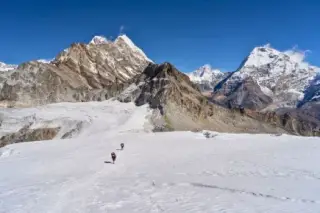
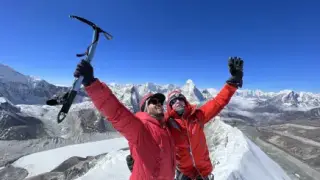
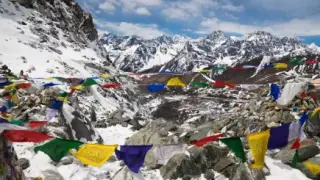
A 16-day AD-grade climb of Naya Kanga (5,884 m) in Langtang, Nepal: glacier, crampons, fixed ropes and a panorama of Shishapangma and Langtang Lirung.
Duration
16 Days
Max Altitude
5,884 m / 19,304 ft
Difficulty
Hard
Group Size
Max 14 trekkers
Region
Langtang Valley Treks, Nepal
Best Season
Spring · Autumn
Accommodation
Hotels, teahouses & tented camp
Meals
All meals on trek & at camp
Transport
Private jeep KTM-Syabrubesi & return
Dates & Prices
Choose your date
All dates are guaranteed departures — we never cancel for low numbers. Book online or send a quick enquiry.
YearMonth
3 departures · 2026
Oct
6
Oct 6, 2026 — Oct 21, 2026
Guaranteed departure — from 2 trekkers
Available
USD1,925
per person
Oct
20
Oct 20, 2026 — Nov 4, 2026
Guaranteed departure — from 2 trekkers
Available
USD1,925
per person
Nov
10
Nov 10, 2026 — Nov 25, 2026
Guaranteed departure — from 2 trekkers
Available
USD1,925
per person
Can’t find a suitable date? We run private departures on any date with as few as 2 trekkers.
Trip Overview
About the Naya Kanga Peak Climbing
Naya Kanga Peak Climbing is a 16-day mountaineering expedition in Nepal's Langtang region, reaching the summit of Naya Kanga (also called Ganja La Chuli) at 5,884 m. The climb is rated Alpine D (AD) and combines a classic Langtang valley approach through teahouse lodges with a technical summit push over glacier and mixed terrain using crampons and ice axe. It is a Nepal Mountaineering Association Group B trekking peak and requires the NMA trekking-peak permit alongside the Langtang National Park entry and TIMS card.
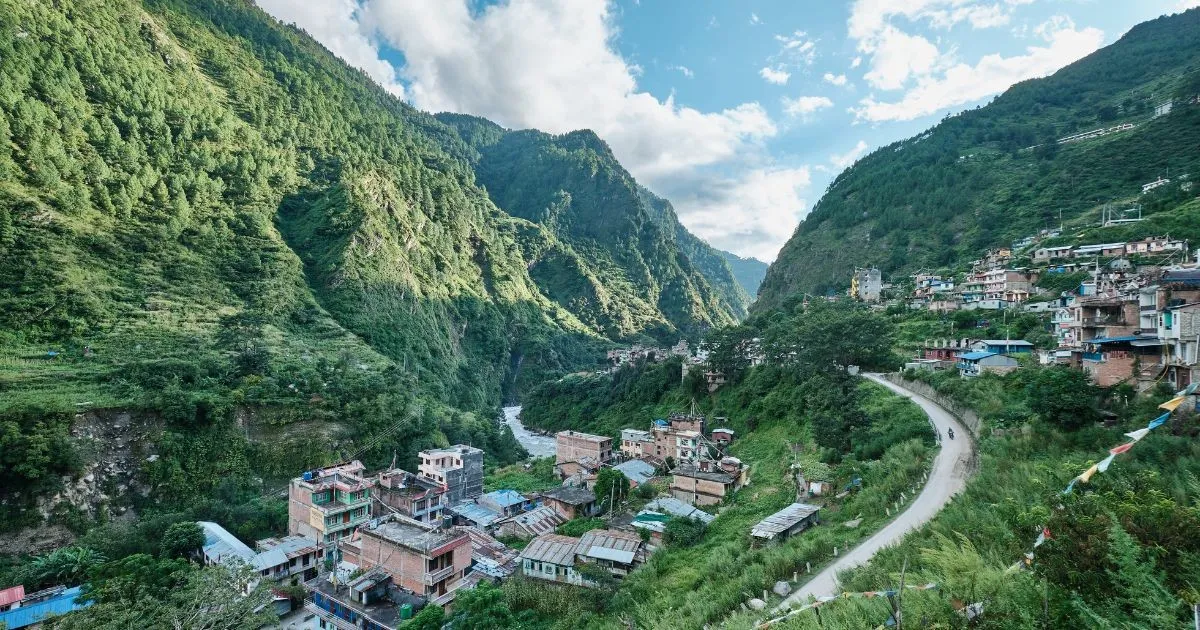
The approach follows the Langtang Khola from Syabrubesi (1,400 m) to Kyangjin Gompa (3,800 m), passing dense oak and rhododendron forest, the rebuilt Langtang Village (3,500 m), and classic Langtang Lirung (7,246 m) views. An acclimatisation day at Kyangjin includes the option to hike the moraine ridge toward Chorkari Ri (5,050 m). From Kyangjin the route moves onto camping terrain: Base Camp at 4,600 m, High Camp at 5,000 m, and the summit bid on day 9 via fixed ropes and a glacier approach from the south-west.
The summit panorama takes in Langtang Lirung (7,246 m), Langtang II (6,571 m), Langshisa Ri (6,310 m), Pemthang Ri (6,836 m), Pemthang Kapro Ri (6,830 m), Shishapangma (8,013 m) across the Tibet border, and Ganesh Himal to the west. Naya Kanga is a serious climb that asks for prior high-altitude trekking fitness and rope-work familiarity; Swotah guides brief rope skills at Base Camp, but arriving with experience shortens that learning curve considerably. The sections below cover the technical grade, permits, best seasons and what to pack.
Last updated June 2026
Trip Highlights
Highlights
1
Summit Naya Kanga (5,884 m) via glacier and fixed ropes
2
Panorama of Shishapangma (8,013 m) and Langtang Lirung (7,246 m)
3
Classic Langtang valley approach: lodges to Kyangjin Gompa (3,800 m)
4
Acclimatisation day at Kyangjin Gompa with option to reach 5,050 m
5
Dense forest with red panda habitat below Lama Hotel (2,748 m)
6
AD-grade trekking peak with NMA permit and professional guide team
Day by Day
Naya Kanga Peak Climbing Itinerary: 16 Days
Tap any day to expand — altitudes, walking times, meals, and overnight details for every stage of the journey.
A Swotah representative meets you at Tribhuvan International Airport and transfers you to your hotel in Kathmandu (1,400 m). In the evening your guide briefs you on the 16-day expedition: the itinerary, NMA permit paperwork, gear check and what to expect on the glacier. Overnight in Kathmandu.
Sleep at 1,400 mDinner
Tonight’s stay
Hotel
A guided half-day of Kathmandu Valley heritage sites, including Boudhanath Stupa and Swayambhunath, leaves the afternoon free for gear rental and any last shopping in Thamel. Swotah's office handles the NMA trekking-peak permit and TIMS card using your passport copy. Overnight in Kathmandu.
Sleep at 1,400 mBreakfast
Tonight’s stay
Hotel
A private jeep heads north-west from Kathmandu on the Pasang Lhamu Highway to Syabrubesi (1,400 m), 117 km and roughly 7 to 9 hours depending on road conditions. The road passes through Trishuli, Dhunche and the Langtang National Park checkpoint at Dhunche, where the entry permit is collected. Overnight in Syabrubesi.
Sleep at 1,400 mBreakfastLunchDinner
Tonight’s stay
Guesthouse
The trail climbs from Syabrubesi along the Langtang Khola gorge through dense mixed forest of oak, maple, alder and rhododendron, passing Bamboo village (1,970 m) and Rimche (2,380 m) before reaching Lama Hotel (2,748 m). The forest between Bamboo and Lama Hotel is one of the best remaining red panda habitats in Nepal. About 5 to 6 hours. Overnight at Lama Hotel.
Sleep at 2,748 mBreakfastLunchDinner
Tonight’s stay
Guesthouse
The trail follows the Langtang Khola east, climbing through Ghora Tabela (2,970 m) and Thangshyap (3,140 m) to Langtang Village (3,500 m), the main Tamang settlement of the valley. Langtang Lirung (7,246 m) dominates the north face above the village, which was rebuilt after the 2015 earthquake. About 5 to 6 hours. Overnight in Langtang Village.
Sleep at 3,500 mBreakfastLunchDinner
Tonight’s stay
Teahouse
The trail continues east through yak pastures and the villages of Muna and Singdum to Kyangjin Gompa (3,800 m), a Buddhist monastery settlement at the head of the inhabited valley. En route the group ascends Kyangjin Ri, the viewpoint ridge that reaches 4,773 m, giving the first close look at the upper Langtang glacier and Naya Kanga's summit profile. The monastery and the government yak-cheese factory are both worth visiting in the afternoon. About 5 to 6 hours. Overnight in Kyangjin Gompa.
Sleep at 3,800 mBreakfastLunchDinner
Tonight’s stay
Teahouse
The acclimatisation day at Kyangjin Gompa (3,800 m) is a genuine training day, not a rest day. The recommended hike is to Chorkari Ri at 5,050 m: a 5 to 6 hour out-and-back that takes the body above 4,500 m and returns it to sleep at 3,800 m, the correct acclimatisation pattern before committing to Base Camp tents. A shorter option is the moraine walk toward Langtang glacier at around 4,100 m, which gives useful glacier familiarisation. Overnight in Kyangjin Gompa.
Sleep at 3,800 mBreakfastLunchDinner
Tonight’s stay
Teahouse
Naya Kanga Base Camp (4,600 m) sits on the southern side of Kyangjin, roughly 5 to 6 hours from the gompa by trail and moraine. The route crosses the Kyangjin valley and gains the moraine shelf above the Langshisa glacier. Camp is tented from here onward, with Swotah's cook team already in place. The afternoon is for gear check, crampon and harness fitting, and a guide briefing on the glacier route and fixed-rope technique. Overnight at Base Camp.
Sleep at 4,600 mBreakfastLunchDinner
Tonight’s stay
Camping
High Camp (5,000 m) is 3 to 4 hours above Base Camp, gaining 400 m over mixed moraine and the lower glacier. The route crosses a glacier section requiring crampons for the first time and steepens toward the camp site, which sits on a sheltered shelf with views across to Shishapangma (8,013 m) on the Tibet border. Afternoon is for rest, hydration (minimum 4 litres) and an early dinner before the pre-dawn start. Overnight at High Camp.
Sleep at 5,000 mBreakfastLunchDinner
Tonight’s stay
Camping
The summit bid starts at 3 to 4 a.m. with headtorches and layered down clothing. The route crosses a flat glacier approach, steepens on a mixed ridge and reaches the fixed-rope section installed by Swotah guides on the upper face. Naya Kanga's summit (5,884 m, also known as Ganja La Chuli) gives a 360-degree panorama: Langtang Lirung (7,246 m) and Langshisa Ri (6,310 m) to the north, Pemthang Ri (6,836 m) and Pemthang Kapro Ri (6,830 m) to the east, Shishapangma (8,013 m) across the Tibet border, and Ganesh Himal (7,422 m) to the south-west. Descent to High Camp takes 3 to 4 hours. Total day approximately 7 to 9 hours. Overnight at High Camp.
Sleep at 5,884 mBreakfastLunchDinner
Tonight’s stay
Camping
The descent from High Camp to Base Camp (4,600 m) takes 3 to 4 hours, crossing the glacier section with crampons and dropping onto the moraine. The afternoon at Base Camp is for gear drying, packing down the tented camp and debriefing with the guide team. Overnight at Base Camp.
Sleep at 4,600 mBreakfastLunchDinner
Tonight’s stay
Camping
Base Camp to Kyangjin Gompa (3,800 m) is a 3 to 4 hour descent back down the moraine and valley trail. Back in a teahouse lodge, a hot shower, a full menu and a flat mattress mark the return to comfort. The cheese factory's yak yoghurt is a popular post-summit reward. Overnight in Kyangjin Gompa.
Sleep at 3,800 mBreakfastLunchDinner
Tonight’s stay
Teahouse
Kyangjin Gompa to Lama Hotel (2,748 m) is a long but mostly downhill day of 5 to 6 hours back through Langtang Village and Ghora Tabela, the altitude dropping 1,000 m and the forest closing in again below 3,000 m. Overnight at Lama Hotel.
Sleep at 2,748 mBreakfastLunchDinner
Tonight’s stay
Guesthouse
The final day of walking descends the Langtang Khola gorge trail from Lama Hotel to Syabrubesi (1,400 m), 5 to 6 hours through the same mixed forest where red pandas forage. Overnight in Syabrubesi.
Sleep at 1,400 mBreakfastLunchDinner
Tonight’s stay
Guesthouse
A private jeep returns to Kathmandu on the Pasang Lhamu Highway, 7 to 9 hours depending on conditions, stopping for lunch en route. The afternoon and evening in Kathmandu are free for a celebratory dinner or shopping in Thamel. Overnight in Kathmandu.
Sleep at 1,400 mBreakfastLunch
Tonight’s stay
Hotel
Your expedition ends today. A Swotah representative transfers you to Tribhuvan International Airport for your onward flight. If you would like to extend your stay, add a cultural tour or book another trip, the team is glad to help arrange it.
BreakfastLunch
What’s included
What's included
Every cost on the trail is broken out below — no hidden fees, no surprises at the trailhead.
Included
11 items
Airport transfers with an escort by Private Vehicle.
Standard/Deluxe rooms in Kathmandu on twin/double sharing with breakfast.
Guided sightseeing tour in Kathmandu, along with ticket fees.
Accommodation during trek (or camping in case of need).
All meals (Breakfast, lunch, dinner) during the trek.
Authorized English-speaking guide along with required Porters (3:1) for the trek.
Equipment clothing for porter, including their insurance.
All applicable government taxes.
All expenses for all staff –meals, accommodation, salary, equipment, insurance, transportation.
All necessary paperwork, local permit and climbing permit cost.
Medical kit (carried by your trek leader).
Not included
5 items
International flights; Nepalese visa fee.
Extra night accommodation in Kathmandu and Lukla because of early arrival, late departure, or early return from the mountain due to any reason other than the scheduled itinerary.
Lunch and evening meals in Kathmandu.
Travel and rescue insurance.
Personal expenses.
How Hard Is the Naya Kanga Peak Climbing?
Naya Kanga Peak Climbing is graded Alpine D (AD) and involves glacier travel, mixed rock and snow, crampon and ice-axe use, and ascending fixed ropes to 5,884 m. Prior high-altitude trekking fitness is required and rope-work experience is a strong advantage.
▲AD grade. Glacier, mixed terrain, crampons + ice axe, fixed ropes. Max 5,884 m. Pre-trip fitness and rope familiarity strongly advised.
Overall Rating
6
Hard
out of 10 · physical effort scale
Max altitude5,884 m
Trekking days13 days
Trip Details
Planning your Naya Kanga Peak Climbing
Everything you need to plan the trek, topic by topic. Tap any one to open it.
Naya Kanga Peak Climbing is rated Alpine D (AD), which places it above standard…
Naya Kanga Peak Climbing is rated Alpine D (AD), which places it above standard trekking peaks but well within the range of competent amateur climbers. The route from High Camp to the summit crosses a glacier approach, negotiates mixed rock and snow, and uses fixed ropes on the steeper sections. A minimum gear set of crampons, ice axe, harness, helmet, ascender and carabiner is mandatory, and Swotah guides conduct a gear briefing and rope-skills session at Base Camp.
Days on the mountain run 5 to 8 hours. The summit bid from High Camp (5,000 m) starts before 4 a.m. to reach the 5,884 m top and return before afternoon clouds build on the glaciers. Anyone with a respiratory or cardiac condition must take a medical advice before booking. Swotah guides carry a pulse oximeter, a first-aid kit and supplemental oxygen for emergencies. Tell your guide early about any altitude symptoms; descent is always the first treatment.
Spring (March to May) and autumn (September to November) are the two windows for…
Spring (March to May) and autumn (September to November) are the two windows for Naya Kanga, because stable weather above 5,000 m is essential for safe glacier travel. Autumn after the monsoon is the most popular: skies are clear, the snow on the upper mountain is well-consolidated, and daytime temperatures on the glacier are manageable. Spring brings slightly warmer lower-valley conditions and rhododendron in bloom on the Lama Hotel section, though early-season snow can make the high camp approach heavier.
Winter (December to February) is possible for experienced parties but cold, and the upper glacier freezes hard, making crampon technique more demanding. The monsoon (June to August) brings cloud, unstable snow and lightning risk on the exposed summit ridge; most expeditions avoid it entirely. The season cards below show the month-by-month temperature and recommendation at altitude.
Naya Kanga is a Nepal Mountaineering Association Group B trekking peak, so it re…
Naya Kanga is a Nepal Mountaineering Association Group B trekking peak, so it requires three permits. The NMA trekking-peak climbing permit costs approximately USD 250 per person in the spring high season (March to May) and around USD 125 in autumn (September to November); current fees are confirmed at booking because NMA adjusts them periodically. The Langtang National Park entry permit costs NPR 3,000 for non-SAARC nationals and is obtained at the park gate in Dhunche or Syabrubesi. The TIMS (Trekkers' Information Management System) card costs NPR 2,000 for individual trekkers organised through an agency.
There is no restricted-area permit for the Langtang valley. Swotah arranges the NMA permit and TIMS card on your behalf once you provide a passport copy and photos, and confirms the current NMA fee before you pay your final balance. The national park entry is paid at the gate and is straightforward.
Kathmandu nights are in standard or superior hotels, and the Syabrubesi to Kyang…
Kathmandu nights are in standard or superior hotels, and the Syabrubesi to Kyangjin Gompa section uses teahouse lodges. Lodges at Lama Hotel, Langtang Village and Kyangjin Gompa are well established, with hot showers and a broad menu available at Kyangjin. Once the route leaves Kyangjin for Base Camp the accommodation switches entirely to tented camp, with Swotah's cook and support crew running the kitchen.
A four-season sleeping bag is essential for nights at Base Camp (4,600 m) and High Camp (5,000 m), where temperatures drop to minus 15 Celsius or lower in autumn and below minus 20 in winter. Swotah provides tents and camping equipment as part of the expedition package. A sleeping bag liner adds a few degrees of warmth and keeps the inner clean during a camp that involves no shower access.
Three meals a day are included throughout the trip. On the teahouse section, dal…
Three meals a day are included throughout the trip. On the teahouse section, dal bhat, noodles, Tibetan bread and egg dishes are the standard menu, and Kyangjin Gompa's lodges serve yak cheese and yak yoghurt produced in the valley's famous cheese factory. From Base Camp onward, Swotah's cook team provides hot breakfast, packed lunch and a two-course camp dinner, with calorie-dense food suited to the demands of high-altitude climbing.
Water above 4,000 m needs treatment even when clear: boil lodge water or use a purification filter or tablets. Aim for 3 to 4 litres a day on the approach and at least 4 litres on summit day to reduce the risk of acute mountain sickness. A Swotah-provided SIM card gives basic Nepal Telecom coverage in Syabrubesi and Kyangjin; the mountain camps are off-grid.
Syabrubesi is the trailhead for Naya Kanga, 117 km north-west of Kathmandu by ro…
Syabrubesi is the trailhead for Naya Kanga, 117 km north-west of Kathmandu by road on the Pasang Lhamu Highway. The drive takes 7 to 9 hours by private jeep depending on road conditions and the season, with a checkpoint at Dhunche where park permits are checked. Swotah runs both legs by private vehicle, which handles the narrow mountain road better than a local bus. The road is paved to Dhunche and mostly unpaved and steep beyond, so the drive is rough; take a motion-sickness tablet if you are prone.
Kathmandu's Tribhuvan International Airport is the entry point; no domestic flight is needed. Gear rental shops for crampons, ice axes, harnesses and high-altitude boots are concentrated in Thamel, Kathmandu, and Swotah can recommend reliable rental agents. Purchasing or renting gear in Kathmandu on arrival day is straightforward if you have booked in advance.
The summit day on Naya Kanga starts from High Camp (5,000 m) before dawn, typica…
The summit day on Naya Kanga starts from High Camp (5,000 m) before dawn, typically at 3 to 4 a.m., to reach the 5,884 m top and descend before afternoon conditions deteriorate on the glacier. The approach from High Camp crosses a flat glacier section, steepens on a mixed ridge, and finishes on the fixed-rope section that Swotah's guides install on the upper face. A head-torch, layered clothing and warm mitts are non-negotiable for the cold pre-dawn start.
The summit gives a 360-degree panorama: Langtang Lirung (7,246 m) and Langshisa Ri (6,310 m) dominate the north, Shishapangma (8,013 m) sits across the Tibet border, and Ganesh Himal (7,422 m) and the Jugal Himal fill the south-west. Descent to High Camp takes 3 to 4 hours. If weather closes in or a team member shows AMS signs, Swotah guides will turn the group around; summit success rates on Naya Kanga are high in settled autumn and spring windows.
Kyangjin Gompa (3,800 m) is the hub of the Langtang valley's upper section, a sm…
Kyangjin Gompa (3,800 m) is the hub of the Langtang valley's upper section, a small settlement with a centuries-old Buddhist monastery, a government-run yak-cheese factory, and a small permanent farming and herding community. The acclimatisation day here on day 6 gives the body 24 hours to adjust before moving to camping altitude, and several hikes from the village serve double duty as altitude preparation.
Chorkari Ri at 5,050 m is the main acclimatisation option: a 5 to 6 hour out-and-back that takes you well above 4,500 m and returns you to Kyangjin the same day. The moraine hike toward Langtang glacier gives glacier familiarisation at lower stakes. The Kyangjin Ri viewpoint at 4,773 m is a shorter option. The rule of thumb is sleep low and hike high: returning to the 3,800 m lodge after each excursion is the correct pattern before committing to Base Camp tents.
A licensed climbing guide is required for Naya Kanga under NMA regulations. Swot…
A licensed climbing guide is required for Naya Kanga under NMA regulations. Swotah's high-altitude guides hold NMA summit licenses, have first-aid certification from the Kathmandu Environmental Education Project (KEEP) or equivalent, and have personal summit experience on Naya Kanga and other peaks above 6,000 m. The guide-to-client ratio on the summit push is 1:2 or better, and guides install fixed ropes on the technical sections above High Camp before the summit attempt.
A porter carries 20 to 25 kg on the teahouse section (Syabrubesi to Kyangjin) and loads cap at that weight; camp staff carry equipment from Kyangjin to the mountain camps. Swotah provides a free duffel for the porter so you walk with a light 20-25 L daypack. Tipping is customary: a common figure for a 16-day expedition is USD 20 to USD 30 per day for the climbing guide, USD 10 to USD 15 for the cook, and USD 8 to USD 12 for porters, though any amount is at your discretion.
Nepal Telecom (NTC) gives a usable signal in Syabrubesi, Lama Hotel and Kyangjin…
Nepal Telecom (NTC) gives a usable signal in Syabrubesi, Lama Hotel and Kyangjin Gompa; coverage drops on the mountain from Base Camp upward. Swotah provides a tourist SIM. Charging at teahouse lodges is possible for a small fee (typically NPR 200 to 400 per device). Base Camp and High Camp have no grid power, so a power bank of at least 20,000 mAh is important; cold temperatures drain lithium batteries fast, so keep it in a jacket pocket at night.
Responsible climbing on Naya Kanga means carrying out all waste from the mountain camps, using a reusable bottle rather than single-use plastic, keeping noise low around the Kyangjin Gompa monastery, and following the guide's turn-around time without argument. Fixed ropes are removed after the expedition season by Swotah's crew. Booking through a registered NMA-affiliated operator ensures porters earn a fair wage, carry legal loads and have insurance, all of which NMA requires operators to document.
What to pack
What to pack
The full kit list. Anything we loan (sleeping bag, down jacket) is called out — bring everything else.
✓Duffel bag (carried by porter to Kyangjin)
✓Daypack (20-25 L)
✓Dry bag or pack rain cover
✓Packing cubes
Frequently Asked
Questions & Answers
Everything trekkers ask before booking. Don't see yours? Tap Enquire — we usually reply within a few hours.
The best seasons to do Naya Kanga Peak Climbing are autumn (September, October, and November) and spring (March, April, May).
Usually, we have to walk about 5-7 hours a day. But it shouldn't be taken as certain thing. Because the walking hour really depend on client's speed. So it's really relative.
In some villages, it is possible to charge the devices, but it costs extra to charge the camera and other electronic equipments. It usually costs between $3-$6 per hour. So it's expensive. The best idea is to bring a power bank.
Yes, you can add the extra days as per your wish, but for the extra day, you will have to pay the additional cost to cover guides, porters, accommodation and food.
The hotel in Kathmandu does provide the free storage services. So you can leave the clothes which are not necessary for the trekking. The best way is to save it in our office store room which is equally safe.
It's always a good idea to book on your own. But we can also help you booking your flight in case of request.
To confirm your booking, a deposit of $200 or 15% of total trip cost is required if you are booking at least a year in advance before trip departure date. If booking is made less than 100 days before the trip departure, you'll need to pay 20% to confirm the trip, if before two months, 25% of the total trip cost will need to be paid and if booked between 30-60 days, 50% of the total trip cost needs to be paid and finally, if you are booking 30 days prior to trip departure, then 100% payment should be made. The payments can be easily made by the bank transfer or Western Union Money transfer. The due balance is payable on arrival in Kathmandu with cash (preferably USD/EURO) or card on POS/credit card machine. Please note that non refundable fee is 10% or $200 whichever is greater.
You have to pay the remaining balance after arriving in Kathmandu either by cash or through credit card, before we start our adventure.
There are no hidden costs in our itineraries. Therefore you don't need to carry much, but everything that's not mentioned on itinerary for example extra cup of tea, coffee, charging electrical appliances, can cost you extra. Therefore, we recommend you to keep at least $20-$50 per day for your personal expenses.
Definitely we will provide you porter, or yak as per the condition. Besides your personal bag and the water bottle which will be frequently needed for you, they must be carried by you and remaining will be carried by our porter or yak.
Yes, of course you can change the lodge if you don’t feel comfortable at one place, but it really depends on the availability of the lodges. During the peak season, the possibilities of changing the lodges are low.
We will send our potters to reserve the lodges before we reach there.
Naya Kanga Peak is quite popular and difficult peak to climb, so you need good stamina and energy to climb it. You need to know how to use the climbing equipment and gears. At Base Camp, our guide also helps you to how to use that equipment so you don’t need to worry about that.
Yes, you shouldn’t worry about this. As you arrive, our representative will be standing outside the airport terminal. You'll be directly transferred to the hotel.
For nights in cities, we use standard/superior standard/deluxe rooms whereas, during the trek we use lodges/tea houses/guesthouses/home stay for our clients, and whatever is available and accessible. We also arrange sleeping bags for our clients, on their request. For this expedition, accommodation will be tented camp.
During the trek, you will get clean and hygienic food. Our cooks and helpers will cook the special meals.
There are plenty of water stations on each stop on the route. You can easily fill up the bottle from the open taps. We recommend that you bring water purifier tablets with you or at least get it from Kathmandu before you depart for trekking. You can also buy mineral waters but we usually recommend tap water which is pure and it helps us not promoting plastic bottled water.
We mostly use the comfortable and efficient vehicle so that you may not get a problem during the ride. We use private or tourist vehicle for sightseeing in the Kathmandu. Depending on the nature or group sized, we use cars, minibus, vans or jeep for travelling along the narrow and bumpy roads of Nepal. Mostly we use AC vehicles for your comfort.
Yes, the trekking guides working in our company are the certified license holders and they also have received high altitude first aid training from KEEP (Kathmandu Environmental Education Project).
Our guides are well trained; they carry the first aid box for emergency. You also take some medicine box for your personal use.
Yes, our climbing guides are well trained and have got the license from the Nepal Mountaineering Association. They are experienced with many mountains above 6000 m to 7000 m and also some of them have experienced the 8000 m peaks.
Usually, we rent a sleeping bag which is good for -10 degree Celsius or -20 degree Celsius. In case the sleeping bag is not warm enough for you, we'll also provide you the extra blanket.
During trek, please use comfortable and flexible dress. While trekking during the day at lower altitudes, lightweight trekking trousers and T-shirts are recommended. It's always a good idea to carry a waterproof jacket and some warmer clothing with you though as mountain weather is notoriously unpredictable. For the cold nights, thermal underwear, a warm fleece jacket and even a down jacket will help to keep you warm. Good shoes are of great importance. They must be comfortable. For higher altitude treks where you may have to tread snow for long hours, good boots are available for rent in Kathmandu. For mountaineering, you will require special clothes that can be bought or hired from us.
No vaccinations are compulsory in the Himalaya, but we do recommend you are covered for Diphtheria & TB, Hepatitis A, Hepatitis B, Malaria, Typhoid, Polio and Tetanus. We also recommend: •A dental check-up prior to traveling that you know your blood group in case of emergency. If you have any pre-existing medical conditions which might affect you on tour, you make these known to your tour leader and Swotah travelers at the time of your booking.
Yes, for the first few days, it's possible to have telephonic communication. In some villages, you can make local and international calls from telephone provided by the guesthouse owner after paying the price directly to them. In higher altitude regions, we usually have satellite phones with our Sherpas or Guides.
You can use a credit card only at Kathmandu. As outside the Kathmandu valley, you have to use the cash so change your currency into the Nepalese Rupees before the trekking.
We make sure to take security measures during climbing to make your expedition successful. We hire experienced and authorized Guides/Sherpas to safeguard your life in the mountains. We strongly recommend that you follow the guide’s instruction with utmost care.
No, there will not be any problem as mostly at the high altitude, we prefer vegetarian food to avoid the food poisoning.
Why Travel with Swotah
Why Book the Naya Kanga Peak Climbing with Swotah
Most Nepal operators look the same from the outside. Here's what actually makes the difference.
Born in Nepal
100% locally owned since 2016. Trek profits stay with the mountain families and village schools along your route.
Guaranteed Departures
Every date on our calendar runs — no minimum group size. You never pay to be cancelled.
Certified Guides
Government-licensed, WFR-certified, English-speaking. Most were born within two valleys of the trail.
Small Groups
Small groups, never more than 8 trekkers. You get a real experience, not a convoy.
Gear Included
Sleeping bag and down jacket loaned at no extra charge — both rated to –20°C.
Flexible Payment
Deposit from 10% to confirm, balance before departure or in cash on arrival. Reschedule up to 30 days prior.
24/7 Support
Kathmandu office and dedicated WhatsApp emergency line. We answer at 2am if needed.
Hall of Fame
TripAdvisor Travelers' Choice 2023, 2024 and 2025. Hundreds of verified five-star reviews.
Get a free personalised travel brief for the Naya Kanga Peak Climbing.
Tell us your travel dates and group size. Our team in Kathmandu will put together a tailored itinerary, honest costs, and practical tips — completely free, no commitment.