GUARANTEED DEPARTURES
Check upcoming trip dates, availability & prices. If you can't see dates that suite you, contact us we will do our best to assist you.
| GUARANTEED DEPARTURES | PRICE | AVAILABILITY | |
| Apr 20, 2026 - May 3, 2026 | $1999 | High | |
| May 8, 2026 - May 21, 2026 | $1999 | High | |
| May 25, 2026 - Jun 7, 2026 | $1999 | High | |
| Jun 12, 2026 - Jun 25, 2026 | $1999 | High | |
| Jul 13, 2026 - Jul 26, 2026 | $1999 | High |
Trek Highlights
- Annapurna is the 10th-highest mountain in the world. You will have stunning views of the Annapurna Massif, the north face of the mountain, and the surrounding peaks on this short but thrilling trek.
- Pass through traditional villages belonging to the Gurungs and Magars.
- Trek off-the-beaten track through wilderness, with fewer trekkers than many other Annapurna treks.
- Camp for six nights under the Himalayan skies.
- Explore glaciers and frozen landscapes.
- Explore some of the cultural sites of Kathmandu.
- Watch sunrise over the Himalayas from Sarangkot, near Pokhara.
- Explore some of Pokhara’s natural sites and visit Fewa Lake.
The North ABC Trek is short enough to be doable for most people of good fitness, yet strenuous and exciting enough for experienced trekkers. Staying in a tented camp for six nights gives a whole new dimension to trekking in the Himalayas. The stars shining clearly overhead (no city light pollution to hide them), the mountains towering over you as you breakfast, companionship around the camp fire as you eat dinner, few, if any, other trekkers on the trail - this all leads to a feeling of being a bit of an explorer! In addition to the trekking and camping, you will visit some of the great cultural sites in Kathmandu and some of Pokhara’s natural phenomena. In both cities you will stay in 3-star hotels (upgrades available).
Photo Gallery
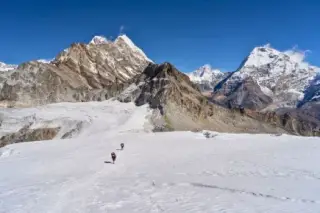
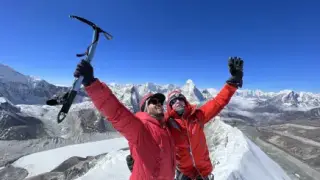
Dive into our gallery to get a glimpse of the awe-inspiring vistas waiting for you on our guided treks across stunning landscapes.
Brief Itinerary
Day
1
Arrive Kathmandu (1,400 m / 4,593 ft)
Day
2
Sightseeing in the Kathmandu Valley
Day
3
Kathmandu to Pokhara (827 m / 2,713 ft) (Drive)
Day
4
Pokhara to Tatopani (1,190 m / 3,900 ft) (Drive)
Day
5
Tatopani to Sardhi Kharka ( 3,182 m / 10,433 ft) (Drive and Trek)
Day
6
Sardhi Kharka to Bhusket Mela (3,551 m / 11,900 ft) (Trek)
Day
7
Bhusket Mela to Annapurna North Base Camp (4,130 m / 13,550 ft) (Trek)
Day
8
Annapurna North Base Camp Exploration
Day
9
Annapurna North Base Camp Glacier Exploration
Day
10
Annapurna North Base Camp to Sardhi Kharka (Trek)
Day
11
Sardhi Kharka to Pokhara (Trek and Drive)
Day
12
Pokhara Sightseeing
Day
13
Pokhara to Kathmandu (Drive)
Day
14
Departure from Kathmandu
Comprehensive Trek Guide
The North Annapurna Base Camp (North ABC) Trek is a hidden gem in the Annapurna region, perfect for trekkers looking for a quiet, adventurous, and authentic Himalayan experience. This trek takes you away from crowded routes and leads you to the remote north face of Annapurna, offering breathtaking mountain views, glaciers, and untouched landscapes.
Along the way, you pass through traditional Gurung and Magar villages, trek through wild alpine terrain, and camp under clear Himalayan skies. Combined with cultural sightseeing in Kathmandu and the natural beauty of Pokhara, the North ABC Trek is an ideal choice for those seeking real adventure, peaceful trails, and unforgettable mountain scenery.

How Difficult is the North ABC Trek?
While some people may tell you this is an 'easy' trek and suitable for beginners, we would choose to say this is a 'moderate' to 'slightly challenging' trek. Why? First of all, there really isn't anything 'easy' in the Himalayan mountains – it's all about perspective. Are you a trail runner? A mountaineer with years of experience behind you? Or are you like the majority of us, fit but no super hero?
Aside from having a good level of fitness, what you should know before embarking on this trek is that it is a relatively new trail so the paths are less well defined than in other part of the Annapurnas. And there are very few options for accommodation – camping being the main one. Camping itself brings challenges, as well as rewards. If you have camped before on a trek that would stand you well on this trek. However, if you have not camped don't worry – there is a whole crew behind you for setting up camp and cooking meals.
While this is not an extremely high altitude trek, there are days over 3,000 m / 9,842.5 ft, with the highest you will be sleeping at is 4,130 m / 13,550 ft at base camp itself. The majority of people will certainly feel the effects of altitude at these heights, so you should expect that but with acclimatization and shorter hiking days we do our best to mitigate this.

Fully Supported Camping Trek
This trek is for those who love not only nature but being more alone and peaceful in the landscapes of forests and mountains. To achieve this kind of peaceful experience, trekking through the areas which are still less visiting by hikers is recommended. The North ABC Trek provides you with wilderness, landscapes and mountain views along quiet trails with few, if any, accommodation options on route.
This trek is fully supported on six nights by our experienced camping crew. Our porters will carry the necessary equipment – tents, kitchen tent, toilet tents, dining tents and various essentials – and set up camp before you reach the location. Our camp chef will provide you with excellent breakfasts, lunches and dinners on this part of the trek, as well as boiled drinking water and hot water for washing.
We will provide you with a two man waterproof tent of the highest quality. We ask you to bring your own sleeping bag – which you can hire or buy in Kathmandu if you don't have at home.
Food on this Trek
Our camping chef will prepare fresh, hygienic food for each meal. With limited facilities along this route, many items will be brought from Kathmandu or Pokhara. Where possible we do buy from local communities to give something back to them.
The majority of the food will be vegetarian, with some tinned meat and fish. Please let us know if you are vegetarian or vegan. Because the porters are human, we do not carry alcohol or plastic bottles of water. Rather we boil water for drinking. Please do bring your own water bottle for this purpose. Beer, soft drinks etc can be purchased in the guest houses/ hotels at the end of your trek.
The meals will look something like this:
Breakfast: porridge, bread such as Tibetan bread or roti, eggs, pancakes, tea and coffee.
Lunch and dinner: Nepali dal bhat (rice, lentil soup and vegetables), vegetables and pasta, chowmein (fried noodles), fried rice, basic soups.
Drinks: tea, coffee, and hot chocolate.
Water: you will be provided boiled drinking water when camping.
Is the Camp Kitchen / Food Hygienic?
Our camping staff are well trained on hygiene. However, please do bring sanitizer for your hands and use before eating. Do not eat leftovers of food cooked hours before. Drink only the boiled water at the camp and not from local streams/ rivers. You can bring your own sterilizing drops/ liquid for emergency drinking water on the trails.
Bring stomach medicines and electrolytes in your day pack in case you do need them. Strange environments and experiences can cause stomach upsets!
What Does an Average Day on the Trek Look Like?
You will be travelling by road on some days – to and from Pokhara for example, on others it's a combination of jeep and trek. But overall, you will be trekking for an average of four hours per day. It may be through forests or along rough trails. You may be exploring glaciers and ice formations while the high mountains dominate the skyline.
At the campsite, your day starts with a cup of hot tea, followed by breakfast. While you eat, the porters will be packing up the camp and moving on to the next location. You may be having a cooked lunch or, depending on the location, a simple 'packed' type of lunch. At the next overnight campsite, you can relax with more tea until dinner is ready. A campfire will keep you warm before you retire early to bed. Don't forget to spend some time gazing at the stars – so clear without the lights of a city around you.
Preparing for the Trek
This is a trek into a more remote area of the Annapurnas where the trails are not as well-established as in the busier sections. We suggest you be of good fitness before undertaking this trek. Although the daily walking time is not so long (average 4 – 5 hours per day) it is a camping trek so there are some limitations on facilities to relax in in the evenings.
Increase your time in the gym, swimming pool, hiking route around your home or fitness classes to increase your stamina before coming on this trek.
People of the Area
The area you will be trekking through is home to the Gurung and Mugar people.
Gurungs: are the most prominent peoples in the Annapurna Region. You may even know or have seen some Gurung people in the British or Indian army. They are skilled soldiers and have served in the British Gurkha regiments for decades. They speak a Tibeto-Burman language and wear colourful clothing. Many are Buddhist, but shamanistic beliefs and practices are still to be found. Their homes are made of stone with slate roofs, perfect for the environment they live in.
Magars: the Magar communities occupy the lower and mid-hills within the Annapurna region. Sharing many similarities with the Gurungs, they are one of the largest indigenous ethnic groups in Nepal. They have their own language and culture. Again, they are Buddhist / Hindu with a blend of animist beliefs. They are known for their weaving and metal work crafts. Their houses are built of stone and wood.
Flora and Fauna
North Annapurna Base Camp lies within the Annapurna Conservation Area with rich biodiversity providing home to over 100 species of animals and over 1,200 species of plants, including orchids. If you are really lucky you may see a snow leopard or a Himalayan brown bear on your trek. More likely you will see blue sheep, langur monkeys and a host of birds. These birds include the Impeyan pheasant (also known as the Himalayan monal), crimson horned pheasant and vultures.
If you come in the spring, at lower altitudes the rhododendrons will be in bloom. Pass through rhododendron forests, oak and pine forests and bamboo groves.
Responsible Eco Conscious Trekking
We at Swotah like to ensure we leave no litter or damage behind us on our camping treks. Our guides and camp crew are instructed on how to deal with garbage and the likes.
We request our guests to be conscious too. Please be responsible for your own garbage, leaving nothing at the camp site or on the trail.
Weather and Best Time to Go
The time of year you plan going on this trek will influence a few things – such as what to pack.
Spring and autumn are the most popular times for trekking throughout Nepal as the weather is normally good. Mornings and evenings will be cool but day times are comfortable, and warm at lower altitudes. Skies are clear and the mountains on full display.
Monsoon is not the best time for trekking due to slippery trails and leeches! It is also not the best time for camping – no one really wants to camp in the rain.
Winter for camping poses the problem of the cold! Snow on the trails will make it more challenging and if you have to stay an extra day somewhere due to a snowstorm, it can be frustrating. On the other hand, if you like high adventure, the crisp air and astounding mountain views may attract you.
Temperatures at North Annapurna Base Camp
These are basic, rough average temperatures to give you some idea:
• March to May (Spring) 10°C / 50°F to 15°C / 59°F with freezing nights.
• June to September (Monsoon) around 17°C / 63°F in the day but possibility of rain on some or even all days.
• October to November (Autumn) 10°C / 50°F to 20°C / 68°F in the day time.
• December to February (Winter) at night it can fall to -20°C / -4°F with heavy snow.
What to Pack for this Trek
Please check our Packing List for general trekking items.
You will need clothes you can layer for this trek as the lower altitudes will be warm and the higher altitudes cooler/cold. Waterproof trousers and waterproof trekking boots are a good idea even if you are not coming in winter or monsoon – you just never know in the mountains!
Although you will get three meals a day when camping, it's a good idea to bring some of your favourite snacks. You will thank us later!
Bring a charger for your phone and a headtorch with extra batteries as you are on a camping trek with no access to electricity.
Along with your first aid kit do remember to bring extras of any medicines you require on a daily or regular basis. It's also a good idea to carry in both your main pack and in your day pack.
Money Matters
Do I Need Money on This Trek?
While camping, everything is taken care of, accommodation, food, water, but on the nights you are staying in guest houses/ hotels, you will need money for internet access, hot showers, snacks, drinks etc. So the answer is Yes, bring some money!
In Pokhara and Kathmandu you may wish to do some shopping for souvenirs and gifts. In these cities you will find ATM machines and often shops take cards. Bur you will not find money exchanges or ATMs on the trail.
As a very rough guide, you can budget for around Rs500 per day when on the camping part of the trek in case there is hot tea or some cold drinks available for sale. Budget around Rs3,000 (USD20) per day for Pokhara and Kathmandu. Plus money for souvenirs and any extra adventures you do such as boating.
Tips for the Camping Crew and Guide
It is usual to tip the guide and trekking crew. Normally the guide should receive 10% of your total trek cost, divided by the number of the people on your trek. Porters normally are paid around $10 per day on the camping trek, and the cook around $15 per day (also divided by the number of people on your trek). You can pay the porters, cook and other camping crew in Nepali Rupees, but the guides can be paid in dollars, pounds or euro if more convenient. As the camping crew are often from the areas we trek through, please pay them at the point of the trek where they leave you. Guides can be paid at the end point of your trek.
More information on tipping will be given at your briefing in Kathmandu.
What Happens if I get Altitude Sickness?
The best plan is to try and avoid or mitigate any altitude related sickness.
Stay hydrated, walk steadily but not too fast, monitor your body, tell your guide if you feel unwell. Walk at a pace that is suitable for you. Please see the Signs of Altitude Sickness section for further details.
This trek starts at a low altitude - 820 m / 2,723 ft at Pokhara. The highest point is at the base camp - 4,130 m / 13,550 ft. Should you become unwell, it is important to slow down and rest for some time. If you feel better, then continue (under the recommendation of your guide). If you, or someone else gets worse it is always recommended to go down to a lower altitude for a night. Your guide will be carrying a phone (satellite if necessary) in case of a emergency. Should evaluation be necessary, it is important you have details of your insurance policy with you on the trek.
Our guides are all trained in first aid and altitude awareness and should be consulted at the first sign of illness.

Transport Alternatives
You will be travelling from Kathmandu to Pokhara and return by Tourist Bus. This is very comfortable transport but if you would like more freedom to go at your own pace and stop where you like (for photographs for example) you can hire a private vehicle (at an extra charge). If you want to reach there quicker – by road takes around 8 hours – you can fly between the two cities in 25 minutes! Please discuss with us.
Permits Required
You are required to have the following permit to enter this area:
Annapurna Conservation Area Permit (ACAP) – Nrs3,000 (USD22)
TIMS – Trekkers' Information Management System Nrs3,000 (USD22)
Extending your Visit
There is plenty to see and do in both Kathmandu and Pokhara so if you would like to extend your visit please let us know. You may wish to take one of our culture tours around heritage sites in Kathmandu, or you may wish to stay longer in Pokhara to relax or do some adventures such as bungy jumping, sky diving, zip lining etc. We also have treks (short and long) out of Kathmandu and Pokhara. Chitwan National Park is also a regular extension for trekkers. Wildlife spotting can be another adventure after the thrill of trekking through the mountains.
Please ask us!
Detailed Itinerary
Meals: N/A
Accommodation: hotel in Kathmandu
Meals: breakfast
Accommodation: hotel in Kathmandu
Meals: breakfast, lunch and dinner
Accommodation: N/A
Meals: breakfast, lunch and dinner
Accommodation: N/A
Meals: breakfast, lunch and dinner
Accommodation: N/A
Meals: breakfast, lunch and dinner
Accommodation: N/A
Meals: breakfast, lunch and dinner
Accommodation: N/A
Meals: breakfast, lunch and dinner
Accommodation: N/A
Meals: breakfast, lunch and dinner
Accommodation: N/A
Meals: breakfast, lunch and dinner
Accommodation: N/A
Meals: breakfast, lunch and dinner
Accommodation: N/A
Meals: breakfast
Accommodation: N/A
Meals: Breakfast
Accommodation: N/A
Meals: Breakfast
Accommodation: N/A
What's Included
- Airport transfers on arrival and departure
- Tourist bus transportation between Kathmandu and Pokhara (round trip)
- All ground transportation by jeep or car during the trek
- Accommodation in Kathmandu and Pokhara with breakfast
- Fully supported camping trek with high-quality two-person tents (6 nights)
- All meals during the trekking period (breakfast, lunch, and dinner)
- Boiled drinking water during camping days
- Experienced, English-speaking trekking guide
- Porters and full camping crew (cook, helpers)
- All trekking permits (ACAP and TIMS)
- Trekking staff wages, insurance, meals, and accommodation
- Applicable government taxes
What's not Included
- International airfare to and from Nepal
- Nepal entry visa fees
- Travel and rescue insurance
- Personal expenses (snacks, soft drinks, alcoholic beverages, phone calls, laundry)
- Tips for guide, porters, and camping crew
- Optional activities and sightseeing not mentioned in the itinerary
- Alternative transportation such as private vehicles or domestic flights
- Personal trekking gear and equipment (sleeping bag, clothing, boots, etc.)
Frequently Asked Question
Is a Porter Included in the Price ?
How many people will be on my trek ?
Do the guides speak English ?
Is there WiFi / phone networks in this area ?
What happens if the weather delays the trek ?
Can I bring my children on this trek ?
I have specific dietary needs. How can I manage this ?
Got a question about this tour?
Or looking for customize trip, reach out to our travel experts