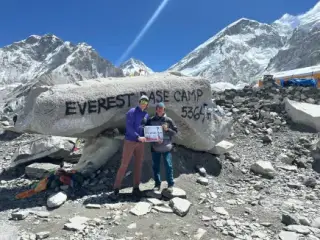
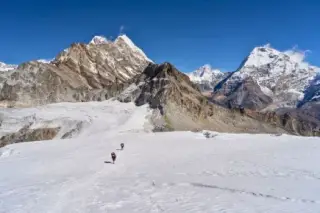
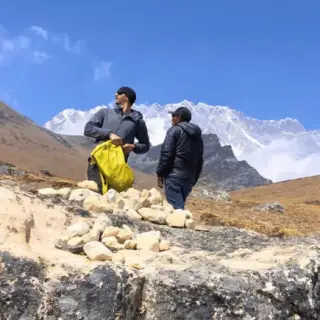
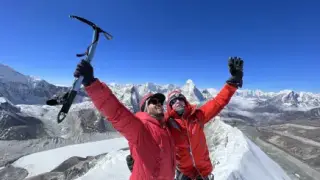
A 12-day moderate trek to the 4,070 m Pikey Danda sunrise viewpoint in Solu-Khumbu, with views of Everest and 5 other 8,000 m peaks.
Duration
12 Days
Max Altitude
4,070 m / 13,353 ft
Difficulty
Moderate
Group Size
Max 7 trekkers
Region
Everest Tour Packages, Nepal
Best Season
Spring · Autumn
Accommodation
Guesthouses on trek; hotels in Kathmandu
Meals
All meals on trek; breakfast in Kathmandu
Transport
Flight Kathmandu-Phaplu return; trek
Dates & Prices
Choose your date
All dates are guaranteed departures — we never cancel for low numbers. Book online or send a quick enquiry.
YearMonth
6 departures · 2026
Oct
10
Oct 10, 2026 — Oct 21, 2026
Guaranteed departure — from 2 trekkers
Available
USD1,900
per person
Oct
18
Oct 18, 2026 — Oct 29, 2026
Guaranteed departure — from 2 trekkers
Available
USD2,050
per person
Oct
24
Oct 24, 2026 — Nov 4, 2026
Guaranteed departure — from 2 trekkers
Available
USD1,900
per person
Nov
7
Nov 7, 2026 — Nov 18, 2026
Guaranteed departure — from 2 trekkers
Available
USD1,900
per person
Nov
21
Nov 21, 2026 — Dec 2, 2026
Guaranteed departure — from 2 trekkers
Available
USD2,050
per person
Can’t find a suitable date? We run private departures on any date with as few as 2 trekkers.
Trip Overview
About the Pikey Peak Trekking
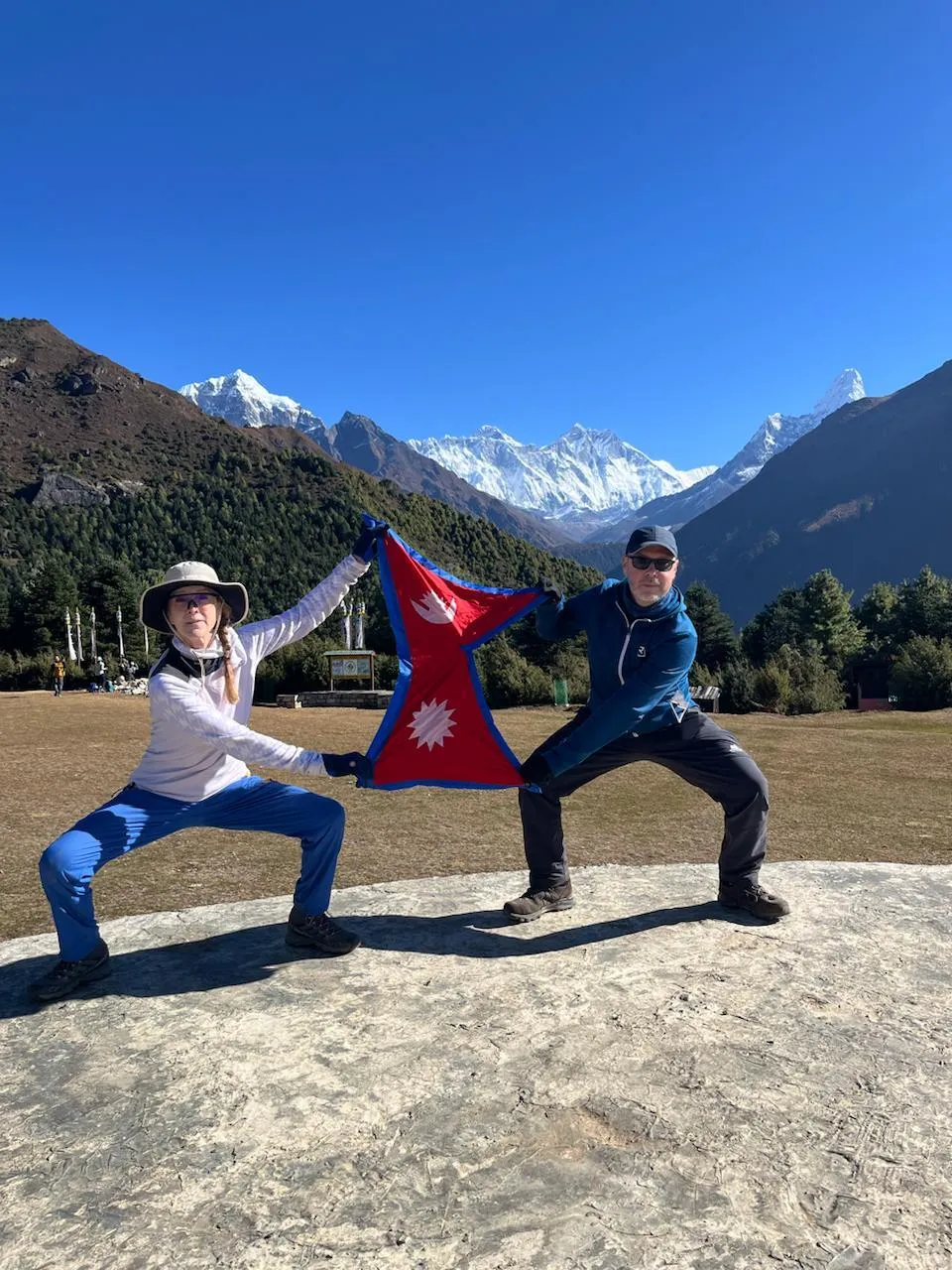
Pikey Peak Trekking is a 12-day trek in Solu-Khumbu, the lower Everest region of northeast Nepal, reaching Pikey Danda at 4,070 m for one of the widest sunrise panoramas in the Himalaya. Sir Edmund Hillary named this view his favourite in Nepal. On a clear October or November morning, the 360-degree arc runs from Everest (8,849 m) and Lhotse in the east, across Makalu, Kanchenjunga and the distant Annapurna massif to the west, with Cho Oyu, Gauri Shankar and Ama Dablam filling in between.
The route begins with a 35-minute flight from Kathmandu to Phaplu airstrip (2,470 m), then follows a ridge-and-valley trail south of the main Everest corridor through Salleri, Dorpu, Kerung/Pattale and Jhapre before the final climb to Pikey Danda. It descends to Junbesi (2,675 m), a historic Sherpa town with the large Nyingma monastery Thupten Chholing nearby, before returning to Phaplu for the flight out. The trail passes through Sherpa, Tamang and Magar villages and rhododendron forest, with yak herds on the upper pastures.
Pikey Peak is a moderate, non-technical trek. The highest point is 4,070 m and all nights are below that altitude, so serious acute mountain sickness risk is low for healthy, well-acclimatised trekkers. Days run 5 to 8 hours on established trail. The sections below cover difficulty, permits, accommodation, food and what to pack.
Last updated June 2026
Trip Highlights
Highlights
1
Sunrise panorama of Everest (8,849 m) from Pikey Danda (4,070 m)
2
Sir Edmund Hillary's favourite viewpoint in Nepal
3
Thupten Chholing Monastery, a major Nyingma seat near Junbesi
4
Short flight into the hills; no long road approach
5
Rhododendron forest, yak pastures and Sherpa village culture
6
6 Himalayan 8,000 m peaks visible from the summit ridge
Day by Day
Pikey Peak Trekking Itinerary: 12 Days
Tap any day to expand — altitudes, walking times, meals, and overnight details for every stage of the journey.
A Swotah representative meets you at Tribhuvan International Airport and drives you to your hotel in Thamel. In the evening the guide briefs you on the route, reviews your gear and joins you for a welcome dinner. Overnight in Kathmandu.
Sleep at 1,400 mDinner
Tonight’s stay
Hotel
A guided morning covers four to five UNESCO World Heritage Sites in the Kathmandu Valley, chosen from Pashupatinath, Boudhanath, Swayambhunath, Patan Durbar Square and Kathmandu Durbar Square. The afternoon is free for gear shopping along Thamel's trekking-supply street or personal rest. Overnight in Kathmandu.
Sleep at 1,400 mBreakfast
Tonight’s stay
Hotel
A 35-minute domestic flight from Kathmandu delivers you to Phaplu airstrip (2,470 m), a STOL strip in Solu-Khumbu. From the airstrip the trail drops slightly and heads south through pine and rhododendron forest and past the first mani walls to Salleri, the district headquarters of Solukhumbu, about 5 hours of walking. Salleri has a weekly market, several monasteries and views north toward the Dudh Koshi valley. Overnight in Salleri.
Sleep at 2,390 mBreakfastLunchDinner
Tonight’s stay
Guesthouse
The trail leaves Salleri and climbs through Sherpa, Tamang and Magar villages on the southern ridge system, crossing wooded hillsides and open meadow. The day runs about 6 hours, passing chortens and mani-stone walls with carved Tibetan script. Views of the lower Solu hills open up to the south. Overnight in Dorpu.
Sleep at 2,500 mBreakfastLunchDinner
Tonight’s stay
Guesthouse
8 hours of walking today, the longest day of the trek, as the trail climbs from Dorpu across a ridge and descends into the Kerung-Pattale area. Kerung is a mixed-culture village with Tamang, Magar and Sherpa households, old monasteries, a Buddhist stupa and a row of mani walls at the entry. The altitude gain to 2,840 m is the highest point so far. Overnight in Kerung/Pattale.
Sleep at 2,840 mBreakfastLunchDinner
Tonight’s stay
Guesthouse
A 6-hour walk from Kerung descends slightly then traverses a long ridge through wild orchid groves to Jhapre (2,820 m). The trail here runs through oak and rhododendron forest, and on clear days the first snow peaks appear above the ridgeline to the north. Jhapre is the last overnight before the Pikey Danda ascent. Overnight in Jhapre.
Sleep at 2,820 mBreakfastLunchDinner
Tonight’s stay
Guesthouse
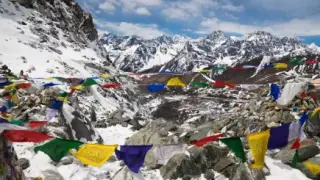
Today reaches the trek's high point. The trail climbs steadily from Jhapre through rhododendron and juniper to the open ridge of Pikey Danda at 4,070 m, about 6 hours of walking with 1,250 m of ascent. Yak herds graze the upper pastures, and prayer flags mark the ridgeline. The panorama from the top is one of the widest in the Himalaya: Everest (8,849 m) sits directly northeast, with Lhotse (8,516 m), Makalu (8,485 m) and Kanchenjunga (8,586 m) arrayed to the east, Cho Oyu (8,201 m) to the northwest and Annapurna on the distant western horizon. The sunrise here was Sir Edmund Hillary's favourite view in Nepal. Overnight near Pikey Danda.
Sleep at 4,070 mBreakfastLunchDinner
Tonight’s stay
Guesthouse
The descent from Pikey Danda runs about 5 hours through forest and pasture to Junbesi (2,675 m) in the wide Junbesi Khola valley. Junbesi is one of the largest and oldest Sherpa towns in Solu-Khumbu, a supply point for early Everest expeditions in the 1950s before the Lukla airstrip was built. The valley floor has apple orchards and a small hydroelectric plant. Overnight in Junbesi.
Sleep at 2,675 mBreakfastLunchDinner
Tonight’s stay
Guesthouse
The morning is free to rest, wash clothes, visit the local market or walk the mani walls around Junbesi. After lunch the trail climbs about 2 km up the valley to Thupten Chholing (Tuptenchholing Gompa), a large Nyingma monastery founded by Trulshik Rinpoche in the 1960s after the displacement of the Rongbuk community from Tibet. Several hundred monks and nuns live and study here; the main assembly hall has large thangka paintings and gilded statues. Dress modestly and remove shoes at the entrance. Return to Junbesi in the late afternoon. Overnight in Junbesi.
Sleep at 2,675 mBreakfastLunchDinner
Tonight’s stay
Guesthouse
A 6-hour return walk heads north up through forest and pasture back to Phaplu, retracing part of the approach trail. This is the last day on the trail; the afternoon allows time to explore the area around the airstrip, meet the guide for a debrief and pack the duffel bag for the flight. Overnight in Phaplu.
Sleep at 2,450 mBreakfastLunchDinner
Tonight’s stay
Guesthouse
After breakfast, a 35-minute domestic flight returns you to Kathmandu. The rest of the day is free to explore Thamel, visit any sites missed on day one, or rest. The guide is available to help with dinner recommendations or last shopping. Overnight in Kathmandu.
Sleep at 1,400 mBreakfast
Tonight’s stay
Hotel
A Swotah representative transfers you to Tribhuvan International Airport 3 hours before your flight. If you would like to extend your stay in Nepal or add another trek or tour, Swotah can arrange it.
Breakfast
What’s included
What's included
Every cost on the trail is broken out below — no hidden fees, no surprises at the trailhead.
Included
12 items
Airport transfers;
Standard/Deluxe rooms in Kathmandu on twin/double sharing with breakfast;
Guided sightseeing tour in Kathmandu on a private vehicle;
Accommodation during the trek (or camping in case of need);
All meals (breakfast, lunch, dinner) during the trek;
Authorized English-speaking guide along with required porters (2:1/15kg) for the trek;
Round-trip Kathmandu to Pokhara transfer;
Equipment clothing for porters, including their insurance;
All applicable government tax;
All expenses for all staff: meals, accommodation, salary, equipment, insurance, transportation;
All necessary paperwork;
Medical kit (carried by your trek leader).
Not included
9 items
International flights;
Nepalese visa fee
Excess baggage charge(s) for the domestic flight;
Extra night accommodation in Kathmandu and Phaplu because of early arrival and late departure;
Entrance fees during sightseeing;
Lunch and evening meals in Kathmandu;
Travel and rescue insurance;
Personal expenses (phone calls, laundry, bar bills, battery recharge, extra porters, bottle or boiled water, shower, etc.);
Tips for guide(s), porter(s) and driver(s).
How Hard Is the Pikey Peak Trekking?
Pikey Peak Trekking is a moderate, non-technical trek. The highest point is Pikey Danda at 4,070 m, all nights are below that altitude, and there is no technical terrain, making it accessible to trekkers with a reasonable base fitness.
▲Moderate. 5-8 hr days, max 4,070 m (Pikey Danda). No technical terrain; good fitness and broken-in boots required.
Overall Rating
4
Moderate
out of 10 · physical effort scale
Max altitude4,070 m
Trekking days9 days
Trip Details
Planning your Pikey Peak Trekking
Everything you need to plan the trek, topic by topic. Tap any one to open it.
Pikey Peak Trekking is graded moderate. The highest point is Pikey Danda at 4,07…
Pikey Peak Trekking is graded moderate. The highest point is Pikey Danda at 4,070 m, reached on day six, and all sleeping stops sit below that altitude, so the acclimatisation risk is manageable for most healthy adults. There is no technical terrain, no rope work, and no glacier crossing.
Days run 5 to 8 hours on established trail with some steep ascents, particularly on the climb from Jhapre to Pikey Danda. The long crossing day on day four (Dorpu to Kerung/Pattale) runs about 8 hours. Trekkers should be comfortable on multi-hour hill walks before coming; a few weeks of regular aerobic exercise, including uphill, is the right preparation. Swotah guides carry a first-aid kit and a pulse oximeter.
Autumn (late September to November) and spring (March to May) are the two main s…
Autumn (late September to November) and spring (March to May) are the two main seasons for the Pikey Peak Trek. Autumn delivers the clearest skies and sharpest views from Pikey Danda, with cool, stable days and cold but dry nights; it is the most reliable window. Spring is warmer at the lower altitudes, with rhododendron flowering on the approach ridges, though some haze can reduce the long-range views in May.
Winter (December to February) is cold but walkable; the trail rarely closes at 4,070 m, and the views can be crystal-clear when skies are settled. The monsoon (June to August) brings rain, leeches and cloud cover that obscures the peaks, so it is not recommended for the summit sunrise. The season cards above show the month-by-month picture.
Pikey Peak Trekking is an open trek with no restricted-area permit. The permits…
Pikey Peak Trekking is an open trek with no restricted-area permit. The permits required are a TIMS card (Trekking Information Management System) and a local conservation or entry permit. Depending on the route approach, the Gaurishankar Conservation Area Permit (GCAP) may apply; confirm the exact permit with Swotah before departure. Swotah arranges all paperwork once you provide a passport copy.
The TIMS card costs around USD 20 for agency-booked trekkers. Conservation area and local entry permit fees vary and change periodically, so Swotah confirms current rates at the time of booking. No special permit, licensed guide requirement, or minimum group size is required for this route.
Accommodation on the Pikey Peak Trek is guesthouses and teahouses throughout. Th…
Accommodation on the Pikey Peak Trek is guesthouses and teahouses throughout. The trail is less commercialised than the main Everest routes, so lodges are simple: basic rooms with shared bathrooms, dining rooms warmed by a wood or gas stove, and limited hot water. Salleri and Junbesi have more options than the smaller ridge villages.
In Kathmandu, Swotah uses standard or deluxe hotel rooms. A sleeping bag rated to -10 degrees Celsius is advisable for the cold nights around Pikey Danda, where temperatures drop sharply after sunset. During spring and autumn peak weeks, popular lodges fill up; Swotah sends porters ahead to reserve rooms.
Food on the Pikey Peak Trek is standard teahouse cooking: dal bhat (lentil soup,…
Food on the Pikey Peak Trek is standard teahouse cooking: dal bhat (lentil soup, rice and vegetable curry) is the staple at most stops, with Tibetan bread, noodles, potatoes and eggs on the menu at the smaller villages. The Sherpa-run guesthouses around Junbesi also offer simple yak-cheese dishes. Swotah includes all three meals a day on the trek.
Water is available at each stop, but treat it before drinking: purification tablets, a filter or a UV pen all work, and boiled water is sold at lodges. Carry 2 to 3 litres on the longer ridge sections, particularly the climbs to Kerung/Pattale and Pikey Danda. Plastic waste is a problem in the Solu-Khumbu hills, so a reusable bottle is the better choice.
The trek begins with a roughly 35-minute domestic flight from Kathmandu to Phapl…
The trek begins with a roughly 35-minute domestic flight from Kathmandu to Phaplu (2,470 m), a STOL airstrip in Solu-Khumbu served by Tara Air and other domestic carriers. The flight is weather-dependent and can be delayed or cancelled in the monsoon or when cloud covers the hills; build a spare day into your Kathmandu schedule if your onward flight is tight. The return is the same flight from Phaplu to Kathmandu.
Swotah books the domestic flights once you confirm the trip. There is no long road drive involved; the flight cuts straight into the hills rather than the two-day road approach used on the Everest Base Camp corridor. Ground transfers in Kathmandu are by private vehicle.
Pikey Danda at 4,070 m is the high point of the trek and its main event. The sum…
Pikey Danda at 4,070 m is the high point of the trek and its main event. The summit is a broad, open ridgeline above the treeline, draped with prayer flags, with an unbroken arc of high peaks from east to west. Sir Edmund Hillary, who spent decades in Solu-Khumbu building schools and hospitals, called the Pikey view his favourite anywhere in Nepal.
The sunrise from Pikey Danda is the payoff: Everest (8,849 m) catches the first pink light to the northeast, followed by Lhotse (8,516 m) and Makalu (8,485 m), with Kanchenjunga (8,586 m) visible on the distant eastern horizon and Cho Oyu (8,201 m) to the northwest. Annapurna appears on the western horizon on clear mornings. Most groups camp or sleep at the top or approach in the dark for the view before descending. The alpine summer festival in July and August brings Sherpa herders from surrounding villages to the pastures around Pikey.
Junbesi at 2,675 m is one of the largest and most historically important Sherpa…
Junbesi at 2,675 m is one of the largest and most historically important Sherpa towns in Solu-Khumbu, sitting in a wide valley below the ridgeline on the old Everest approach trail. The town has a strong tradition of scholarship and was a supply point for early Everest expeditions before the airstrip at Lukla opened.
Thupten Chholing (Tuptenchholing Gompa) is a large Nyingma monastery about 2 km above Junbesi, founded by Trulshik Rinpoche in the 1960s after displacement from the Rongbuk monastery in Tibet. It houses several hundred monks and nuns and follows the Nyingma lineage of Tibetan Buddhism. The day at Junbesi allows time to visit the monastery, walk the mani walls, and rest before the return leg to Phaplu. Dress modestly and remove shoes at the entrance.
Pikey Peak Trekking is an open area, so a licensed guide is not legally required…
Pikey Peak Trekking is an open area, so a licensed guide is not legally required, but Swotah sends one on every departure. Swotah guides hold Nepal Tourism Board licences, carry a pulse oximeter and first-aid kit, and know the trail, the guesthouses and the communities along the route.
A porter is strongly recommended: one porter carries 20 to 25 kg, capped at that weight, and you walk the 5 to 8 hour days with a light daypack. Swotah provides a free duffel bag for the porter's load. The guide-to-porter ratio on this trek is 2:1 (one porter per two trekkers), so you can ask your guide about adjusting the ratio at booking.
Mobile coverage on the Pikey Peak Trek is patchy but better than on the restrict…
Mobile coverage on the Pikey Peak Trek is patchy but better than on the restricted western circuits. Nepal Telecom (NTC) SIM cards work in the valley floors and larger villages including Salleri and Junbesi; the ridgeline near Pikey Danda has limited signal. Swotah provides a tourist SIM on arrival.
Charging devices costs extra at lodges, typically NPR 200 to 400 per charge, and is not always available at the smaller stops, so bring a power bank. For responsible trekking, carry a reusable bottle, pack out waste, buy locally, and tip the guide and porter directly: 10 to 15 percent of the trip cost, shared among staff, is the standard guideline.
What to pack
What to pack
The full kit list. Anything we loan (sleeping bag, down jacket) is called out — bring everything else.
✓Duffel bag (carried by porter)
✓Daypack (25-30 L)
✓Dry bag or rain cover
✓Packing cubes
Frequently Asked
Questions & Answers
Everything trekkers ask before booking. Don't see yours? Tap Enquire — we usually reply within a few hours.
Pikey peak is not a technically difficult peak to climb, but you need good stamina and energy to climb it. Even though Pikey peak can be climbed without any previous climbing experience, you need to know how to use the climbing equipment and gears. At Base Camp, our guide also helps you to how to use that equipment so you don’t need to worry about that.
February, March, April, May, June, September and October are the best months to climb Pikey Peak.
Usually, we have to walk about 6 to 8 hours a day. But it shouldn't be taken as certain thing. Because the walking hour really depend on client's speed. So it's really relative.
It's always a good idea to book on your own. But we can also help you booking your flight in case of request.
No vaccinations are compulsory in the Himalaya, but we do recommend you are covered for Diphtheria & TB, Hepatitis A, Hepatitis B, Malaria, Typhoid, Polio and Tetanus. We also recommend: •A dental check-up prior to traveling that you know your blood group in case of emergency. If you have any pre-existing medical conditions which might affect you on tour, you make these known to your tour leader and Swotah travelers at the time of your booking.
To confirm your booking, a deposit of $200 or 15% of total trip cost is required if you are booking at least a year in advance before trip departure date. If booking is made less than 100 days before the trip departure, you'll need to pay 20% to confirm the trip, if before two months, 25% of the total trip cost will need to be paid and if booked between 30-60 days, 50% of the total trip cost needs to be paid and finally, if you are booking 30 days prior to trip departure, then 100% payment should be made. The payments can be easily made by the bank transfer or Western Union Money transfer. The due balance is payable on arrival in Kathmandu with cash (preferably USD/EURO) or card on POS/credit card machine. Please note that non refundable fee is 10% or $200 whichever is greater.
You have to pay the remaining balance after arriving in Kathmandu either by cash or through credit card, before we start our adventure.
Yes, you can add the extra days as per your wish, but for the extra day, you will have to pay the additional cost to cover guides, porters, accommodation and food.
The hotel in Kathmandu does provide the free storage services. So you can leave the clothes which are not necessary for the trekking. The best way is to save it in our office store room which is equally safe.
There are no hidden costs in our itineraries. Therefore you don't need to carry much, but everything that's not mentioned on itinerary for example extra cup of tea, coffee, charging electrical appliances, can cost you extra. Therefore, we recommend you to keep at least $20-$50 per day for your personal expenses.
Yes, of course you can change the lodge if you don’t feel comfortable at one place, but it really depends on the availability of the lodges. During the peak season, the possibilities of changing the lodges are low.
We will send our potters to reserve the lodges before we reach there.
We mostly use the comfortable and efficient vehicle so that you may not get a problem during the ride. We use private or tourist vehicle for sightseeing in the Kathmandu. Depending on the nature or group sized, we use cars, minibus, vans or jeep for travelling along the narrow and bumpy roads of Nepal. Mostly we use AC vehicles for your comfort. For domestic flight from Kathmandu to Phaplu to Kathmandu, we use Tara air, Yeti air, and Goma air which are the popular domestic airlines in Nepal.
For nights in cities, we use standard/superior standard/deluxe rooms whereas, during the trek we use lodges/tea houses/guesthouses/home stay for our clients, and whatever is available and accessible. We also arrange sleeping bags for our clients, on their request. For this expedition, accommodation will be tented camp.
During the trek, you will get clean and hygienic food. Our cooks and helpers will cook the special meals.
There are plenty of water stations on each stop on the route. You can easily fill up the bottle from the open taps. We recommend that you bring water purifier tablets with you or at least get it from Kathmandu before you depart for trekking. You can also buy mineral waters but we usually recommend tap water which is pure and it helps us not promoting plastic bottled water.
In some villages, it is possible to charge the devices, but it costs extra to charge the camera and other electronic equipments. It usually costs between $3-$6 per hour. So it's expensive. The best idea is to bring a power bank.
Yes, for the first few days, it's possible to have telephonic communication. In some villages, you can make local and international calls from telephone provided by the guesthouse owner after paying the price directly to them. In higher altitude regions, we usually have satellite phones with our Sherpas or Guides.
You can use a credit card only at Kathmandu. As outside the Kathmandu valley, you have to use the cash so change your currency into the Nepalese Rupees before the trekking.
Definitely we will provide you porter, or yak as per the condition. Besides your personal bag and the water bottle which will be frequently needed for you, they must be carried by you and remaining will be carried by our porter or yak.
Usually, we rent a sleeping bag which is good for -10 degree Celsius or -20 degree Celsius. In case the sleeping bag is not warm enough for you, we'll also provide you the extra blanket.
During trek, please use comfortable and flexible dress. While trekking during the day at lower altitudes, lightweight trekking trousers and T-shirts are recommended. It's always a good idea to carry a waterproof jacket and some warmer clothing with you though as mountain weather is notoriously unpredictable. For the cold nights, thermal underwear, a warm fleece jacket and even a down jacket will help to keep you warm. Good shoes are of great importance. They must be comfortable. For higher altitude treks where you may have to tread snow for long hours, good boots are available for rent in Kathmandu. For mountaineering, you will require special clothes that can be bought or hired from us.
No, there will not be any problem as mostly at the high altitude, we prefer vegetarian food to avoid the food poisoning.
Yes, you shouldn’t worry about this. As you arrive, our representative will be standing outside the airport terminal. You'll be directly transferred to the hotel.
Yes, the trekking guides working in our company are the certified license holders and they also have received high altitude first aid training from KEEP (Kathmandu Environmental Education Project).
Our guides are well trained; they carry the first aid box for emergency. You also take some medicine box for your personal use.
Yes, our climbing guides are well trained and have got the license from the Nepal Mountaineering Association. They are experienced with many mountains above 6000 m to 7000 m and also some of them have experienced the 8000 m peaks.
We make sure to take security measures during climbing to make your expedition successful. We hire experienced and authorized Guides/Sherpas to safeguard your life in the mountains. We strongly recommend that you follow the guide’s instruction with utmost care.
Why Travel with Swotah
Why Book the Pikey Peak Trekking with Swotah
Most Nepal operators look the same from the outside. Here's what actually makes the difference.
Born in Nepal
100% locally owned since 2016. Trek profits stay with the mountain families and village schools along your route.
Guaranteed Departures
Every date on our calendar runs — no minimum group size. You never pay to be cancelled.
Certified Guides
Government-licensed, WFR-certified, English-speaking. Most were born within two valleys of the trail.
Small Groups
Small groups, never more than 8 trekkers. You get a real experience, not a convoy.
Gear Included
Sleeping bag and down jacket loaned at no extra charge — both rated to –20°C.
Flexible Payment
Deposit from 10% to confirm, balance before departure or in cash on arrival. Reschedule up to 30 days prior.
24/7 Support
Kathmandu office and dedicated WhatsApp emergency line. We answer at 2am if needed.
Hall of Fame
TripAdvisor Travelers' Choice 2023, 2024 and 2025. Hundreds of verified five-star reviews.
Get a free personalised travel brief for the Pikey Peak Trekking.
Tell us your travel dates and group size. Our team in Kathmandu will put together a tailored itinerary, honest costs, and practical tips — completely free, no commitment.