16 days trekking through the Forbidden Kingdom of Lo — red cliffs, sky caves, the walled city of Lo Manthang and a scenic mountain flight from Jomsom to Pokhara.
Duration
16 Days
Max Altitude
3,840 m / 12,598 ft
Difficulty
Moderate
Group Size
Max 14 trekkers
Region
Mustang Region Treks, Nepal
Best Season
Spring · Autumn
Accommodation
Teahouse & hotel
Meals
All meals on trek
Transport
Bus KTM-Pokhara; flights Pokhara-Jomsom (return)
Dates & Prices
Choose your date
All dates are guaranteed departures — we never cancel for low numbers. Book online or send a quick enquiry.
YearMonth
9 departures · 2026
Sep
22
Sep 22, 2026 — Oct 7, 2026
Guaranteed departure — from 2 trekkers
Available
USD2,475
per person
Oct
8
Oct 8, 2026 — Oct 23, 2026
Guaranteed departure — from 2 trekkers
Available
USD2,475
per person
Oct
24
Oct 24, 2026 — Nov 8, 2026
Guaranteed departure — from 2 trekkers
Available
USD2,475
per person
Nov
9
Nov 9, 2026 — Nov 24, 2026
Guaranteed departure — from 2 trekkers
Available
USD2,475
per person
Nov
9
Nov 9, 2026 — Nov 24, 2026
Guaranteed departure — from 2 trekkers
Available
USD2,475
per person
Can’t find a suitable date? We run private departures on any date with as few as 2 trekkers.
Trip Overview
About the Upper Mustang
Upper Mustang Trek is a 16-day journey into one of the most culturally and geographically isolated regions in the Himalaya — the former Kingdom of Lo, also known as the Forbidden Kingdom. Upper Mustang was closed to all outsiders until 1992 and only fully opened in the following decade; even today, entry requires a special Restricted Area Permit. The result is a landscape and culture essentially unchanged for centuries: Tibetan Buddhist monasteries with original 14th-century murals, ancient cliff caves of unknown origin, walled medieval settlements and a way of life shaped by the same high-altitude trade and agriculture practiced here for over a thousand years.
The route follows the Kali Gandaki River — the world's deepest river gorge between the 8,000-metre peaks of Annapurna and Dhaulagiri — north from Jomsom through the red sandstone canyon landscape of Lower Mustang into the rain-shadow desert of Upper Mustang. Most trekking days are spent above 3,000 m / 9,842 ft; the highest overnight point is Lo Manthang (3,840 m / 12,598 ft). En route the trek passes Chhusang (first cliff caves), Syangboche (under Nilgiri), Tsarang with its 14th-century Gelugpa monastery and fortress, and Ghami with the longest mani wall in Mustang. The centrepiece is two nights in Lo Manthang — the ancient walled city that was the capital of the Kingdom of Lo from 1380 until 2008 — with a full day for the royal palace, the Jampa, Thubchen and Chode monasteries, and the sky cave day-trip to Jhong.
The return follows the same route south to Kagbeni — the official southern gateway of Upper Mustang — and Jomsom, from where a scenic 25-minute mountain flight to Pokhara passes the Annapurna range, Machhapuchhre and Dhaulagiri. The tour ends with an overnight in Pokhara beside Phewa Lake and a short flight back to Kathmandu.
Last updated June 2026
Trip Highlights
Highlights
1
Trek through the last Forbidden Kingdom of Lo — only opened to outsiders in the 1990s
2
Explore sky caves cut into 50-metre red sandstone cliffs — ancient chambers with mummified remains and unknown origins
3
Two nights in Lo Manthang, the medieval walled city and seat of the King of Mustang until 2008
4
Visit 14th-century Gelugpa monasteries in Tsarang and Lo Manthang with original murals and clay sculpture
5
Himalayan panoramas: Nilgiri, Annapurna I, Dhaulagiri and Machhapuchhre on the scenic Jomsom-Pokhara flight
6
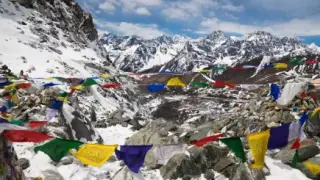
Dramatic rain-shadow desert of red cliffs, canyon walls, mani walls and prayer-flag strung passes
Day by Day
Upper Mustang Itinerary: 16 Days
Tap any day to expand — altitudes, walking times, meals, and overnight details for every stage of the journey.
A Swotah representative meets you at the arrivals exit of Tribhuvan International Airport in Kathmandu and transfers you to your hotel by private vehicle. After check-in, there will be a briefing covering the 16-day itinerary, permits for Upper Mustang (Restricted Area Permit and ACAP), what to expect from teahouse accommodation and food, equipment checklist and altitude awareness. Your guide will join for the briefing and answer any questions about the trek. The rest of the day is free to rest and prepare. Stock up on any trekking supplies, snacks or medications in the Thamel area. Overnight: hotel in Kathmandu.
Sleep at 1,400 m
Tonight’s stay
Hotel
Your guide collects you from the hotel for the tourist bus to Pokhara (approximately 200 km / 8 hours). The bus makes a lunch stop and toilet breaks along the way. The Prithvi Highway runs through river valleys and terraced farmland; the high Himalayas begin to appear in the distance as you approach Pokhara. Carrying snacks and your own water is a good idea in case of delays. On arrival in Pokhara, check into your hotel in the Lakeside area. The afternoon and evening are free — take a stroll along Phewa Lake, or head to one of the waterside cafes and restaurants to relax before the early morning flight tomorrow. Overnight: hotel in Pokhara. Meals: breakfast.
Sleep at 830 mBreakfast
Tonight’s stay
Hotel
Your flight to Jomsom (2,720 m / 8,924 ft) departs early in the morning — all flights must leave before the high winds rise through the Kali Gandaki Gorge. The Pokhara-Jomsom flight takes approximately 25 minutes and is one of the most dramatic short flights in Nepal: the aircraft climbs directly into the mountain corridor between the Annapurna range and Dhaulagiri, passing at close range to Machhapuchhre (6,993 m) and offering views of the glaciated ridges of the Annapurna massif before landing at the high-altitude airstrip in the Kali Gandaki Gorge.
Jomsom is the district headquarters of Mustang — a busy market town with a New Town (modern grid of hotels and shops) and an Old Town (traditional Thakali architecture, monastery, covered streets) separated by the Kali Gandaki riverbed. Today is an arrival and orientation day: explore the town, try a meal in a local restaurant and prepare for the trek that begins tomorrow. Your guide will brief the route details in the evening. Overnight: teahouse/hotel in Jomsom. Meals: breakfast, lunch and dinner.
Sleep at 2,743 mBreakfastLunchDinner
Tonight’s stay
Hotel
Trek time: 6 to 7 hours. Distance: approximately 22 km / 13.5 miles. Altitude gain: 260 m (Jomsom 2,720 m to Chhusang 2,980 m).
The trek begins by following the Kali Gandaki River north from Jomsom, leaving the last motor road behind as the valley narrows into the gorge. The landscape changes quickly: the green fields of lower Mustang give way to the increasingly dry and desert-like terrain of the trans-Himalayan rain shadow. The path runs along the riverbed and the lower cliff terraces, passing through several small settlements of stone and mud-brick houses.
Chhusang (2,980 m) is the first village of any size — a farming community of barley and buckwheat surrounded by dramatic red, orange and grey sandstone cliffs. Around the village you will see the first of the cave formations that define Upper Mustang: openings cut into the cliff face at height, their origin and purpose unknown. A Buddhist community like almost every settlement in the Mustang valley, Chhusang has a small monastery and prayer flags across every rooftop. Overnight: teahouse in Chhusang. Meals: breakfast, lunch and dinner.
Sleep at 2,980 mBreakfastLunchDinner
Tonight’s stay
Tea House
Trek time: 6 to 7 hours. Distance: approximately 11.5 km / 7 miles. Altitude gain: 495 m (Chhusang 2,980 m to Syangboche 3,475 m).
Today the trail climbs steadily away from the river, ascending through dry rocky hills on paths that have been walked by traders and pilgrims for over a thousand years. The ascent is long but steady rather than steep. The red and orange cliffs that line the upper valley become more dramatic as altitude increases — the rock formations eroded by wind and the rare rains into towers, arches and faces. The vegetation becomes increasingly sparse: above 3,000 m you are above the treeline, in the dry open landscape that characterises the rest of the trek.
Throughout the day, Mount Nilgiri (7,061 m) dominates the southern skyline — the great wall of ice and rock that marks the southern boundary of the Upper Mustang plateau. Other peaks of the Annapurna range are visible as the valley opens. Overnight: teahouse in Syangboche. Meals: breakfast, lunch and dinner.
Sleep at 3,475 mBreakfastLunchDinner
Tonight’s stay
Teahouse
Trek time: 5 to 6 hours. Distance: approximately 16 km / 10 miles. Altitude: Syangboche 3,475 m to Ghami 3,500 m, crossing a high point of around 4,000 m.
The trail continues north across the high plateau, crossing ridges and a high pass that opens onto the central valleys of Mustang. Mani walls appear with increasing frequency — long walls of flat stones engraved with the Tibetan mantra Om Mani Padme Hum, accumulated stone by stone over generations as acts of Buddhist devotion. Always pass to the left of a mani wall (keeping it on your right) to walk the correct clockwise direction of prayer. Prayer flags and chortens mark every ridge.
The descent to Ghami (3,500 m) crosses a suspension bridge over the Ghami Khola. Approaching the village stands the longest mani wall in Mustang — a remarkable stone wall stretching along the valley, each stone individually carved with mantras. Ghami is a small, quiet settlement of terraced fields and flat-roofed stone houses, ringed by canyon walls. Overnight: teahouse in Ghami. Meals: breakfast, lunch and dinner.
Sleep at 3,500 mBreakfastLunchDinner
Tonight’s stay
Teahouse
Trek time: 5 to 6 hours. Distance: approximately 12 km / 7.5 miles. The route crosses the Charang La Pass (3,870 m / 12,700 ft).
The day climbs from Ghami to the Charang La — a long, sometimes loose-stone ascent where trekking poles are strongly recommended. From the pass the full width of the Upper Mustang plateau opens ahead, a vast dry expanse ringed by ridges. A steady descent then leads to Tsarang.
Tsarang (Charang, 3,560 m) is one of the largest and most culturally significant villages in Upper Mustang. The centrepiece is the Tsarang Gompa, the largest monastery in Upper Mustang — a Gelugpa-sect monastery built in the 14th century, its walls painted red like the cliffs that rise behind it, with extraordinary original murals and woodwork that have survived largely intact. A whitewashed dzong (fortress) stands beside the monastery. Visit in the late afternoon before dinner. Overnight: teahouse in Tsarang. Meals: breakfast, lunch and dinner.
Sleep at 3,560 mBreakfastLunchDinner
Tonight’s stay
Teahouse
Trek time: 4 to 5 hours. Distance: approximately 14 km / 8.5 miles.
Today you reach the goal of the trek. The trail north from Tsarang crosses the open plateau, passing mani walls, chortens and occasional herder camps before the final climb onto the Lo Manthang plain. As the plateau flattens, the walls of Lo Manthang appear in the distance — ochre and white against the brown desert — a sight that seems almost unreal after days of empty plateau.
Lo Manthang (3,840 m / 12,598 ft) is the ancient walled capital of the Kingdom of Lo. Founded in 1380 by the warrior king Ame Pal, it is enclosed on all four sides by a continuous mud-brick wall; the royal palace of the kings of Lo stands at the northern corner. Inside the walls live approximately 180 households. The city has three ancient monasteries — Jampa Lhakhang, Thubchen Gompa and Chode Monastery — all containing original 15th-century murals. On arrival, rest and then explore the city briefly before dinner. Tomorrow is a full day for the sky caves and the major sites of Lo Manthang. Overnight: teahouse in Lo Manthang. Meals: breakfast, lunch and dinner.
Sleep at 3,840 mBreakfastLunchDinner
Tonight’s stay
Teahouse
Trek time: approximately 6 hours round trip for the sky cave excursion.
After breakfast, set out for the Jhong Caves — also known as the Sky Caves of Mustang. The Jhong Caves are a cluster of man-made chambers cut into the red sandstone cliffs near the village of Jhong, northwest of Lo Manthang. Several storeys of cave chambers are stacked into the cliff face at heights of 30 to 50 metres; reaching the upper levels requires climbing wooden poles or ladders fixed by local guides. Bring a headtorch.
Inside the cave chambers, some contain ancient Buddhist murals, clay figurines and — in caves studied by archaeologists — mummified human remains dating back over 2,000 years. The origin and purpose of the caves remain genuinely unknown. Your guide will explain the current theories. A packed lunch is carried for the excursion.
Return to Lo Manthang by mid-afternoon for the Royal Palace — opened to visitors by the last king, Jigme Dorje Palbar Bista, as part of his legacy of cultural preservation. Inside: a shrine room, a small museum of royal artefacts and a rooftop terrace with the best view over the walled city and the plateau. The rest of the afternoon is for the monasteries at your own pace — early evening, when monks return from prayer, is the best time to visit. Overnight: teahouse in Lo Manthang. Meals: breakfast, packed lunch and dinner.
Sleep at 3,840 mBreakfastLunchDinner
Tonight’s stay
Teahouse
Trek time: 7 to 8 hours. Distance: approximately 21 km / 13 miles.
Begin the return south. The long day follows the trail from Lo Manthang back to Ghami, descending gradually across the plateau. The light from the south gives the cliffs and canyon walls a different character on the return — colours that were hidden in morning shadow on the approach are lit in the afternoon. Take a different path where the guide suggests — there are parallel tracks across some sections of the plateau that offer different views of the canyon systems.
The long descent is a good day for mani wall photography — you have more time to stop on the return without the pressure of reaching Lo Manthang before dark. Overnight: teahouse in Ghami. Meals: breakfast, lunch and dinner.
Sleep at 3,500 mBreakfastLunchDinner
Tonight’s stay
Teahouse
Trek time: approximately 5 hours. Distance: approximately 12 km / 7.5 miles.
A shorter day of steady descent and traverse through the southern reaches of the Upper Mustang plateau. The trail south from Ghami crosses several minor ridges and passes more mani walls, prayer flag poles and chortens before dropping into the Samar (3,703 m / 12,149 ft) valley. Samar is a peaceful, relatively prosperous village with good teahouse facilities — well decorated with prayer flags and a prominent chorten at the village entrance. The afternoon arrival time gives space to rest, explore the village, visit the small local monastery and wash clothes in preparation for the return to Jomsom. Overnight: teahouse in Samar. Meals: breakfast, lunch and dinner.
Sleep at 3,703 mBreakfastLunchDinner
Tonight’s stay
Teahouse
Trek time: 5 to 6 hours. Distance: approximately 10.7 km / 6.5 miles.
Today the trail drops steeply from the high plateau back down to Kagbeni (2,810 m / 9,219 ft). The altitude loss of nearly 900 metres is immediate and noticeable — by the time you reach Kagbeni, breathing is easier, the air feels thicker and warmer, and the vegetation begins to return. The dry red cliff landscape gives way to the beginning of the green Kali Gandaki valley.
Kagbeni is the official southern gateway of Upper Mustang — the checkpoint at the village marks where the Restricted Area begins and ends. It is a fascinating village in its own right: the main lanes are partially covered with overhanging stone arches and buildings, creating a network of covered streets unusual in Nepal. Strange painted wooden effigies (protective spirits) stand at doorways and village entrances — a Bon-influenced tradition found in few other places. The Kag Chode Monastery above the village is one of the oldest active monasteries in the lower Mustang valley. Overnight: teahouse in Kagbeni. Meals: breakfast, lunch and dinner.
Sleep at 2,810 mBreakfastLunchDinner
Tonight’s stay
Teahouse
Trek time: 3 to 4 hours. Distance: approximately 10.7 km / 6.6 miles.
A short and straightforward final trekking day, mostly flat through the wide gravel riverbed of the Kali Gandaki from Kagbeni back to Jomsom. After the high-altitude desert terrain of the past nine days, the walk feels easy. Arrive in Jomsom by midday — the afternoon is free to explore the market town properly, buy last-minute souvenirs (Tibetan handicrafts, prayer flags, Mustang apples in season) or simply rest. Contact home and recharge devices in preparation for the flight tomorrow. Your guide confirms the morning flight time and check-in procedure. Overnight: teahouse/hotel in Jomsom. Meals: breakfast, lunch and dinner.
Sleep at 2,720 mBreakfastLunchDinner
Tonight’s stay
Guesthouse
The morning flight from Jomsom to Pokhara departs early to avoid the Kali Gandaki gorge winds (all flights must leave before approximately 11 am). The 25-minute flight retraces the approach in reverse: the gorge narrows, Machhapuchhre (6,993 m) fills the window at close range — its distinctive double summit clearly showing the fish-tail shape that gives it its name — and then the mountains fall back as the aircraft descends into the wider Pokhara valley.
On arrival in Pokhara, check into your hotel in the Lakeside area. The afternoon is entirely free. After nine days of teahouse food, the restaurants and cafes of the Pokhara waterfront feel like luxury. Stroll along Phewa Lake, sit with a coffee and a mountain view, or browse the outdoor gear and souvenir shops. An optional evening boat ride on the lake is a relaxing way to end the trekking chapter of the tour. Overnight: hotel in Pokhara. Meals: breakfast.
Sleep at 830 mBreakfast
Tonight’s stay
Hotel
A short domestic flight (approximately 25 minutes) from Pokhara to Kathmandu. The flight route crosses the Marsyangdi valley and the Annapurna foothills before descending into the Kathmandu Valley. On arrival, a Swotah vehicle transfers you to your hotel. The rest of the day is free in Kathmandu — explore Thamel for souvenirs, have a farewell dinner at one of the city's many restaurants, or visit any sites you did not see on day 1. This is also a good opportunity to change any remaining Nepali Rupees back to hard currency. Overnight: hotel in Kathmandu.
Sleep at 1,400 mBreakfast
Tonight’s stay
Hotel
After breakfast, a Swotah representative transfers you to Tribhuvan International Airport for your onward flight. Allow at least 3 hours before your international departure for check-in and security. If your flight departs late, the hotel room is typically available until noon. We hope you have enjoyed your time in Upper Mustang and the Forbidden Kingdom of Lo, and look forward to welcoming you back to Nepal. Meals: breakfast.
Sleep at 1,400 mBreakfast
Tonight’s stay
-
What’s included
What's included
Every cost on the trail is broken out below — no hidden fees, no surprises at the trailhead.
Included
12 items
Airport transfers
Standard/deluxe rooms in Kathmandu and Pokhara on twin/double sharing with breakfast
Guided sightseeing tour in Kathmandu with a professional guide
Accommodation during the trek
All meals (Breakfast, lunch, dinner) during the trek
Authorized English-speaking guide along with Porters (3:1) for the trek
Equipment clothing for porters, including their insurance
All applicable government tax
All expenses for all staff – meals, accommodation, salary, equipment, insurance, transportation
All necessary paperwork: Upper Mustang Restricted Area Permit (RAP) and Annapurna Conservation Area Permit (ACAP)
Medical kit (carried by your trek leader)
Two-way Pokhara–Jomsom airfare with domestic airport departure tax
Not included
7 items
International flights; Nepalese visa fee
Excess baggage charge(s) for the domestic flight
Extra night accommodation in Kathmandu and Pokhara because of early arrival, late departure, or early return from the mountain due to any reason other than the scheduled itinerary
Lunch and evening meals in Kathmandu
Travel and rescue insurance
Personal expenses (phone calls, laundry, bar bills, battery recharge, extra porters, bottle or boiled water, shower, etc.)
Tips for guide(s), porter(s) and driver(s)
How Hard Is the Upper Mustang?
The Upper Mustang Trek is graded moderate. There is no technical terrain and the highest point is around 3,870 m at the Charang La, but several days run 6 to 8 hours on rough, dry trails with real ups and downs, so good general fitness helps. The gradual profile keeps altitude sickness uncommon.
▲Moderate. 4 to 8 hours a day on rough, dry trails; most days above 3,000 m, top sleep 3,840 m (Lo Manthang). No high passes or technical terrain; good fitness is enough. The long day back to Ghami (about 21 km) is the hardest.
Overall Rating
4
Moderate
out of 10 · physical effort scale
Max altitude3,840 m
Trekking days13 days
Trip Details
Planning your Upper Mustang
Everything you need to plan the trek, topic by topic. Tap any one to open it.
Upper Mustang Trek is a genuinely hard trek — not a walk, not a gentle sightseei…
Upper Mustang Trek is a genuinely hard trek — not a walk, not a gentle sightseeing tour. You should arrive fit, with solid cardiovascular preparation and some previous multi-day trekking experience.
Daily mileage and conditions: Trekking days range from 10 km on the shorter stages to 22 km on the long day from Ghami to Lo Manthang. Trail surfaces vary from sandy river beds to rocky paths to steep loose-stone climbs over passes. The Charang La Pass on day 6 (3,870 m / 12,700 ft) has a rough, slippery path that requires care in descent. Most sections are on clear trails with mani walls, chortens and occasional teashops, but this is remote trekking — not a mountain highway.
Altitude: From Jomsom (2,743 m) on day 2, the trail climbs steadily. Days 3 to 12 are all above 2,800 m; days 4 to 12 are all above 3,000 m. Lo Manthang at 3,840 m is the highest overnight point. The altitude in Upper Mustang is not extreme — this is not Everest Base Camp territory — but at 3,800 m some people will feel effects. Symptoms are usually mild and improve with rest and hydration. Walk steadily and never outpace your breathing.
Climate: Upper Mustang is a rain-shadow desert. It is dry almost year-round. Days are sunny and often windy; mornings and evenings are cold above 3,000 m, and sleeping rooms in teahouses are not heated (only communal dining rooms have wood stoves). Bring a sleeping bag rated to minus 5°C or lower.
Spring (March to June) is the best overall season for this trek. Temperatures ar…
Spring (March to June) is the best overall season for this trek. Temperatures are pleasant at lower altitude, the skies are generally clear and the higher passes are snow-free from late March. The Tiji Festival in Lo Manthang takes place in May — if you can align your trek to see it, the experience is exceptional. Ask Swotah about the Tiji Festival Trek, specifically timed to coincide with this three-day celebration.
Autumn (September to mid-November) is equal to spring as a trekking season. Post-monsoon clarity gives sharp mountain views; the air is cool and stable. October is typically the single best month for long-distance views of the Annapurna and Dhaulagiri ranges from the Mustang plateau.
Monsoon (July to September): Uniquely for Nepal, trekking in Upper Mustang during the monsoon is possible because of the rain shadow. The trans-Himalayan plateau sees very little rain regardless of the monsoon season. However, the lower sections (Jomsom and below) will be wet, and flights in and out of Jomsom are frequently delayed or cancelled during monsoon months. Landslides on the Pokhara-Beni road can affect road access.
Winter (December to February): Not recommended. Heavy snow covers the trail and passes from December; temperatures at Lo Manthang drop to minus 20°C at night. The majority of Upper Mustang's inhabitants migrate to Pokhara or Kathmandu for the winter, leaving the villages largely empty.
Upper Mustang requires two trekking permits, both obtained through Swotah before…
Upper Mustang requires two trekking permits, both obtained through Swotah before departure from Pokhara:
Annapurna Conservation Area Permit (ACAP): Required for all trekkers entering the Mustang region. Cost: NRS 3,000 per person (approximately USD 22).
Restricted Area Permit (RAP): This is the special permit that makes Upper Mustang the Forbidden Kingdom — it is the most restricted trekking zone in Nepal. From November 2025, the cost is USD 50 per person per day in Upper Mustang (the defined restricted zone begins at Kagbeni). Previously the minimum was USD 500 for 10 days regardless of stay; the new per-day rate makes shorter Upper Mustang treks more accessible. The standard 16-day itinerary spends 10 days in the restricted zone (days 3 to 12), making the RAP cost approximately USD 500 per person.
Both permits are included in the Swotah tour price. You are required to carry these permits at all times on the trek — there are checkpoints where they will be checked. Do not cross the checkpoint at Kagbeni into Upper Mustang without your guide and valid permits.
All accommodation on this trek is in teahouses — the simple guesthouses that are…
All accommodation on this trek is in teahouses — the simple guesthouses that are the standard of the Nepali trekking circuit. Upper Mustang teahouses are among the most basic in Nepal. Set expectations accordingly: this is not a comfortable hotel trek.
Sleeping rooms: Twin beds in a small room. Single rooms are rarely available. No heating in sleeping rooms; the communal dining room (and usually only the dining room) has a wood-burning stove or electric heater. At 3,800 m in Lo Manthang, sleeping room temperatures at night can drop below freezing. A sleeping bag rated to minus 5°C minimum is essential; minus 10°C is recommended for the Lo Manthang nights.
Toilets and showers: Shared with other guests. Often the squat-style toilets common throughout Asia. Hot showers are available at most teahouses but charged separately (typically NRS 100 to 200 per shower — a bucket of hot water in the more basic establishments). Bring hand sanitiser, wet wipes and your own toilet paper. Do not expect to find toilet paper in the teahouse bathrooms.
The communal dining room is the heart of teahouse life — where meals are cooked, where groups gather, and where guides brief the next day's route. It is also typically the warmest room in the building and the place to dry damp socks and charge phones.
Upper Mustang was known as the Kingdom of Lo — an independent Himalayan kingdom…
Upper Mustang was known as the Kingdom of Lo — an independent Himalayan kingdom with its own king, traditions and culture for over 600 years. The founder, a warrior chief called Ame Pal, established Lo Manthang in 1380 and became the first king. The location was strategic: the Kali Gandaki gorge was the primary trade route between the Tibetan Plateau and the Indian subcontinent, giving the kings of Lo control over salt, grain and yak trade that made the kingdom wealthy and significant despite its small size.
In 1795, the Kingdom of Mustang was annexed by Nepal's King Prithvi Narayan Shah, but the kings of Lo continued to rule locally as a de facto independent entity for two more centuries. The area was so remote — requiring a challenging cross-mountain approach from any direction — that the outside world knew almost nothing about it until the Swiss geologist and explorer Toni Hagen visited in 1952 as part of his monumental foot-mapping of all Nepal. Upper Mustang was officially closed to foreigners until 1992; even after opening it remained restricted and expensive to enter, limiting visitor numbers.
The last reigning king, Jigme Dorje Palbar Bista, ruled until the Nepalese government abolished all monarchies in 2008. A descendant of Ame Pal across 25 generations, Jigme Dorje was deeply loved by the people of Lo; he died in 2016 and is still revered across the region. His legacy includes the preservation of Lo Manthang's monasteries, the opening of the royal palace to visitors and the continued celebration of the Tiji Festival. His son, Jigme Sinki Palbar Bista, is held in the same regard today.
The main ethnic group is the Lopa people, culturally and linguistically Tibetan, with a way of life built on agriculture (barley, buckwheat and mustard are the main crops), animal husbandry (yak, goat) and, historically, the salt trade. Thakali and Gurung people also live in the lower Mustang valleys. Religion is Tibetan Buddhism, specifically the Sakya and Kagyu schools in Upper Mustang; a small number of Bon practitioners also remain — one of the last concentrations of Bon in Nepal, and also found in Upper Dolpo.
Lo Manthang is the goal of the trek — a medieval walled city at 3,840 m in the h…
Lo Manthang is the goal of the trek — a medieval walled city at 3,840 m in the heart of the Upper Mustang plateau, its ochre and white walls rising directly from the dry plain with the ridgelines of the Tibetan Plateau behind. It was founded in 1380 and has changed remarkably little since. The city wall encloses roughly 180 households; the royal palace of the kings of Lo dominates the northern corner. Inside the walls, three ancient monasteries are the cultural heart of the city.
Jampa Lhakhang is the oldest monastery in Lo Manthang, established in the 15th century and containing remarkable clay sculptures of Maitreya (the future Buddha) and original wall murals painted in the Tibetan style. Thubchen Gompa, also 15th century, is the largest monastery in Lo Manthang — a great assembly hall with a distinctive blue facade and wall murals of the Thousand Buddhas that run around the entire interior. Chode Monastery is the most active of the three, with a resident monk community. Together, these three monasteries were the subject of a major restoration project by the American Himalayan Foundation in the 1990s and 2000s.
The Royal Palace, opened to visitors by the last king, is a four-storey building with a small museum of royal artefacts and a shrine room. The rooftop gives the best view over the walled city and the plateau.
The Tiji Festival takes place in Lo Manthang in May over three days. Based on the lunar calendar, exact dates vary annually. The festival celebrates the victory of Dorje Sonam (a reincarnation of Buddha) over demons threatening Mustang — enacted through masked dances (Tso Chham and Rha Chham), sword displays and a final procession to expel the demons from the city. Swotah offers a dedicated Tiji Festival Trek timed to coincide with it.
The sky caves — locally known as the Jhong Caves after the village nearest to th…
The sky caves — locally known as the Jhong Caves after the village nearest to the most famous cluster — are one of the great mysteries of the Himalaya. Hundreds of man-made cave chambers have been cut into the sandstone and conglomerate cliffs of Upper Mustang, many at heights of 50 metres or more above the valley floor, in clusters of up to five storeys. Reaching them requires a short technical climb on wooden poles or ladders left by local guides.
Why were they built? Nobody knows with certainty. Archaeologists have found mummified human remains in some caves, along with artefacts dating back over 2,000 years, suggesting some were used as burial chambers. Others appear to have served as meditation retreats, granaries or defensive lookout points. More recent Buddhist murals painted on cave walls suggest some were repurposed as shrines after their original function was forgotten. In recent years, local communities have placed Buddhist artefacts in accessible cave chambers to attract visitors; these newer additions are easy to distinguish from the ancient material.
On day 8 of the trek, a half-day excursion from Lo Manthang visits the Jhong Caves — the most accessible and most dramatic cluster. Your guide will take you up into the cliff chambers. Bring a headtorch. The afternoon returns to Lo Manthang for the royal palace and monasteries.
Meals are simple, filling and adapted to the high-altitude environment. Teahouse…
Meals are simple, filling and adapted to the high-altitude environment. Teahouse kitchens serve a consistent menu across Upper Mustang:
Breakfast: tsampa (roasted barley flour porridge), Tibetan bread (a thick, slightly sweet flatbread fried or baked), pancakes, eggs, porridge, tea and coffee. Try salted Tibetan butter tea at least once — warming and sustaining at altitude despite tasting nothing like ordinary tea.
Lunch: usually taken at a teashop on the trail — momos (Tibetan-style dumplings, vegetarian or meat), noodle soup, Tibetan tea and tsampa. On longer or more remote stretches your guide will arrange a packed lunch of Tibetan bread with honey or cheese from the morning teahouse.
Dinner: vegetable or meat soups, fried rice, chow mein (fried noodles), thukpa (thick Tibetan noodle soup with vegetables or meat), dal bhat on days near more populated settlements. Hot lemon is always available; beer and soft drinks are available but at considerably higher cost than at lower altitudes.
Drinking water: Do not buy water in plastic bottles — carry a refillable bottle and either use water purification tablets or boiled water from the teahouse (ask at every stop). River and stream water should only be used where the guide specifically says it is safe.
A typical day: Early breakfast at 7 to 8 am in the communal dining room; the guide briefs the route over breakfast. Set off between 8 and 9 am. Trek 4 to 7 hours with a lunch stop at a trail teashop or packed lunch at a scenic point. Arrive at the next teahouse in the early afternoon for tea and rest. Optional monastery visit or village walk before dinner at 6 to 7 pm. Early night — the alpine cold makes late evenings uncomfortable.
Upper Mustang remained unchanged for centuries partly because of its inaccessibi…
Upper Mustang remained unchanged for centuries partly because of its inaccessibility. Road access now exists to much of the area, and Nepali domestic tourism — which carries no permit costs — has grown rapidly since the mid-2010s. Swotah asks all guests to help limit the impact of their visit:
Do not buy water in plastic bottles. Carry a refillable bottle and purify water or use boiled teahouse water.
Do not litter. Carry all rubbish to the next teahouse and put it in the assigned bin. Do not throw it in the kitchen fire — this is culturally inappropriate in Nepal.
Do not throw anything into rivers or streams.
Do not draw on, chip, carve or deface mani walls, chortens or any religious structure. The carved and painted stones on mani walls are acts of devotion that sometimes represent years of work.
Do not pull down or take prayer flags. They are available for purchase to take home.
In monasteries: remove shoes, sit quietly, walk clockwise, do not touch statues or religious objects. A donation to the monastery fund is expected and appreciated.
Ask your guide before photographing local people closely, particularly monks or people at prayer.
Buying locally made souvenirs, staying in teahouses and family homestays, and hiring a local porter directly supports the communities you pass through.
Flights to/from Jomsom: All flights operate in the early morning before the Kali…
Flights to/from Jomsom: All flights operate in the early morning before the Kali Gandaki gorge winds rise — typically between 6 and 10 am. After noon, the gorge winds make safe landing impossible. Weather delays are common; it is entirely normal to wait one to three days for a Jomsom flight. Build flexibility into your international departure — do not book your international flight for the day after the scheduled Jomsom-Pokhara flight. If flights are cancelled for more than two days, an alternative jeep/bus route to Pokhara (5 to 6 hours) is available.
Connectivity: Ncell and NTC mobile networks cover parts of the Mustang valley but coverage is unreliable above Jomsom. Lo Manthang has intermittent coverage. Buy an Ncell SIM at Kathmandu airport on arrival. Some teahouses offer Wi-Fi via satellite connection for a small charge.
Electricity and charging: Solar power provides limited electricity in most teahouses. Charging phones and cameras is possible in the dining room but may be charged (NRS 100 to 200). Bring a fully charged power bank from Pokhara. Batteries drain faster in cold conditions at altitude.
Money: There are no ATMs in Upper Mustang. Withdraw sufficient Nepali Rupees in Pokhara before flying to Jomsom. Budget approximately NRS 500 to 1,000 per day for hot showers, phone charging, extra drinks and any personal purchases. Most teahouses do not accept credit cards.
Health: A hospital in Jomsom and a basic health post in Lo Manthang provide first-line care. For anything serious, evacuation to Pokhara is the only option — ensure your travel insurance includes helicopter rescue from remote Nepal (minimum USD 5,000 coverage recommended). Your guide carries a first aid kit and has first aid training.
The Tiji Festival is the most important annual celebration in Upper Mustang, hel…
The Tiji Festival is the most important annual celebration in Upper Mustang, held over three days in May at Lo Manthang. The exact dates change yearly following the Tibetan lunar calendar. The festival has been celebrated for approximately 500 years and commemorates the victory of Dorje Sonam — a reincarnation of the Buddha — over the demons who were terrorising the people of Mustang.
Each of the three days has a different ritual:
Day 1 (Tso Chham): Monks of Lo Manthang's monasteries perform elaborate masked dances in the courtyard of Chode Monastery telling the story of the demons and Dorje Sonam. The costumes are extraordinarily detailed — made over months — and the slow ritual dances have a hypnotic quality.
Day 2: Dorje Sonam begins the chase of the demons through the walled city, accompanied by sword dances and music. The energy builds throughout the day.
Day 3 (Rha Chham): The climax. Dorje Sonam succeeds in expelling the demons: a masked procession leads from the monastery to the city gates, where the demons are symbolically cast out of Mustang. The third day is the most dramatic for visitors and the most photographed.
The festival draws Lopa people from across the Upper Mustang valley, Tibetan traders from across the border, and foreign visitors who have timed their trek specifically to see it. Swotah runs a dedicated Tiji Festival Trek — ask for details if you are interested.
Upper Mustang sits north of the main Himalayan range in the rain shadow of Annap…
Upper Mustang sits north of the main Himalayan range in the rain shadow of Annapurna and Dhaulagiri. The vegetation is strikingly sparse compared with most of Nepal: above the treeline (which ends around Chhusang at roughly 3,000 m), the dominant plants are thorny scrub, high-altitude grasses and the occasional wild rose. The distinctive landscape feature is the red, orange and grey sandstone and conglomerate cliffs — sculpted by wind and the Kali Gandaki into towers, arches and canyon walls that give Upper Mustang its surreal, Mars-like quality.
Wildlife: the Himalayan Wolf(Canis lupus chanco) is present in Upper Mustang — one of the largest populations in Nepal. Blue Sheep (bharal) are commonly seen on rocky slopes. Snow Leopard(Panthera uncia) inhabits the area but sightings are rare; their presence explains why wolves and blue sheep are sighted — the whole predator-prey chain is intact. The Himalayan Griffon Vulture is frequently overhead.
Mountain views from the Upper Mustang plateau are dominated by Nilgiri North (7,061 m) directly above the southern approach, Annapurna I (8,091 m) to the southeast, and Dhaulagiri (8,167 m) to the southwest. On the final flight from Jomsom to Pokhara, Machhapuchhre (6,993 m) fills the window at close range.
Traveller Stories
Upper Mustang Reviews from Swotah Travellers
Short clips from people who have done this trek. Tap any to play.
What to pack
What to pack
The full kit list. Anything we loan (sleeping bag, down jacket) is called out — bring everything else.
✓Main duffel bag max 10-15 kg (porter or pack mule carries this between teahouses)
✓Day pack 20-25L for the daily trek (carry snacks, water, camera, layers)
✓Waterproof pack cover (dust storms are common on the dry Mustang plateau)
Frequently Asked
Questions & Answers
Everything trekkers ask before booking. Don't see yours? Tap Enquire — we usually reply within a few hours.
Yes. A Swotah representative will meet you at the arrivals exit of Tribhuvan International Airport in Kathmandu and transfer you to your hotel by private vehicle. You will receive a briefing at the hotel covering the full 16-day itinerary, permits, equipment, what to expect on the trek and any questions you have before departure.
Yes. Your guide meets you at your Kathmandu hotel for a briefing on day 1 covering: the 16-day itinerary, the Upper Mustang Restricted Area Permit and ACAP permit, accommodation standards on the trek, what to pack in your day pack vs. your main bag, altitude awareness, typical daily schedule, and what to do in an emergency. If you have specific questions about the trek or the area, this is the ideal time to ask.
Swotah runs both private (individual, couple, family) and small-group Upper Mustang treks. Small group departures typically have 4 to 10 participants. Private treks can be arranged year-round. Because Upper Mustang is a restricted area, all trekkers must travel with a licensed guide regardless of group size.
Upper Mustang is the most culturally intact part of the former Tibetan cultural sphere outside Tibet itself. Three things set it apart from any other Nepal trek: (1) The medieval walled city of Lo Manthang — unchanged since the 14th century and home to three monasteries with original murals. (2) The sky caves — hundreds of hand-carved cliff chambers of unknown origin with mummified remains found inside. (3) The Lopa people — descendants of the Kingdom of Lo who maintain Tibetan Buddhist traditions that have been continuous for over 600 years, without the disruption that Tibet itself experienced after 1959.
Tourist bus from Kathmandu to Pokhara (approximately 8 hours, with stops). Domestic flight from Pokhara to Jomsom (approximately 25 minutes, early morning before gorge winds). The trek from Jomsom north to Lo Manthang and back is on foot. Domestic flight from Jomsom to Pokhara (25 minutes) then Pokhara to Kathmandu (25 minutes). All flights are included in the Swotah price. If flights are cancelled due to weather, a jeep/local bus alternative from Jomsom to Pokhara (5-6 hrs) is available.
Spring (March to June) and autumn (September to mid-November) are the peak seasons. Spring has pleasant temperatures and the Tiji Festival in Lo Manthang in May. Autumn has the best mountain clarity and stable weather. Uniquely for Nepal, the monsoon (July to September) is also possible here because Upper Mustang is in the rain shadow of the Himalaya and sees very little rain — but flights to Jomsom are frequently delayed during this period. Winter (December to February) is not recommended: heavy snow, extreme cold and most local teahouses are closed.
For trekking: functional, layered clothing for a wide temperature range (warm days on sun-exposed trail; cold mornings, evenings and nights). Avoid bright or garish clothing — neutral colours are respectful in a traditional Buddhist community. For monasteries and the royal palace: covered shoulders and knees are required. Remove shoes before entering any monastery or someone's home. Do not wear shorts in villages or religious sites. A neck scarf or gaiter doubles as sun/dust protection on the trail and can be used as a head covering at temples.
Nobody knows with certainty. The sky caves — hundreds of chambers cut into the red sandstone cliffs — have been investigated by archaeologists since the 1990s. Mummified human remains, artefacts dating back over 2,000 years, Buddhist murals and painted decorations have been found inside. Current theories suggest the caves served multiple purposes at different periods: burial chambers, meditation retreats, granaries and defensive lookouts. In recent years local communities have placed Buddhist artefacts in accessible cave chambers. The enduring mystery of their original purpose is one of the most compelling aspects of the Upper Mustang experience.
Yes. All Swotah guides are licensed by the Nepal Tourism Board (NTB) and hold a government-issued trekking guide licence. For the Upper Mustang Restricted Area, guides must also hold a specific area permit. Guides are trained in first aid, altitude awareness and route knowledge. Many of Swotah's Upper Mustang guides have made the trek dozens of times and have established relationships with teahouse owners along the route.
Yes. The standard 16-day itinerary can be extended in several ways: extra nights in Lo Manthang to explore more of the area, a visit to Lo Gekar Monastery (Ghar Gompa — one of the oldest in Nepal, founded by Guru Rinpoche), or an extension to Dhi or other remote Upper Mustang villages. Swotah can also customise the start or end in Kathmandu, Pokhara or other destinations. Discuss with Swotah at booking.
Two permits are required. (1) Annapurna Conservation Area Permit (ACAP): NRS 3,000 per person (approximately USD 22). Required for all trekkers in the Mustang region. (2) Upper Mustang Restricted Area Permit (RAP): USD 50 per person per day in the restricted zone (from Kagbeni north). Announced November 2025. The standard 16-day itinerary spends approximately 10 days in the restricted zone. Both permits are included in the Swotah tour price. You must carry permits at all times — they are checked at multiple checkpoints.
Credit cards are not accepted in Upper Mustang teahouses. Bring sufficient Nepali Rupees in cash from Pokhara — there are no ATMs anywhere on the trek. Budget NRS 1,500 to 2,000 per day for hot showers, phone charging, extra drinks and personal purchases. Credit cards are accepted at most hotels and restaurants in Pokhara and Kathmandu.
Teahouses throughout — simple guesthouses that are the standard of Nepal trekking. Sleeping rooms have two beds; single rooms are rarely available. Sleeping rooms are not heated (only the communal dining room has a wood stove). At Lo Manthang (3,840m), nights are near or below freezing. Bring a sleeping bag rated to at least minus 5C; minus 10C is recommended. Toilets are shared and often squat-style, sometimes in a separate outdoor structure. Hot showers cost NRS 100 to 200 extra (bucket of hot water in the most basic teahouses). Bring hand sanitiser, wet wipes and your own toilet paper.
Teahouse food is simple, filling and adapted to the high-altitude environment. Breakfast: tsampa (roasted barley porridge), Tibetan bread (thick flatbread), pancakes, eggs, porridge, tea and coffee. Try salted Tibetan butter tea — it is warming and sustaining at altitude. Lunch: usually momos (dumplings), noodle soup or Tibetan tea at a trail teashop; a packed lunch of Tibetan bread and honey or cheese is provided on longer or more remote stretches. Dinner: soups, fried rice, thukpa (Tibetan noodle soup), chow mein, dal bhat. Vegetarian options are always available. Beer and soft drinks cost more at altitude.
Tap and stream water should not be drunk without treatment. Bring water purification tablets or a filter as backup. At every teahouse, boiled water is available (ask and it will be provided, sometimes for a small charge). Do not buy water in plastic bottles — the waste problem in Upper Mustang is significant. A refillable 1-litre bottle plus purification tablets is the recommended approach.
On this trek with Swotah, your accommodation at each teahouse is pre-arranged by your guide. You will not arrive at a full teahouse. In the peak spring and autumn seasons, Upper Mustang teahouses do fill up — this is another reason to trek with a guide who has local connections and can make reservations in advance.
Most teahouses have solar panels providing limited electricity. Charging is possible in the communal dining room, but availability is limited and charging is often charged separately (NRS 100 to 200 per device). Bring a fully charged power bank from Pokhara — it is the most reliable way to keep your devices charged. Batteries drain significantly faster in cold conditions. A solar charger is useful on sunny days on the plateau.
Ncell and NTC networks cover Jomsom and some parts of lower Mustang but are unreliable above Tatopani and in most of the Upper Mustang restricted zone. Lo Manthang has intermittent Ncell coverage. Some teahouses offer satellite Wi-Fi for a small fee. Buy an Ncell SIM card at Kathmandu airport on arrival. Tell your family and friends to expect communication gaps of several days at a time on this trek.
Trekking days range from 3 hours (Kagbeni to Jomsom on day 12) to 7-8 hours (Lo Manthang to Ghami on day 9 covering 21 km). The average is 5 to 6 hours of active trekking per day. This does not include stops for lunch, photography, monastery visits or rest. On some days there are additional optional afternoon activities (monastery visits, sky cave exploration). Factor in approximately 7 to 9 hours from breakfast to arriving at the next teahouse.
Your main bag (10-15 kg maximum) is carried by a porter between teahouses. Your guide and porter are included in the Swotah price. You carry only your day pack during trekking hours — typically 5-8 kg with water, snacks, camera, extra layers, first aid and personal items. Keep your day pack light: the long days at altitude are harder with a heavy back. Brief the porter on any fragile items before departure from Jomsom.
Yes. Upper Mustang is a safe trekking destination. The Lopa people are hospitable and respectful of visitors. The teahouse network means you are rarely far from other trekkers or teahouse owners. All Swotah treks include a licensed guide who accompanies you throughout, which further reduces any personal safety concerns. The main risks on this trek are altitude sickness, weather-related delays and injury on rough terrain — not personal safety concerns. Dress modestly at religious sites (covered shoulders and knees).
The three main risks are: (1) Altitude sickness: most days above 3,000m; highest sleep at 3,840m. Walk steadily, drink 2-3 litres of water per day, monitor for symptoms (headache, confusion, loss of co-ordination). (2) Terrain: the Charang La Pass is steep and slippery; descent days on loose stone are hard on knees. Trekking poles are strongly recommended. (3) Flight delays at Jomsom: all flights operate early morning before gorge winds rise. Do not book an international connection for the day after your scheduled Jomsom flight. A jeep/bus alternative (5-6 hrs) exists if flights are cancelled for multiple days.
Your guide carries a first aid kit and has first aid training. A hospital in Jomsom provides basic care; a basic health post in Lo Manthang can handle minor issues. For any serious injury or illness, Pokhara is the nearest fully-equipped medical centre. Helicopter evacuation from Upper Mustang to Pokhara typically takes around 30 minutes. Ensure your travel insurance covers trekking at altitude and emergency helicopter evacuation — minimum USD 5,000 coverage is recommended, but higher is safer. Do not trek without adequate insurance.
There are no compulsory vaccination requirements. Swotah recommends consulting a travel health clinic before departure and considering: Hepatitis A and B, typhoid, tetanus, diphtheria, polio and tuberculosis. Altitude medication (Acetazolamide/Diamox) is prescription-only in most countries — discuss with your doctor before travel. Malaria is not a risk in Upper Mustang (too cold and dry); if your itinerary includes Chitwan or low-altitude Terai areas, discuss malaria prophylactics with your doctor.
Why Travel with Swotah
Why Book the Upper Mustang with Swotah
Most Nepal operators look the same from the outside. Here's what actually makes the difference.
Born in Nepal
100% locally owned since 2016. Trek profits stay with the mountain families and village schools along your route.
Guaranteed Departures
Every date on our calendar runs — no minimum group size. You never pay to be cancelled.
Certified Guides
Government-licensed, WFR-certified, English-speaking. Most were born within two valleys of the trail.
Small Groups
Small groups, never more than 8 trekkers. You get a real experience, not a convoy.
Gear Included
Sleeping bag and down jacket loaned at no extra charge — both rated to –20°C.
Flexible Payment
Deposit from 10% to confirm, balance before departure or in cash on arrival. Reschedule up to 30 days prior.
24/7 Support
Kathmandu office and dedicated WhatsApp emergency line. We answer at 2am if needed.
Hall of Fame
TripAdvisor Travelers' Choice 2023, 2024 and 2025. Hundreds of verified five-star reviews.
Get a free personalised travel brief for the Upper Mustang.
Tell us your travel dates and group size. Our team in Kathmandu will put together a tailored itinerary, honest costs, and practical tips — completely free, no commitment.