


To choose a trekking agency in Nepal, check four things before you pay. It should hold a trekking agency licence from the Department of Tourism and a company registration you can verify, it should be listed in the TAAN members directory, its price should spell out what is included, and it should be able to tell you who your guide is and how porters are paid and insured. Read recent reviews on Tripadvisor or Google, not just the agency's own website, and be wary of any quote far below the rest.
- LicenceTrekking agency licence from the Department of Tourism
- CompanyRegistered with the Office of the Company Registrar, with a PAN number
- AssociationTAAN members directory lists 2,300+ agencies
- Guide ruleLicensed guide required on most treks since 1 April 2023
- Porter load30 kg ceiling (IPPG), many agencies carry less
- Red flagA quote far below the others, with vague inclusions
Tourism earned Nepal about NPR 87 billion in 2025, and the country has more than a thousand licensed trekking agencies. Choosing the right one among so many can feel nerve-wracking. You might think what all this fuss about choosing a tour company is? Find one and go with whichever you like.
Choosing the right trekking agency or tour operator is perhaps the most important decision to make because a good operator will make your trip memorable and a once-in-a-lifetime experience, while the bad one can completely ruin it.
Perfectly designed to suit every budget and style of travel, travel and tours company remove the stress of visiting a new destination, and allows you to maximize your time, meet new people, connect with the local community, and encourages you to take new activities and challenges, like conquering Everest Base Camp or the Annapurna Circuit.
Are Tours And Trips The Same Thing?
Generally, tours are multi-day adventures that take care of all your travel needs such as transfers, accommodation, transport, guides, activities, and permits upon your arrival at the airport so that you can enjoy the ride.
Meanwhile, trips generally are locally-organized one or two-day additions to holidays and independent travel experiences.
While ample internationally renowned tour companies offer tour services to Nepal, several local tour companies in Nepal will happily take care of all your travel and trekking arrangements in the country.
Although local tour operators may be cheaper, it’s always wise to do your research and compare options before committing to anything. So, to help you choose the right tour operators in Nepal, here are some criteria you must keep in mind while choosing the right tour operators in Nepal.
Registration And License
First of all, it is very important to verify whether the company you decide to travel along with, is an authorized agency under any government and whether they are listed on any reputed international travel associations member directory or not. Besides, every trekking agency must hold a trekking agency licence from the Department of Tourism, which sits under the Ministry of Culture, Tourism and Civil Aviation, and be registered as a company with the Office of the Company Registrar. The Nepal Tourism Board promotes Nepal abroad and runs the TIMS card system with TAAN, but it does not license agencies.
Most licensed trekking agencies are also members of the Trekking Agencies' Association of Nepal (TAAN). Its online members directory, with more than 2,300 entries, shows each member's registration number, address and contact person, so you can check that the company on the website is a real one. For climbing, the operator applies for permits on NMA trekking peaks such as Island Peak and Mera Peak through the Nepal Mountaineering Association, and for expedition peaks through the Department of Tourism, so ask which permits it will arrange in your name.
How to check an agency's papers
Ask for the licence and registration numbers and check them before you send money. A licensed agency has no reason to hide them, and many publish the documents on their website. Ours, for example, are on our Awards and Certifications page: a Department of Tourism trekking agency licence valid since 6 December 2016, and company registration number 158282/073/074. Nepal Rastra Bank also publishes a list of businesses licensed to handle foreign currency, which in April 2026 included about 1,390 trekking agencies.
Cost And Facilities
It is very essential to check this term if you have decided to travel to Nepal or anywhere in the world. Many travel agencies and trekking companies in Nepal do offer a variety of schemes to attract clients. To ensure if they are living up to their values, check their official website or personally enquire about the inclusions and exclusions, whether they cover the cost of facilities like hotel transfers, breakfast, domestic flight tickets, TIMS card (not used in the Everest region), entry permits, meals, accommodation, guides, porters and so on in a trip cost.
Likewise, the cost of your trek may widely vary, although the trekking route, with a few exceptional differences and modifications, remains the same. Refrain yourself from picking up the cheapest agency because the cheapest ones may not always give you the best value of your money, especially in travel scenarios. Comparing your basic needs with the facilities provided by your operator will surely help you to make some concrete decisions. The prices may seem a bit on the high side, which includes every service you want from transfers, a much better-facilitated accommodation, responsible, respectful travel style and user-friendly local guides to emergency rescue operations so before you choose to go budget-friendly, contemplate if you really wish to go comfort friendly!
And make sure you read the company’s terms and conditions thoroughly. Our guide to the realities of low-cost trekking in Nepal shows where cheap packages usually cut, from Lukla flights left out of the price to porter wages and rest days.
Client Response And Testimonials
While looking for the right operators it’s always best to check their client’s response on the website. It’s unlikely for a company to include a bad review on their website, however, look for the reviews on Tripadvisor or Google for more independent information on the quality of service provided by the travel agencies in Nepal.
Read the recent reviews, not just the star rating. Detailed reviews that name the guide and the route, and replies from the agency to the critical ones, tell you more than a page of five-star scores.
Another effective way is by contacting them to check their ability of communication or professionalism, how well versed they are about safety, altitude sickness, and emergency evacuation.
Give-Back Enterprise: Corporate Social Responsibility (CSR)
Corporate social responsibility (CSR) is a popular term nowadays. It represents an organization’s actions regarding attempts to support the environment and society. I think it’s essential to choose companies that deliver high-quality service and give back to the local place you are traveling to. In the past, this concept was not as popular as it is now in Nepal. As of present, the idea of Corporate Social Responsibility (CSR) is becoming vital. In terms of the tourism sector, it is also known as responsible tourism and is in trend everywhere.
The idea of CSR policy is to create a safe and eco-friendly environment for everyone. So make sure the company you are using employs a local guide and provides services without impacting nature. Ask what the agency actually does, not just what it believes in. Our own pledges are set out on our commitment page.
Customization On Trips
When you choose a tour package, it is advisable to get a company that can offer customized tours or holidays. The idea behind it is you get more than just a package that fits your length of holiday or budget in general. A tailor-made tour operator puts all your personalized interest to the holiday as per your expectations and is able to make your trip memorable. Nowadays, organized tours are designed to offer an array of options as per everyone’s needs, from backpackers to families, thrill-seekers, older travelers, couples and even photographers. So, make sure you choose a tour operator adept in tailoring your package as per your need for the best travel experience.
Size Of The Group And Safety Measures Applied By The Company
Group sizes vary a lot between trekking agencies in Nepal, and some run groups of 15 or more. A large group moves at the pace of its slowest member and fills small teahouses fast. Better choose the company which handles small group, because it will be easier for you to adjust with lesser people.
Take a closer look at the company safety benchmarks, which can be done in various means either by checking the official website or by viewing review (the method is discussed already above). Or you can send an email inquiry about it. Different agencies have a distinct standard of safety measures.
Porter Welfare and Crew Insurance
How an agency treats its porters says a lot about how it runs everything else. The International Porter Protection Group (IPPG) uses 30 kg as the ceiling for a porter's load, and many agencies carry less. On our treks, for example, one porter carries two trekkers' duffels, about 20 kg in all. Ask what the agency's limit is, whether porters get proper clothing and boots for the altitude, and whether every member of the crew has accident and rescue insurance. Our guide to hiring a guide and porter covers fair daily rates.
Licensed Guides and the 2023 Guide Rule
Since 1 April 2023, trekkers on most routes in Nepal's national parks and conservation areas must go with a licensed guide arranged through a registered agency. The Khumbu local authority does not enforce the rule on the Everest trails, but the rest of the country does. So the agency you choose also chooses your guide. Ask for the guide's name, licence and years on your route. Our explainer on whether solo trekking is banned in Nepal sets out where the rule applies.
Deposits, Refunds and Payment
Look at the money terms before you look at the itinerary. A fair agency asks for a modest deposit, sets a clear date for the balance, publishes its refund tiers and says which fees, such as permits and flights, can never be refunded. As an example, our booking and cancellation policy asks for a deposit from 10% when you book more than a year ahead, rising to full payment within 14 days of departure, with the balance due 15 days before you start. It refunds 90% of the trip cost more than 150 days out, falling in steps to nothing in the last week. Card payments carry a bank charge, 3.65% on our booking page, so ask any agency what it adds before you pay by card.
Agency Vetting Checklist
Use this as a quick scorecard when you compare two or three agencies.
| Check | Why it matters | How to verify |
|---|---|---|
| Department of Tourism licence | Only licensed agencies can legally run treks | Must have Ask for the licence number |
| Company registration and PAN | Shows a real, tax-registered business | Must have Ask for the certificates |
| TAAN membership | Industry body with a public directory | Expected Search the TAAN members directory |
| Named, licensed guide | Required on most routes since 2023 | Must have Ask who guides you and their route experience |
| Clear inclusions and exclusions | Stops surprise costs on the trail | Must have Get them in writing with the quote |
| Porter load and crew insurance | Fair treatment and cover for the people carrying your bags | Must have Ask the load limit and who insures the crew |
| Emergency and evacuation plan | Altitude illness needs fast decisions | Must have Ask how a descent or helicopter is arranged and paid for |
| Independent reviews | Website testimonials are hand-picked | Check Read recent Tripadvisor and Google reviews |
| Written refund policy | Protects you if plans change | Check Read the booking terms before paying a deposit |
Red Flags When Choosing a Trekking Agency
| Red flag | What it can mean |
|---|---|
| High A price far below every other quote | Cuts on porter wages, guide quality, rest days or the Lukla flight |
| High No licence or registration number on request | The company may not be licensed to run treks at all |
| High Full payment demanded months ahead, to a personal account | Weak protection if the trip does not run |
| Medium "Includes everything" with no written list | Permits, flights or meals turning up as extras later |
| Medium The guide is "decided later" | An unlicensed or inexperienced guide on the day |
| Medium No answer on altitude sickness or rescue | No real emergency plan |
| Low Only glowing reviews on its own website | Nothing on its own, but check independent sites |
Local Travel Agency
You must be wondering why I should book a trip with a local travel agency. Well, there are a lot of advantages you can get from a local tour operator. At first, they are usually cheaper than an international travel agency, because no overseas middleman takes a share. Next, they are also more flexible as all of them are keen to provide you with the best experience based on your real destination. Finally, they know their country and can easily deliver unique and authentic experiences.
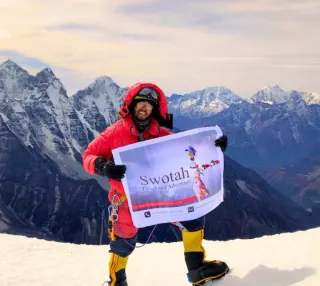
For Responsible and ethical trek and tour packages, remember Swotah Travel and Adventure- Your own local agency.
Quick Checklist: Questions to Ask Before You Book
- What is your Department of Tourism licence number and company registration number, and are you listed in the TAAN members directory?
- Exactly what does the price include? Ask about permits, insurance for the crew, porter weight limits and contingency days.
- Who guides my trip, and how many years and which routes have they worked?
- What happens if I get altitude sickness? Ask about the descent plan, the helicopter arrangement and who pays for what.
- Can I see recent, verifiable reviews on TripAdvisor or Google, not just the website testimonials?
A good operator answers all five without flinching. Whoever you choose, make sure the maths covers fair crew wages. The cheapest quote on the street is usually cheap at someone else's expense, as our guide to responsible trekking explains.
FAQ
Who licenses trekking agencies in Nepal?
The Department of Tourism, under the Ministry of Culture, Tourism and Civil Aviation. The agency must also be registered as a company with the Office of the Company Registrar. The Nepal Tourism Board promotes tourism but does not license agencies.
How can I check whether an agency is real?
Ask for its Department of Tourism licence number and company registration number, then look it up in the TAAN members directory, which lists registration numbers and addresses. A genuine agency will share these without fuss.
Do I have to book a trek through an agency?
On most routes, yes. Since 1 April 2023 trekkers in Nepal's national parks and conservation areas need a licensed guide arranged through a registered agency, and the TIMS card is issued only through agencies. The Khumbu local authority does not enforce the guide rule on the Everest trails.
Is a local agency cheaper than an international one?
Usually, because no overseas company takes a share. Many international operators use a Nepali agency on the ground anyway. Compare what each price includes rather than the headline figure.
How much deposit should a trekking agency ask for?
There is no fixed rule. Many agencies, ours included, ask for somewhere between 10% and 30% when you book months ahead, with full payment close to departure. Whatever the amount, get the refund terms in writing first.