


Yes. Most women find Nepal one of the easier countries in Asia to travel alone, and violent crime against visitors is rare. The bigger risks are the same for everyone: roads, trail accidents and altitude. Expect the odd stare, and on crowded city buses the occasional hand where it shouldn’t be. A few solo trekkers have gone missing over the years, so trek with a licensed guide (the law on most routes since 1 April 2023), dress modestly away from Thamel and Lakeside, take tourist buses or a private car, and save the Tourist Police hotline, 1144.
- Is it safe?Yes for most women. Roads, trails and altitude are the bigger risks
- Trekking aloneLicensed guide required on most routes since 1 April 2023 (not enforced in the Khumbu)
- What to wearCover shoulders and knees at temples and in villages
- Getting aroundTourist buses, metered taxis or ride apps. Avoid night drives
- EmergencyTourist Police 1144, Police 100, Ambulance 102
- Best seasonsMarch to May, and October to early December
- SwotahWomen-only treks run as custom-made trips. Female guide on request
Nepal ranks high on solo female travel destinations not just because of the beautiful countryside and outdoor adventure opportunities but because it is a safe country to travel to as a woman.
My first experience in Asia was in India. And years later, I still heard the same thing from travelers coming from India. "Oh. Goodness, Nepal is so fascinating". Anyone who has ever traveled to India will feel it immediately! Not that India isn't a very interesting country. It has incredible places to see. No, it's just as a woman, you always need to be on your guard. So enough about that other country. On to Nepal!
Nepal is superb for family tours and is among the safest travel destinations in Asia, so you immediately get the overall picture of the country's safety level.
However, as a solo traveler, particularly a female solo traveler, there are some basic things to consider. Here are some of my tips.
Nepal has Traditional Core Values.
Part of the reason we love to travel is we want to experience something different from what we know in our daily lives. Part of the wonder of traveling to foreign countries is to experience the culture. And part of that experience is accepting the local culture, religion, heritage, etc which is different from our own, is of no less value and should be respected and celebrated.
Two main areas of difference are in how people dress in Nepal and how they act around religious sites and objects.
Dress: No doubt the first place you will go on arriving in Nepal is Thamel. This tourist hub has many hotel and restaurant options to fit all budgets. And bars and clubs. Do not be confused about seeing local women in skimpy dresses and shorts. There is no way they left the house dressed like that. Nor would they walk around any other part of town dressed like that.
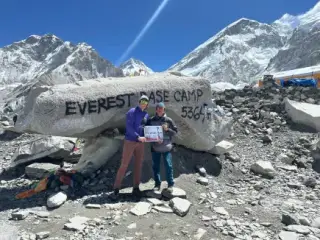
Indeed, if you are going trekking, you will automatically be dressed conservatively. Otherwise, expect to freeze! Everest Base Camp Trek and Dhaulagiri Circuit Trek, to cover up even just two, are places for vests, sweaters, and fleece jackets! Cover up even if you are in Chitwan National Park, where temperatures can be up near 40oC! It also helps protect you from sunburn and jungle creepy crawlies!
Respect: Please show respect when visiting religious sites, even if they are not advertised as religious, such as Swayambhunath and Boudhanath. Dress even more conservatively around these areas. It's not that long ago that I would not go out with a sleeveless top on. Nowadays, sleeveless is fine, but cover the other bits!
It may be that no one will ever say anything to you regarding your clothing. But definitely, they will be thinking about it! And pleeeeease, leave all that ‘my body, my choice’ stuff at home. Respect for others is vital.
If traveling around Asia, you will find the safe travel destinations in Asia are among those with fascinating ancient cultures.
Bits and Pieces: Do not forget to follow other cultural norms such as taking your shoes off before entering anyone's home (and some offices), not putting your feet on tables or seats in public areas such as hotel lobbies, restaurants, bars, etc., not touching idols and statues and not touching anyone's head. Do not take photographs of people without asking first. Do not climb on stupas or other religious buildings. You might find that people do get a bit closer to the street and shops. This is also a cultural aspect of life. The personal space between people in most of Asia tends to be much less than that in Europe. And if you think about it, among the Latin countries in Europe (Spain, Italy and so on) that personal space is less than in countries like, for example, Germany and the UK. So don't be alarmed! Unless it's some creepy-looking person. But certainly don't be surprised if women get close and perhaps even want a hand while crossing a busy road.

Safety When Trekking
Personally, I tell everyone to Never Trek Alone. Why? Every year there will be someone who goes missing on the trails. Every year, even more people have accidents on the trails. Even a small accident, such as a sprained ankle, can be a major problem if you are trekking alone off the beaten track. Always take a guide or porter. On most routes it is also the law. Since 1 April 2023, trekkers in Nepal’s national parks and conservation areas need a licensed guide. The Everest region is the exception, because the local municipality has never enforced the rule (more in our guide to solo trekking in the Everest region). If you don’t want to sign up for a group trek, you can hire a guide or porter from a reputable trekking company. In this way, you enjoy the freedom of being the only trekker on your route, while your licensed guide brings local knowledge and a safety net in case something, god forbid, goes wrong. You can also find other solo trekkers to go with, and that way, share the cost of your guide and enjoy the company of people you have chosen to trek with.
Yes, you will hear, "I trekked the XYZ trail myself, and I was totally fine." But you don't want to be the one who is not fine. Thousands of trekkers come through annually with no mishaps, but be particularly careful around the Langtang area, where several lone trekkers have gone missing over the years. Langtang reopened on 22 October 2026 after the August floods, with treks now starting from Thulo Syabru, and the guide rule is enforced there.
Easier trekking routes for solo travelers in Nepal include the Annapurnas, such as the four-day Poon Hill trek. You need a licensed guide there too. The high seasons (spring and autumn) are the best bet for having other trekkers on the trails and all the teahouses (lodges) open in case of problems.
Keep in touch: Always tell someone at home and in the country (at your hotel, for example) where you are going and how long you expect to be away. And tell those at home if you think you will be out of the internet/ phone signal range for some time, so they don't worry.
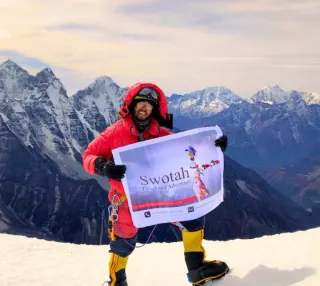
Girl Power: Or, here is an idea. There are female trekking guides and porters these days. Why not help empower local women, increase their income and have fun sharing with a woman from another culture simultaneously? Swotah runs women-only treks and tours as custom-made trips, built around what your group wants: the route, the dates, and a female guide if you ask for one. Swotah also tries to match you with a guide by gender, language, experience or age. They also have a great homestay trek in Nepal through more than 30 Gurung, Magar, Brahmin and Chhetri villages. Check it out!
Aside from trekking, other things to check out include mountain biking in Nepal, Nepal yoga retreats, rafting, and other high-adrenaline rushes such as bungee jumping!
Bits and Pieces: Pretty much all the same safety tips for the mountains apply to everyone, regardless of sex. If hiking alone, everyone needs to be extra careful to take the correct trail and of accidents. The best idea is to touch base with some of the best travel companies in Nepal who will be able to advise you on your travel plans.
Safety on the Road
Buses: The first rule of road safety in Nepal is: always take a tourist bus! These are much safer than local buses. Why? Because local buses are in a race against each other to get to the next stop to pick up more passengers. And that can be fatal on mountain roads. Almost every day, we hear about buses going over cliffs. Tourist buses have no such reason to drive fast, and drivers are better trained by the owners in safety (or I assume so). In some places, there may be no choice but to take a local bus.
City buses are another matter. It's not unusual for more harassment to happen on a crowded bus than anywhere else. Conductors and male passengers might try to get too close! This is definitely one situation where invading your personal space is not cultural but a deliberate infringement of your rights. Just be on your guard.
Vehicle hire: If you are thinking of hiring a car or jeep in Nepal, note they come with a driver! There are no self-drive cars. Motorbikes are available to hire in some locations. Helmets are compulsory. But do not assume other drivers will be following the rules. Actually, you can assume they won’t, so I suggest you don’t ride a motorbike unless you are very experienced. Check that your licence and your travel insurance both cover it before you hire one. What about a mountain bike instead?
Taxis: They are generally safe, and ride-hailing apps such as Pathao and inDrive offer cars and bikes in Kathmandu and Pokhara. I would stick to taxis though, because they are regulated better. Your hotel will help you organize a vehicle if you are heading on a self-organized tour or to the other side of town. If your driver speaks English, he will most likely enquire about your marital status. Do you have children etc.? While mostly this is just conversation, I always make up a husband waiting at the other end in case it is not just conversation! Some women do not like taking taxis alone late at night. Local women have taken down the license plate number and texted it home before getting in. I don't have any problem with late-night taxis, but then I know where I am going and the routes well.
On the positive side, although many drivers will try to cheat you on the fare, they are generally pretty okay and do not take you the long way round to increase the fare (if you manage to get it on the meter, lol). A couple of times, they have gone above and beyond in terms of driving through flooded streets for me.
Crossing the road: This might seem a strange topic if you have not been to Asia before! In towns where there are zebra crossings, again, assume nothing! No one is going to stop because you are standing at the crossing! Well, very few will. The idea is to hold up your hand and walk slowly across. Bikes will stream around you. Not for the faint-hearted! If there is no zebra crossing, the same technique applies… hold up your hand to show you are crossing and cross slowly. Yeah, I know, you would think if you are standing in the middle of the road, it's a sure thing you are crossing, but seemingly, they just need that extra reassurance you are not just standing there for fun!
Bits and Pieces: It would go without saying, never leave your hand luggage on the intercity bus unattended when it takes a break. Try to sit at the window for fresh air and the view! Take a light shawl to shade you from the sun. Local buses don't have curtains on the windows. Don't expect the windows to close just because it's winter!

Safety in Towns
If you are trekking through villages, the only real danger is on the trail itself: landslides, floods and so on. Or spicy food your stomach is not used to! But in towns such as Kathmandu and Pokhara, while they are generally safer than a town in your own country, you should be alert.
Muggings are rare but do happen. Keep your valuables in the hotel safe and your bag close to you. Most likely, you will probably only be walking after dark in the tourist areas, Thamel in Kathmandu and Lakeside in Pokhara. Tourist areas are pretty well lit, but try not to go down dark alleys alone. If you are staying in a small hostel or lodge, ask if they lock the door at night. If they do, let them know if you think you will be out late.
Men: Nepali men are lovely! A lot of hooking up happens in the bars and on the treks. Use the same common sense you would use at home if you meet someone. If you are being hassled, tell the barman, doorman, or another tourist about it. But in general, a cold stare will send most men off. Keep an eye on your drink in bars, and get a taxi home rather than a lift from someone you have just met.
Tourist police are available if anything does happen. Their main office is in the Nepal Tourism Board building at Bhrikutimandap in Kathmandu, and the hotline, 1144, is free to call. Or ask your hotel to help, which would definitely be easier than trying to do it yourself! Outside of Kathmandu and Pokhara, police will not be very effective for small things. If it isn’t serious and you don’t need a police report for, say, your insurance company, you may decide it isn’t worth reporting. Anything serious, such as an assault, is different. Report it, and call your embassy too. And don’t even think about asking directions! Plenty of people would rather point you somewhere than admit they don’t know.

Emergency Numbers for Women Travelling in Nepal
Save these before you land. The Tourist Police speak English and deal with visitors every day, and your hotel can call for you if your phone has no signal.
| Who | Number | When to use it |
|---|---|---|
| Tourist Police | 1144 (free, 24 hours) | Theft, harassment, scams, lost passport, any problem as a visitor |
| Nepal Police | 100 | Crime or danger anywhere in the country |
| Ambulance | 102 | Medical emergencies in towns |
| Fire | 101 | Fire |
| Your embassy | Look it up before you fly | Assault, arrest, a lost passport, or if you need a lawyer or doctor |
On a trek, your guide’s phone and your insurer’s emergency line matter more than any of these. Helicopter rescue only happens fast if your insurer has your policy number, so keep it on paper as well as on your phone.
Safety Checklist for Women in Nepal
| Situation | What works |
|---|---|
| Arriving at the airport | Book a hotel pickup or use the prepaid taxi counter inside the terminal |
| Nights out in Thamel or Lakeside | Watch your drink, stay on lit streets, take a taxi back. Tell your guesthouse if you’ll be late |
| Trekking | Go with a licensed guide, in spring or autumn, and leave your route and dates with someone at home |
| Temples and villages | Shoulders and knees covered, shoes off where others take them off, ask before photos |
| Long road trips | Tourist bus or private car, daytime only, bag on your lap or in sight |
| Periods on a trek | Bring all your supplies from home and carry used items out in a sealed bag. A menstrual cup saves weight |
| Insurance | A policy that covers helicopter rescue up to the highest point of your trek. Swotah asks for cover to 6,000 m |
For a full kit list built around a 10 kg bag, see our women’s guide to packing light for trekking, and check what a policy needs in travel insurance for trekking in Nepal.
Best Season to Visit Nepal
Definitely, the best season to visit Nepal is spring or autumn. But it really depends on what you want to do. For trekking, yes, March to May and October to early December are best. By June the monsoon is arriving and the trails turn wet and leechy. If you want to go with a Nepal tour agency into the more remote areas that fall into the rain shadow, such as Upper Mustang and Dolpo, you can also trek in the summer monsoon months.
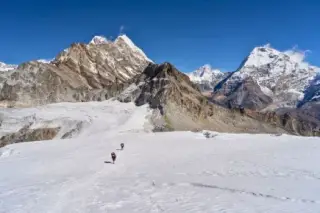
If you are into peak trekking, you must go through a local agency before heading off. The most famous peak trek is Island Peak (6,165 m). Again the best times for peak trekking are spring and autumn. Note that while peak trekking introduces you to climbing and they say no prior experience is required for some of the peaks, I recommend you try out on your local climbing wall before coming to Nepal!
Bits and Pieces: Nepal is the best place to start your Nepal Bhutan Tour or Nepal Tibet Tour. Tibet can close to foreigners at short notice, most often around February and March, so check before you book. You can’t visit Tibet independently, because an agency has to arrange your permit, and in Bhutan a licensed guide must stay with you. Please ask us about these tours.

Travelling in Nepal with Swotah as a Woman
Every Swotah guide is licensed, trained and certified, first aid included. If you’d feel easier with a woman guide, or someone close to your age or who speaks your language, say so when you book and Swotah tries to match you. Swotah also runs women-only treks and tours as custom-made trips, planned around your group’s route, dates and pace. Swotah can arrange any of these as a private trip, for you alone or a group of friends.
| Trip | Days | Why it suits a first solo trip | From (group departure) |
|---|---|---|---|
| Poon Hill Trek | 4 | Short, busy trail, highest night 2,860 m | USD 300 |
| Millennium Homestay Trek | 13 | Village homestays, low altitude | USD 1,250 |
| Langtang Valley Trek | 10 | Close to Kathmandu, guide rule enforced | USD 730 |
| Annapurna Base Camp Trek | 14 | Popular teahouse route to 4,130 m | USD 1,000 |
| Everest Base Camp Trek | 14 | The classic, with plenty of company on the trail | USD 1,620 |
| Best of Nepal Tour | 12 | Kathmandu, Pokhara and Chitwan without a trek | USD 1,010 |
Prices are the cheapest upcoming group departure per person, checked October 2026.
Long Story Short
For most visitors, Nepal is about as safe for women as it is for men. The main thing is to dress a bit more conservatively than you might on the beach or at home, be respectful of others. Don't flirt with men outside of the bars in town! And open displays of affection are frowned on. So if you do meet someone, don't hold hands in public!
And remember, even if you love traveling alone, this is the Himalayas! It's definitely much safer to trek through a reputable company with all the trail knowledge and emergency resources should they be needed.
Safe travels!
FAQs: Women Travelling in Nepal
Is Nepal safe for solo female travellers?
Yes, for most women. Violent crime against visitors is rare, and the tourist areas of Kathmandu and Pokhara are easy to get around. The real risks are road travel, trail accidents and altitude, plus harassment on crowded city buses now and then.
Can a woman trek alone in Nepal?
Not legally on most routes. Since 1 April 2023 trekkers in Nepal’s national parks and conservation areas need a licensed guide. The Everest region hasn’t enforced the rule, but trekking alone there still leaves you with no help if you twist an ankle or get sick.
What should women wear in Nepal?
Cover your shoulders and knees at temples, monasteries and in villages. Loose trousers or a long skirt and a T-shirt are fine for towns. On a trek you’ll be in layers anyway, because nights get cold.
Can I ask for a female guide in Nepal?
Yes. Nepal has a growing number of licensed women guides. Swotah tries to match you by gender, age, language or experience if you ask when you book.
Does Swotah run women-only treks?
Yes, as custom-made trips. Tell Swotah the route, dates and group you have in mind, and the trek is planned around it, with a female guide if you want one. There are no set annual departures, so the dates are yours.
What is the emergency number for tourists in Nepal?
Call the Tourist Police on 1144, which is free and open 24 hours. The general police number is 100 and the ambulance is 102.