



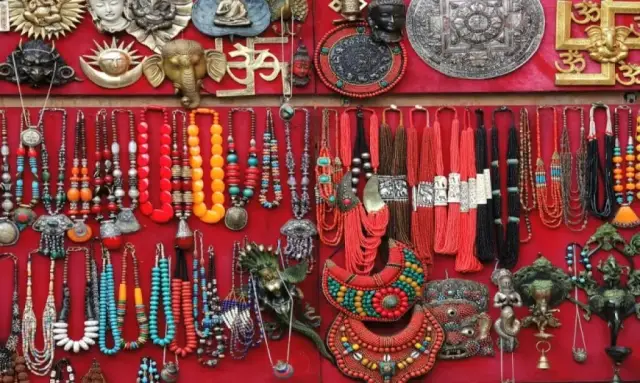

The best souvenirs from Nepal are a real pashmina shawl, a khukuri knife, a hand-hammered singing bowl, a thangka painting, lokta paper, Ilam tea, prayer flags and rudraksha beads, plus felt, hemp and dhaka cloth. Thamel has the widest choice at tourist prices. Asan is cheaper, and Patan is the place for metalwork and fair-trade crafts. Bargain in open markets, not in fixed-price shops. Before you fly, pack the khukuri in checked baggage and skip anything that might be an antique: objects over 100 years old cannot leave Nepal without Department of Archaeology permission. Wildlife products such as shahtoosh or ivory are banned outright.
- Best all-round buyPashmina, ideally with the Chyangra Pashmina label
- Where to shopThamel (choice), Asan (price), Patan (metalwork, fair trade), Bhaktapur (pottery)
- BargainingExpected in markets, not in fixed-price fair-trade shops
- KhukuriChecked baggage only, and check your home country’s blade rules
- AntiquesOver 100 years old: Department of Archaeology permission needed
- BannedShahtoosh, ivory and other wildlife products
- Needs permitsYarsagumba (export permit and royalty)
It's difficult to return empty-handed when you wander the busy markets of Kathmandu. Once you fall in love with this country, it’s almost impossible not to want to take little gifts from Nepal. It's a smart thought to get souvenirs from Nepal for your friends and family back home, eager to hear intriguing stories of your venture.
These may be something as little as a customary Nepali cap or a Gurkha khukuri, or something you find while walking around the beautiful back roads of Thamel or Patan. Genuine Nepali handicrafts turn up on almost every corner. These little mementos from Nepal can go a very long way, reminding you of the country you so much fell in love with.
We know the hassle involved in trying to find that one perfect thing for you or for your friends back home. To help you find the perfect gift to take back home from Nepal, we present you the list of things that will make a perfect souvenir from Nepal.
Pashmina Shawls
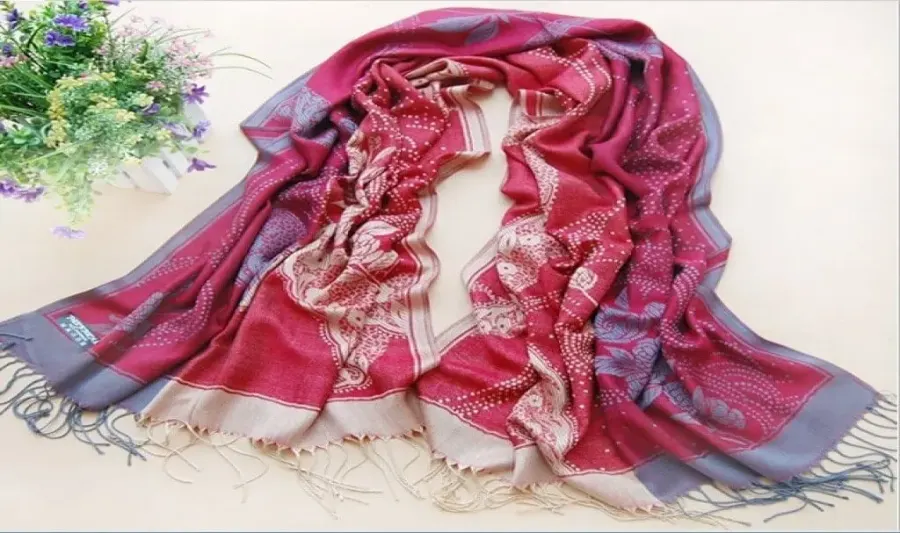
Photo: Pashmina Shawl
Pashmina shawls, referred to as cashmere fleece in the western world, make the best gift to take back home from Nepal. The name comes from pashm, the Persian word for wool. Pashmina is made from the fine undercoat of the Himalayan mountain goat, called chyangra in Nepali, which lives in the high, cold country of the Tibetan Plateau and Nepal’s northern districts. That is why real pashmina is so light and so warm.
The vast majority of these shawls today are woven in Kathmandu Valley handlooms, so a Pashmina shawl makes an astounding and prized trinket from Nepal. Watch out for fakes, though, because the markets are full of them. Polyester, acrylic and ordinary wool are often sold as pashmina. Many genuine shawls are a pashmina and silk blend (70/30 is common), which is fine as long as the label says so. Look for the Chyangra Pashmina label, the collective trademark of the Nepal Pashmina Industries Association, which is registered in dozens of countries to fight imitations.
Nepali Khukuri
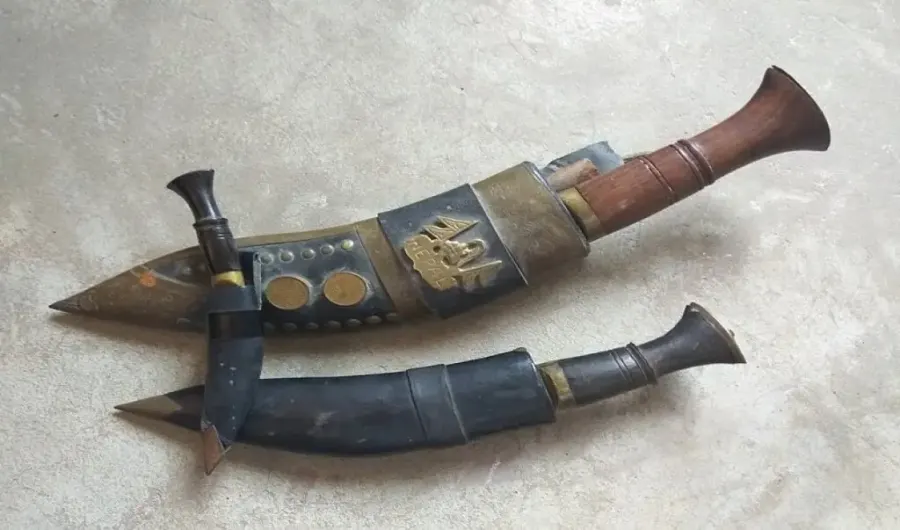
Photo: Khukuri
Instantly recognisable, the khukuri (a curved steel blade) is a symbol of courage in Nepal, tied to the Anglo-Nepal war of 1814 to 1816, when Gorkhali soldiers fought with it. Gurkha soldiers in the British and Indian armies still carry one. Buying one means taking home a piece of Nepal’s history.
Khukuris are made by local blacksmiths, traditionally from the Kami community, and they are a favourite with visitors who collect traditional objects. Because it is a blade, a khukuri must travel in checked baggage, and some countries limit blade length or knife imports. Check your own country’s customs rules before you buy a big one.
Singing Bowls
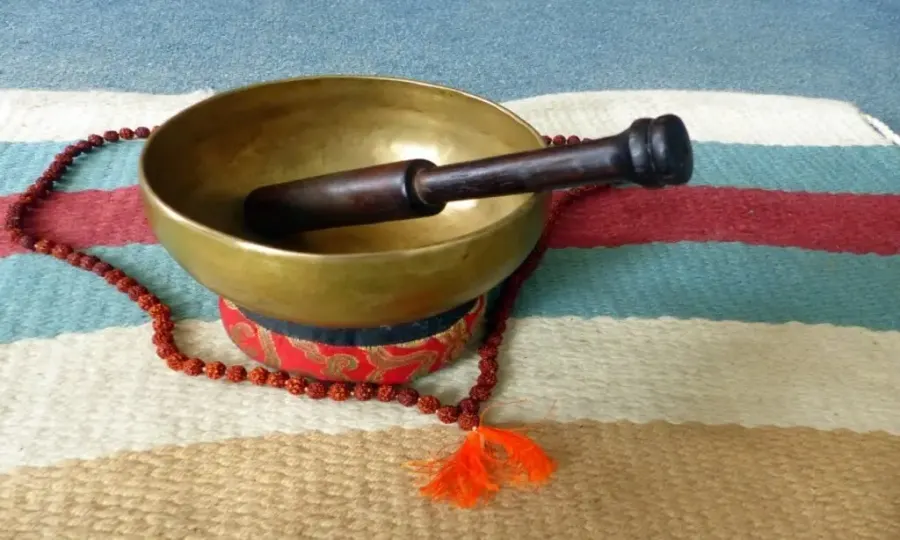
Photo: Singing Bowl
Singing bowls are hand-beaten metal bowls from the old Himalayan metalworking tradition, and they come in every size. Using them for sound healing is mostly a modern practice, and the sales line that every bowl is made of “seven metals” is more story than rule. Most good bowls are bronze, an alloy of copper and tin. You will find both machine-made and hand-hammered bowls in the market. It’s worth paying a little more for a hand-hammered one, which usually sounds richer and lasts longer. Ask the seller to play it for you before you pay. The perfect token of love from Nepal for your spiritual friends!
Thangka Paintings
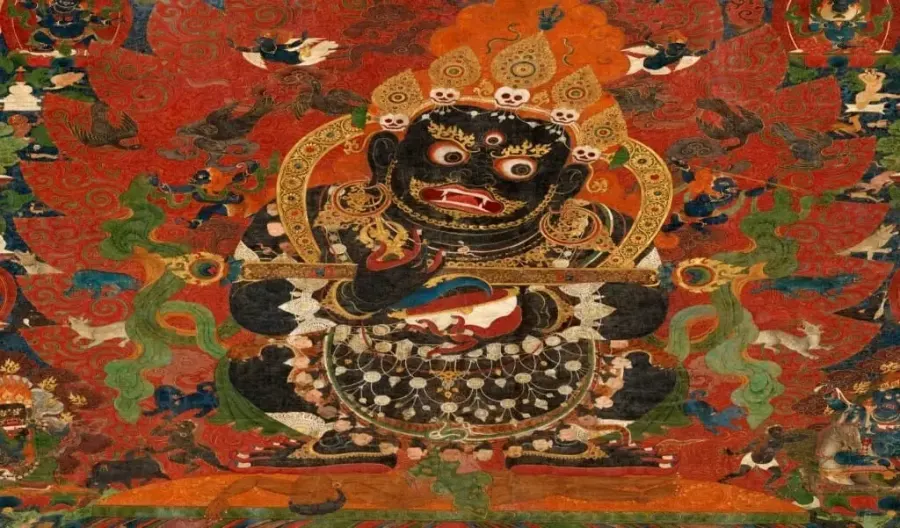
Photo: Thangka painting
Thangka paintings show Nepali craftsmanship at its most careful. Their beauty is in the detail. A large, finely worked thangka can take an experienced painter many months by hand. Painters work on cotton or silk canvas with mineral pigments, sometimes with fine detailing in real gold. For devoted painters, thangka is sacred Buddhist art, passed from teacher to student. A good thangka is a real investment. Ask for a receipt and a certificate that states the painter or workshop, and if the painting looks old or has been artificially aged, ask the shop for a Department of Archaeology clearance before you take it out of Nepal. An evergreen memento and precious gift one could ever take from Nepal.
Handicrafts: Masks, Woodcarving and Metalwork
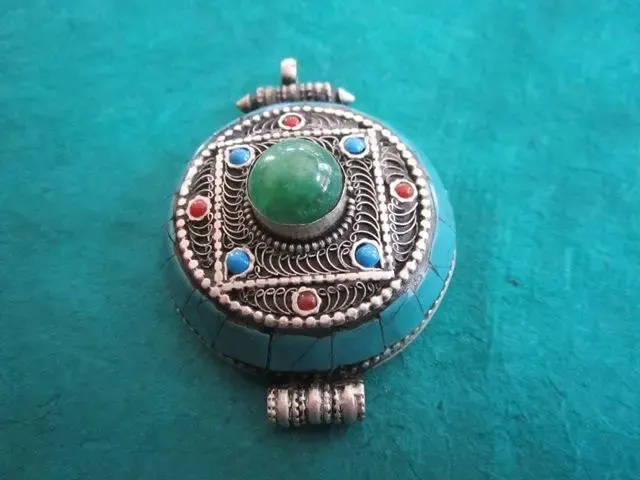
Photo: Nepali Craft
Nepalese craftsmanship has a look all its own. Prayer wheels, traditional masks, puppets, intricately carved wooden figures, pottery and hemp goods are some of the best-known crafts made and sold in Nepal.
The brightly painted masks of local gods, sold in every size, say Kathmandu like nothing else. Carved wooden windows in miniature, wooden boxes and vases are good choices too. Patan is the centre of Newar metal casting, where workshops still make bronze and copper statues of the Buddha and Hindu gods by the lost-wax method.
Hemp shirts, trousers, rucksacks and bags are popular too, and hand-made hemp backpacks from Nepal are tough enough for daily use back home.
Be careful with anyone selling a piece as an antique. Genuine antiques are hard to find, and anything over 100 years old cannot leave Nepal without permission from the Department of Archaeology. Stone, metal or wooden pieces that look old may need a clearance certificate even when they are new, so keep your receipt.
Lokta Paper Products
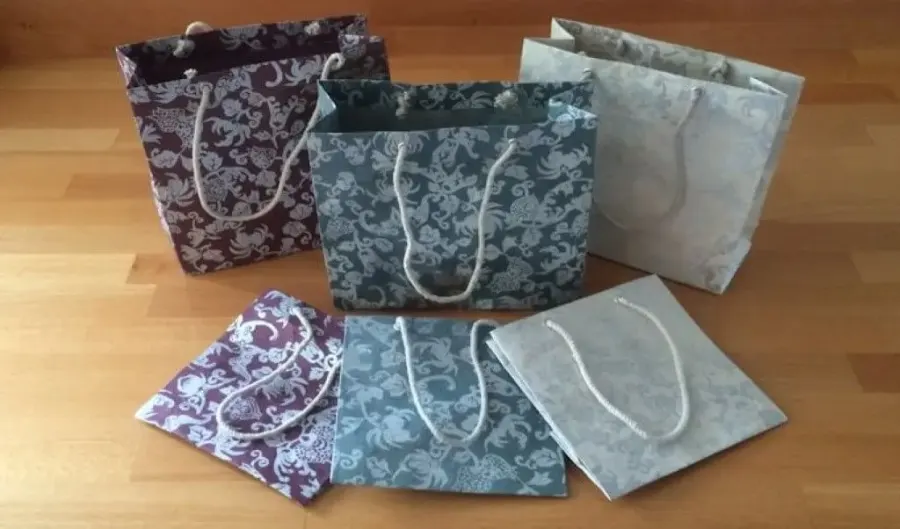
Photo: Lokta Paper Bags
Lokta paper, Nepal’s traditional handmade paper, is made from the inner bark of the lokta shrub (Daphne bholua and Daphne papyracea), which grows on Himalayan hillsides. The shrub grows back after it is cut, so the harvest doesn’t kill the plant. Once used for manuscripts and government records, it is now one of the most charming gifts to buy in Nepal. You will find shops selling lokta paper in Patan and Thamel.
Lampshades, calendars, notebooks and cards are made to pack flat for travellers (the lampshades often fold).
Nepali Tea
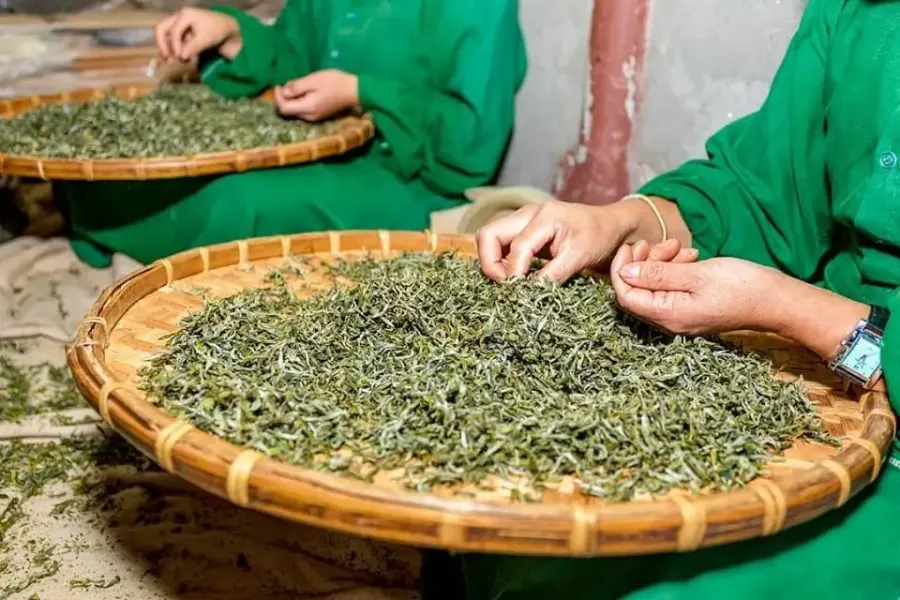
Photo: Nepali Tea Leaves
Nepal grows fine orthodox tea, much of it in Ilam and the eastern hills next to Darjeeling, where the first estate was planted in the 1860s.
Chances are during the period of your stay in Nepal you will be addicted to sweet Nepali tea or Chiya, so better pack some back home.
One of the best ways to bring home a taste of Nepal is a bag of local tea. The cool, misty hills suit tea bushes and herbs well. Buy loose-leaf first flush or second flush tea, and a packet of chiya masala if you liked the spiced milk tea.
Tea is light, cheap to post and easy to pack. Good tea shops in Thamel and Patan stock a huge range at very different prices, and most let you taste first. Find your favorite one and enjoy the taste of Nepal at your home.
Prayer Flags
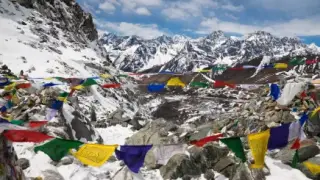
Strings of lungta prayer flags, the five colours representing sky, air, fire, water, and earth, cost next to nothing (NPR 100 to 500), weigh nothing, and carry more meaning than almost anything else you can pack. Buy them around Boudhanath, where the selection is best, and note the etiquette: flags are meant to be hung in the wind, never on the ground.
Rudraksha Beads
The seeds of the rudraksha tree, sacred to Shiva and worn by sadhus and pilgrims, are sold as malas (rosaries) and bracelets around Pashupatinath and Asan. Prices range from a few hundred rupees to astonishing sums for rare single-faced seeds. For a souvenir, a simple five-faced mala is authentic and affordable.
Felt and Hemp Goods
Nepal's felt workshops turn wool into bright slippers, bags, toys, and Christmas ornaments, and hemp goods, from wallets to backpacks, are a Thamel staple. Both are light, durable, and made by small local producers, often through fair-trade cooperatives whose shops cluster around Kupondole in Patan.
Where to Buy, How to Bargain, and Getting It All Home
Thamel has everything at tourist prices. Asan and Indra Chowk sell the same beads and fabrics at local prices. Patan is best for metalwork and fair-trade crafts, and Bhaktapur for pottery and the juju dhau king curd you sadly cannot pack. Bargaining is expected in open markets, with something between a third and half off the first quote being a normal landing point, while fixed-price fair-trade shops charge more and put more into makers' hands.
Three rules for the flight home. First, khukuri knives must travel in checked baggage, never carry-on, and a customs-friendly receipt helps. Second, genuine antiques over 100 years old cannot leave Nepal without Department of Archaeology clearance, so buy reproductions (clearly described as such) unless you are ready for that paperwork. Third, wildlife products, including old shahtoosh shawls and anything ivory or bone, are illegal to export, full stop. Two natural products need extra care. Yarsagumba is legal to buy from licensed traders, but export needs permits and paid royalties, and many countries have their own import rules. Mad honey is legal in Nepal and in the United States, but countries including South Korea and Australia restrict it, so check before you pack a jar. Everything else on this list flies happily in a duffel.
Two More Souvenirs Worth a Look
Dhaka Topi and Dhaka Cloth
The dhaka topi, the patterned cap many Nepali men wear on formal days, is about as Nepali as a gift gets. It is cut from dhaka, a hand-woven cloth with bright geometric patterns that is closely tied to Palpa in the western hills and to Tehrathum in the east. Caps, shawls and bags made of dhaka cost little and weigh almost nothing. Ask for hand-loomed cloth, because cheap machine copies are common.
Tibetan Carpets
Hand-knotted wool carpets, woven by Tibetan refugee families and Nepali workshops since the 1960s, became one of Nepal’s biggest exports. They are heavy, so most buyers have them shipped. Child labour was once a serious problem in the industry. The GoodWeave label (formerly RugMark), started in 1994, certifies carpets made without it, with a traceable number on each rug. Ask for it, or buy from a workshop where you can watch the weavers.
Nepal Souvenirs at a Glance
| Souvenir | Where to buy | Good to know |
|---|---|---|
| Pashmina shawl | Thamel, Durbar Marg, Patan | Look for the Chyangra Pashmina label. A silk blend is fine if labelled |
| Khukuri | Thamel, Bhaktapur | Checked baggage only. Check blade rules at home |
| Singing bowl | Patan, Boudhanath, Thamel | Hand-hammered bowls sound richer. Listen before you pay |
| Thangka painting | Bhaktapur, Boudhanath, Patan | Get a receipt. Old-looking pieces need archaeology clearance |
| Masks, carvings, metal statues | Patan, Bhaktapur | Anything over 100 years old cannot leave Nepal without permission |
| Lokta paper | Patan, Thamel | Light and flat. Perfect for gifts |
| Tea | Thamel, Patan tea shops | Taste first. Ilam is the best-known region |
| Prayer flags | Boudhanath, Swayambhunath | NPR 100 to 500 a string. Hang them in the wind |
| Rudraksha mala | Pashupatinath, Asan | A five-faced mala is the usual souvenir |
| Felt and hemp | Kupondole, Thamel | Fair-trade shops pay makers more |
| Dhaka cloth | Asan, Patan, Palpa | Ask for hand-loomed cloth |
| Tibetan carpet | Jawalakhel, Boudhanath | Ask for the GoodWeave label. Ship it home |
Customs Checklist Before You Fly Home
| Item | Rule when leaving Nepal |
|---|---|
| Khukuri and other blades | Checked baggage only, never in your carry-on |
| Antiques (over 100 years old) | Cannot be exported without Department of Archaeology permission |
| New statues, carvings, paintings that look old | Ask the shop for a clearance or non-antique certificate and keep the receipt |
| Shahtoosh, ivory, bone, wildlife parts | Banned |
| Yarsagumba | Export needs permits and royalties. Check your country’s import rules |
| Mad honey | Legal in Nepal. Restricted in some countries, including South Korea and Australia |
| Tea, paper, textiles, felt | No special rules for normal personal amounts |
Rules change, and your home country has its own customs limits. If you are buying something expensive or unusual, ask the Department of Archaeology in Kathmandu before you pay.
Shop Kathmandu Valley’s Craft Towns With Swotah
The best souvenir hunting happens in the old towns, and two Swotah trips spend real time there. The Best of Nepal Tour (12 days, from USD 1,010 per person, group departure) visits Bhaktapur, Patan, Boudhanath and Swayambhunath before heading to Pokhara and Chitwan. The Himalayan Food Exploration Tour (11 days, from USD 2,999, group departure) includes Bhaktapur, where you can pick up pottery and taste juju dhau. Groups are capped at 8 people. If you ask, Swotah tries to match you with a guide by language, gender, experience or age, and your guide can point you to fair-trade shops and help you bargain. Swotah can arrange it as a private trip, with as much shopping time as you like.
Nepal Souvenir FAQs
How can I tell if a pashmina is real?
Real pashmina is very soft, light and warm, and it doesn’t feel slippery like polyester. Check the label for the fibre mix and look for the Chyangra Pashmina trademark. A pashmina and silk blend is genuine if it is sold as one. Prices that look too good usually are.
Can I take a khukuri home from Nepal?
Yes, in checked baggage. Never put it in your carry-on. Some countries limit blade length or knife imports, so check your home country’s rules before you buy a large one.
Can I export antiques from Nepal?
Not without permission. Objects over 100 years old count as antiques, and they cannot leave Nepal without Department of Archaeology clearance. New items that look old may also need a certificate, so keep your receipt.
How much should I bargain in Kathmandu?
In open markets, landing somewhere between a third and half below the first price is normal. Stay friendly and walk away if the price doesn’t suit you. Fair-trade and fixed-price shops don’t bargain, and more of their price goes to the makers.
Where is the best place to buy souvenirs in Kathmandu?
Thamel has the most choice. Asan and Indra Chowk are cheaper and more local. Patan is best for metal statues, singing bowls and fair-trade crafts, and Bhaktapur for pottery and thangkas.