
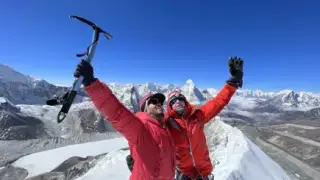
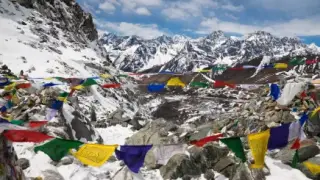

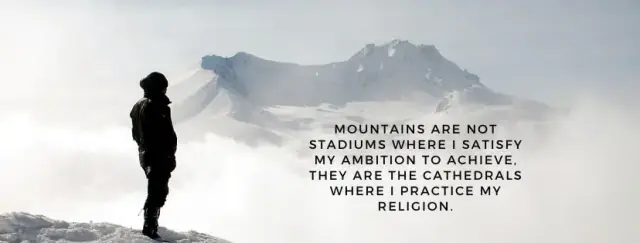

Start with The Snow Leopard by Peter Matthiessen (1978), the account of a 1973 walk to Shey Gompa in Dolpo that won a US National Book Award. Climbers should read The Climb by Anatoli Boukreev next to Jon Krakauer's Into Thin Air, because the two men saw the 1996 Everest disaster very differently. For Nepal off the mountains, try Samrat Upadhyay's short stories in The Royal Ghosts, Thomas Bell's Kathmandu, Isabella Tree's The Living Goddess and Elizabeth Enslin's memoir of village life in Chitwan.
- Books on this list9, published 1978 to 2014
- Mountaineering picks4: Kukuczka, Blum, Boukreev, Messner
- Nepali authorSamrat Upadhyay, The Royal Ghosts (2006)
- Written by women3: Arlene Blum, Isabella Tree, Elizabeth Enslin
- Oldest pickThe Snow Leopard, 1978
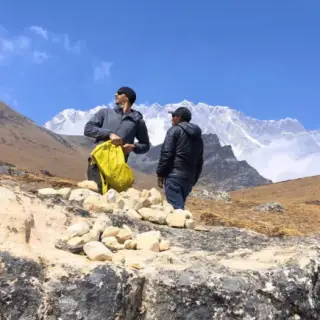
- Read it on the trailShey Gompa in Upper Dolpo, the setting of The Snow Leopard
- Swotah tripsGroups of up to 8, any trip also private
Whether you have visited Nepal already or are still planning your trip, take the chance to read one or two books about this colourful and diverse country. Some are written by Nepali authors and many by foreign writers who fell for the Himalaya, its culture, traditions, history and religions.
Have a look at the selection of nine books, grab one of them and enjoy reading with a cup of masala tea, the spiced milk tea drunk all over Nepal and India.
They will take you on a journey into Nepal before you land and, hopefully, wake up the wanderlust to go and see it for yourself.

The Snow Leopard by Peter Matthiessen (1978)
Snow leopard will find enthusiasts in both, nature and mountaineering lovers. The book, by the novelist and naturalist Peter Matthiessen, tells the story of his autumn 1973 walk with the zoologist George Schaller to Shey Gompa in Dolpo. Schaller went to study the bharal, the Himalayan blue sheep, and both men hoped to glimpse the snow leopard that hunts them. Very few people had seen one in the wild. Schaller was one of them, in Pakistan a few years earlier. Will they see one in Dolpo? Let’s keep it as a secret and indulge the moments of mystery through the whole book, combined with picturesque nature descriptions. The book won the US National Book Award in 1979.
Matthiessen's incredible narrative, using metaphors and mysticism, takes readers not only on the journey through snowy peaks of Dolpo but also into more spiritual trip inside self, retrospecting aspects of life and death.
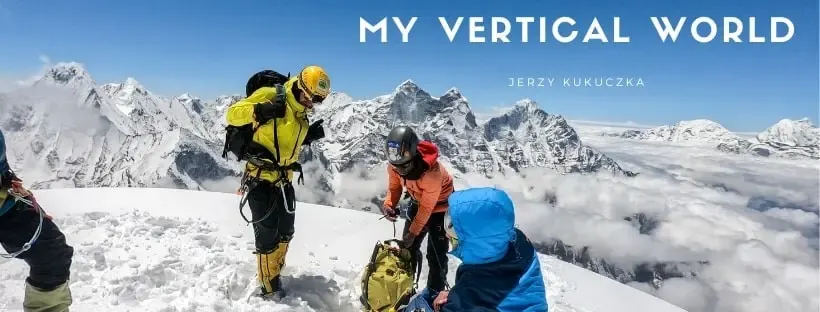
My Vertical World by Jerzy Kukuczka (1992 in English)
My vertical world is an autobiographic book of Polish mountaineer, Jerzy Kukuczka, who in 1987 became the second person to climb all 14 of the world’s 8,000-metre peaks, a year after Reinhold Messner. He climbed every one of them except Mount Everest without supplemental oxygen. He died on the south face of Lhotse in 1989.
Kukuczka presents in an interesting and often humorous way the reality of living in communist Poland in the 1970s and 1980s, difficulties in managing the budget and challenges of those times to organise expeditions to far destinations as Nepal or Pakistan.
But primarily the book gives the statement of the inner power of a single man in achieving his dreams. My vertical world takes readers into the mind of a great alpinist, who deeply loved the mountains and showed in his actions that impossible becomes possible. Not only in the mountains, but on every day of his life.
The English edition first came out in 1992. A newer version, Challenge the Vertical, adds a new layout and many more of Kukuczka's photos.
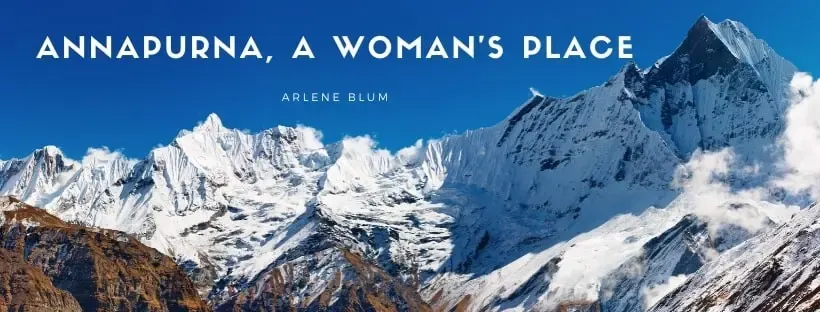
Annapurna: A Woman's Place by Arlene Blum (1980)
The fact that books about mountaineering are rarely written by women made me choose it as one of the recommended. This book is the story of the all-women American expedition that Arlene Blum led in 1978 to climb Annapurna I (8,091 m), the tenth-highest mountain in the world. On 15 October Vera Komarkova and Irene Miller reached the summit with Mingma Tsering Sherpa and Chewang Ringjing Sherpa, the first Americans and the first women to stand on top. Days later Vera Watson and Alison Chadwick-Onyszkiewicz died on a second attempt. The book tells both the triumph and the tragedy. It shows the problems the women faced organising the trip and gathering gear, climbing the ice walls of one of the deadliest 8,000-metre peaks, keeping the team talking, and finding the physical and mental strength to go on.
Annapurna is an extraordinary book about mountaineering, particularly because written from a female perspective. Moreover, Blum's story and skills presented by her team during the trip became a pushing button for appreciating woman's achievements and abilities in many areas such as sport, career or leadership.
The narration is simple and lively, subtly revealing Blum's attitudes, passion and dedication to the mountains.
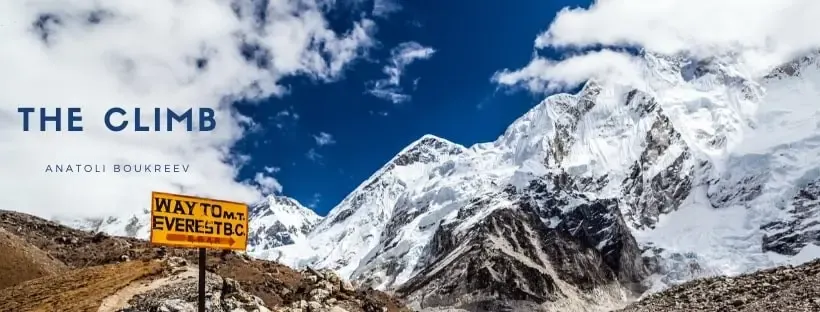
The Climb: Tragic Ambitions on Everest by Anatoli Boukreev (1997)
Mountains are incredibly beautiful and addicting, but also impenetrable and dangerous. Every year they take lives, and in May 1996 a storm caught several expeditions high on Mount Everest. In The Climb, written with G. Weston DeWalt, the Russian-Kazakh mountaineer Anatoli Boukreev tells the story of that disaster. Eight climbers died on 10 and 11 May, five of them on the South Col route and three Indo-Tibetan Border Police climbers on the north side. Boukreev describes the conditions he faced when he went out alone into the storm on the South Col and brought three exhausted climbers back to camp. Boukreev was personally a very humble person, the book is written in a similar manner. He does not praise himself for his heroic action, rather talks about skills that alpinist uses while placed in this kind of extreme situation.
The Climb is a direct reply to Jon Krakauer's Into Thin Air (1997), which criticised Boukreev for guiding without bottled oxygen and for descending ahead of his clients. Boukreev died in an avalanche on Annapurna on Christmas Day 1997. It is worth reading both books and get to know the statement and perspective of both, Krakauer's and Boukreev's on the 1996 incident. They are true, dramatic and sad stories, but also very touching and showing that climbing the mountains should be done with humility and wisdom. Our article on overcrowding on Everest looks at how the mountain has changed since.
My Quest for the Yeti by Reinhold Messner (2000 in English)
Yeti, a legend or real monster? Myth or true story? Yeti, Meh Teh or Abominable Snowman, a folkloric ape-like creature, associated with the Himalaya mountains.
My quest for the Yeti is an unusual read because it doesn’t really try to prove that Yeti has truly existed or exists as a physical creature. But rather it shows how it exists in people's minds as a myth. The author passes through remote villages deep in the Himalayas, interviewing local people and listening to their accounts about Yeti.
Reinhold Messner, the first person to climb all 14 of the 8,000-metre peaks, and without bottled oxygen, has also trekked many remote areas of Nepal, Tibet and northern India. In July 1986, on a trek in Tibet, he met a tall, hairy creature at night that he could not explain. When he said it might be a yeti, newspapers mocked him. In the book, first published in German in 1998, he explains how he came to believe the creature was a Tibetan brown bear, known locally as the chemo or dremo. He suggests that it could be also the origin of yeti's myth.
Pleasant, mysterious, thrilling read about mountaineer’s adventures into different parts of Himalaya combined with passion, enthusiasm, nearly obsession to investigate the Yeti's case.
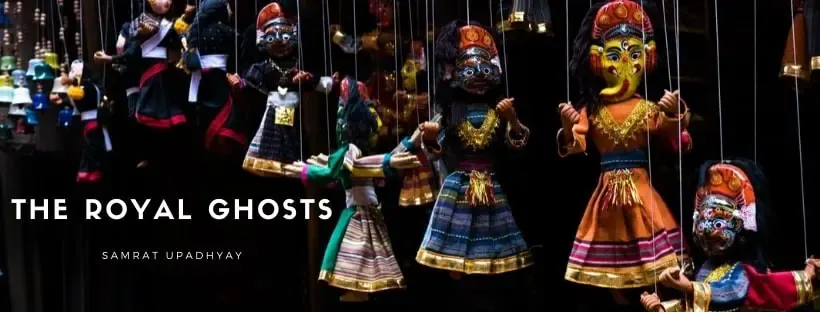
The Royal Ghosts by Samrat Upadhyay (2006)
A collection of stories set mostly in Kathmandu, about people dealing with hard questions in Nepali society: arranged marriage, the caste system, a family member’s homosexuality, mental health and duty to ageing parents. Samrat Upadhyay skillfully takes the readers into the reality of Nepal, which often is not easy to imagine, even harder to fully understand by Western people. However, the book gives an excellent picture of norms, rules, mores, cultural and political aspects ruling in Nepal. The stories are set against the Maoist insurgency, the civil war that ran from 1996 to 2006, and its consequences.
Moreover, Upadhyay deliberately applies in his stories the ambiguous ending, which leaves the reader either with reflection or frustration.
Book recommended for those who want to discover and learn a bit more about another culture through fiction.
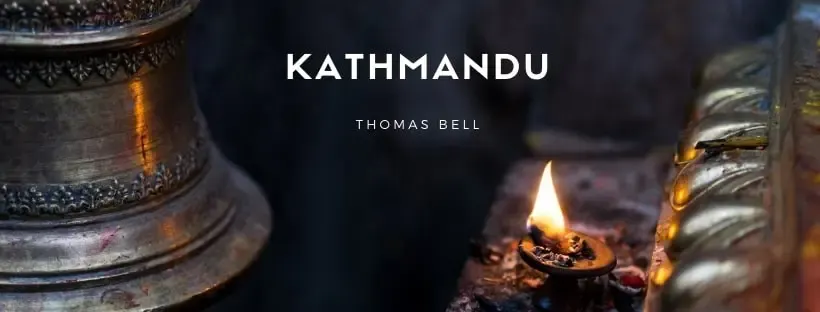
Kathmandu by Thomas Bell (2014)
A detailed book about Kathmandu by Thomas Bell, a British journalist who came to the city in 2002 to cover the civil war for the Daily Telegraph and The Economist, and lived there for well over a decade.
The book weaves together three stories. The first follows the history of Kathmandu, the second the Maoist revolution and the political changes that followed. The third narrative reveals Bell's personal life and the process of gradual settling his life in Nepal.
Bell has been spending a great amount of time researching Nepalese culture, history, social issues and economic influences. What you can find in Kathmandu is the effect of years of travelling, discovering, observing and investigating the secret valleys and history of Kathmandu city and its inhabitants.
This is a perfect book for Nepal lovers, history enthusiasts or political followers. Worth to note that written from foreigner's perspective.
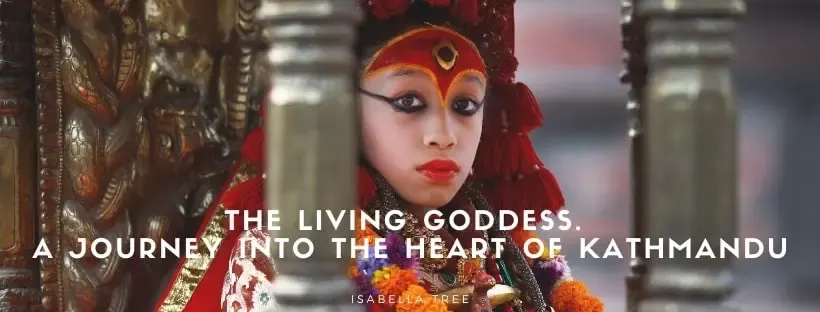
The Living Goddess: A Journey into the Heart of Kathmandu by Isabella Tree (2014)
The Kathmandu Valley keeps one of the world’s rare traditions of a living goddess, the Kumari, worshipped by both Hindus and Buddhists. Our guide to the living goddess of Nepal explains how she is chosen and where to see her.
Fascinating topic and the amazing story followed by research and collecting information on Nepali traditions, culture, rituals and history, with the worship of a young girl from the Newar Shakya or Bajracharya clans as the goddess Taleju at its centre. In The Living Goddess Tree also asks what life is like for a Kumari after she steps down. Interviews with ex-Kumaris are a noteworthy part of the book.
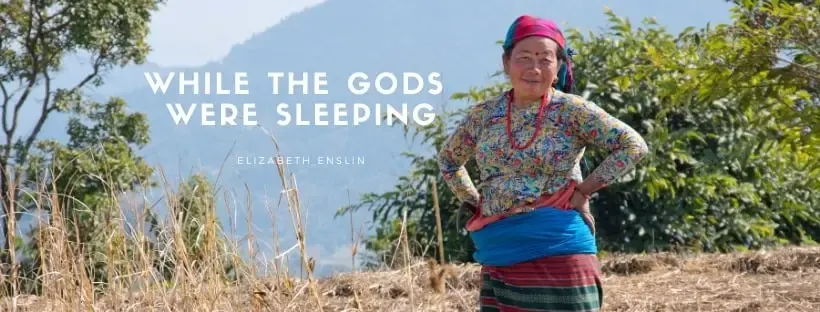
While the Gods Were Sleeping by Elizabeth Enslin (2014)
Finally, a book about love and marriage, although not complete with an ending 'they lived happily ever after'. Driven by love, Elizabeth Enslin, an American anthropologist, marries into a Brahmin family and moves to her husband's village of Gunjanagar in Chitwan in the 1980s. Life there is not easy for a foreigner, because village traditions and rules are strict and very different from a Western view of the world.
Enslin tells her compelling story of cultural differences, adapting to the local society, heavy role of caste, challenges of marriage life, birth and upbringing of the child according to unfamiliar to her rules. She also takes the reader deep into the life of Nepalese women, their role in the society and their growing push for rights and an end to old practices that held them back. The subtitle says it well: A Journey Through Love and Rebellion in Nepal.
Absorbing and touching account based on personal experience and observation, not only of others but also an observation of self in unusual life circumstances.
Don’t forget your masala tea!
The 9 Books at a Glance
Use this table to pick a book by mood, or by the trip you are planning. The years are first publication in English.
| Book | Author | Year | Best for | Where to go after |
|---|---|---|---|---|
| The Snow Leopard | Peter Matthiessen | 1978 | Nature lovers, slow readers | Upper Dolpo and Shey Gompa |
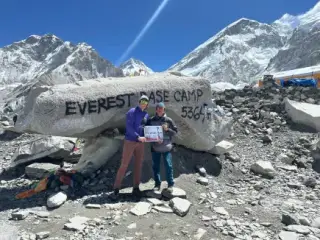
| My Vertical World | Jerzy Kukuczka | 1992 | Climbers, history of the 8,000ers | Everest Base Camp |
| Annapurna: A Woman's Place | Arlene Blum | 1980 | Women in mountaineering | Annapurna Base Camp |
| The Climb | Anatoli Boukreev with G. Weston DeWalt | 1997 | Anyone who read Into Thin Air | Everest Base Camp |
| My Quest for the Yeti | Reinhold Messner | 2000 | Myths and remote trails | Khumjung, home of the "yeti scalp" |
| The Royal Ghosts | Samrat Upadhyay | 2006 | Modern Nepali life in fiction | Kathmandu |
| Kathmandu | Thomas Bell | 2014 | History and politics | Kathmandu's sights |
| The Living Goddess | Isabella Tree | 2014 | Religion and ritual | Kumari Ghar, Kathmandu Durbar Square |
| While the Gods Were Sleeping | Elizabeth Enslin | 2014 | Village life, women's rights | Chitwan |
Five More Books About Nepal Worth Packing
Once you finish the nine above, these five fill the gaps. Two are the classics people ask us about most, and one is by Nepal's best-known writer in English.
| Book | Author | Year | Why read it |
|---|---|---|---|
| Into Thin Air | Jon Krakauer | 1997 | The other side of the 1996 Everest story told in The Climb |
| Annapurna | Maurice Herzog | 1951 (French), 1952 (English) | The first ascent of an 8,000-metre peak, Annapurna I in June 1950 |
| Arresting God in Kathmandu | Samrat Upadhyay | 2001 | His first book of Kathmandu stories, before The Royal Ghosts |
| Touching My Father's Soul | Jamling Tenzing Norgay | 2001 | Tenzing Norgay's son climbs Everest in 1996 and writes about Sherpa faith |
| Little Princes | Conor Grennan | 2011 | Children trafficked into fake orphanages, and why to think twice before volunteering in Nepal |
Kathmandu's Thamel district has plenty of bookshops, many of them selling second-hand copies, so you can pick up most of these after you land. For lines to write in the front cover, our list of 50 travel quotes and who really said them checks every attribution.
Follow the Books With Swotah
Every book on this list points somewhere you can actually go. Matthiessen's route ends at Shey Gompa in Upper Dolpo, a restricted area where you need a special permit and a licensed guide. The Everest and Annapurna books lead to the two most popular base camp treks in Nepal, and the Kathmandu books are best read in the valley itself.
| If you liked | Trip | Days | From (group departure) |
|---|---|---|---|
| The Snow Leopard | Snow Leopard Trek in Dolpo | 20 | USD 3,800 |
| The Snow Leopard | Upper Dolpo Trek, via Shey Gompa | 26 | see trip page |
| The Climb, My Vertical World | Everest Base Camp Trek | 14 | USD 1,620 |
| Annapurna: A Woman's Place | Annapurna Base Camp Trek | 14 | USD 1,000 |
| Kathmandu, The Living Goddess, The Royal Ghosts | Best of Nepal Tour | 12 | USD 1,010 |
| While the Gods Were Sleeping | Chitwan Jungle Safari | 7 | USD 800 |
Groups are capped at 8 people. All Swotah guides are licensed, trained and first-aid certified, and if you ask, Swotah tries to match you with a guide by language, gender, experience or age. Swotah can arrange any of these as a private trip. For the climbing history behind the mountaineering books, read our guide to Himalayan mountaineering.
Books About Nepal FAQs
What is the best book to read before trekking in Nepal?
The Snow Leopard by Peter Matthiessen is the classic. It follows a 1973 walk across western Nepal to Shey Gompa in Dolpo and doubles as a book about grief and Zen Buddhism.
Should I read Into Thin Air or The Climb?
Read both. Jon Krakauer and Anatoli Boukreev were on the same mountain in May 1996 and came away with very different views of what went wrong.
Are there good books about Nepal by Nepali authors?
Yes. Samrat Upadhyay, born in Kathmandu, writes short stories and novels in English. Start with Arresting God in Kathmandu (2001) or The Royal Ghosts (2006).
Can I visit Shey Gompa from The Snow Leopard?
Yes, on an Upper Dolpo trek. It is a restricted area, so you need a special permit, which costs USD 500 for the first 10 days, and a licensed guide. Swotah's Upper Dolpo Trek passes Shey Gompa.
Is there a good book about the Kumari?
The Living Goddess by Isabella Tree (2014) is the most detailed. Tree spoke with priests, caretakers and former Kumaris about how the girls are chosen and what happens after they step down.