


Magnificent Mustang: The Forbidden Kingdom Beyond the Himalayas
The recent trip, which I had a month ago was really awesome. The trip was in the heaven of Nepal; Mustang. Yes, I can say that because the place was so beautiful that I didn’t want to return from there. We planned our tour in the monsoon. Normally, the monsoon is not the right time to travel but we did anyway. There were a series of things which made our trip excited and adventurous.
The first obstacles that got in our path were the landslides in different places which made us wait for a long time; only a boring part of the trip. Being stuck in a place, on the other hand, gave us an opportunity to explore new destinations. It was really serene to sit on the bank of the river and observe villages and their life. These are the moments that are going to be the highlights of the Mustang memory.
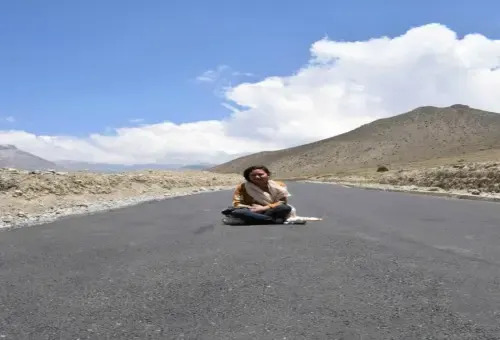
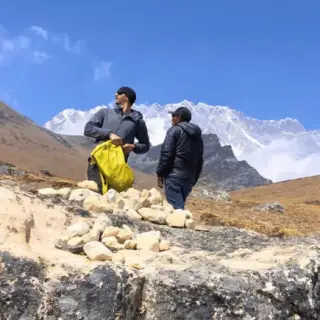
Photo: On the way to Muktinath
Mustang: Nepal's Forbidden Kingdom
Mustang occupies a unique place in Himalayan history. For most of the 20th century it was a sealed kingdom, the ancient Lo Kingdom, closed entirely to foreign visitors until 1992. Even today, Upper Mustang (the area north of Kagbeni up to Lo-Manthang) remains a Restricted Area requiring a special permit. This isolation has preserved the region almost intact: its medieval Tibetan culture, its cliff-carved monasteries, its ancient walled cities, and its extraordinary high-desert landscape have changed little in centuries.
Geographically, Mustang lies north of the main Himalayan range in a rain-shadow zone, which means that while the rest of Nepal is drenched by monsoon rains from June to September, Mustang stays dry and clear. It is one of the few places in the Himalayas where trekking is actually better during the monsoon months, blue skies, full rivers, and very few other trekkers. At the heart of the district is Lo-Manthang, the ancient walled capital at 3,840 metres, a living relic of 14th-century Tibetan-influenced architecture.
Introduction
Mustang is often called a kingdom beyond the mountains, it is also called the desert of Nepal because one simply cannot point out a single green hill although the apple from this region is very famous. The wind is the region's signature: it funnels up the Kali Gandaki valley nearly every day, picking up strength from late morning, carrying sand and dust with it. A windproof jacket is essential gear for Mustang, and early starts beat the worst of the gusts.
I also suggest that you should choose a road trip or hike to reach Jomsom. While on the path, you can experience the most beautiful experience of your life. You can experience the pristine views of rivers, waterfalls, giant walls, the jungles, the village, mountains and the most important thing you can see the variation in the color of hills. From Beni to Mustang is a long journey where you can see the change in every single crossing hill.
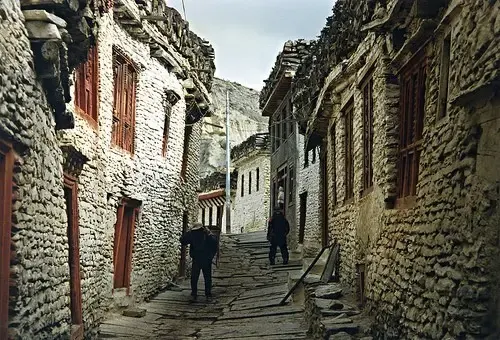
Photo: Streets of Jomsom
Key Highlights
Mustang is not only famous for its natural beauty but also an important Hindu Shrine. The Muktinath temple, one of the most famous temples of Nepal, the temple lies in a little hill as most of the temples in Nepal do. We pass through Kagbeni, another very important religious site, before we reach the Muktinath. The interesting fact about Muktinath is that the temple is of the Hindu god "Lord Vishnu" and the priest on the temple is Buddhist and moreover the priest is a female, which signifies the religious harmony among the people of Mustang. Mustang was the abode of Guru Rinpoche, who is revered as the Second Buddha and the founder of Tibetan Buddhism. It is believed by the locals, and there were many monasteries dedicated to him throughout the region. The temple is surrounded by 108 taps where freezing water flows, it is believed that the water can wash away all the sins and attain purity. The reason itself is enough for the thousands of pilgrims visiting Muktinath.
Lo-Manthang: The Walled City
The true prize of Upper Mustang is Lo-Manthang, the ancient walled capital enclosed by mud-brick walls that have stood for over 600 years. The city houses four palaces, several ancient monasteries, and a community of Loba people whose way of life has changed little for centuries. The cave monasteries carved into the cliffs around Lo-Manthang are among the most extraordinary in Central Asia, some contain 15th-century murals in near-perfect condition, painted in a style that links Tibetan and Nepali artistic traditions.
The Tiji Festival
Held annually at Lo-Manthang in May, the Tiji Festival (Tenpa Chirim, “driving away evil”) is a three-day ritual performed by the monks of Choedhe Monastery. Costumed monks perform intricate dance sequences that dramatise the myth of a deity defeating a demon threatening the kingdom with drought and disaster. It is one of the most visually extraordinary cultural events in the Himalayas. Timing an Upper Mustang trip to coincide with Tiji is one of the best decisions a visitor to Nepal can make.
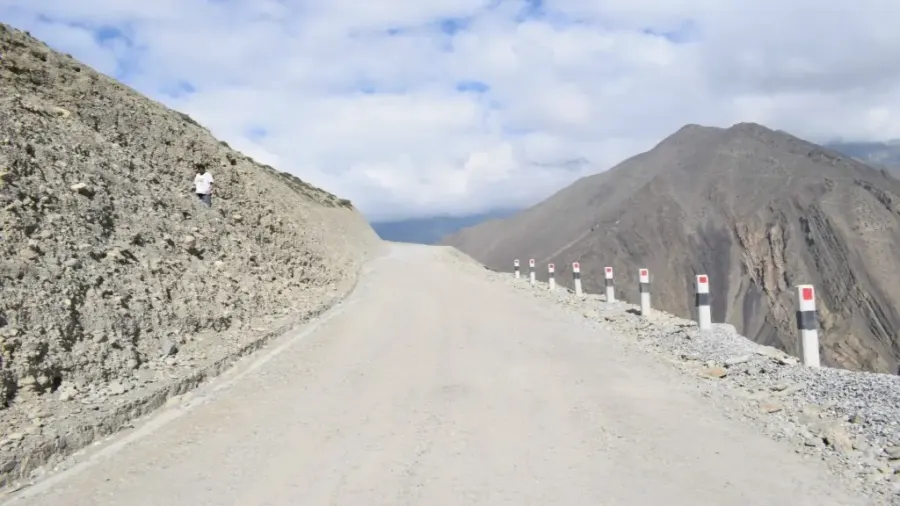
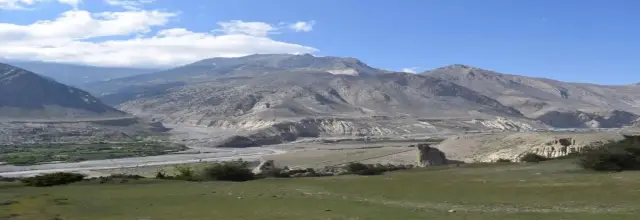
Photo: Roads of Mustang
Opportunity to Explore
Mustang is also a central point from where you can plan other trips too. Mustang can also be the gateway to the Dhaulagiri circuit trek, Tilicho trek, Manang via Thorang La pass, Lo-Manthang (upper Mustang). Mustang and particularly Marpha Village is renowned for ‘Marpha’ it's the local wine made from the fresh apples. You can also see the apple farms over there.
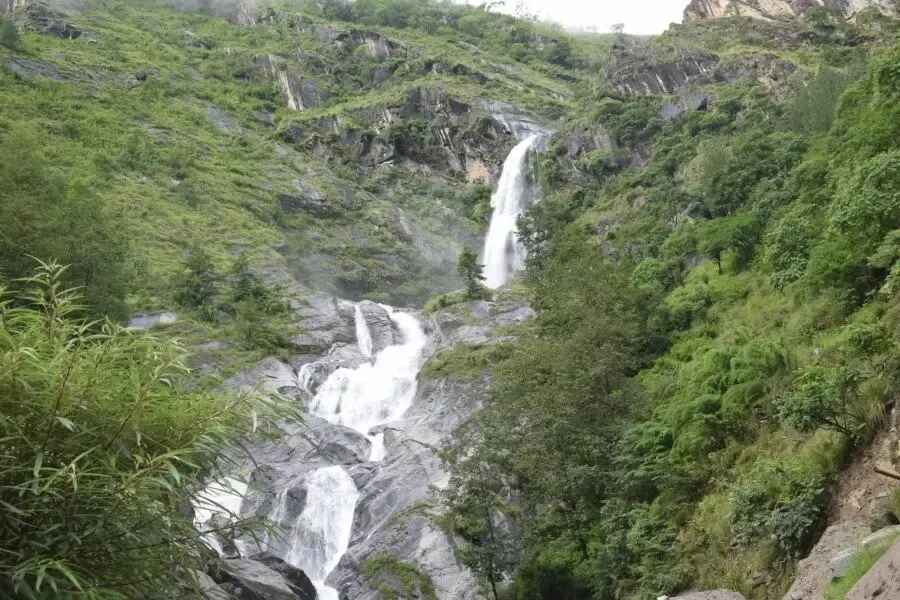
Another thing which you can see during your trip is the one of the world's deepest gorges, Kali Gandaki Gorge. And on the opposite side, you can see the cascading waterfall from the gorge, it appears as if it is falling from the sky. Yeah, it looks as if the water is falling from the sky because it falls from the height that you cannot identify the source of it. And make you wonder if there’s a big lake behind that waterfall. I really want to explore that place too. But we will always have next time. The Dhumba Lake, yet another hidden gem of the Mustang, the green-colored lake is so eye-catching and sitting near the bank watching the fishes of the lake was quite peaceful.
I loved everything about the trip but the most important and the adventurous thing was the road. This narrow road and the hills looked like as if they will come to hug us every time we cross them. And I must admit the drivers who drive in such places are very daring. Hats off to them. My experience of Mustang was Magnificent hence I called this trip ‘Magnificent Mustang.’
Planning Your Mustang Trip
Lower Mustang (Jomsom, Muktinath, Kagbeni) requires only standard trekking permits, a TIMS card and ACAP permit. Jeep roads now connect Pokhara to Jomsom, making the lower region accessible without any trekking at all if you prefer.
Upper Mustang (Kagbeni to Lo-Manthang) requires a Restricted Area Permit, which costs USD 500 per person for the first 10 days (2026 rate). The permit must be arranged through a registered Nepali trekking company, and a licensed guide is required throughout. The best seasons are May (Tiji Festival), June–September (dry despite monsoon elsewhere), and October–November.
To book a Mustang journey: Upper Mustang Trek, Jomsom Muktinath Trek, or Mountain Biking in Mustang. For more on Nepal’s most dramatic landscapes, read our guide to the best lakes of Nepal.