







Samay Baji is the Newar ritual snack platter of the Kathmandu Valley. Beaten rice (baji or chiura) sits in the middle, ringed by grilled spiced buffalo (chhoila), a lentil patty (wo or bara), roasted black soybeans, a fried boiled egg, spiced potato, sauteed greens, slivers of ginger and a small cup of aila, the Newar rice spirit. It is offered to the gods first and then shared, at Indra Jatra (Yenya), Mha Puja, lineage worship and family ceremonies. Newari restaurants in Kathmandu, Patan, Bhaktapur and Kirtipur serve it year-round, and most will make a vegetarian plate without the meat, egg and aila.
- What it isNewar ritual snack set (khaja) built around beaten rice
- Core itemsBaji, chhoila, wo, black soybeans, egg, potato, greens, ginger, aila
- ServedAs prasad at festivals and rites, then shared by seniority
- Big festivalIndra Jatra (Yenya), usually September
- Next Mha Puja10 November 2026 (Nepal Sambat 1147)
- Vegetarian?Ask for it without chhoila, egg and aila
- Where to tryKirtipur, Patan, Bhaktapur and old Kathmandu
Samay Baji, famous as the Newari khaja set symbolizes good luck, joy, health, and longevity among the Newars. It is a popular traditional dish in the Newari community, the old inhabitants of the Kathmandu Valley, who speak Nepal Bhasa (Newari).
Growing up in a Newari family, I have had Samay Baji almost on every special occasion in the Newar community. This hearty food platter consists of main items such as the chiura (beaten rice), black soybeans (bhatmas), wa:, chatamari, chhwela, finely cut ginger (palu), fried boiled egg, boiled beans, spinach, and ayla (alcohol).
Samay Baji is typically served during special occasions and ceremonies. It is a Newari dish that tastes good, fills you up and gives you a bit of everything: grain, pulses, meat, egg, greens and spice on one plate.
Follow along if you want to learn more about Samay Baji: The Newari Khaja Set!
What is Samay Baji?
Samay Baji is the most popular traditional Newari cuisine, holding a lot of cultural significance. It is offered as a prasad during Newari festivals and rituals.
After the Pooja is finished, Samay Baji is frequently served as the opener or as the first course of a meal. This cuisine signifies luck, joy, health, and long life among the Newars.
The full feast offered to the gods is called samay dwoh. Some Newar scholars say it began as a purely Buddhist offering, which made it vegetarian, and that the buffalo meat came in later as Hindu and Buddhist practice blended. In one reading, each item belongs to one of the five Buddhas: the beaten rice to Vairocana, the black soybeans to Akshobhya, the wo to Amitabha, the ginger soaked in aila to Ratnasambhava and the greens to Amoghasiddhi. Other priests read the same plate as the five elements. Families do not all agree, and nobody seems to mind.
Samay Baji, a traditional Newari cuisine, has been handed down through the generations. It usually comprises a large number of foods on a single plate, traditionally a leaf plate known as a "tapari," stitched from sal leaves.
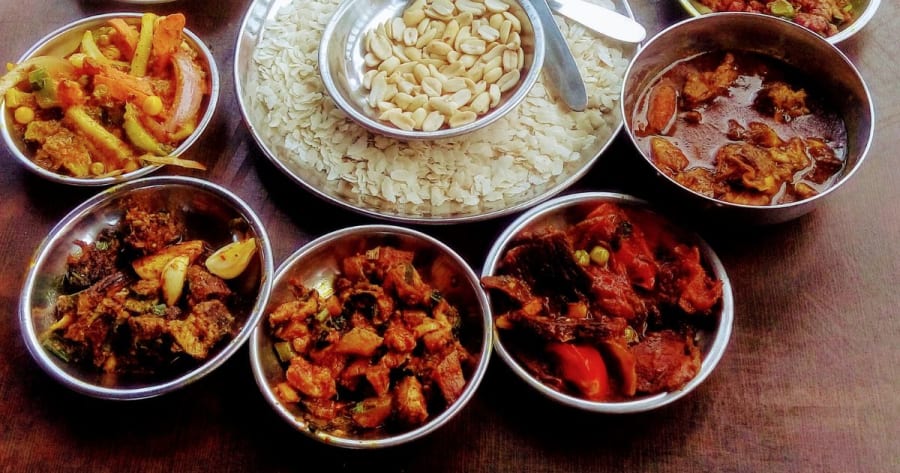
Photo: Samay Baji
Origin of Samay Baji
Samay Baji is a traditional dish of the Newari community in Nepal. The Newari people have a rich and diverse cultural and culinary tradition, and Samay Baji is an important part of that tradition.
It is not clear exactly when or how the dish originated. One popular story goes back to older times, when the caste system rigidly organised Newar society and farming families cooked everything over firewood, which took time and fuel they did not have to spare in the fields.
Cooking in firewood was a tedious task, so they would take chiura, chhwela, bhatmas, saag, etc., as snacks to the farm as they didn’t need to be reheated and also made them full yet provided nutrition. So, the story goes, the field snack slowly became the festival platter.
However or whenever Samay Baji might have originated, it is likely that it has been enjoyed by the Newari people for many generations. The various components of Samay Baji, such as beaten rice and boiled eggs, have been a staple of the Newari diet for centuries.
Ingredients of Samay Baji
Samay Baji is a traditional Newari snack that consists of a variety of ingredients. The main components of Samay Baji are chiura (beaten rice), black soybeans (bhatmas), wa:/bara, chatamari, chhwela, finely cut ginger (palu), fried boiled egg (khen), fried fish (sanya), boiled beans, aalu-wala, spinach, and ayla (homemade alcohol).
Here is a list of some of the ingredients that may be included in Samay Baji:
Beaten rice (Chiura): This is a type of flattened/beaten rice that is light and crispy. It is made by pounding rice in a mortar and pestle until it becomes thin and flat.
Roasted black soybeans (Bhatmas): These are soybeans that have been roasted and seasoned. They are usually spicy and add a crunchy texture to the dish.
Aalu-wala: Potatoes are a common ingredient in Samay Baji, Aalu-wala is a spicy potato salad made by boiling potatoes until they are tender and mixed with different spices.
Fried boiled eggs (khen): Hard-boiled eggs are a common component of Samay Baji and add protein to the dish. The eggs are first boiled and then lightly fried until the outer parts are golden.
Chatamari: A thin rice-flour crepe, often called Newari pizza, topped with egg or minced meat. It is a separate dish, but many restaurant sets now add a wedge of it.
Wa: (Wo)/Bara: A savoury lentil patty, made from ground black lentils (maas) or mung beans and fried on a flat pan, plain or topped with egg or mince.
Chhwela (chhoila): It is one of the tastiest Newari dishes made by grilling buffalo meat over a flame, traditionally a straw fire, until the surface is charred, cooling it, then combining it with some spices and marinating it for a while.
Pickles (Achar): Pickles are a common condiment in Nepali cuisine and are often included in Samay Baji.
Other ingredients that are included in Samay Baji include spinach, finely cut ginger (palu), juju dhau (yoghurt), ayla (homemade alcohol), etc. The ingredients are typically served on a platter and are meant to be shared among a group of people.
What Is on a Samay Baji Plate?
Plates differ from house to house and restaurant to restaurant, but these are the items you will see most. The vegetarian column shows what stays on the plate when you ask for a meat-free set.
| Item | Newar name | What it is | Vegetarian? |
|---|---|---|---|
| Beaten rice | Baji | Dry flattened rice, the base of the plate | Yes |
| Grilled buffalo | Chhoila | Flame-grilled meat tossed with mustard oil, chilli and spices | No |
| Lentil patty | Wo | Fried black-lentil or mung bean patty | Yes (plain) |
| Black soybeans | Musya (bhatmas) | Roasted and lightly spiced | Yes |
| Fried boiled egg | Khen | Boiled, then crisped in oil | No |
| Spiced potato | Aalu-wala | Boiled potato with sesame, chilli and lemon | Yes |
| Greens | Wauncha | Mustard greens or spinach, sauteed | Yes |
| Dried fish | Sanya | Small fried fish, not in every set | No |
| Ginger and garlic | Palu | Fine slivers, said to help digestion | Yes |
| Rice spirit | Aila | Distilled Newar liquor, a few sips | Skip if you don't drink |
Where to Have Samay Baji in Kathmandu
Samay Baji is a popular snack in Kathmandu, Nepal, and can be found at many restaurants and street food stalls throughout the city. Some popular places to try Samay Baji in Kathmandu include:
Bhaktapur Durbar Square: The ancient Newar city of Bhaktapur, about 13 km east of Kathmandu, has one of the largest Newar communities in the valley and is also famous for juju dhau, the "king yogurt" that rounds off a Samay Baji platter perfectly. Some restaurants near Durbar Square offer Samay Baji on their menu. Foreign visitors pay NPR 1,800 to enter the old city.
Patan Durbar Square: Patan (Lalitpur), just across the Bagmati River from Kathmandu, is another historic Newar city full of courtyard eateries. Some restaurants around the Patan Durbar Square offer Samay Baji on their menu.
Newa Lahana: This is a restaurant in Kirtipur that specializes in traditional Newari cuisine, which includes Samay Baji.
Other popular chains of restaurants in Kathmandu and nearby Kathmandu that serve a variety of traditional Nepali dishes, including Samay Baji, are Nandini Food Court, Lalitpur, Newari Kitchen, Newa De Café, Kathmandu, etc.
The availability and specific items of Samay Baji vary by place and cook, and small eateries open and close often, so ask locally before you go. For more names, see our guide to the best Newari restaurants in Kathmandu.
When Do Newars Eat Samay Baji?
Although restaurants now serve it year-round, Samay Baji remains first and foremost a ritual food. It appears at nearly every major Newar occasion: during Indra Jatra (Yenya in Nepal Bhasa) in Kathmandu, at Mha Puja, the self-purification ritual that marks the Newar New Year, during Digu Puja lineage worship, and at life events from rice-feeding ceremonies to weddings. The platter is offered to the gods first as prasad, then shared among family by seniority, with the eldest receiving theirs first. Each item carries meaning. Many families say the egg stands for new life, and the ayla is poured in a thin stream as an offering, which is why a proper Samay Baji looks much the same whichever kitchen it comes from.
Indra Jatra is the big one. Neighbourhoods in old Kathmandu build huge mounds of samay baji, and the size of the pile is a matter of local pride. On the festival days the great mask of Swet Bhairab at Hanuman Dhoka is uncovered, and Newar liquor is poured through its mouth for the crowd to catch as the god's blessing. A few days of this is enough to see why Newars call the season Yenya and treat it as the year's main feast.
When to See Samay Baji at a Festival (2026-27)
| Festival | Date | Where |
|---|---|---|
| Mha Puja and Nepal Sambat 1147 (Newar New Year) | 10 November 2026 | Newar homes across the valley |
| Bisket Jatra | About 10 to 18 April 2027 | Bhaktapur, Thimi |
| Gai Jatra | Mid-August 2027 (expected) | Kathmandu, Bhaktapur |
| Indra Jatra (Yenya) | Usually September (2027 date not confirmed) | Kathmandu Durbar Square and old city |
Festival dates follow the lunar calendar, so check them again a few months before you travel. Our upcoming festivals in Nepal page keeps the list current.
How to Eat Samay Baji
Use your right hand, or a spoon if the restaurant gives you one. Take a pinch of baji with a bit of chhoila or soybeans and eat them together, since the dry rice needs the oily, spicy sides. At a family ritual, wait until the elders have been served and the offering has been made. If you don't drink, it is fine to touch the aila cup to your lips, or simply leave it. Some Newars who avoid meat touch the plate to their forehead as a blessing and pass the meat to someone else.
Try Samay Baji With Swotah
The Himalayan Food Exploration Tour (11 days, from USD 2,999 per person, group departure) spends time on Newar food in the Kathmandu Valley, with a food day in Bhaktapur and a tasting in Kirtipur that includes chatamari and wo, plus cooking classes in Kathmandu and beyond. If you would rather fit a Newar lunch into a wider trip, the Best of Nepal Tour (12 days, from USD 1,010 per person, group departure) covers Kathmandu, Bhaktapur, Pokhara and Chitwan. Swotah can arrange either as a private trip on your own dates.
Samay Baji FAQs
What does Samay Baji mean?
Baji is the Nepal Bhasa word for beaten rice, the base of the plate. Samay refers to the ritual food offered to the gods (the full feast is samay dwoh), so Samay Baji is the beaten-rice set that is offered first and eaten after.
Is Samay Baji vegetarian?
The traditional set is not, because it has buffalo chhoila, egg and sometimes dried fish. Most Newari restaurants will make a vegetarian plate with baji, wo, soybeans, potato, greens and ginger if you ask.
Is Samay Baji spicy?
Some parts are. The chhoila and aalu-wala carry chilli and mustard oil, while the baji, egg and wo are mild. Mix them on each mouthful and ask for less chilli if you need to.
What is aila?
Aila is a strong spirit distilled by Newar families from rice or millet. A small cup comes with Samay Baji and part of it is offered to the gods. You can leave it if you don't drink.
When is the best time to try Samay Baji?
Any day in a Newari restaurant, but the festival versions are the ones to see. Indra Jatra in September brings the biggest displays in old Kathmandu, and Mha Puja falls on 10 November 2026.