




For dinner with a live dance show in Kathmandu, book Nepali Chulo in Lazimpat or Bhojan Griha in Dilli Bazaar. Both serve a set Nepali and Newari meal while dancers perform pieces from around the country, such as the masked Lakhey and the Tharu peacock dance. Thamel House Restaurant runs shorter dance sets and is a walk from most Thamel hotels. Krishnarpan at Dwarika's Hotel is the splurge, with set menus of 6 to 22 courses and staff in ethnic dress, but no regular dance show. In Kirtipur, about 5 km from the city, Newa Lahana and Sasa Twa serve cheaper Newari food without a stage. Book a day ahead and confirm the show time, because programmes and prices change.
- Fullest dance showsNepali Chulo (Lazimpat), Bhojan Griha (Dilli Bazaar)
- Closest to ThamelThamel House Restaurant
- Fine diningKrishnarpan, Dwarika's Hotel: 6 to 22 courses, dinner only
- Cheaper Newari foodNewa Lahana and Sasa Twa, Kirtipur
- Dances you may seeLakhey, peacock, Tharu stick dance, Maruni, Tamang Selo, Sherpa
- BookingA day ahead, longer in October, November, March and April
Normally I don’t like cultural shows with dinner. Often, either the dinner is good and the show not so much, or the show is good, and the food is not the best. So it’s hard to find a place with both good food and interesting cultural performances.
In Kathmandu, we are lucky to have a few great places, which you should add to your list of top things to do in Kathmandu!
Most visitors experience these cultural dinners after returning from one of the many treks Nepal is famous for. Treks such as the Mardi Himal Trek, Kanchenjunga Trek, or wildlife spotting at Chitwan National Park or even doing an Everest Yoga Trek. In my experience, by the time you have done your trek or done activities around Pokhara or further afield, you will have a better understanding of Nepali culture and be ready for the cultural dance experience and the spicy, tangy taste of Newari food!
Below are a few of the best restaurants to visit for a cultural experience!
Kathmandu Dinner and Dance Venues at a Glance
Only three of these places put on a proper dance show. The others are here for the food, and one of them for the party that tends to break out in its courtyard.
| Venue | Area | Dance show | Food | Good to know |
|---|---|---|---|---|
| Nepali Chulo | Lazimpat | Yes, during dinner | Set Nepali and Newari meal | Rana-era building, private rooms |
| Bhojan Griha | Dilli Bazaar | Yes, in the evening | Set Nepali and Newari meal | Restored old house with a shop |
| Thamel House Restaurant | Thamel | Short dance sets | Nepali dishes | Walkable from most Thamel hotels |
| Atithi Satkar | Jyatha, Thamel | Ask when you book | Set Nepali dinner | Small and family-run |
| Krishnarpan, Dwarika's Hotel | Battisputali | No regular show | 6 to 22 courses, dinner only | Staff in ethnic dress, book ahead |
| Newa Lahana | Kirtipur | No | Newari, buffalo dishes | Community-run, local women cook |
| Sasa Twa | Kirtipur | No stage, live music at weekends | Newari khaja | Diners often end up dancing |
Nepali Chulo Restaurant
Chulo is a Nepali word for stove for cooking food. So, you know the food is going to be good! This restaurant has been around for some time but more recently moved to a Rana building in Lazimpat.

Photo credit: Chulo Restaurant
Ranas are the old rulers (1846 to 1951) of Nepal whose architecture was influenced by European style buildings. You can still see many Rana buildings, recognisable by their white exteriors and European looks. Many of these old buildings are either hotels, or government buildings. If you want to see more of this type of architecture you should take a trip to Babar Mahal Revisited which is a beautiful reconstruction of Rana courtyards and palace, built on the site of an original Rana palace courtyard and stables. It also has a couple of amazing restaurants to try out as well as unique shops and an art gallery. But I digress…
Nepali Chulo puts on a culture show of different ethnic dances and music from around Nepal, drawing on a handful of the country’s 142 caste and ethnic groups. Some of these are the Tharu peacock dance, Lakhe dance (masked performers), Maithili dance (from around Janakpur in the southeastern Terai) and Newari (original settlers of the Kathmandu Valley) dance.
With their belief of working as a team, this is reflected in their food also. Their food represents Newari cuisine as well as tastes from around the country. You can book a private room or join other visitors in the main restaurant.
Location: Lazimpat, Kathmandu
Bhojan Griha
Bhojan Griha is one of the best-known cultural dance restaurants. Its name translates to house of feasts. The building that houses the restaurant has been restored to its four-storey former glory to reflect the heritage of days gone by. The traditional designs, artwork and craftmanship make this a glorious place to explore.
Today they have expanded to include organic shops selling their own farm products and handmade local Nepali products. Prioritizing Nepali women, disabled and marginalized communities, you can shop for some interesting local products here before your dinner.
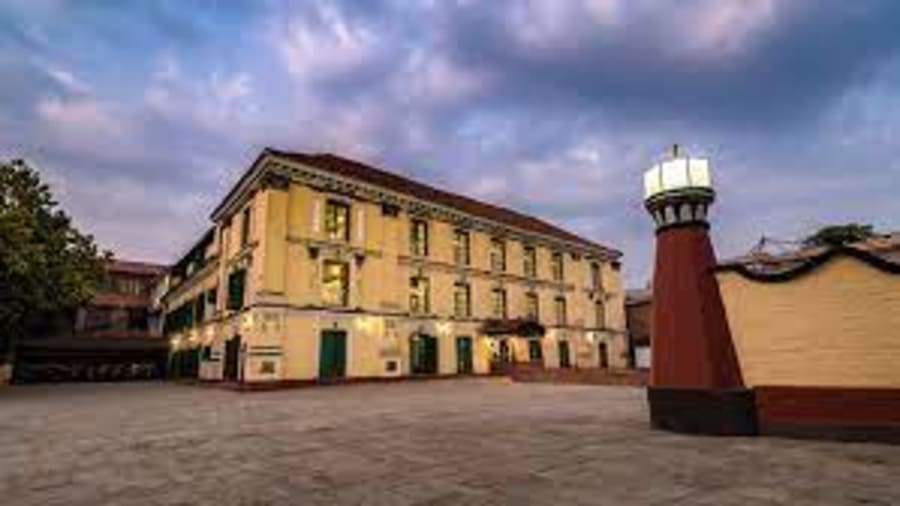
Photo credit: Bhojan Griha
Since Bhojan Griha grows its own food on its own farms they are very aware of what they serve to customers. They believe in 100% organic food. And of course, they prepare delicious Nepali and Newari dishes.
Location: Dilli Bazaar, Kathmandu
Thamel House and Atithi Satkar in Thamel
The next two restaurants are found in Thamel, the main tourist area, and serve traditional cuisine: Thamel House Restaurant and Atithi Satkar Nepali Restaurant.
Thamel House runs short dance sets through dinner. They won’t match the full programmes at Nepali Chulo or Bhojan Griha, but you get a quick tour of several regions in one evening, and you can walk back to your hotel afterwards. Atithi Satkar is a small family-run place in Jyatha, opened in 2014, best known for its set Nepali dinner. We couldn’t confirm that it still has dancers, so ask when you book.
For something a bit different, try this one.
Krishnarpan at Dwarika’s Hotel
For my money, one of the best restaurants to eat different ethnic foods from around Nepal is at the Krishnarpan Restaurant in Dwarika’s Hotel at Battisputali, not far from Pashupatinath.
Here they do not have cultural dances (except on special occasions), but the waiters and waitresses are dressed in different ethnic wear from different parts of the country, and you are welcomed in traditional Nepali manner.
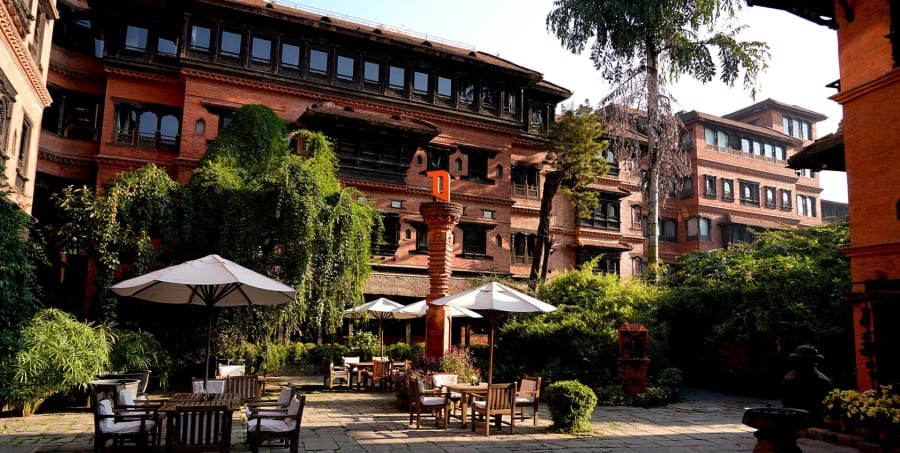
Photo Credit: Dwarika Hotel
They used to have cultural dances performed in the courtyard (so as not to distract from the wonderful food experience in the restaurant). There is no regular dance programme now. The poolside bar often has live traditional music, so ask what is on when you book, and reserve a table in high season.
The food is sensational, and they also have their own organic farms. The prices can also be sensational too, but you can choose from the set menus ranging from 6 to twenty-two courses, prices accordingly! As with the other cultural restaurants, you need to book ahead and tell them at that point how many courses you want. I dare you to try twenty-two!
If you haven’t been to Dwarika’s you are in for a treat! It is the most amazing hotel. Built by re-using old wooden windows (which people were throwing away more than 60 years ago as they opted for ‘modern’ homes) and with their own workshop making wood furniture and furnishings, this is truly a work of art.
Originally a family home (which is now the Fusion Bar), the hotel basically started by leasing out the room above the cow shed to an INGO worker. Today the hotel has around 80 rooms and three restaurants plus food at the bar, not to mention the swimming pool and spa!
I can’t really stress enough how much I love this hotel. Even if you don’t want to sample the food, do drop by for coffee or a drink and marvel at the architecture!
Newari Restaurants in Kirtipur
Another couple of fabulous restaurants which are a favourite of mine are Newa Lahana and Sasa Twa, both in Kirtipur.
Kirtipur is situated about 5 km southwest of Kathmandu and is a historical village filled with temples and shrines and worth a visit for that alone.
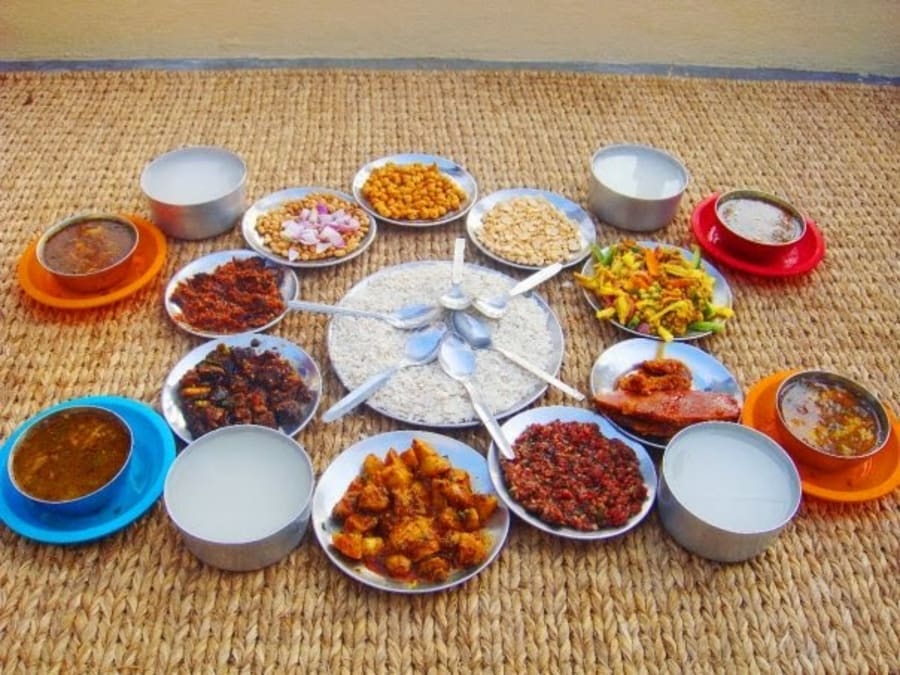
Photo Credit: Newa Lahana
Both the restaurants mentioned here offer great Newari dishes at a lower price and in a great atmosphere. Newa Lahana is community-run, and the women of the town do the cooking. Unfortunately, they do not offer cultural dances.
However, Sasa Twa (a relative newcomer) at Sagal Tole has quickly become a place for hearing both traditional and non-traditional music, mostly on weekend evenings. With dining happening in open-sided traditional pattis (seating areas at temples) round a huge central courtyard you are encouraged, and it is probably compulsory, to dance! For sure, the locals are going to encourage you to join them. So, head over and enjoy fabulous food and drinks and learn how to do some traditional (and not-so-traditional) Nepali dances!
Of course, there are other interesting Newari restaurants and hole-in-the-wall places that serve wonderful and extremely spicy Newari food. Have you ever looked behind the Krishna Temple in Patan Durbar Square? Ask your Nepal travel agency or get a local to take you on a walking tour in Kathmandu to find the best places!
Pair the dinner with the food itself: our guides to Newari dishes worth ordering and Nepali food and drinks tell you what is actually on the plate.
Dances You Might See at a Cultural Dinner
A dinner show is a sampler. In two hours you get dances that, in real life, belong to festivals hundreds of kilometres apart. These are the ones that turn up most:
| Dance | Community | What to look for | Where it lives outside the restaurant |
|---|---|---|---|
| Lakhey | Newar | A masked demon with a red face, fangs and a mane of hair, dancing to drums | Kathmandu streets at Indra Jatra (September) |
| Peacock dance (Mayur naach) | Tharu | A dancer in a peacock costume, fanning out the tail | Tharu villages of the Terai |
| Stick dance | Tharu | Lines of men striking bamboo sticks in rhythm | Evening shows in Sauraha, by Chitwan National Park |
| Maruni | Magar | Dancers in bright skirts and jewellery, traditionally men dressed as women | Hill villages at Tihar (October or November) |
| Tamang Selo | Tamang | Fast songs and footwork to the damphu frame drum | Tamang villages north of Kathmandu, Langtang |
| Sherpa dance | Sherpa | A slow line dance, arms linked, with stamping steps | Khumbu villages at Losar and weddings |
| Charya nritya | Newar Buddhist | A slow, precise ritual dance of a deity, with crown and mudras | Once only for Bajracharya priests, now taught in Patan and Kathmandu |
The music comes from the same families of instruments you hear at weddings and festivals: the madal, the sarangi, the damphu and the Newar dhimay drum. Our guide to Nepal’s traditional musical instruments explains what each one is.
Booking a Cultural Dinner: What to Expect
Book. A day ahead is usually enough, but in October, November, March and April the good tables go earlier. Most of these places serve a set menu, so say when you book if you’re vegetarian, don’t eat buffalo, or don’t drink. Buffalo is the usual red meat in Newari cooking, and beef is off the menu almost everywhere because cow slaughter is illegal in Nepal. Expect aila, the Newar rice spirit, to arrive poured in a long thin stream from a spouted jug. It is strong. Ask what time the dancing starts, and whether photos are fine during the show. Prices change from season to season, so ask for the current set price rather than trusting a review from two years ago.
Cultural Evenings on Swotah Trips
Several Swotah trips build a cultural evening in. The Lhotse, Nuptse and Pumori expeditions finish with a farewell dinner at a Nepali restaurant in Kathmandu with a cultural dance show. The 7-day Chitwan Jungle Safari, from USD 800 per person (group departure), includes an evening Tharu cultural show near the park, which is where the stick dance really comes from.
If the valley itself is the point, the 12-day Best of Nepal Tour, from USD 1,010 per person (group departure), covers Kathmandu, Patan, Bhaktapur and Pashupatinath. Food lovers should look at the 11-day Himalayan Food Exploration Tour, from USD 2,999 per person (group departure), with cooking classes and Newari food in Kirtipur and Bhaktapur. Swotah can arrange either as a private trip.
FAQs About Dinner With Traditional Dances in Kathmandu
Which restaurant in Kathmandu has the best cultural dance show?
Nepali Chulo in Lazimpat and Bhojan Griha in Dilli Bazaar have the fullest programmes, with dances from several regions performed while you eat. Thamel House Restaurant has a shorter show and is the most convenient if you are staying in Thamel.
How much does a dinner with a cultural show cost in Kathmandu?
Set dinners with a show cost more than an ordinary Nepali restaurant, because the price covers the performance. Krishnarpan’s longer tasting menus are priced like fine dining. Set prices change each season, so ask for the current price when you book.
Do I need to book a cultural dinner in advance?
Yes. A day ahead is usually fine, and two or three days ahead in the busy October to November and March to April seasons. Krishnarpan takes reservations only, and asks how many courses you want when you book.
Are there vegetarian options?
Yes. The set menus have vegetarian versions, and Nepali cooking has plenty of lentil, vegetable and potato dishes. Tell the restaurant when you book. The usual meat is buffalo, chicken or goat, and you won’t find beef.
Can I see traditional dances outside a restaurant?
Yes, at festivals. Lakhey dancers come out on Kathmandu’s streets at Indra Jatra in September, and Maruni dancers and deusi-bhailo singers go house to house at Tihar, which runs 7 to 11 November in 2026. In Chitwan, the Tharu villages around Sauraha put on dance shows most evenings.