




Shyakpa (also spelt shakpa) is a thick Sherpa stew of hand-torn flat dough pieces, potato, radish, greens and usually meat, cooked in one pot and seasoned with garlic, ginger and turmeric. It is milder and heavier than thukpa, and the Tibetan thenthuk is its closest cousin. You'll find it in most teahouses on the Everest Base Camp trek for about NPR 500 to 1,200 a bowl, and it takes around 45 minutes to make at home.
- Dish typeThick noodle stew
- FromSherpa kitchens of Solukhumbu
- Main ingredientsFlour dough, potato, radish, greens, meat
- Closest relativeTibetan thenthuk
- On the trailAbout NPR 500 to 1,200 a bowl
- Time to cookAbout 45 minutes
What else can warm you up better during cold winters than a hot soupy noodle, right? Shyakpa/Shakpa, an easy-to-make and nutrition-packed dish, is a traditional stew popular among the Sherpa community.
Shakpa might be something new to you, but this is a widely consumed delicacy among the Sherpas that have been passed down from generation to generation.
This flavorful soup with hand-pulled noodles is a perfect dish to warm you up in the extreme climates of higher altitudes and fight against the cold.
Below is what the traditional Sherpa stew Shyakpa is, how it differs from thukpa, and a quick recipe to make it at home.
What is Shakpa/Shyakpa?
Sherpa stew, known as Shakpa or Shyakpa, is a traditional dish among the Sherpa community. This traditional Sherpa cuisine doesn’t have a specific recipe but the primary ingredients that go into it are the same: hand-pulled dough strips, meat chunks, and vegetables.
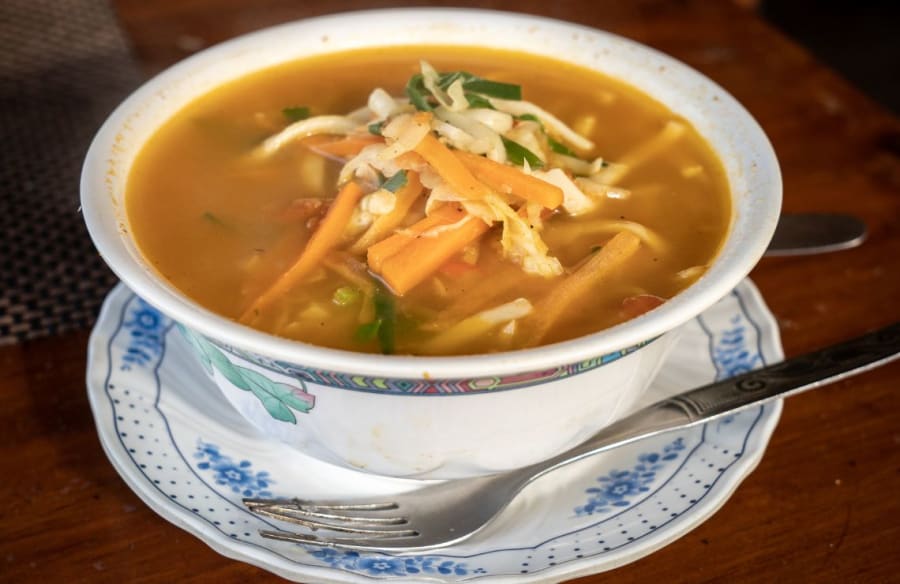
The Sherpas enjoy Shyakpa in the cold climate of higher regions to warm their body. These hot soupy noodles might also help you fight against the cold.
This simple, hearty dish is popular across the Himalayas, and visitors who try it on the trail often go looking for it again in Kathmandu.
Shyakpa is similar to Tibetan Thukpa but a little bland in taste compared to the Thukpa. The difference between Shakpa and Thukpa also lies in the noodles as Thukpa has long and thin noodles whereas Shakpa has thick and hand-pulled flat dough strips as the noodle.
In Kathmandu, the closest dish on most menus is thenthuk, the Tibetan pulled-noodle soup served in nearly every Tibetan restaurant around Boudha. Some Sherpa cooks use the two names for the same pot.
You can find Shyakpa in a few restaurants run by Sherpas in other parts of Nepal and whoever has tried it comes back to try it again.
Shyakpa vs Thenthuk vs Thukpa
| Dish | Noodles | Body | Where you'll find it |
|---|---|---|---|
| Shyakpa (Sherpa stew) | Thick, flat, hand-torn dough pieces | Thick stew, potato and radish heavy, mild | Sherpa homes and lodges in Solukhumbu |
| Thenthuk | Flat strips pulled straight into the pot | Thinner broth, often lamb or yak | Tibetan restaurants in Kathmandu |
| Thukpa | Long, thin noodles | Clear soup, a little spicier | Almost every lodge and eatery in Nepal |
Easy-to-Make Shakpa Recipe
Having daal-bhat every day as your meal can be boring. On top of that, due to the cold climate of high-altitude regions, the crop production rate is very low which leads to a limited supply of crops.
And as the roadways to most of the Himalayan regions are challenging and airways cost way too much, the transportation of goods is very expensive which is why rice and lentils cost so much up there.
In such a situation, people of the Himalayas opted for Shyakpa as an alternative staple food as it brings variety to the table as well as saves some money.
Shyakpa, the traditional Sherpa stew, is a comfort food you may choose to have during cold winter days even at home as it can be made simply with the ingredients present at home.
There is no specific recipe for Shyakpa as people add all kinds of ingredients to it as their heart desires. But this is what makes Shyakpa so unique each time you have it.
Shyakpa is simple to make yet healthy and also perfect for the chilly weather. This version makes four bowls in about 45 minutes.
Ingredients (4 bowls)
| Ingredient | Amount | Notes |
|---|---|---|
| Plain flour | 250 g (2 cups) | Mixed with about 150 ml water for the dough |
| Meat of your choice | 250 to 300 g | Yak, buffalo, mutton or chicken. Leave it out for a veg pot |
| Potatoes | 2 medium | Cubed. They thicken the stew as they break down |
| Carrot and radish | 1 of each | White mooli radish is the classic choice |
| Bok choy or spinach | A big handful | Goes in last |
| Onion, garlic, ginger | 1 onion, 3 cloves, a thumb of ginger | Chopped fine |
| Green chilli | 1 to 2 | Optional, to taste |
| Ghee, oil or butter | 2 tbsp | For frying the meat |
| Turmeric and salt | 1/2 tsp turmeric, salt to taste | Some cooks add a pinch of cumin or timur pepper |
| Water or stock | About 1.5 litres | Bone stock gives a richer broth |
Method
- First, cut the vegetables of your choice after washing them properly. Here I am including carrots, radishes, potatoes, and Bok choy as the vegetables that go into Shakpa.
- Also, cut some garlic and ginger for a flavorful soup.
- Then, leave the vegetables to boil together in about 1.5 litres of water for 10 to 15 minutes. Keep the bok choy aside for the last step.
- Now cut some meat of your choice.
- Heat the ghee, oil or butter in a frying pan with the onion and turmeric. Then add the meat and fry it well.
- Once the meat is fried, add it to the boiling pot of vegetables along with the required spices and salt.
- To make the noodles, add water little by little to the flour and knead until the dough is smooth. Let it rest for 10 minutes.
- Then roll the dough using a rolling pin into a flat rectangle and cut it into uniform strips.
- Now pull the long rectangular strips one by one and drop the torn dough into the boiling pot.
- Finally, add the bok choy and boil for 3 to 4 minutes, until the dough pieces are cooked through.
- Voila! Your Shakpa is ready. Serve hot and enjoy this traditional Sherpa stew with your friends and family.
Note: The main ingredients that go into the stew are meat, hand-pulled noodles, and vegetables. You can add any vegetables and meat of your choice.
Why Shyakpa Works So Well at Altitude
There is a practical reason this stew is such a common dinner in the high Himalaya. At altitude, appetite shrinks just when the body needs more fuel, and cold dry air dehydrates you with every breath. Shyakpa solves both problems in one bowl. The broth restores fluids and salt, the dough strips deliver slow-burning carbohydrates, and the meat and vegetables add protein and micronutrients, all in a form that is easy to digest when your stomach is sulking at 4,000 metres. Many trekkers alternate it with dal bhat night after night for exactly this reason. It is warming, filling, quick for teahouse kitchens to cook fresh, and gentle on a queasy stomach.
Where to Try Shyakpa on the Everest Trail
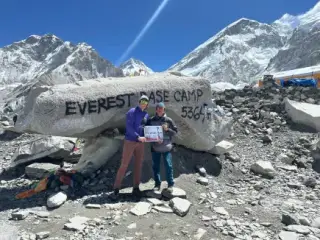
Almost every teahouse on the Everest Base Camp trek serves shyakpa, and watching it arrive at your table steaming after a long day is one of the small joys of the trail. Expect to pay roughly NPR 500 to 800 per bowl in Namche Bazaar, rising with altitude to around NPR 800 to 1,000 in Dingboche and Lobuche, since every ingredient is carried up by porter or mule. In Kathmandu, Tibetan and Sherpa-run restaurants around Boudha serve a close cousin, usually listed as thenthuk, for a fraction of the mountain price. Our guide to Sherpa food in Kathmandu names the places worth the trip. For the full menu of mountain cooking, see our guide to 10 Sherpa foods to try during the Everest Base Camp trek.
The table below is a rough guide to a bowl of shyakpa on the Everest Base Camp route in 2026. Menus change every season and lodges set their own prices, so treat the numbers as a ballpark.
| Where | Altitude | Price per bowl | Range |
|---|---|---|---|
| Lukla and Phakding | 2,610 to 2,860 m | NPR 500 to 700 | |
| Namche Bazaar | 3,440 m | NPR 500 to 800 | |
| Tengboche and Dingboche | 3,867 to 4,410 m | NPR 700 to 1,000 | |
| Lobuche and Gorak Shep | 4,940 to 5,170 m | NPR 900 to 1,200 |
Above Namche Bazaar, order the vegetable version. Lodges have no reliable refrigeration up there and meat has usually been carried in for days, so Swotah guides tell trekkers to eat vegetarian from Namche onward. A veg shyakpa with potato, radish and greens is every bit as filling.
Shyakpa FAQs
Is shyakpa the same as thukpa?
No. Thukpa has long, thin noodles in a clearer and slightly spicier soup. Shyakpa uses thick pieces of hand-torn dough and turns into a heavy stew as the potatoes break down.
Is shyakpa vegetarian?
The home version usually has yak, buffalo or mutton in it, but every lodge on the trail will cook it with vegetables only if you ask. Above Namche Bazaar the veg version is the safer order.
How do you pronounce shyakpa?
Roughly "shyak-pa", with the stress on the first syllable. Menus spell it shakpa, shyakpa or sherpa stew.
Can I make shyakpa without meat at home?
Yes. Fry the onion, garlic and ginger in ghee before the water goes in, add an extra potato, and use vegetable stock. The torn dough does the rest.
Where can I eat shyakpa in Kathmandu?
Sherpa and Tibetan restaurants around Boudhanath and Jorpati are the best bet. Look for shakpa or thenthuk on the menu.