




The Sherpa dishes worth trying on the Everest Base Camp trek are tsampa (roasted barley flour), shyakpa (Sherpa stew), thukpa, tingmo, rildok (potato dumpling soup), momo, riki kur (potato pancake), Tibetan bread, shyaphale and salty butter tea. Most are on teahouse menus from Lukla to Lobuche, and the potato dishes are easiest to find in the lower villages. Above Namche Bazaar, order the vegetarian versions.
- StapleTsampa, roasted barley flour
- Signature stewShyakpa
- Potato dishesRildok and riki kur
- NoodlesThukpa
- DrinkSalty butter tea
- Where to findTeahouses from Lukla to Lobuche
- Above NamcheOrder the vegetarian versions
Food keeps your energy, health and fitness up in the extreme conditions of a high-altitude trek. Without proper food, your trekking experience suffers.
In those cold Himalayan regions, you will get to taste authentic Nepali to continental cuisines. But have you ever wondered what the locals of those regions eat in day-to-day life?
The Sherpas have their own delicacies that stand out from everything you have ever tried before. When these indigenous mountain people migrated from Eastern Tibet to settle in Solukhumbu, they also brought Tibetan cuisines with them.
Sherpa cuisine is mostly simple like their nature and made by using locally grown crops and yak or sheep milk and meat. You will get to taste the unique Sherpa delicacies during your Everest Base Camp Trek.
So here is the list of the top 10 Sherpa foods we recommend you try during the Everest Base Camp Trek.
- Tsampa
- Shyakpa (Sherpa Stew)
- Thukpa
- Tingmo
- Rildok
- Sherpa Momo
- Riki Kur (Potato Pancake)
- Kur (Tibetan Bread)
- Shyaphale
- Su-Chya (Butter Tea)
1. Tsampa
Tsampa is a staple dish of Sherpas made from roasted barley flour. It is a wholesome food that is packed with nutrition and perfect for the chilly climate of the Himalayan regions.
Tsampa can be prepared easily and you can have this dish in various ways. You can have the dry powdered Tsampa as it is.
Else you can form a dough by mixing it with butter tea and yak cheese or make porridge by adding butter, salt, and tea/milk/hot water to it.
You can find Tsampa on the menus of most lodges in the Everest Base Camp Region.
2. Shyakpa (Sherpa Stew)
Sherpa stew, known as Shyakpa, is a traditional dish of the Sherpas. This is a thick, soupy stew that is perfect for fighting against the cold climate and is popular among the people of the Himalayas.
Shyakpa is entirely homemade food. While people have their versions of the stew, it mainly consists of noodles (cut into flat squares or can be thick and round), meat, and locally grown vegetables such as potato, onion, carrots, radish, spinach, etc.
Additionally, people add salt and spices of their choice to bring authentic flavor to the Shyakpa.
Shyakpa can be found on the menu of almost every hotel, teahouse, or eatery on the way to Everest Base Camp. It is a must-try dish if you are there as it keeps your body warm in the chilly climate of the Himalayan region.
3. Thukpa
Similar to Shyakpa, Thukpa is another soupy noodle dish of the people of the Himalayas. The difference lies in the noodles as the noodles in Thukpa are long and thin while Shyakpa has hand-pulled thick and flat noodles. Thukpa is also comparatively spicier than Shyakpa.
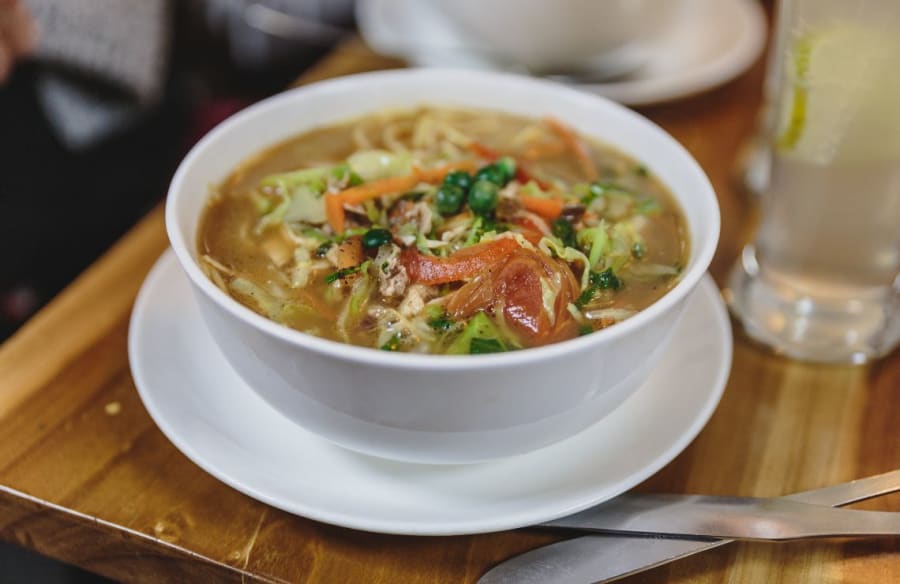
Thukpa is prepared by boiling the noodles in water with meat, vegetables, and spices and served hot. This makes it a great meal during the cold winters of the Himalayas.
You can find Thukpa in almost every eatery, lodge, and restaurant during the EBC trek.
4. Tingmo
The fluffy steamed bread known as Tingmo is prepared from wheat flour and has no filling unlike Momo. Tingmo has a bland taste so it is often served with curry, dipping sauce, or hot beverages.
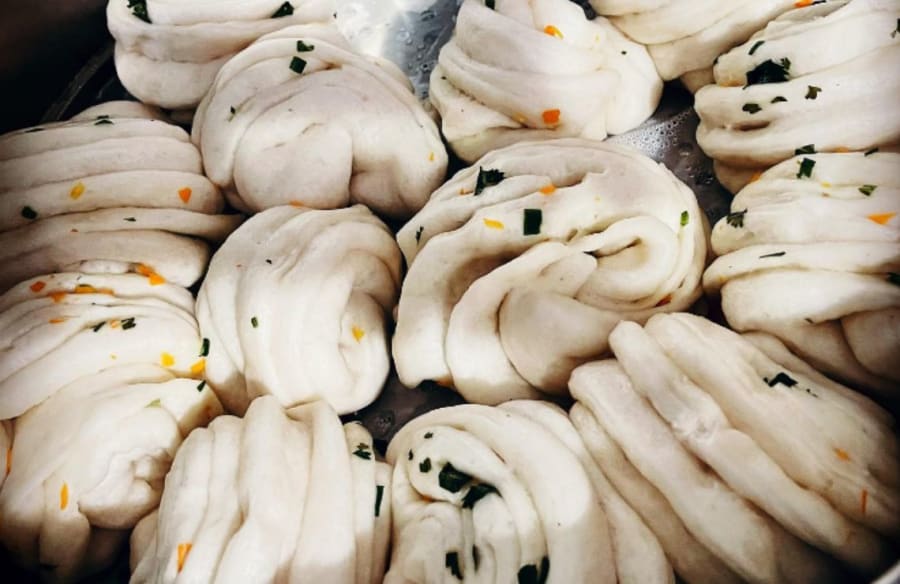
Tingmo is eaten in the Sherpa community. You may get to try Tingmo in small eateries on your way to Everest Base Camp as not every teahouse around the region offer Tingmo.
5. Rildok
Rildok is another traditional Sherpa stew with chunks of mashed potatoes. While some may find this dish as a lumpy potato soup, others find it delicious depending upon their preference.
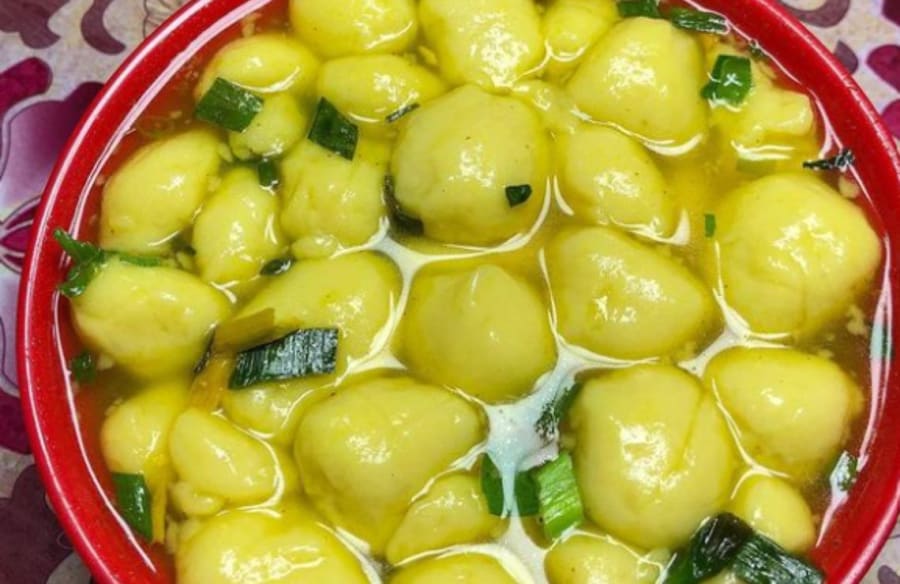
Rildok is made by mashing boiled potatoes and mixed with some salt and butter. Then the mashed potatoes are formed into small balls and cooked in boiling soup.
This hot potato stew is a perfect dish to warm you in cold weather of high altitudes. Don’t forget to try this unique dish on the lower Solukhumbu region on your way to the Everest Base Camp!
6. Sherpa Momo
Who doesn’t love Momo, right? Momo is one of the most loved delicacies of Nepal. These bite-sized steamed Momo with a mixture of minced meat, veggies, and spices as fillings are just perfect to satisfy your taste buds while you are on the trek to Everest Base Camp.
Steaming hot Sherpa Momo served with some tomato chutney and soup is just the right way to fill your tummies and your soul after a long trek.
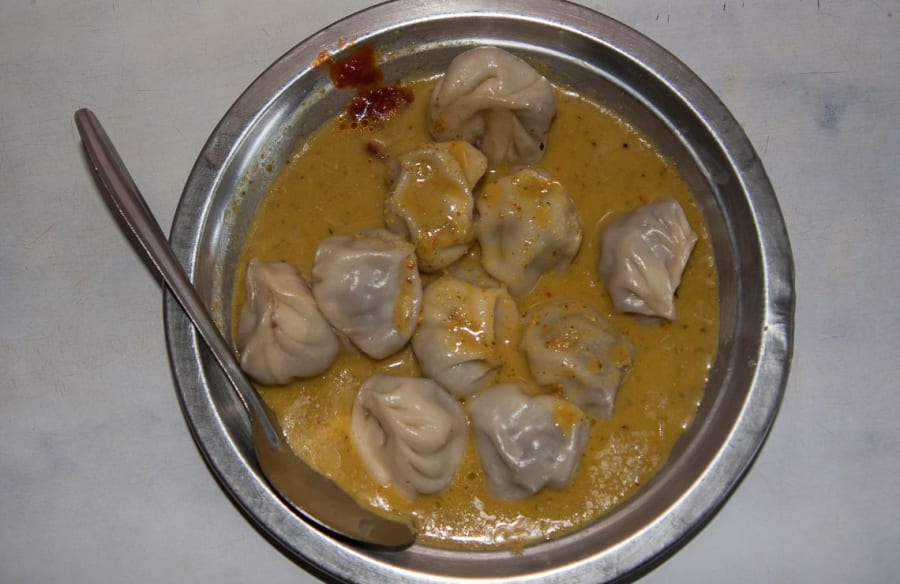
Traditionally, only meat and some veggies were found to be used as fillings in Momo but as the love for Momo grew, the varieties of it increased as well.
Now you can find Momo of different types. Some of which includes chicken momo, buff (water buffalo) momo, veg momo, paneer momo, etc.
You’ll find these varieties of Momo in every restaurant, eatery, and lodge along the trail. Above Namche Bazaar, order the vegetable, potato or cheese ones. Meat up there has usually been carried for days without a fridge.
7. Riki kur (Potato Pancake)
Riki means potato, and kur means pancake, thus Riki kur translates to a potato pancake. This is a popular dish among the Sherpa community where Roti (pancake) is made using potatoes.
The pancake is made forming a batter whose main ingredients include flour and grated potatoes. Riki kur isn’t sweet like the usual pancakes and is usually served with butter, yak cheese, and some pickle.
You can find Riki kur in the hotels of the lower regions of the trail but if you want the authentic traditional taste, find this cuisine in the Sherpa village.
8. Kur (Tibetan Bread)
Tibetan bread, known as Kur, is a staple meal of the Sherpa community. It is made from a flour and baking-powder dough, rolled into a flat round and deep-fried until it puffs up.
Kur is typically eaten as breakfast or snack and is served with jam, butter, dipping sauce, or curry. This dish is relatively cheaper but also filling.
You can find Kur on the menus of almost all the lodges, teahouses, restaurants, and eateries while you are in the Everest region.
9. Shyaphale
Shyaphale is one of the delicious Tibetan dishes widely popular among the Sherpas. It is semi-circular in shape consisting of minced meat inside.
Shyaphale is initially prepared similarly to Momo by wrapping a mixture of minced meat, cabbage, and spices into a dough and giving a semi-circular shape. Then it is deep fried and served hot with some spicy tomato chutney/sauce.
Most local eateries in Namche Bazar and Lukla serve Shyaphale. It got so popular that you can find this dish in many restaurants in different parts of Nepal.
10. Su-Chya (Butter Tea)
Butter Tea, commonly known as Su-Chya, is a popular beverage among the Sherpas. You must have had varieties of tea before but Su-Chya is something very unique and is a must-try if you don’t want to miss the authentic taste of Himalayan tea.
Su-Chya is made by brewing strong tea, then churning it with yak butter and salt in a tall wooden churn called a dongmo. In the cold Himalayan regions where energy is frequently used to provide heat to the body, this caloric beverage plays an important role and is a regular part of the Sherpa lifestyle.
Su-Chya is served in almost every hotel run by the Sherpas along the EBC trails. To experience the local taste, it’s best if you try this salty butter tea in the small local eateries during the Everest Base Camp Trek.
Sherpa Food at a Glance
| Dish | What it is | Vegetarian? | Where to find it |
|---|---|---|---|
| Tsampa | Roasted barley flour, eaten as porridge or dough | Yes | Most lodges |
| Shyakpa | Thick stew of hand-torn dough, potato and vegetables | Ask for veg | Most lodges |
| Thukpa | Noodle soup with long, thin noodles | Ask for veg | Everywhere |
| Tingmo | Plain steamed spiral bun | Yes | Some eateries, mostly lower down |
| Rildok | Mashed-potato dumplings in broth | Yes | Lower Solukhumbu villages |
| Momo | Steamed dumplings with a savoury filling | Veg, potato or cheese versions | Everywhere |
| Riki kur | Grated-potato pancake with butter and yak cheese | Yes | Lower villages, Sherpa homes |
| Kur (Tibetan bread) | Deep-fried flatbread for breakfast | Yes | Almost every lodge |
| Shyaphale | Fried half-moon meat pie | Usually no | Lukla and Namche Bazaar |
| Su-chya | Salty tea churned with yak butter | Yes (dairy) | Sherpa-run lodges |
Eating Well at Altitude on the Everest Trail
Everything on a teahouse menu above Lukla arrived on a porter's back or a yak, and prices climb with every village. Expect a plate of dal bhat to cost roughly twice as much at Gorak Shep as it does in Lukla. Dal bhat is still the best value on the trail, because the refills of rice, lentils and curry are traditionally free, and it's the meal Sherpa guides themselves eat twice a day.
Your appetite drops above 4,000 m. Eat anyway. Soups count toward the 3 to 4 litres of fluid a day you need at altitude, and garlic soup turns up on nearly every menu because trekkers swear it helps, although there is no good evidence that it prevents altitude sickness. Save chhang (barley beer) and rakshi (millet spirit) for the walk down, since alcohol makes altitude symptoms worse and dehydrates you.
Above Namche Bazaar, skip meat and stick to vegetarian dishes. A Swotah guide orders ahead at each lodge, and if you have an allergy or a strict diet, tell us before you fly to Lukla so the kitchens can be warned.
Sherpa Food FAQs
What do Sherpas eat every day?
Potatoes, barley, buckwheat and dairy from their yaks and cows. A typical day might start with tsampa and butter tea, with rildok, shyakpa or dal bhat later on. Meat is eaten, but less often than visitors expect.
Is Sherpa food spicy?
Mildly. Most Sherpa dishes are seasoned with salt, garlic, ginger and a little chilli, and the heat comes from the chutney served on the side, so you control how hot it gets.
Can vegetarians eat well on the Everest Base Camp trek?
Yes, easily. Tsampa, rildok, riki kur, tingmo, Tibetan bread and dal bhat are all vegetarian, and every lodge makes veg momo, thukpa and fried rice. Vegans should ask lodges to leave out butter and cheese.
What does butter tea taste like?
Salty and rich, with the body of a thin broth. It takes a cup or two to like, but on a cold morning at 4,000 m the fat and salt are exactly what your body wants.
Is it safe to eat meat on the Everest Base Camp trek?
Below Namche Bazaar it is generally fine. Higher up, there is no reliable refrigeration and meat has been carried for days, so most guides, Swotah's included, tell trekkers to eat vegetarian from Namche onward.
Hungry for more? See our guides to traditional Nepali dishes and to Gorak Shep, the last stop before Everest Base Camp, where a bowl of anything hot tastes better than it ever will at sea level.