








Traditional Nepali Food and Drinks: A Complete Guide
Nepali food stretches far beyond the dal-bhat-tarkari that every trekker meets on day one. The 2021 census recorded 142 caste and ethnic groups in Nepal, and most keep a distinct food culture: the Newar communities of the Kathmandu Valley alone cook more than 200 dishes, the Thakali of the Kali Gandaki valley run the country's best-loved kitchens, and the Tharu of the Terai steam, smoke, and ferment ingredients that appear nowhere else in Asia. This guide starts with the staples every visitor meets, then walks through the signature dishes of each major food culture, and finishes with the traditional drinks, from millet tongba to Newari aila. To eat most of it properly, set the fork aside and use your right hand.
The National Staples
Dal bhat tarkari is the foundational Nepali meal: steamed rice (bhat) with lentil soup (dal) and seasonal vegetable curry (tarkari), served with greens, pickles, and free refills until you surrender. Most Nepalis eat it twice a day, and on a trek, it is the best-value and most reliable dish on any menu, which is what the trail saying "dal bhat power, 24 hour" celebrates.
Momo, the Tibetan-origin steamed dumpling filled with buffalo, chicken, or vegetables, is Nepal's favourite snack and the subject of genuine local rivalry over fillings and dipping achars; the soup-served jhol momo of the Kathmandu Valley is the connoisseur's order. Two more staples deserve a first-day tasting: juju dhau, the "king curd" of Bhaktapur, a rich buffalo-milk yoghurt set in clay pots, and sel roti, the ring-shaped rice doughnut fried at festivals across the country. Through it all runs chiya, sweet milk tea spiced with ginger and cardamom, drunk at every hour in every settlement in Nepal.
Newari Cuisines
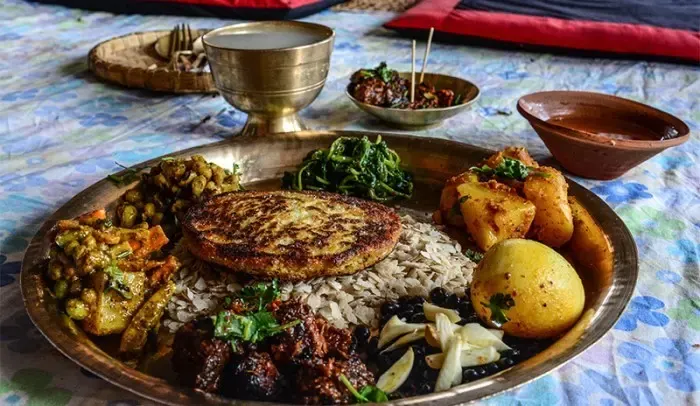
Photo: Samay Baji
Newari cuisine is one of the most delicious foods with intense flavour, consisting of over 200 dishes. It widely uses buffalo meat. There are dishes for every edible part of buffalo meat (cooked and uncooked), which include intestine, stomach, and brain. It is the other reason why they are famous.
Popular dishes include Kwati (soup made from various beans), Vegetable Curry or Fried Green Vegetables, Kachila (spiced minced meat), Chhoyla (water buffalo meat grilled over dried wheat stalks), Pukala (fried meat), wo (lentil cake), Paun Kwa (sour soup), Swan Puka (stuffed lungs), Syen (fried liver), Mye (boiled and fried tongue), Sapu Mhicha (leaf tripe (sweets). The most popular homemade alcoholic beverages are Thwon (rice alcohol) and Ayla (local whiskey).
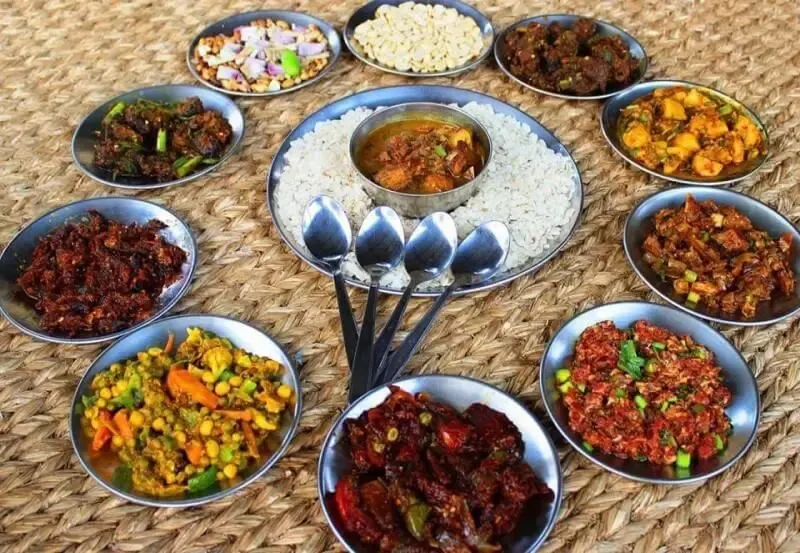
Photo: Newari Khaja Set
For vegetarians, meat and dried fish can be replaced by fried tofu or cottage cheese. Dessert consists of Dhau (yogurt), Sisabusa (fruits) and Mari (sweets). There are pickles made with Aamli fruit and other items.
Thakali Cuisines
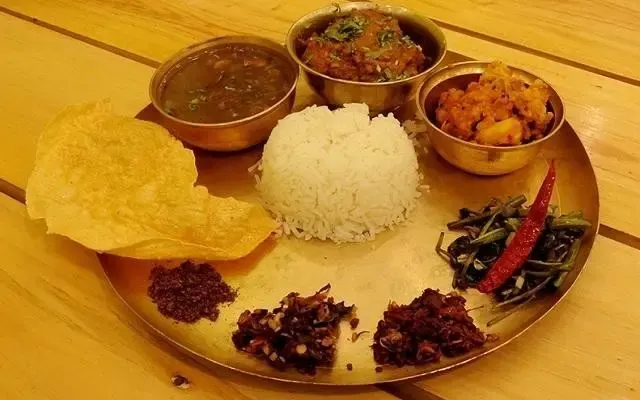
Photo: Thakali set
Thakali food is basically Dal-Bhat-Tarkari − Lentils, Rice and Vegetables, with Meat (Chicken or Mutton), Spicy Fried Potatoes and Spinach for non-vegetarians. As for vegetarians, Meat is replaced with Carrots, Cauliflower, Peas, and Green Beans which are cooked using the same spices as in the preparation of Meat. Most modern Thakali restaurants, however, also offer Momos (meat dumplings) and Thukpa (noodle soup).
Sometimes Buckwheat Breads (like chapatis or pancakes) may be served with the basic Curry and Kachhyamba (buckwheat finger chips) as an appetizer. Desserts include Sweet Curd or Phopke (fermented rice). Some places fry tiny pieces of Churpi (hard yak cheese, the stringy variety), and serve the Phopke over it with a little ghee to make it extra special. Fresh tomato relish and white radish pickle are placed to the side.
Magar Cuisines
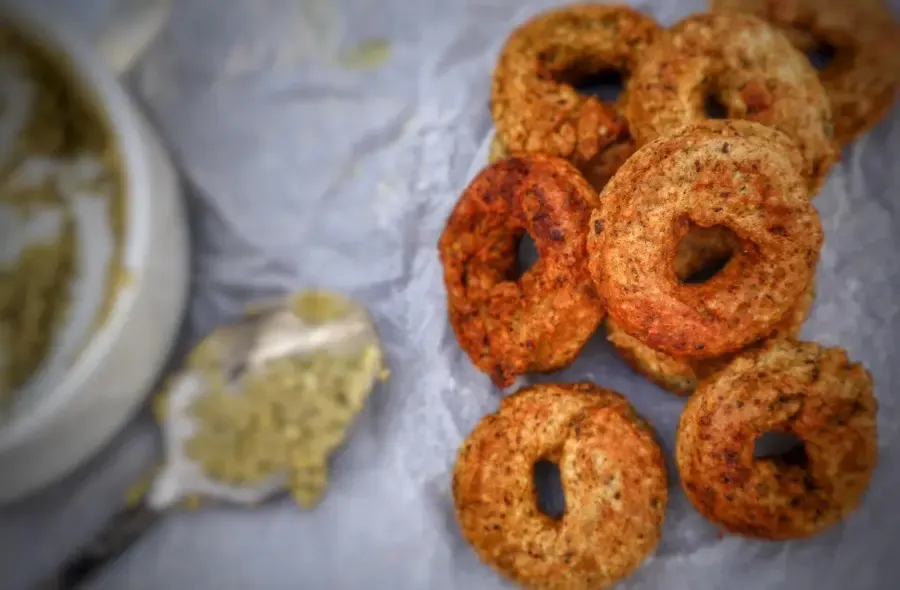
Photo: Batuk
Fried Tarul (Yam) with Spices and Batuk, commonly known as Bara are the popular ethnic delicacies of Magar communities. Batuk is made from black lentils and is best served alongside pork and Kodo-Ko-Raksi (local alcohol made from millet). Batuk rotis are shaped like Western doughnuts, but the taste is easily distinguishable. The crunchiness on the outside complements the soft texture inside.
Gurung Cuisines
Dhido or Ato:
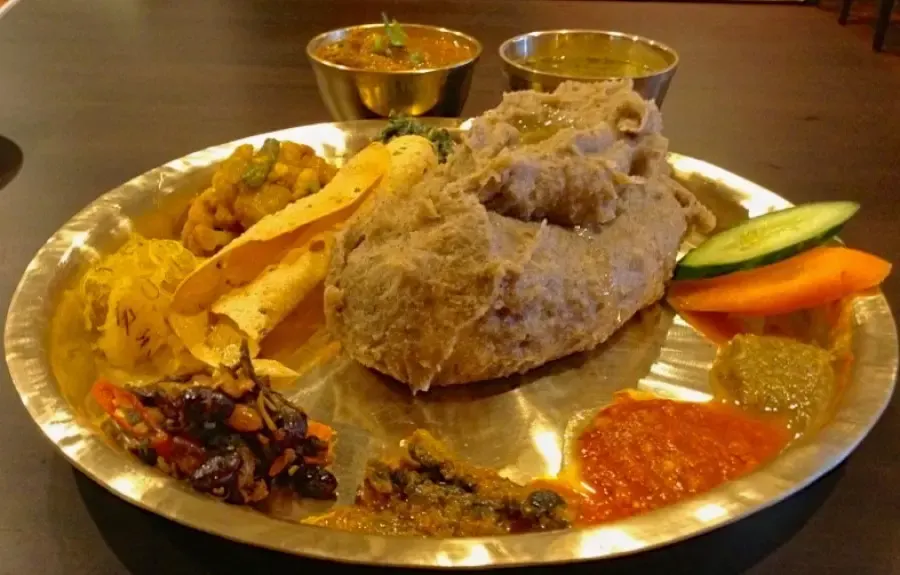
Photo: Dhindo
It is a porridge-like alternation of Maize, Buckwheat, Barley, or Millet. The vegetable can be spinach and fresh greens, fermented and dried greens, white radish, potatoes, green beans, cauliflower, cabbage, pumpkin, etc. Yogurt and curried chicken or fish are served as side dishes with few varieties of a pickle. However, in some places, the meat of wild boar (pork) may also be served.
Sukuti (Smoke-dried buffalo meat):
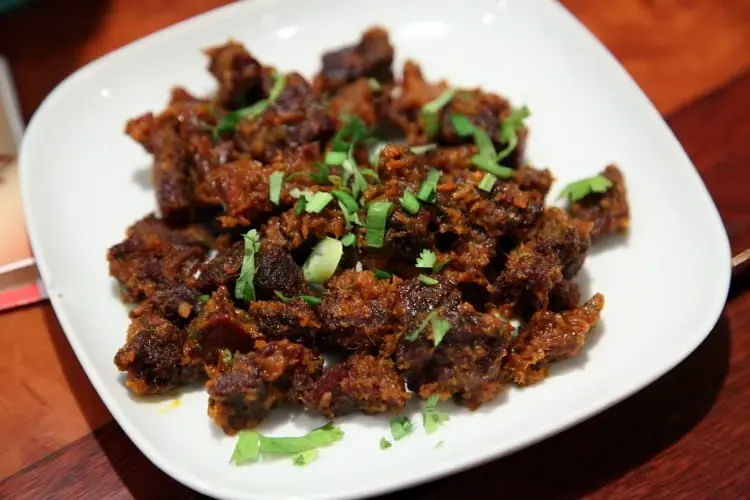
Photo: Sukuti
It is a very common and must-have food item. Sukuti can be served both as an appetizer/snack laden with spices and tomato sauce, it can also be cooked alongside vegetables like potato, zucchini, or pumpkin to make gravy that is highly preferred with dhindo. The tanginess from the tomatoes and the mixed-in spices gives a real kick to this dish.
Niuro with Machha (Fiddlehead fern with anchovies):
Another side dish in Gurung cuisine is sauteed fiddlehead fern with fermented or dried anchovies with a lot of tomatoes and garlic. This is a very simple, yet delightful, side dish that complements the Gurung thali (plate) very well.
Selroti:
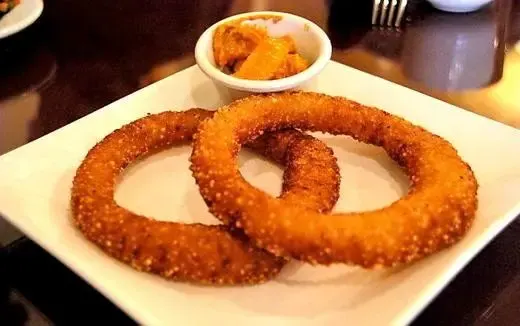
Photo: Selroti
It is a Nepali homemade ring-shaped, rice doughnut that is a very important snack in many ethnic groups. Sugar or Honey is used for the sweetness and pure ghee, made from buffalo milk, is mostly preferred to fry them. It is fried until the batter turns a reddish-brown in color and the outer layer becomes crispy. Selroti is often paired with different types of pickles.
Pickles:
Karkalo Ko Aachar and Karela (bitter gourd) Ko Aachar are two types of pickles eaten by the people. Karkalo is the Nepali name for the taro plant. All three parts of the plant are highly used in Nepali cuisine. In this case, the leafy part is used to make aachar (pickle). It is a very different and unique taste to one’s taste buds.
Mohi Chop:
Mohi chop – Mohi is the Nepali word for skimmed milk. It is the most popular and well-liked dish in Gurung cuisine. The mohi is seasoned with a finely ground mixture of chile, garlic, and salt. The preferred mohi for this meal is a little bit sour.
Kodo ko Raksi:
Raksi is a Nepali traditional alcoholic beverage that is either made from millet or rice. Kodo means millet in Nepali. It is a very strong drink that is clear in appearance. It goes really well with sukuti.
Rai & Limbu Cuisines
Kinema: fermented soybeans that are dried, stored, and used to make curry, soup, and pickles.
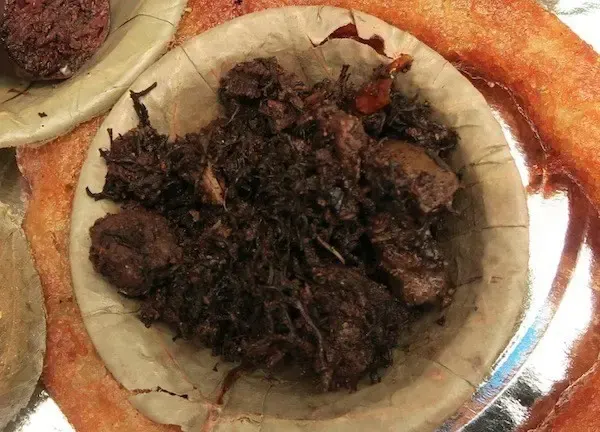
Yangben-Faaksa (Pork Curry with Yangben and Pig’s blood):
Yangben-Faaksa
Meat from local domestic pigs (sungur) is one of the most loved and widely consumed foods. Simple ingredients like blood, yangben (a wild edible lichen), onion, ginger, garlic, cumin seed, and coriander seed are used to prepare the pork.
Wachipa: A distinctive cuisine called wachipa is prepared by combining rice, minced local chicken flesh, charred downy feather follicles, and offal. It has a distinct, bitter flavor and scent similar to that of meat that has been cooked over fires.
Sargemba:
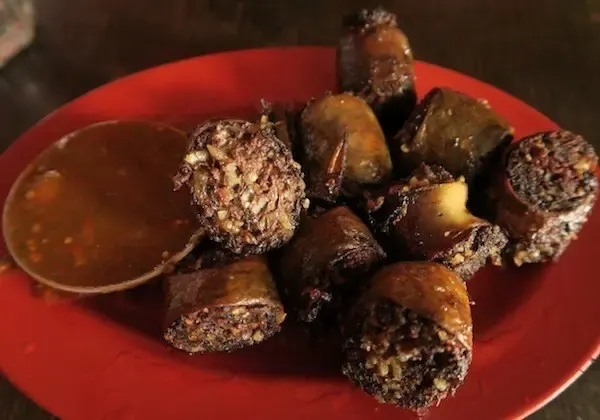
Photo: Sargemba
Essentially, sargemba is a blood sausage wrapped in pig intestines that is made with pig blood, yangben, rice, and spices. It is one of the uncommon foods cooked on the important holidays. Almost all of the pig's tissues and organs are used to create delicious dishes.
Chhop Achaar (pickle): It is a dry ground form of pickle made from oily seeds such as niger seed (Philinge), pumpkin seed and sesame seed along with salt, spices powder and sour agents such as lime juice.
Rice and Dhido: Steamed rice and Dhido (prepared by cooking millet or buckwheat flour in boiling water) is the main staple dish, which is generally eaten with vegetable curry, meat curry, Daal (Lentil soup) or other soup and Achaar (pickle).
Gundruk:
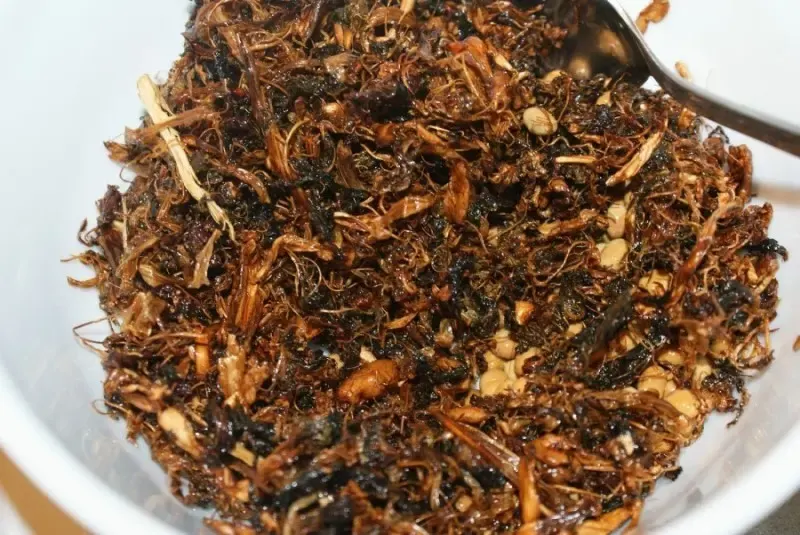
Photo: Gundruk
Gundruk, a staple dish in many other ethnic cultures, is made by fermenting spinach and then drying it. In general, green herbs, spices, and oils are used to make achaar. As an alternative to daal or lentil soup, it is also prepared into soup.
Tongba and Raksi:
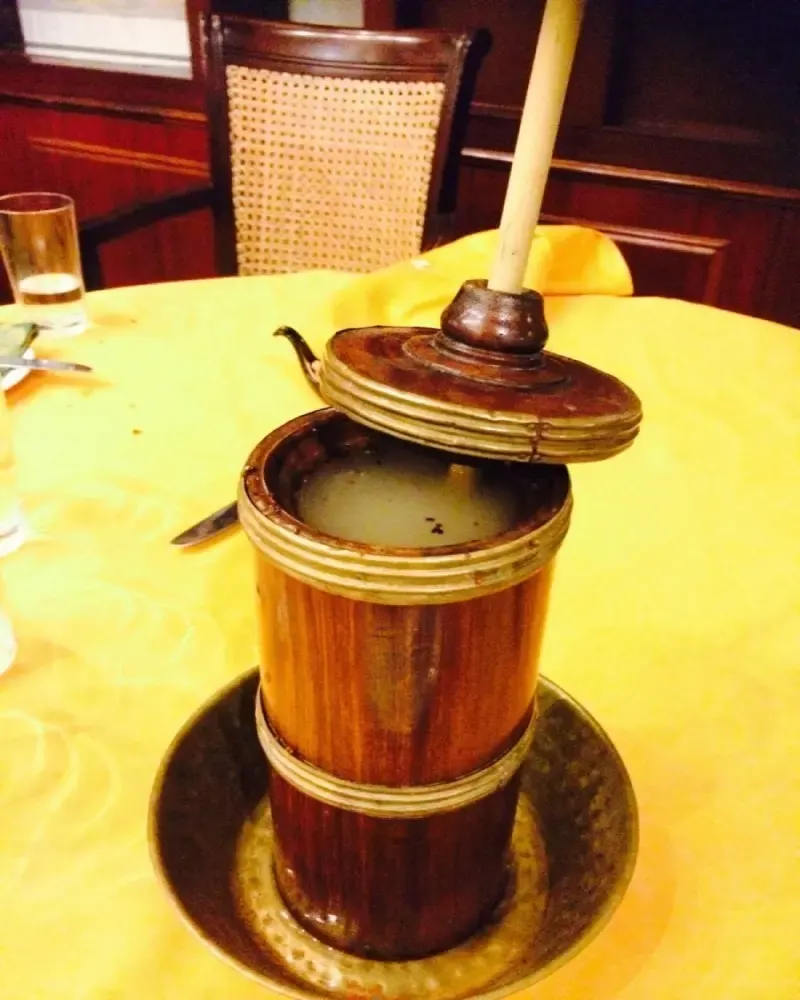
Photo: Tongba
Tongba is an alcoholic beverage prepared by fermenting millet and served with pouring hot water over fermented grains in a special cylindrical vessel. Raksi is a hard distilled version generally made from fermented millet. These beverages are served as a gesture of respect, and also a must-have drink in occasions and festivals.
Terai Cuisines
A Typical Terai Set:
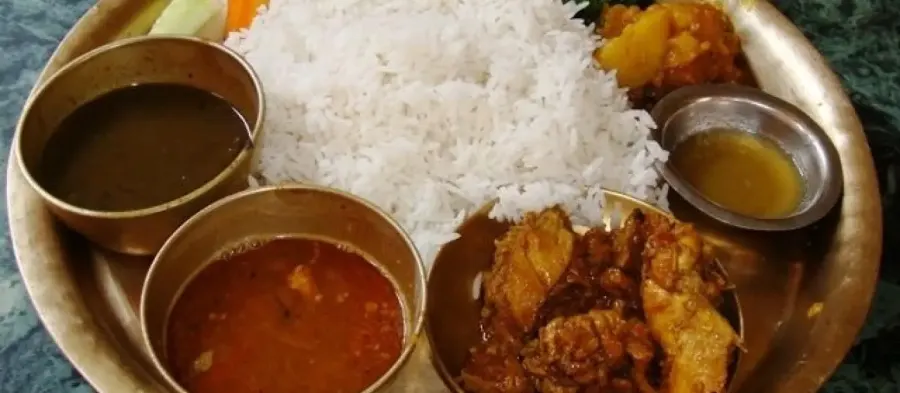
Photo: Typical Terai set
It includes basmati rice with ghee, Pigeon Pea Soup in the place of Lentil Soup, Tarkari (cooked variety of vegetables), Taruwa (battered raw vegetables such as potato, brinjal/aubergine, chilli, cauliflower, etc., deep fried in oil), Papadum, Mango/Lemon pickles, and Yogurt. For non-vegetable items, mostly fish or goat curry is served.
Tharu Dish:
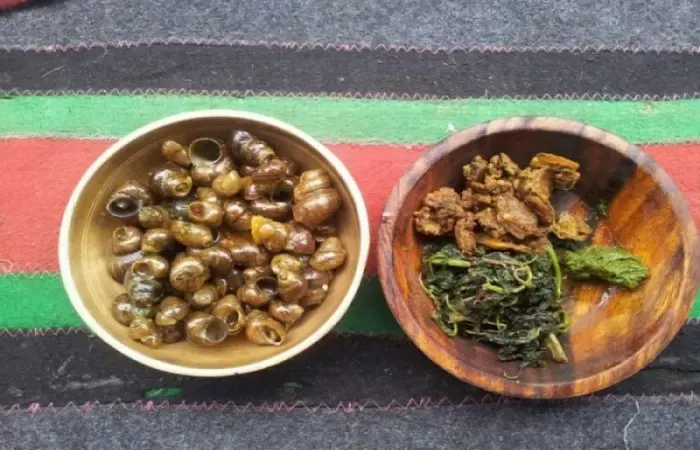
Photo: Tharu Dish
Most of the Tharu dishes are rice-based. Rice and lentil are moulded into various shapes and steamed to make Dhikri or Bhagiya, and a special kind of sticky rice called Anadi is steamed and served. Furthermore, some other special Tharu food items on the menu include Pakuwa (barbecued meat), Gughi (boiled and spiced snails) and an assortment of Tina (vegetables). Another short compendium of Tharu recipes includes Roasted Crab, Wheat Flatbread, and Fried Taro Leaf Cakes.
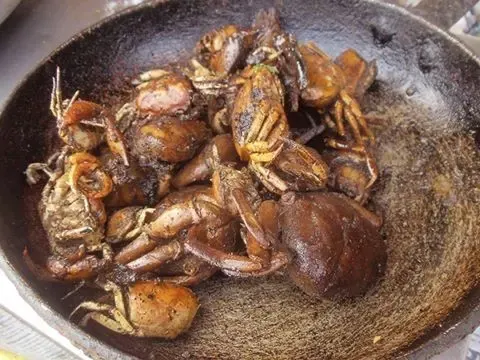
Photo: Crab
The unleavened flatbread is a staple food item in Terai. It encompasses a variety of whole-grain flatbreads such as Wheat roti, Corn roti, all kinds of Parathas (flatbread with stuffing), Maduwa (barley flatbread) and Litti (gram flour flatbread). Furthermore, special varieties of bread include Thekuwa (bread cum cookie made out of wheat flour and other ingredients) and Bhusuwa (flatbread made out of rice flour as the main ingredient).
India-influenced dishes include Malpuwa (sweet wheat fritter), Dahi Bara (lentil dumpling topped with savoury gravy of yoghurt, tamarind, and spices) and Mithais (sweets). Sidhara, a unique food item of Terai, is a mixture of taro root, dried fish and turmeric that is formed into cakes and dried. The cakes are broken up and cooked with radish, chilli, garlic, and other spices to accompany boiled rice.
Lohorung Cuisine
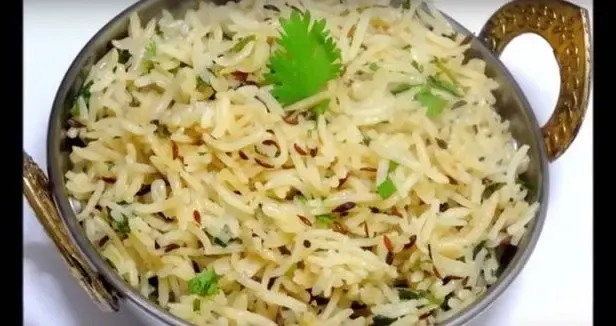
Photo: Wachipa
Lohorung is indigenous to eastern Nepal. They have a variety of food in their cuisine made from local ingredients. One of the main dishes is Wachipa also called Wamik. It is a traditional Kirat dish cooked with minced chicken, rice and powder of burnt chicken feathers. This powder gives this dish a bitter, unique taste. Vegetarians replace chicken with flowers or leaves of a plant known as Damlapa.
It is also believed that eating this dish cures body aches. Other foods include Masikdaam, Kinima (a side dish eaten as a soup with rice or chapati), Sibring, Sel roti (round shape roti made from rice flour, sugar, and butter), Bawari (a roti of rice flour batter cooked in hot oil), Dhule Achar (a type of pickle made from sesame seed, ginger, salt, oil, chili together turning into fine powder), Saruwa, Chamre (rice cooked in ghee, water, and salt), Yangpen and Dibu. Drinks include local drinks made of rice or millet called Tongba.
Traditional Drinks of Nepal
Raksi is Nepal's traditional distilled spirit, a clear, strong liquor made from millet or rice and produced at home across the hills; it is poured at festivals, offered to deities, and served to guests as a mark of respect. Chyang (called thwon by the Newars) is the gentler cousin, a cloudy home-brewed rice beer drunk young and slightly sweet.
Tongba, the signature drink of the eastern hills and the Limbu community, is fermented millet served in a wooden or metal vessel: hot water is poured over the grains and the warm, mildly alcoholic result is sipped through a bamboo straw, then topped up again, which makes it the perfect cold-evening drink in the Kanchenjunga foothills. The Newars distil aila, a potent spirit poured in a thin stream from height during feasts and rituals. In the high Himalaya, the drink of hospitality is su chya, butter tea churned with salt, an acquired taste that makes complete sense at 4,000 m. All of these are homemade and unstandardised, so drink slowly and accept refills with caution.
Enjoyed reading this blog? You may also like: Festivals you may not want to miss in Nepal
Want to taste these dishes on the trail? Our Annapurna Circuit Trek passes through the heartland of the Thakali and Gurung communities, some of the most diverse food cultures in Nepal.