


A Complete Guide to Traveling to Bhutan
Tucked between two powerful countries, India and China, Bhutan is the most isolated and incredibly beautiful country in Asia. Also referred to as the Last Shangri-La, Bhutan is the only carbon-negative country in the world. The cultural richness, the unexploited religion, and its distinctly unrivaled natural beauty make it one of the most sought after travel destinations.
Bhutan is often famous amongst travelers as an expensive travel destination. Its unexploited culture, tradition, environment, and the sense of isolation it maintains from the outer world is what lures these travelers to this beautiful mysterious land every year.
To help you navigate through this incredibly mesmerizing country, here is the complete guide to traveling to Bhutan.
Visa Information
You require a Bhutanese visa before arrival while traveling to Bhutan. All the Bhutanese visas are issued only from the head office of the Department of Immigration. During the visa application, visa fees must be paid to the Bhutan tourism board. It is mandatory to make travel arrangements at least 90 days earlier. Nationals from countries except Maldives, India, and Bangladesh must apply for a visa through a locally registered travel agency.
Citizens from Maldives, India, and Bangladesh can acquire entry permits on arrival upon producing their passports with six months validity. Meanwhile, Indian nationals can also use their voters’ identity cards to obtain entry permits.
All the other countries must obtain a visa clearance in advance by means of their tour company before touring to Bhutan.
Documents Required For Bhutan Visa Application
Upon making full payment of Bhutan tour and Bhutan visa fee of US$ 40 to the Tourism Council of Bhutan, Travel companies will obtain your visa. Your Bhutanese visa will be sent to you prior to your arrival in Bhutan.
Requirements
A scanned copy of passport with at least six months' validity at the point of arrival in Bhutan.
Information is listed below:
- Full name as per passport
- Occupation
- Mailing address
- Contact No. (Mobile preferred)
- Submit a scanned copy of your passport
Note: Visa clearance takes at least 7 days to process and airplane tickets to Bhutan cannot be purchased without visa clearance. Upon entering Bhutan all you need to bring is your valid passport and an official letter sent by your tour company.
Bhutan Tourist Visa Extension
In order to extend your visa for additional days in Bhutan, consult with your travel agency and they will take care of it for you. The visa renewal fee is approximately Nu. 500( US $1= 82 Nu as of 2023).
Transportation
There are two different ways to reach Bhutan- Overland and on air. While flying to Bhutan is well known, traveling to Bhutan overland is less heard of.
Traveling to Bhutan overland
You can actually travel to Bhutan by road through India via three different border crossings- Gelephu, Samdrup Jongkhar, and Phuentsoling.
You can also travel to Bhutan overland from Nepal through India. When traveling to Bhutan from Nepal, first you will exit Nepal at Kakarbhitta and travel by road to one of the three border crossings to Bhutan in India. Direct buses to Kakarbhitta run from Kathmandu on a daily basis. Look for ticket counters. The cost to Kakarbhitta ranges from $15-$20 on local buses. Next, you take a bus to Darjeeling from Kakarbhitta. Upon reaching Darjeeling, you then take another bus to Phuentsoling which falls on the border
between India and Bhutan. From Phuentsoling, it takes almost 6 hours to reach Thimpu.
Note: If you want to avoid all the hassle involved in booking buses book an overland trip to Bhutan through a tour operator. They will take care of it.
Traveling To Bhutan On Air
Only two airlines travel to Bhutan, Druk Air, and Royal Bhutan Airlines. The flights to Bhutan have operated from five different countries altogether.
| Country | City | Flight Operation |
|---|---|---|
|
India |
Bagdodara Guhawati Kolkata(Calcatta) New Delhi |
Two weekly flights Two-weekly flights Daily flights five flights weekly |
|
Thailand |
Bangkok |
Daily flights |
|
Bangladesh |
Dhaka |
Two weekly flights |
|
Nepal |
Kathmandu |
Six flights weekly |
|
Singapore |
Singapore |
Two flights weekly |
|
Indonesia(an exception) |
Operates during the season only |
Flights to Bhutan are known to be very expensive which starts at $400. The cost, however, is reasonable given the Paro airport is one of the most inaccessible, dangerous and difficult places to land in the world. It is the only international airport in Bhutan.
Due to the difficulty in landing, flights to and from Bhutan do not operate at night. Most interestingly, only 8 pilots in the world are certified to land and takeoff in Paro. Bummer but true, flights to Bhutan are highly weather dependent. Thus, delays are very common.
Road Conditions In Bhutan
Bhutan is an exceptional experience. Do not expect fine roads as in western countries or in some of the Asian countries. Bhutan is still improving its roadways and upgrading from dirt and gravel roads to asphalt. Only around 60% of roads in Bhutan are paved with concrete or asphalt; the rest are dirt or gravel roads.
The main road in Bhutan is East-west highway which runs from Phuentsoling on the border with India in the southwest to Trashigang in the east. This road branches off to the major cities like Thimpu, Punakha, and Paro.
While the rads to Thimpu, Paro, and Punakha are rated the best highways in the nation, the road is not as good. It is a mix of old paved road, dirt or gravel tracks. Thus, it can take up to 3-3.5 hours to complete the entire journey.
The best-paved part of the road in Bhutan is the one leading up to and down from the Dochu La pass at 3100 meters. The maximum road speed is limited to 50km/hr as this country is comprised of rough hilly terrains.
If you are thinking of short-distance traveling within the country, short taxi rides will cost you between 50-100 nugultrum.
Note: In case you think the taxi driver is charging you more than the standard amount takes the details displayed in the vehicle- taxi number, Driver's name, and details and complain to the traffic police. The police in Bhutan takes a serious view of it.
Tour Company And Costs
Bhutan scrapped its old all-inclusive "minimum daily package" in 2022 and now charges a Sustainable Development Fee (SDF) of USD 100 per person per night, a rate halved from USD 200 in September 2023 and confirmed through August 31, 2027. Children aged 6 to 12 pay half and under-6s are exempt; Indian nationals pay INR 1,200 per night. The one-time visa fee is USD 40. On top of the SDF you pay your operator separately for hotels, guide, transport, and meals, which puts a typical comfortable trip at roughly USD 250 to 450 per person per day all-in, depending on hotel level. From January 1, 2026, a 5 percent GST applies to tourism services, though the SDF and visa fee are exempt. All international tourists must still book through a licensed Bhutanese tour operator and travel with a guide.
So, What Does the SDF Actually Fund?
The SDF is Bhutan's high-value, low-volume tourism policy in action: it funds free national healthcare and education, cultural preservation, and the forests that keep Bhutan the world's only carbon-negative country. It buys you nothing directly, and that is the point; your hotels and guide are paid separately, and the fee is the price of a country without crowds.
Best Time To Visit Bhutan
Bhutan’s climate varies all over the year. Usually, due to its sub-tropical climate, Southern Bhutan can be hot and moist and the northern part can be cold in summer due to its high altitude. While weather in the high altitudes is subject to change drastically, anytime is the best time to visit Bhutan if you are looking for spiritual relief.
February- March, September- November are the best months to visit Bhutan. Though the weather during this time of the year is colder, skies are generally clear and blue making it the perfect time to sightsee and hike.
June to August is the summer/monsoon season in Bhutan. During the monsoon season, it typically rains for 1-2 hours in the morning. Heavy downpours are rare. Temperature ranges from 24 to 25 degrees. Trekking during monsoon is not recommended while one can go for a short day hike with ease. Make sure to carry an umbrella and raincoat while traveling during this season. Furthermore, summer is also a wonderful time for mushroom picking, observing a Matsutake Mushroom Festival and catching glimpses of (sometimes double) rainbows over the valleys.
December -February is the winter season in Bhutan. During this time, the weather is coldest and very unpredictable in the mountains. However, winter is a good time to catch the endangered black-necked crane in the Phobjika valley.
Festivals
The next best time to visit Bhutan is during festivals. December- February is high festival time. You will most likely stumble into festivals every now and then during this time. You can also be some of the very few foreigners to have witnessed some of these festivals. Check the list below to find out when and where the festivals in Bhutan take place and plan your trip accordingly.
| Places | Festivals | Dates |
| Punakha |
Punakha Dromshen Punakha Tsechu |
February 12-14 February 15-17 |
| Bumthang |
Ura Festival Nimalung Festival Kurjey Festival Tamshing Phala Choepa Tangbi mani Jakar Jambay Lhakhang Drup Pakar Nalakhar Festival |
16-20 April 10-11 July 11 July 7-9 October 10-13 October 5-9 November 13(evening)-16 November 14-16 November 12-14 December |
| Tashigang |
Gom Kora Tashigang Festival |
14-16 March 5-7 December |
| Paro | Paro festival | 17-21 March |
| Tashi Yangtse | Chorte Kora | To be confirmed |
| Thimpu |
Thimpu Drupchen Thimpu festival |
3-October 7-9 October |
| Gangtey | Gangtey Festival | 10-13 October |
| Wangdphodrang | Wangdi festival | 5-7 October |
| Mongar | Mongar festival | 4-6 December |
| Trongsa | Trongsa festival | 4-7 January |
| Luntse | Luntse Festival | 4-7 January |
While observing these festivals note the following things on what not to do:
- Do not eat, drink, talk or laugh loudly at inappropriate times while on the dance floor.
- Do not flash cameras or intrude on the dance space while photographing the dancers or onlookers.
- Festivals in Bhutan are genuine manifestations of thousand-year-old religious traditions, thus take them seriously.
- Do not in any way infringe or impair the sacredness and the beauty of the ritual.
- Last but not least, tourists are given the privilege of witnessing these beautiful events don’t belittle the rituals and customs just because you don’t understand the depth of these beliefs.
Accommodation
You can either book a luxury hotel or consider a homestay. Both ways, you are sure to experience a relaxed and comfortable stay. The cost depends upon the place you choose to stay in. In a luxury hotel you will experience comfort like any other hotel while in a homestay, you get to observe a typical Bhutanese lifestyle and enjoy the warmth of Bhutanese hospitality.
Food and Beverages
Bhutanese culture has very few delicacies in meat and fish, as fishing is not allowed in Bhutan. So, during your stay, vegetables with rice will be served for your meals. Additionally, if you are into alcoholic beverages, you can try Ara; a popular local distilled drink.
Rice is a Bhutanese staple diet served with one or two side dishes consisting of either meat or vegetables. Pork, beef, chicken and yak meat are consumed most often.
Less the chance but if you ever get tired of Bhutanese dish, there is a wide selection of western and Indian food available in many restaurants around the country. Fast food chains sadly are not available, but the local food is typically delicious. Besides, 'Tibetan' cuisine - momos, thukpas, etc are also available.
Bhutanese cuisine is known to be spicy, as chilies are an essential part of nearly every dish. You can guess from their national dish which is Ema Dathi (Chillies and Cheese). They eat it almost everywhere, and most Bhutanese would not enjoy a meal that is not spicy.
If you are into alcoholic beverages, try out some local brands like Red Panda ( a specialty from Bumthang), Druk 11000, range of fine wines and whiskeys. And they are quite cheaper than in India.
Additional information
Wifi
Internet access in Bhutan is not something as good. But it works fine. There are very few internet cafes in town. Most of the hotels also provide wifi connection. But the connection is not as strong and might work only in the lobby and restaurants only.
Getting Sim Card In Bhutan
Bhutan has two mobile network providers: B-Mobile and Tashi Cell. B-Mobile provides Tourist Sim Card for 100 Bhutanese Ngultrum which is about 1.5 USD. Tashi Cell sells a normal Sim Card for 200 Bhutanese Ngultrum for about 3 USD.
The only difference between a tourist sim and a regular sim is a tourist sim has validity or life of one month only.
You can buy 475 Mb data with B-mobile for 99 BTN.
You can buy 400mb data on Tashi cell for 99 BTN.
The phone call rate to most European Countries, USA, and Asian countries is 15 BTN/Minute. SMS cost abroad is 10BTN/ each SMS everywhere in the world.
Currencies
Bhutanese currency is called Ngultrum(BTN). Apart from Ngultrum, Indian Rupee is also commonly used. The Bhutanese Ngultrum and Indian rupee are equivalent so you can pay everywhere with the Indian rupee. It is common to pay and receive the exchange in both BTN and Indian currency. 4
ATM
ATMs are not common in Bhutan. Only three banks in total accept foreign credit cards in Bhutan. The three banks accepting foreign credit cards are Bank of Bhutan, Bhutan National Bank, and Druk Punjab National Bank. ATMs in the big cities accept VISA cards also.
Independent travelers
The Bhutanese government is quite conservative about allowing visitors into the country. Independent travel to Bhutan is recently being introduced but it's not something the government encourages. Visitors to Bhutan generally must either be tourists, or guests of the government. The only other exception to visit the country is to receive an invitation by "a citizen of some standing" or a volunteer organization.
Except for passport holders from India, Bangladesh, and the Maldives, all tourists must travel on a pre-planned, prepaid, guided package tour or custom-designed travel itinerary.
Important Tips
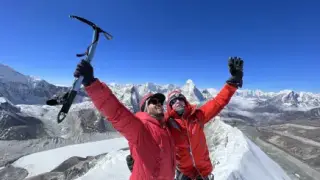
- Mountaineering is prohibited in Bhutan but hiking on peaks under 6000m is acceptable.
- Dress modestly and wear long-sleeved clothing covering your arms and legs. While visiting Dzongs and monasteries, cover your body properly. Do not wrap the jumper or jacket around your waist or wear revealing clothes. Wear closed shoes, most preferably.
- Smoking is banned unless you bring your own cigarettes and smoke inside your room.
- Tipping waiters and porters is not compulsory, but a guide is a must.
- Don’t expect heavy discounts. Only 10% of discounts apply to goods.
- Tuesdays are considered the national 'dry day,' so the sale of alcohol is prohibited.
- Bring a multi-purpose electrical plug, and a universal travel adapter as most of the hotel rooms have limited electrical plugs, so it'll be wise to bring them along if you have many devices.
- Carry a jacket or jumper and some layers of clothing, irrespective of the season, as the weather in Bhutan isn’t as predictable.