


Offseason Trekking in Nepal: Monsoon and Winter Guide
The offseason for trekking in Nepal covers the monsoon months of June to September and the winter months of December to February. Most visitors arrive in the two peak windows of October to November and March to May, which leaves trails, teahouses, and viewpoints far quieter for the rest of the year. Offseason trekking brings real advantages: room discounts of 20 to 40 percent, cheaper flights, empty sunrise viewpoints, better wildlife sightings in Chitwan and Bardia, and ideal conditions in rain-shadow regions such as Upper Mustang and Dolpo, which stay dry while the rest of the country gets its rain. This guide explains when the offseason falls, why it is worth considering, and which treks suit each season.
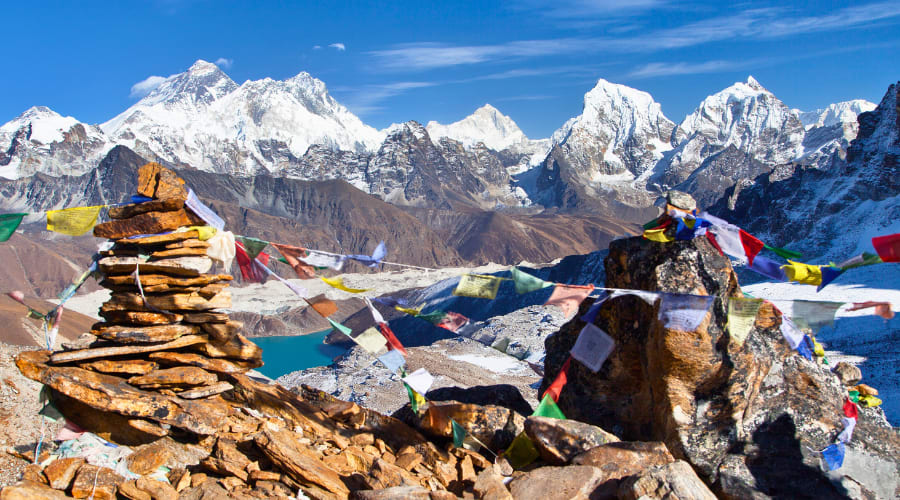
When Is the Offseason for Trekking in Nepal?
Peak trekking season in Nepal means autumn (September to November) and spring (March to May), when skies are clearest and temperatures at altitude are mildest. The offseason is everything else: the summer monsoon from June to early September, when Nepal receives close to 80 percent of its annual rainfall, and winter from December to February, when high passes hold snow and nights above 4,000 m drop well below freezing.
Monsoon and winter behave very differently on the trail. Monsoon brings rain, leeches, and cloud at lower elevations but leaves the trans-Himalayan districts almost untouched. Winter brings cold and snow up high but dry air and the year's sharpest visibility on lower routes. Matching the region to the season matters more than the season itself.
| Months | Season | Trail conditions | Best regions |
|---|---|---|---|
| March – May | Spring (peak) | Warm, rhododendron bloom, haze builds by May | All classic routes |
| June – September | Monsoon (offseason) | Daily rain below 3,000 m, leeches, lush green; rain-shadow stays dry | Upper Mustang, Dolpo, Nar Phu |
| October – November | Autumn (peak) | Clearest skies, mild temperatures, biggest crowds | All classic routes |
| December – February | Winter (offseason) | Cold, sharp visibility, snowbound high passes | Poon Hill, Pikey Peak, Langtang, lower Everest trail |
Why Trek in Nepal During the Offseason?
Five practical benefits draw trekkers to the offseason: thinner crowds, lower prices, better wildlife viewing, green monsoon scenery, and easier bookings. Each one is worth spelling out.
Quieter Trails and Viewpoints
Poon Hill (3,210 m), the sunrise viewpoint on the Ghorepani Poon Hill trek, shows the difference clearly. In October, hundreds of trekkers climb the steps before dawn to watch first light hit the Annapurna range; in the offseason you may share the platform with a handful of people. The same applies on popular trekking trails across the country, and in Kathmandu and Pokhara, where queues shrink and restaurants have free tables.

Lower Prices on Flights and Rooms
Nepal is already a budget-friendly destination, and offseason pricing pushes costs down further. International fares to Kathmandu drop outside the peak windows, teahouses and city hotels discount rooms rather than leave them empty, and guides and porters are easier to book at short notice. Travellers visiting in July or January routinely pay 20 to 40 percent less for accommodation than October visitors.
Wildlife and Jungle Safaris
Chitwan National Park holds 752 greater one-horned rhinos according to Nepal's 2021 national rhino count, and winter is the comfortable time to look for them: daytime temperatures in the Terai stay pleasant instead of the 40°C heat of late spring. A Chitwan jungle safari in December or January pairs cool mornings with active wildlife. Further west, Bardia National Park recorded around 125 Bengal tigers in Nepal's 2022 national tiger survey, the highest count of any park in the country, and sightings there are best outside the flooded monsoon months. Gharial crocodiles and more than 500 recorded bird species round out the list.

Monsoon Greenery and Festivals
Ropain, the rice-planting festival, fills the hill terraces with farmers, mud, and music every June and July, and offseason visitors can join the planting in villages around Kathmandu and Pokhara. Monsoon rain usually falls in the late afternoon or at night, so early starts keep you ahead of the showers. The hills turn a deep green that autumn trekkers never see, waterfalls run at full volume, and the air clears beautifully after each burst of rain.
Where Should You Trek During the Monsoon?
Rain-shadow regions are the monsoon answer. Upper Mustang and Dolpo lie north of the main Himalayan range, where the mountains block the monsoon clouds; parts of Mustang receive under 300 mm of rain a year against a national average of roughly 1,500 mm. June to September is therefore the classic season for Upper Mustang and Upper Dolpo, with the Nar Phu valley on the Annapurna side as a third option. These restricted areas need permits arranged through an agency; our guide to trekking permits in Nepal covers the costs.
Sagarmatha National Park on the Everest trail also rewards offseason walkers with wildlife. With fewer trekkers on the path, Himalayan tahr, musk deer, and the danphe, Nepal's national bird, appear closer to the trail. Factor in flight risk, though: Lukla flights face frequent monsoon delays and cancellations, so build buffer days into any Everest-region plan between June and September.
Where Should You Trek in Winter?
Low and mid-elevation treks are at their best from December to February. Poon Hill (3,210 m), Pikey Peak (4,065 m), the Langtang Valley up to Kyanjin Gompa (3,870 m), and the Annapurna foothill routes all stay open, with crisp air and superb mountain views. Days are cold but walkable; nights call for a proper four-season sleeping bag.
High passes set the winter limit. Thorong La (5,416 m) on the Annapurna Circuit and Larke Pass (5,106 m) on the Manaslu Circuit are frequently snowbound between late December and February, and crossing them then demands winter experience and the right gear. Everest Base Camp remains possible in winter for well-prepared trekkers, with daytime temperatures at Gorak Shep around -5°C and nights near -20°C.
Offseason Risks and How to Prepare
- Slippery trails and leeches (monsoon): trails below 2,500 m get muddy and leech-prone; gaiters, salt, and trekking poles all help.
- Landslides and road delays (monsoon): hill highways close intermittently after heavy rain, so keep itineraries flexible.
- Flight cancellations (monsoon): Lukla and Jomsom flights are weather-dependent; add one or two buffer days.
- Cold and snow (winter): carry a four-season sleeping bag, insulated layers, and microspikes for icy stretches, and check pass conditions before committing.
- Guides: Nepal Tourism Board has required solo foreign trekkers to hire a licensed guide in most trekking regions since April 2023, and an experienced guide earns their fee twice over when the weather turns.
Offseason Trekking FAQ
Is monsoon trekking safe in Nepal?
On the right routes, yes. Trails below 2,500 m get muddy and leech-prone and hill roads suffer landslides, but the trans-Himalayan rain-shadow regions stay dry through the monsoon. Build buffer days for Lukla or Jomsom flights and keep road itineraries flexible.
Can you trek to Everest Base Camp in winter?
Yes, for well-prepared trekkers. Days at Gorak Shep hover around -5°C and nights near -20°C, but the trail stays open, skies are at their clearest, and the route is nearly empty. A four-season sleeping bag and flexible schedule are essential.
Do teahouses close in the offseason?
Most stay open year-round on the main routes. A handful of the highest lodges, above roughly 4,500 m, close in deep winter, and some Gokyo and high Annapurna lodges shut between December and February; your guide will know which.
Are permits cheaper in the offseason?
Restricted area permits drop from December to August: Manaslu falls from USD 100 to USD 75 per week and Nar Phu from USD 100 to USD 75. TIMS, conservation, and national park fees stay the same all year.
Match the region to the season and the offseason stops being a compromise: Mustang or Dolpo in July, Poon Hill or Pikey Peak in January, and Chitwan or Bardia whenever the crowds thin. Browse our fixed departures to pair your dates with the right trek.