


Trekking Permits in Nepal: A Complete 2026 Guide
Most treks in Nepal require two permits, and the combined cost runs from about NPR 5,000 (roughly USD 37) for a standard Annapurna trek to over USD 500 for restricted areas such as Upper Mustang. The main documents are the TIMS card (NPR 2,000 for foreign trekkers), conservation area or national park entry permits (NPR 2,000 to 3,000), and restricted area permits priced in US dollars. Two rule changes matter in 2026: Nepal's Department of Immigration removed the two-trekker minimum for restricted area permits on March 22, 2026, so solo trekkers with a licensed guide can now enter, and the licensed-guide requirement for independent trekkers introduced in April 2023 remains in force in most regions. This guide lists every permit, its current fee, and where to get it.
What Permits Do You Need to Trek in Nepal?
A trekking permit in Nepal is a government-issued authorisation that funds conservation, records trekkers for safety, and controls access to sensitive border regions. Six categories cover every situation:
- TIMS card (Trekkers' Information Management System)
- Conservation area entry permits (ACAP, MCAP, GCAP, KCAP)
- National park entry fees
- Restricted area permits (RAP) for controlled regions
- Peak climbing and mountaineering permits
- Filming and documentary permits
Which permits you need depends on the route. An Annapurna Circuit trekker needs TIMS plus ACAP. An Everest Base Camp trekker needs the Sagarmatha National Park permit plus a local municipality fee. A Manaslu Circuit trekker needs a restricted area permit, MCAP, ACAP, and TIMS.
TIMS Card: Cost and Rules
The TIMS card costs NPR 2,000 (about USD 15) per trek for foreign nationals and NPR 1,000 for citizens of SAARC countries. Since April 2023, Nepal Tourism Board issues TIMS only through registered trekking agencies, which also provide the licensed guide the same rule requires; the old green card for independent trekkers no longer exists. Your agency needs a passport copy and a passport-size photo to arrange it.
Enforcement of TIMS varies by region. The Everest region dropped TIMS in 2018 in favour of a local municipality fee, and some operators report light checking on a few other routes, but checkpoints in Langtang, Manaslu, Annapurna, and far-western Nepal do verify it. Treat TIMS as required everywhere outside the Everest region.
Conservation Area Permits
The National Trust for Nature Conservation and the Department of National Parks and Wildlife Conservation manage Nepal's conservation areas, and each area charges its own entry fee:
| Conservation area | Foreigners | SAARC nationals | Needed for |
|---|---|---|---|
| Annapurna (ACAP) | NPR 3,000 | NPR 1,000 | Annapurna Base Camp, Circuit, Poon Hill, Nar Phu |
| Manaslu (MCAP) | NPR 3,000 | NPR 1,000 | Manaslu Circuit (alongside the restricted area permit) |
| Gaurishankar (GCAP) | NPR 3,000 | NPR 1,000 | Rolwaling Valley, parts of the Langtang approach |
| Kanchenjunga (KCAP) | NPR 2,000 | NPR 500 | Kanchenjunga Base Camp routes |
Buy conservation permits at the Nepal Tourism Board offices in Kathmandu (Bhrikutimandap) or Pokhara with a passport copy and one photo. ACAP bought at the entry checkpoint instead of in advance may be charged at double the rate, so sort it out before you start walking.
National Park Entry Fees
Nepal has 12 national parks, and any trek that passes through one requires an entry permit, payable in advance or at the gate:
| National park / fee | Foreigners | Notes |
|---|---|---|
| Sagarmatha (Everest region) | NPR 3,000 | NPR 1,500 for SAARC; payable at Monjo or in Kathmandu |
| Khumbu Pasang Lhamu Rural Municipality fee | NPR 3,000 | The Everest region's local permit that replaced TIMS; sold only in Lukla or at Monjo |
| Langtang National Park | NPR 3,000 | Langtang Valley, Gosaikunda, Helambu |
| Shey Phoksundo National Park | NPR 3,000 | Dolpo treks |
| Makalu Barun, Rara, Khaptad, Shivapuri, Banke, Bardia, Chitwan, Parsa, Shuklaphanta | NPR 1,500–3,000 | Varies by park |
Wildlife reserves such as Koshi Tappu and the Dhorpatan Hunting Reserve charge separate entry fees in a similar range.
Restricted Area Permits (RAP)
Restricted areas are border regions where Nepal's Department of Immigration controls entry, and their permits are the most expensive trekking documents in the country. A registered trekking agency must apply on your behalf, and a licensed guide must accompany you throughout. Current fees per person:
| Restricted area | September – November | December – August |
|---|---|---|
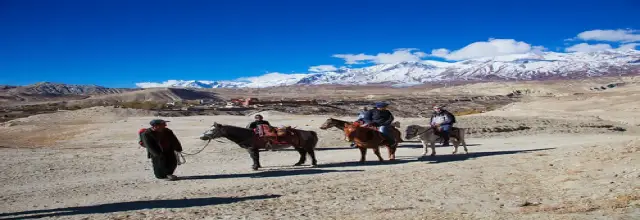
| Upper Mustang | USD 50 per person per day (revised 2026; the old USD 500 / 10-day block was scrapped) | |
| Upper Dolpo | USD 50 per person per day (revised 2026; the old USD 500 / 10-day block was scrapped) | |
| Manaslu Circuit | USD 100 per week + USD 15 per extra day | USD 75 per week + USD 10 per day |
| Nar Phu Valley | USD 100 per week | USD 75 per week |
| Tsum Valley | USD 40 (first 8 days) | USD 30 (first 8 days) |
| Kanchenjunga, Lower Dolpo | USD 20 per person per week | |
The December-to-August discounts make the restricted regions one of trekking's better offseason deals, and several of them sit in the rain shadow where monsoon weather barely reaches; our guide to offseason trekking in Nepal covers which routes suit which months.
New for 2026: Solo Trekkers Can Get Restricted Area Permits
On March 22, 2026, the Department of Immigration removed the long-standing requirement of at least two foreign trekkers per restricted area permit. Solo trekkers can now obtain a RAP for all restricted districts, including Upper Mustang, Manaslu, and Kanchenjunga, provided they book through a registered agency and trek with a licensed guide. The change followed years of lobbying by the Trekking Agencies' Association of Nepal (TAAN) and ends the old practice of solo travellers paying for a second, fictitious group member.
Do You Need a Guide to Trek in Nepal?
Since April 1, 2023, Nepal Tourism Board has required foreign trekkers to hire a licensed guide through a registered agency for treks in national parks and conservation areas. Enforcement is uneven: the Khumbu Pasang Lhamu Rural Municipality has publicly stated that independent trekkers may still enter the Everest region, while restricted areas have always demanded a guide without exception. For safety and for permit logistics, treat a guide as standard; our post on why you should take a guide while travelling in Nepal covers the practical case.
Peak Climbing and Mountaineering Permits
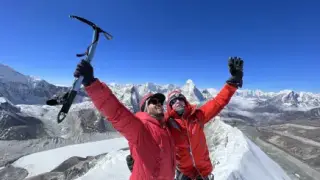
The Nepal Mountaineering Association (NMA) issues climbing permits for 27 designated trekking peaks below roughly 6,600 m, including Island Peak, Mera Peak, and Lobuche East; royalties range from about USD 70 to USD 400 per person depending on the peak group and season. Permits for expedition peaks come from the Department of Tourism, where the headline figure changed recently: Nepal raised the Everest spring-season royalty from USD 11,000 to USD 15,000 per climber effective September 1, 2025, the first increase in a decade. Climbing permits are valid for the season applied for and always require an authorised agency. Current rates are published at nepalmountaineering.org.
Filming and Documentary Permits
Commercial filming inside national parks, conservation areas, or restricted regions needs a separate permit from the Ministry of Communication and Information Technology, applied for through a local coordinator or agency. Applications include a synopsis, full script, shooting schedule, locations, and the name list and passport details of the foreign crew. Fees depend on the equipment and locations involved, and drone filming requires additional clearance from the Civil Aviation Authority of Nepal.
What Documents Should You Carry?
- Passport plus two to four photocopies
- Four to six passport-size photographs
- Nepali rupees in cash for fees paid locally (checkpoint offices rarely take cards)
- Travel insurance covering your maximum trekking altitude (agencies ask for it with restricted area applications)
Trekking Permits FAQ
Do I need a TIMS card for Everest Base Camp?
No. The Everest region replaced TIMS with the Khumbu Pasang Lhamu Rural Municipality fee (NPR 3,000), bought in Lukla or at Monjo. You still need the Sagarmatha National Park permit.
Can I buy permits at the trailhead?
National park fees can be paid at the entry gates, but ACAP bought at a checkpoint instead of in advance may be charged double, and restricted area permits can only be issued in advance through a registered agency. Sort everything in Kathmandu or Pokhara before you start walking.
How many passport photos do I need?
Carry four to six. TIMS, conservation permits, and SIM cards each consume one or two, and photo shops on the trail are rare.
Are trekking permits refundable or transferable?
No. Permits are issued for a named person, route, and dates, and unused days are not refunded, including on restricted area permits.
Do children need permits?
Yes, but children under 10 are generally exempt from national park and conservation entry fees. Restricted area permits apply at full rate regardless of age.
Planning Your Trek?
Our team at Swotah Travel handles all trekking permit logistics, from TIMS cards and conservation area fees to restricted area permits for Upper Mustang and the Manaslu Circuit. Contact us to start planning, or read our complete guide to trekking in Nepal for route ideas.