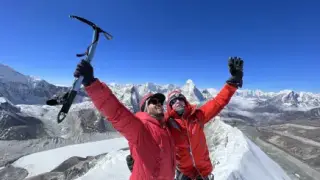
A 16-day trek pairing the Langtang Valley and a Tsergo Ri (4,984 m) summit with the holy lakes of Gosaikunda and a Helambu finish, all by road from Kathmandu.
Duration
16 Days
Max Altitude
4,984 m / 16,352 ft
Difficulty
Moderate
Group Size
Max 7 trekkers
Region
Langtang Valley Treks, Nepal
Best Season
Spring · Autumn
Accommodation
Teahouses throughout
Meals
All meals on trek
Transport
Private jeep, no flights
Dates & Prices
Choose your date
All dates are guaranteed departures — we never cancel for low numbers. Book online or send a quick enquiry.
YearMonth
7 departures · 2026
Sep
24
Sep 24, 2026 — Oct 9, 2026
Guaranteed departure — from 2 trekkers
Available
USD1,355
per person
Oct
10
Oct 10, 2026 — Oct 25, 2026
Guaranteed departure — from 2 trekkers
Available
USD1,355
per person
Oct
26
Oct 26, 2026 — Nov 10, 2026
Guaranteed departure — from 2 trekkers
Available
USD1,355
per person
Nov
11
Nov 11, 2026 — Nov 26, 2026
Guaranteed departure — from 2 trekkers
Available
USD1,355
per person
Nov
20
Nov 20, 2026 — Dec 5, 2026
Guaranteed departure — from 2 trekkers
Filling fast
USD1,295
per person
Can’t find a suitable date? We run private departures on any date with as few as 2 trekkers.
Trip Overview
About the Langtang Valley Trek
The 16-day Langtang Valley Trek is a teahouse route in Langtang National Park, Nepal, that follows the Langtang Khola river corridor from Syabrubesi (1,550 m / 5,085 ft) to Kyanjin Gompa (3,870 m / 12,697 ft), with a dedicated acclimatisation and summit day at Kyanjin Gompa to climb Tsergo Ri (4,984 m / 16,352 ft) or Kyanjin Ri (4,773 m / 15,659 ft), and views up-valley toward Langshisha Kharka and the upper Langtang Glacier (4,084 m). Kathmandu to Syabrubesi covers 117 km by private jeep through the Trishuli River corridor; the trek itself covers approximately 120 km of trail in 11 walking days spread across a 16-day schedule that includes cultural time in Kathmandu at both ends.
Langtang Valley sits 53 km north of Kathmandu and is bounded on the north by the Tibetan border. Langtang Lirung (7,227 m / 23,711 ft) dominates the skyline above Kyanjin Gompa, its south face rising 3,357 m from the valley floor in a single continuous wall. The valley's name comes from the Tamang words 'lang' (yak) and 'tang' (field or trail), reflecting the pastoral culture that has defined it for centuries. The Tamang people, a Tibeto-Burman group whose Buddhist practice carries strong Tibetan influence, have inhabited the valley for at least 400 years. Langtang Village (3,430 m) was buried in an avalanche triggered by the April 25, 2015 earthquake (7.8 Mw); 243 people died, including 175 Tamang villagers and 68 foreign trekkers. The rebuilt village carries a memorial garden near the debris field boundary, and the teahouse owners who serve trekkers today often lost family members in that event.
The 16-day itinerary stages the route more gradually than the 10-day version. An overnight at Bamboo (1,970 m) breaks the first ascent section into two shorter days. Three consecutive nights at Kyanjin Gompa before any summit attempt allow full acclimatisation at 3,870 m. The Langshisha Kharka day on Day 9 extends the route 9 km upstream into upper-valley terrain that fewer than 10 percent of Langtang visitors reach. No restricted-area permit is needed; the route falls entirely within Langtang National Park under the standard park entry permit and TIMS card.
Last updated April 2017
Trip Highlights
Highlights
1
Tsergo Ri summit at 4,984 m / 16,352 ft
2
Langshisha Kharka and the upper Langtang Glacier
3
Langtang Lirung north face from Kyanjin Gompa
4
Langtang Village earthquake memorial
5
Kyanjin Gompa monastery and the 1955 cheese factory
6
Red panda habitat in the lower valley forest
Day by Day
Langtang Valley Trek Itinerary: 16 Days
Tap any day to expand — altitudes, walking times, meals, and overnight details for every stage of the journey.
Arrive at Kathmandu (1,350m): On this day, with the first sight of Nepal, our team will pick you up from the airport, escort you to the hotel where a warm welcome will be waiting for us to devour, and then discuss the trek, its requirements, and precautions briefly.
Sleep at 1,400 m
Tonight’s stay
Hotel
Around Kathmandu: Kathmandu is the place where you witness modernization, tradition, culture, history, and monumental perseverance co-existing. The hospitality and richness of the diversity of Kathmandu are unmatched by other cities. We will try and visit as many UNESCO world heritage sites as possible before the sun goes down.
Sleep at 1,400 mBreakfast
Tonight’s stay
Hotel
Kathmandu to Syabru Besi (1,400m): Our day starts with a breakfast then we prepare and leave the chaos of Kathmandu behind and head to Syabrubesi surrounded by picturesque view all along.
Sleep at 1,550 mBreakfastLunchDinner
Tonight’s stay
Guesthouse
Syabru Besi to Lama Hotel (2,748m): Once we reach the Lama hotel and have breakfast, you will start exploring attractions nearby, like Ghopcha Khola, a dense forest of oaks, maple, etc. The trek further consists of crossing a suspension bridge above Langtang river, with astonishing waterfalls. In case you are a lucky fellow Himalayan white langur monkey, yellow-throated martin, and red panda might also come into sight. We return back to Lama hotel to spend the night.
Sleep at 2,748 mBreakfastLunchDinner
Tonight’s stay
Teahouse
Trek from Lama Hotel to Langtang village (3,500m): The trail of this day’s Langtang valley trek is steeper and ascends up. We start trekking after breakfast. First, Langtang Lirung greets you, which is situated at an altitude of 3140 m. Then, you pass through Ghoda Tabela and Thangshyap and finally arrive at Langtang village, which offers 180 degrees view of glorious mountains. You will spend the night in a teahouse.
Sleep at 3,500 mBreakfastLunchDinner
Tonight’s stay
Teahouse
Trek Langtang village to Kyangjing gompa (3,800m): After breakfast, we trek through Mundu village and Singdunanda's wide green pastures, where Yaks graze. Before arriving at Kyagjing Gompa, you climb through mountain passes. The village has Buddhist Gompa, a cheese factory famous for Yak cheese, and beautiful scenery. The accommodation will be arranged at a teahouse.
Sleep at 3,870 mBreakfastLunchDinner
Tonight’s stay
Teahouse
A day for rest in Kyangjing gompa: The day will be for acclimatization to get our body used to weather conditions, thinner air, and lesser atmospheric pressure. It is good to do light physical activity while acclimatizing, so on this day of the Langtang valley trek, we explore the destinations around. You will get to visit the monastery and cheese factory, and if you want to, then climb the Kyangjing Ri ( viewpoint) at 4350 m and behold a panoramic view of the Himalayas. Then you can march forward to see Mountain ridges and glaciers from the moraine. We return back to the hotel and rest overnight.
Sleep at 3,870 mBreakfastLunchDinner
Tonight’s stay
Teahouse
Trek Kyangjing Gompa to Lama Hotel (2,784m): On this day, we trek to the Lama hotel once again, following the downhill trail. Enjoying the view around and walking for a few hours through an easy path, you will reach the Lama hotel to spend the night at a teahouse.
Sleep at 2,784 mBreakfastLunchDinner
Tonight’s stay
Teahouse
Trek from Lama Hotel to Thulo Syabru (2,130m): Thulo syabru lies between Lama hotel and Gosaikunda ( holy lake), so we first trek to Thulo syabru. Through a few small but colorful villages, you arrive here before sunset and stay overnight at a teahouse.
Sleep at 2,130 mBreakfastLunchDinner
Tonight’s stay
Teahouse
Trek Thulo Syabru to Sing Gompa (3,254m): After breakfast, the Langtang valley trek leads us to Sing gompa, which is an uphill walk through a forest of Rhododendrons, bamboo, oak, and pine trees. Small villages and green hills beautify the trail. By the end of the day, you reach Chandan Bari, Sing Gompa. At night we rest in a Sing Gompa (teahouse).
Sleep at 3,254 mBreakfastLunchDinner
Tonight’s stay
Teahouse
Trek from Sing Gompa to Gosainkunda (4,336m): We visit the most famous attraction of the Langtang valley trek on this day, Gosaikunda lake, which is an uphill trek via Lauribinayek. The trail is also equally eye-pleasing, with a magical view of Mt.Ganesh, Mt. Langtang Lirung, Manaslu range, Him Chuli, and the Tibetan peak’s vista and forest of pine and rhododendron. On this night, you will stay beside the Gosaikunda lake.
Sleep at 4,336 mBreakfastLunchDinner
Tonight’s stay
Teahouse
Gosainkunda to Tharepati (3490m): Today we trek through the highest point of the Gosaikunda section, Surya Kunda lake ( 4500 m ). To reach Tharepati, you pass another beautiful lake called Bhairav Kunda and walk across Juniper, pine, and rhododendron forest. Ascending through mesmerizing views, Tharepati greets us, and you spend the night there in a teahouse.
Sleep at 3,490 mBreakfastLunchDinner
Tonight’s stay
Teahouse
Tharepati to Kutumsang (2,446m): After breakfast, we begin an easy trek to Kutumsang of Helambu district. The path to Kutumsang has green meadows, beautiful fields, and stunning views of Langtang mountain. Through a scenic trail, we arrive at Kutumsang village and stay in a teahouse for the night.
Sleep at 2,446 mBreakfastLunchDinner
Tonight’s stay
Teahouse
Trek from Kutumsang to Chisopani (2,300m) / 2-3 hrs: After breakfast first, the Langtang valley trek takes us to a pass situated at an altitude of (2470 m) a large beautiful Tamang village called Pati Bhanjyang. From this village, we walk for approximately 2 hours to reach Chisapani. You will accommodate at a teahouse.
Sleep at 2,300 mBreakfastLunchDinner
Tonight’s stay
Teahouse
Trek to Sundarijal and drive back to Kathmandu: The day starts with the golden sunrise of Chisapani. From, the Chisapani trek leads us to Sundarijal, then you pass through Shivapuri National Park and walk for about 2 hours to reach Kathmandu. Our team will transfer you to a hotel in Kathmandu for an overnight stay.
Sleep at 1,400 mBreakfast
Tonight’s stay
Hotel
DEPARTURE: On the last day of the Langtang valley trek, our team will look after all the necessary requirements for your departure from hotel check-in to airport check-out.
Breakfast
What’s included
What's included
Every cost on the trail is broken out below — no hidden fees, no surprises at the trailhead.
Included
11 items
Airport transfers;
Standard/Deluxe rooms in Kathmandu on a twin/double sharing basis with breakfast;
Guided sightseeing tour in Kathmandu;
Accommodation during the trek;
Three-course meal during the trek;
Authorized English-speaking guide along with porters (2:1) for the trek;
Round Kathmandu to Syabru transfer by private jeep;
All applicable government tax;
All expenses for team members: meals, accommodation, salary, equipment, insurance, transportation;
Langtang National Park entry permit, TIMS card and all necessary paperwork
Medical kit (carried by your trekking leader).
Not included
6 items
International flights, Nepalese visa fee;
Extra night accommodation in Kathmandu because of early arrival, late departure, or early return from the mountain due to any reason other than the scheduled itinerary;
Lunch and evening meals in Kathmandu;
Travel and rescue insurance;
Personal expenses (phone calls, laundry, bar bills, battery recharge, extra porters, bottle or boiled water, shower, etc.);
Tips for guide(s), porter(s) and driver(s);
How Hard Is the Langtang Valley Trek?
The 16-day Langtang Valley Trek is graded moderate to strenuous. There is no technical climbing, but the summit of Tsergo Ri (4,984 m), the Laurebina La crossing above Gosaikunda and 11 walking days make fitness and acclimatisation important.
▲Moderate to strenuous. 5-7 hr days over 11 walking days, max altitude 4,984 m at Tsergo Ri. No technical skills needed, but good cardio and the built-in acclimatisation help on the summit and pass days.
Overall Rating
4
Moderate
out of 10 · physical effort scale
Max altitude4,984 m
Trekking days11 days
Trip Details
Planning your Langtang Valley Trek
Everything you need to plan the trek, topic by topic. Tap any one to open it.
The 10-day Langtang Valley Trek (Swotah trip 180) covers the same valley trail b…
The 10-day Langtang Valley Trek (Swotah trip 180) covers the same valley trail but compresses the schedule at two points. Syabrubesi to Lama Hotel is done as a single 920 m ascent day on the 10-day schedule; the 16-day version adds an overnight at Bamboo (1,970 m) to split it into two shorter days. The 10-day version then combines Kyanjin Ri and Tsergo Ri into one summit day and does not include Langshisha Kharka.
The 16-day itinerary separates those three high-altitude days: Day 7 for Kyanjin Ri (4,773 m), Day 8 for Tsergo Ri (4,984 m), and Day 9 for Langshisha Kharka (4,084 m). All three start and end at Kyanjin Gompa (3,870 m), so no elevation is carried overnight above the base. This means the guide can assess acclimatisation at Kyanjin Ri before committing to the higher Tsergo Ri summit. Trekkers with mild symptoms on Kyanjin Ri day can take Langshisha Kharka as a lower-altitude alternative the next morning without losing the trip's main exploration entirely.
The descent is staged across three days rather than two. Kyanjin to Lama Hotel is 21 km; the 10-day version covers this in one session. The 16-day version breaks it into Kyanjin to Langtang Village, then Langtang Village to Lama Hotel, then Lama Hotel to Syabrubesi. The Kathmandu cultural day on Day 14 allows rest and sightseeing before departure.
Syabrubesi (1,550 m) is a Tamang market town on the Bhote Kosi river in Rasuwa d…
Syabrubesi (1,550 m) is a Tamang market town on the Bhote Kosi river in Rasuwa district, 117 km from Kathmandu by private jeep. The Langtang National Park gate sits 2 km above the village; permits are checked here and again at the Ghoda Tabela army checkpost (3,030 m). Above the gate the trail enters sub-tropical and temperate forest of rhododendron, oak, and bamboo along the Langtang Khola gorge. Red pandas (Ailurus fulgens) have been documented in this zone between 1,800 m and 3,800 m; early morning walking between Syabrubesi and Lama Hotel produces the highest probability of a sighting on the route.
Bamboo (1,970 m) is a teahouse cluster in a bamboo-forested section of the gorge, the overnight stop added on the 16-day schedule. Lama Hotel (2,470 m) sits at the upper edge of the dense forest at a river bend where the valley begins to widen. The stage from Lama Hotel to Langtang Village (3,430 m) gains 960 m through thinning forest and open pasture past Ghoda Tabela, crossing the Langtang Khola on suspension bridges. Langtang Village was rebuilt between 2016 and 2018 following the 2015 earthquake; the memorial garden is on the debris field side of the settlement.
Langtang Village to Kyanjin Gompa (3,870 m) is a 6 km walk on a flat valley floor through yak pastures and mani walls, reaching the monastery in 3 to 4 hours. Langtang Lirung (7,227 m) is directly visible to the north above the glacier terminal moraine. The Kyanjin Gompa monastery dates to the 18th century and is in daily active use. The adjacent cheese factory, established in 1955 with Swiss development assistance, sells hard yak-milk cheese by the block at the factory door.
Tsergo Ri, also spelled Tserko Ri, stands at 4,984 m / 16,352 ft on the east sid…
Tsergo Ri, also spelled Tserko Ri, stands at 4,984 m / 16,352 ft on the east side of the Kyanjin Gompa basin. The ascent begins from Kyanjin (3,870 m) and gains 1,114 m on a route that is steep but non-technical: grass slopes to approximately 4,400 m, then scree and loose rock to the broad summit ridge. A fit, acclimatised trekker reaches the top in 4 to 5 hours; descent takes 2.5 to 3 hours. Total time from Kyanjin including rests is typically 7 to 8 hours.
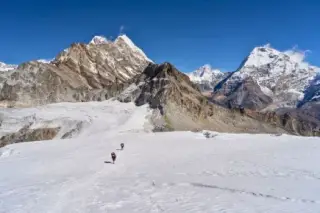
The summit panorama covers the Langtang Himal in full: Langtang Lirung (7,227 m) fills the north horizon; Dorje Lakpa (6,966 m) stands to the east above the Jugal Himal border; Shishapangma (8,027 m), the only 8,000 m peak lying entirely in Tibet, is visible on clear days 65 km to the north-west. The Langtang Glacier is fully visible below Kyanjin, and the Langshisha Glacier further east can be traced up the valley from the summit ridge.
Departure from Kyanjin for Tsergo Ri is 4:30 to 5:00 am, before afternoon wind increases above 4,500 m. Required kit: headlamp, warm layers, trekking poles, packed lunch, and 2 litres of water. Swotah guides carry a pulse oximeter and check SpO2 before departure; a reading below 80 percent at rest is grounds for postponing. On the 16-day itinerary this is Day 8, after two nights already at Kyanjin and one Kyanjin Ri day confirming acclimatisation.
Langshisha Kharka (4,084 m) is a high seasonal grazing pasture 9 km east of Kyan…
Langshisha Kharka (4,084 m) is a high seasonal grazing pasture 9 km east of Kyanjin Gompa, reached by following the Langtang Khola upstream along the north edge of the Langtang Glacier. 'Kharka' is the Nepali word for a high seasonal yak pasture; this one sits below the west face of Langshisha Ri (5,693 m / 18,678 ft) and is used by herder families from July to October. Most Langtang trekkers turn back at Kyanjin; the Langshisha day extends the route into terrain that sees a fraction of the visitor numbers at the valley head.
The trail from Kyanjin to Langshisha Kharka is mostly flat, crossing glacial meltwater streams on log bridges and passing the terminal and lateral moraines of the Langtang Glacier. The altitude gain is 214 m over 9 km. Eastward views of the Jugal Himal, including Dorje Lakpa (6,966 m), are the clearest visible from ground level on the entire route. The round trip from Kyanjin Gompa takes 5 to 6 hours.
Langshisha Kharka falls on Day 9 of the itinerary, the day after Tsergo Ri. The flat valley walk acts as active recovery before the three-day descent begins. No overnight accommodation exists at Langshisha Kharka; both the night before and the night after are at Kyanjin Gompa (3,870 m).
Two permits are required for the 16-day Langtang Valley Trek. The Langtang Natio…
Two permits are required for the 16-day Langtang Valley Trek. The Langtang National Park entry permit costs NPR 3,000 (approximately USD 23) per person for non-SAARC nationals. Langtang National Park was established in 1976 and covers 1,710 km2 of Langtang, Ganesh, and Jugal Himalayan ranges. The park gate above Syabrubesi and the Ghoda Tabela army checkpost (3,030 m) both verify the permit on trail. The TIMS card (Green TIMS for non-restricted routes) costs NPR 2,000 per person when trekking with a registered agency. Swotah processes both in Kathmandu before departure; both are included in the trip cost.
Documents required for permit processing: passport with 6-month validity, two passport-size photographs, Nepal visa copy, and travel insurance certificate. Total permit cost is approximately NPR 5,000 (USD 38) per person. The Langtang Valley route, including the Langshisha Kharka extension, is a standard non-restricted area. No additional special permit is needed beyond the pair above. Trekkers adding the Ganja La Pass crossing (Swotah trip 103) require a separate permit not covered here.
Nepal entry visa: USD 30 for 15 days or USD 50 for 30 days, available on arrival at Tribhuvan International Airport. Swotah does not arrange visas but covers the process in pre-departure briefing materials.
Acute mountain sickness (AMS) occurs when the body cannot acclimatise fast enoug…
Acute mountain sickness (AMS) occurs when the body cannot acclimatise fast enough to reduced atmospheric oxygen. The 16-day Langtang itinerary includes three design features that reduce AMS risk compared to faster schedules. First, the Bamboo (1,970 m) overnight limits Day 3 altitude gain to 420 m, keeping the first two acclimatisation days below 2,500 m. Second, three consecutive nights at Kyanjin Gompa (3,870 m) before any summit attempt allow the body to adapt; International Society for Mountain Medicine guidelines recommend a minimum of two nights before ascending to a new altitude tier. Third, the summit days return to 3,870 m each night, following 'climb high, sleep low' throughout the high-altitude section.
Common early AMS symptoms: persistent headache, nausea, fatigue, disturbed sleep. If any worsen over 12 hours at the same altitude, descend 500 m immediately. Swotah guides carry pulse oximeters, Acetazolamide (Diamox), and Dexamethasone. SpO2 readings are checked each morning above 3,000 m and before summit departures. Trekkers who choose to take Diamox prophylactically should consult their physician before departure; the standard preventive dose is 125 mg twice daily starting 24 hours before ascent.
Travel insurance covering helicopter evacuation to 5,000 m is required. A helicopter from Kyanjin Gompa to Kathmandu takes approximately 25 to 30 minutes. The Kyanjin landing pad operates year-round. Confirm that your policy explicitly covers helicopter evacuation at altitude; general travel policies often exclude this even when they cover emergency medical treatment.
The Tamang are one of Nepal's largest indigenous ethnic groups and the primary c…
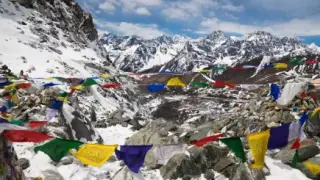
The Tamang are one of Nepal's largest indigenous ethnic groups and the primary community of the Langtang Valley and Rasuwa district. Tamang society follows Tibetan Buddhism mixed with local animist traditions; prayer flags, mani walls (stone slabs carved with 'om mani padme hum'), chortens, and active gompas appear from Syabrubesi onward. The Tamang language belongs to the Tibeto-Burman family; most teahouse owners in the valley speak Tamang, Nepali, and basic English. The Kyanjin Gompa monastery, dating to the 18th century, is maintained by a resident monk and receives morning puja attendance from the local community throughout the year.
The April 25, 2015 earthquake (7.8 Mw) triggered a rockfall and ice avalanche from Langtang Lirung's south face that buried the upper half of Langtang Village within minutes. Of the 243 people killed, 175 were Tamang residents and 68 were foreign trekkers. The rebuilt settlement was completed between 2016 and 2018; a memorial garden at the debris field boundary names those who died. Many teahouse owners in Langtang Village and Kyanjin Gompa lost immediate family members; your guide provides context when the group passes through.
Cultural courtesies: remove shoes before entering monasteries and homes; walk clockwise around mani walls and stupas; ask before photographing religious items or ceremonies. Tipping guides and porters is standard: USD 10 to 15 per day for the guide, USD 5 to 8 per day for the porter, paid at the end of the trek in Kathmandu.
Every overnight stop on the 16-day route has teahouse accommodation. All stops e…
Every overnight stop on the 16-day route has teahouse accommodation. All stops except Bamboo have been rebuilt since 2015 and standards are solid. Room quality ranges from basic plywood-partition twin rooms with shared squat toilet at Bamboo to stone-wall rooms with attached Western toilet at upper-end Kyanjin Gompa lodges. Private rooms with attached bathrooms are available at Syabrubesi and some Kyanjin teahouses for a supplement.
Notes by stop: Bamboo (1,970 m) has 4 to 5 teahouses with basic twin rooms and no reliable electricity for device charging. Lama Hotel (2,470 m) has a wider selection with solar charging and warm common rooms; hot showers cost NPR 150 to 200. Langtang Village (3,430 m) has post-earthquake lodges with clean rooms. Kyanjin Gompa (3,870 m) has the most choice: electric blankets, solar water heating, and the widest menu on the route; hot showers cost NPR 200 to 300. A sleeping bag rated to -10 degrees Celsius is required above Lama Hotel; -15 degrees is recommended from October through April at Kyanjin.
Teahouse menus follow the standard Nepal trekker format throughout the route. Da…
Teahouse menus follow the standard Nepal trekker format throughout the route. Dal bhat (lentil soup with rice and vegetable curry, free refills) is the highest-value item at every stop; it costs NPR 400 to 500 at Lama Hotel and NPR 700 to 900 at Kyanjin Gompa. All menus include Tibetan bread, momos, fried rice, noodle soup, pasta, omelette sets, and porridge. Kyanjin Gompa adds yak-milk products from the 1955 cheese factory: hard cheese, yak butter tea, and curd. Avoid meat above 3,000 m; protein freshness at altitude is unreliable and digestion adds physiological load at reduced oxygen levels.
Tap water is not safe on any section of the route. Boiled water costs NPR 50 to 80 per litre at lower stops and NPR 100 to 150 at Kyanjin. The preferred personal option is purification tablets (Aquatabs or Micropur) or a SteriPen UV purifier. Target 3 to 4 litres of fluid daily above 3,000 m. Single-use plastic bottles cost NPR 100 to 200 per litre above Lama Hotel.
Nepal Telecom (NTC) provides the most consistent signal. Ncell 4G covers Syabrubesi and the lower valley to Lama Hotel; NTC 3G is available at Kyanjin Gompa, slow and intermittent. WiFi is available at Lama Hotel and Kyanjin teahouses for NPR 200 to 500 per session. Device charging costs NPR 200 to 300 at solar lodges. Bring a 20,000 mAh power bank for 11 trek days. Connectivity is limited from Day 5 through Day 12.
What to pack
What to pack
The full kit list. Anything we loan (sleeping bag, down jacket) is called out — bring everything else.
✓Moisture-wicking base layer top (merino or synthetic, 2 recommended)
✓Thermal base layer top and bottoms (for Kyanjin nights, -10 to -15 degrees Celsius)
✓Fleece mid-layer jacket (200-weight)
✓Lightweight down jacket (600-fill or higher; essential above 3,000 m)
✓Waterproof and windproof hardshell jacket
✓Waterproof hardshell trousers
✓Trekking trousers (2 pairs)
✓Warm hat covering ears
✓Sun hat or cap for lower valley sections
✓Buff or neck gaiter
✓Lightweight inner gloves
✓Waterproof outer gloves (for Tsergo Ri summit at dawn)
Frequently Asked
Questions & Answers
Everything trekkers ask before booking. Don't see yours? Tap Enquire — we usually reply within a few hours.
Yes, our representative will be there to greet you at the airport. Upon arrival, you will be transferred to your hotel by a private car/jeep.
Yes, there is going to be a small orientation/briefing program before we embark on our adventure by the tour manager, leader/guide.
For nights in cities, we use standard/superior standard/deluxe rooms whereas, during the trek we use lodges/tea houses/guesthouses/home stay for our clients, and whatever is available and accessible. We also arrange sleeping bags for our clients, on their request.
We believe in operating small intimate group to provide personal attention and services to our guests. Small groups can enjoy the trek hassle free and enjoy the customized trip according to their will so we try to keep group as small as group of 14 but it can be increased with the special request of the clients.
Yes, solo travellers are welcome. As of 2023 a licensed guide is mandatory for trekking in Nepal's national parks, and Langtang National Park is no exception, so you trek with a Swotah guide rather than entirely alone, but you do not need your own group. Solo trekkers join a scheduled departure or trek privately with their own guide and porter.
This trek is popular among the domestic and international tourist for its beautiful mountains and religious values. Gosaikunda Lake is a sacred lake where thousands of people visit it as a pilgrimage. This trekking route lies to near proximity from the bustling city of Kathmandu but offers scenic views of mountains, exquisite lakes and vivid vegetation and animals.
Yes, Nepal can boat as one of the safest country in South Asia for women. You will find people very friendly and respectful towards foreigners especially towards women. As this trek is not so hard to finish, it is mostly done. You won’t be having any difficulty while doing this trek.
We make sure to take security measures during trek to make your trip delightful. We hire experienced and license holding guides to safeguard your life in mountains. We suggest you to follow the guide’s instruction carefully and take responsibility for personal belongings. Always keep your valued belongings near you and lock the door from inside during the night.
Langtang valley is very popular trekking region for religious and adventure purpose. Hence, this region provides few western meals like Pasta, noodles, bread, soup etc. Dal Bhat (Rice, Lentils and Vegetables) are great way to gain energy for the strenuous trek.
Do not drink untreated tap or stream water on the trek. Boiled water is sold at teahouses, and purification tablets, a filter or a UV pen all make water safe to drink; carry a reusable bottle to cut plastic waste. Aim for 3 to 4 litres a day, which also helps prevent altitude sickness.
We use private car for sightseeing inside the Kathmandu Valley and transfer to Syabru Besi on car, van and deluxe minibus with A/C depending on the size of the group. We also drop and pick up from the starting and ending point of trek on private car or jeep.
The two best seasons are spring (March to May) and autumn (September to November). Autumn has the clearest mountain views; spring adds the rhododendron bloom in the lower forest. The June to August monsoon brings rain, leeches and landslide risk on the Syabrubesi road, and winter (December to February) is cold with snow high up.
Yes. Your guide is trained to spot altitude sickness early and to act fast. Travel insurance that covers high-altitude trekking to at least 5,000 m and helicopter evacuation is required; in a serious case the guide arranges a helicopter rescue and transfer to hospital in Kathmandu. Carry your policy number and an emergency contact.
Trekking is a tiresome activity that requires a lot of physical movement so pack your active wears and trekking pants for at lower altitudes. Weather at high altitude is unpredictable so carry a light weight waterproof jacket along with thick down jacket, pant and thermal inner wear to escape severe cold. Needless to say that, good shoes are very important for trekking in rough and snowy terrain, so invest on good quality shoes or rent it from us in a minimum price. As you are trekking in remote village try to wear modest clothes to quickly get up with the local people without hesitation.
We customize the trip according to your preference but if you need to change plan during the trek consult the guide.
We contact the lodge/guesthouse owner for reservation of the room before trekking on a particular day. On other days, porters reach the destination on advance and book the rooms for you. But there are always going to be exceptions but even in those cases, we may have to be flexible about very basic sleeping arrangements. We always try to make sure that we have everything well arranged.
All our Guides are trekking experts holding license from Nepal Tourism Board, Nepal Government. They are the most valuable assets of the company. Guides know the trekking route like the back of their hand and use their expertise in ensuring your safety in the mountains.
While trekking in higher lands, you need to pay for charging the electronics upon request to the owner. The best idea always is to bring your own power bank with you. It is easier and cheaper.
While trekking in Langtang Valley, you can make local and international calls from telephone provided by the guesthouse owner after paying the price directly.
If you need extra day to complete the trekking, you will need to inform the guide in advance and the guide will let the company know. Adding a day to trekking can result in many changes in other arrangements such as transportation, guide’s schedule, flight details, hotel bookings and all, so we really do not recommend this to our clients unless there is an emergency case. But it is true that those changes could be made but it will cost extra. The best way to do it is to inform the agent company about it.
No vaccinations are mandatory for Nepal, but a travel clinic usually recommends being up to date on hepatitis A and B, typhoid, tetanus, diphtheria and polio. Malaria is not a risk at trekking altitude (it only concerns the lowland Terai). See a travel health professional four to six weeks before you fly.
Trekking days run about 5 to 7 hours, with the longest day being the climb toward Kyanjin Gompa and the summit day on Tsergo Ri (4,984 m). The exact time depends on your pace, rest stops and conditions, and your guide sets a steady acclimatisation pace.
To confirm your booking, a deposit of 15% of total trip amount is required if you are booking at least a year in advance before trip departure date. If booking is made between 100-364 days before the trip departure, you'll need to pay 20% to confirm the trip. If payment is made between 99-60 days, 25% of the total trip amount will need to be paid and if booked between 59-30 days, 50% of the total trip amount needs to be paid and finally, if you are booking 29 days prior to trip departure, then 100% payment should be made. The payments can be easily made by the bank transfer. The due balance is payable on arrival in Kathmandu with cash (preferably USD/EURO) or card on POS/credit card machine. Please note that non refundable fee is 10% or $200 whichever is greater.
You cannot use the credit card during the trek. You have to withdraw the money before you start the trek. You can use credit card only in Kathmandu and Pokhara.
You carry a light daypack with water, snacks, documents and a layer, and a porter carries the rest. One porter serves two trekkers and carries up to 20-25 kg, and Swotah provides a duffel for the load. Keep valuables, camera and medication in your own daypack.
The 16-day itinerary adds an overnight at Bamboo (1,970 m) to break the first ascent day into two shorter stages, separates Kyanjin Ri and Tsergo Ri into two distinct summit days, and adds a full day at Langshisha Kharka (4,084 m) in the upper valley beyond Kyanjin Gompa. It also stages the descent as three shorter days instead of two, and includes a Kathmandu cultural day at the end. The extra days produce a more gradual acclimatisation profile, a dedicated high summit on Tsergo Ri (4,984 m), and access to upper-valley terrain the 10-day schedule does not reach.
The highest point is the summit of Tsergo Ri at 4,984 m / 16,352 ft, reached on Day 8. The highest overnight altitude is Kyanjin Gompa at 3,870 m, where trekkers stay for three consecutive nights (Days 6, 7, and 8 overnight). Langshisha Kharka (4,084 m) on Day 9 is a day hike returning to Kyanjin Gompa; it does not add a new overnight altitude above the base.
No. Tsergo Ri (4,984 m) involves no technical climbing. The ascent follows steep grass slopes to approximately 4,400 m, then scree and loose rock to a broad summit ridge. Standard trekking poles and waterproof hiking boots are sufficient from April through October. In winter and late November, light microspikes may be needed on the upper section; an ice axe is not required in normal conditions. The altitude is the primary challenge, not the terrain.
Acute mountain sickness (AMS) is a real concern above 3,000 m on any high-altitude trek. The 16-day itinerary's Bamboo intermediate stop, three pre-summit nights at Kyanjin Gompa, and climb-high-sleep-low summit days reduce AMS risk compared to faster schedules, but individual responses to altitude vary regardless of fitness. Swotah guides carry pulse oximeters and check SpO2 each morning above 3,000 m. Trekkers with worsening headache, vomiting, or loss of coordination must descend immediately. The standard safe rule: if symptoms worsen over 12 hours at the same altitude, descend 500 m.
Two permits are required: the Langtang National Park entry permit (NPR 3,000, approximately USD 23) and the TIMS card (NPR 2,000 for registered agency trekkers). Both are included in the Swotah trip cost and are arranged in Kathmandu before departure. A Nepal tourist visa (USD 30 for 15 days or USD 50 for 30 days) is available on arrival at Kathmandu airport and is not included in the Swotah price.
Autumn (September to November) and spring (March to May) are the two main trekking windows. October is the most reliable month: post-monsoon clarity, stable weather above 4,000 m, and Tsergo Ri accessible without significant snow. Spring offers rhododendron bloom in the lower forest and clear mornings, with afternoon cloud building from mid-April. The monsoon (June to August) brings heavy rain and poor visibility; winter (December to February) is cold and quiet with snow above 3,500 m from January.
All accommodation is in teahouses throughout the trek. Standards range from basic twin rooms with shared facilities at Bamboo (the most rustic stop) to rooms with attached bathrooms and electric blankets at upper-end Kyanjin Gompa lodges. Hot showers are available at Syabrubesi, Lama Hotel, and Kyanjin Gompa for NPR 150 to 300 extra. Sleeping bags are required above Lama Hotel; -10 degrees Celsius minimum, -15 degrees recommended for autumn nights at Kyanjin.
Langshisha Kharka (4,084 m) is a high seasonal yak pasture 9 km east of Kyanjin Gompa in the upper Langtang Valley, below Langshisha Ri (5,693 m). It is included because the 16-day itinerary's three nights at Kyanjin provide the rest day required to reach it and return without adding a new overnight altitude. The route follows the Langtang Glacier edge with clear views of the Jugal Himal, including Dorje Lakpa (6,966 m). Fewer than 10 percent of Langtang trekkers visit Langshisha Kharka.
The trek is graded moderate to strenuous. The most demanding hiking stage is Lama Hotel to Langtang Village (14 km, 960 m gain, 5 to 6 hours). The Tsergo Ri summit day (4 to 5 hours ascent, 1,114 m gain, 7 to 8 hours total) is the most challenging due to altitude. The 16-day schedule's additional staging reduces the impact of hard days compared to the 10-day version. Recommended preparation: 4 to 6 weeks of regular aerobic training with hill walking and a weighted day pack. No prior high-altitude trekking experience is required.
Nepal Telecom (NTC) provides the most consistent coverage. Ncell covers the lower valley to Lama Hotel; NTC 3G signal is available at Kyanjin Gompa but is slow and intermittent. WiFi is offered by most lodges at Lama Hotel and Kyanjin Gompa for NPR 200 to 500 per session. Device charging costs NPR 200 to 300 at solar-powered lodges. Bring a 20,000 mAh power bank for the 11 trek days; connectivity is limited from Day 5 through Day 12.
Yes. The Langtang Valley is one of Nepal's most established trekking routes, with a consistent flow of trekkers in peak seasons and well-run family teahouses throughout. Swotah departures include a licensed guide who accompanies the group at all times. Teahouse communities are accustomed to international trekkers of all backgrounds. Standard precautions apply: keep your guide informed, lock teahouse room doors, and use the Swotah emergency contact when needed. Female guides are available on request.
Swotah guides assess acclimatisation daily using pulse oximetry and symptom observation. If a trekker cannot safely attempt Tsergo Ri on Day 8, Langshisha Kharka (4,084 m, a lower and flatter day) remains a valid alternative on Day 9. If altitude sickness requires descent, the guide accompanies the affected trekker to a safer elevation while the rest of the group continues or waits at Kyanjin. Helicopter evacuation from the Kyanjin landing pad is available when medically indicated; this is covered by the required travel insurance.
Why Travel with Swotah
Why Book the Langtang Valley Trek with Swotah
Most Nepal operators look the same from the outside. Here's what actually makes the difference.
Born in Nepal
100% locally owned since 2016. Trek profits stay with the mountain families and village schools along your route.
Guaranteed Departures
Every date on our calendar runs — no minimum group size. You never pay to be cancelled.
Certified Guides
Government-licensed, WFR-certified, English-speaking. Most were born within two valleys of the trail.
Small Groups
Small groups, never more than 8 trekkers. You get a real experience, not a convoy.
Gear Included
Sleeping bag and down jacket loaned at no extra charge — both rated to –20°C.
Flexible Payment
Deposit from 10% to confirm, balance before departure or in cash on arrival. Reschedule up to 30 days prior.
24/7 Support
Kathmandu office and dedicated WhatsApp emergency line. We answer at 2am if needed.
Hall of Fame
TripAdvisor Travelers' Choice 2023, 2024 and 2025. Hundreds of verified five-star reviews.
Get a free personalised travel brief for the Langtang Valley Trek.
Tell us your travel dates and group size. Our team in Kathmandu will put together a tailored itinerary, honest costs, and practical tips — completely free, no commitment.