


15 Amazing Facts About Nepal You Should Know
Nepal=Thamel? Is this what you think? Well, then, maybe you misunderstand this tiny country. It is compact yet rich in every aspect, and below are some facts which will startle you, and who knows, it will stir a new desire to venture and accomplish what you missed earlier.
1. Amazon Of Asia
The term Amazon is suited to describing the Unique and incredible biodiversity extensive in this minuscule country. In spite of occupying a mere surface area of 0.3 percent of the total land area in Asia, Nepal proudly boasts over 900 variety of rare and colorful species of birds (around 9 % of the total bird species in the world), 650 types of butterflies (around 4.2 % of all butterflies in the world), 5980 types of flowering plants (2.4 percent of similar plants worldwide), out of which, at least 250 species of flowering plants are endemic or unique to Nepal alone.
Apart from the one-horned rhino, snow leopard, and swamp deer prevalent in this Amazonian landscape, there are more than 360 types of orchids in Nepal that give company to 6% of the world’s rhododendron species. The natural breeding ground of the long-snouted Gharial crocodile is located in this wonderland alongside some of the largest moths and wild honeybees that are known to human civilization. The blue poppy plant, again only unique to Nepal, grows here at a revolutionary height of 5400 meters. The royal Bengal tiger gets an awe-inspiring status here and the Nepalese Cows are treated as sacred.
2. Living Cultural Museum of the World
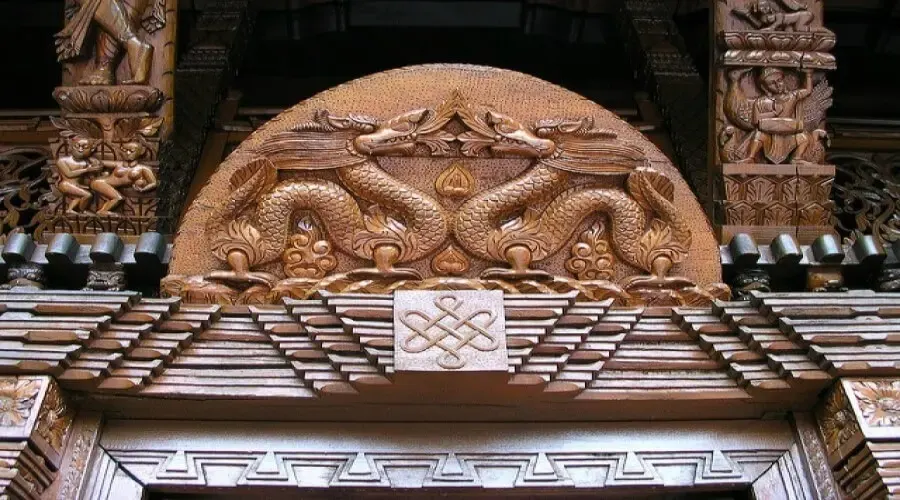
Nepal is a cultural museum showcasing a wide variety of cultures, traditions, and a historically relevant plethora of things. Out of numerous cultural heritages, ten of them are listed as World Heritage Sites by UNESCO and Kathmandu valley itself accounts for seven of these sites. These landmarks cover a radius of just over 15 kilometers but still serve to make Kathmandu the only city in the world with such richness and diversity. It is a multi-ethnic, multi-lingual, and multi-religious country that boasts unity in diversity.
Nepal's 2021 census recorded 142 caste and ethnic groups speaking 124 languages and dialects, residing in harmony and peace. Hinduism is practiced by the majority of people, followed by Buddhism, Islam, Kiratism, Christianity, and Animism, which contribute to the Secular nature of this beautiful land.
3. Land of Living Goddess
The existence of the only living Goddess, ‘Kumari’, is held in high in this compact yet extensive mountainous country. The name "Kumari" is derived from the Sanskrit word Kaumarya i.e. Princess. The historical significance of worshipping a girl as a goddess is a part of the tradition that dates back to the 17th century binding two of the world's oldest religions, Hinduism and Buddhism.
4. From 59 m to 8,848.86 m in One Country
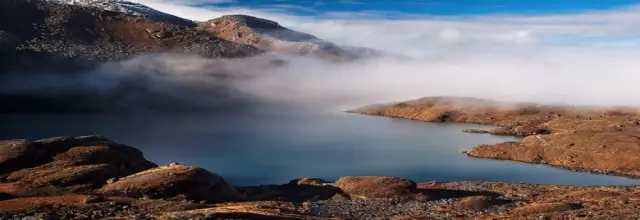
No other country packs Nepal's altitudinal range: from Kechana Kalan in the Terai at 59 m above sea level to the summit of Everest at 8,848.86 m, all within an average width of less than 200 km. Along the way sit Tilicho Lake (4,919 m), one of the highest lakes on Earth, the Kali Gandaki Gorge, one of the world's deepest, and in Chitwan some of the tallest grasslands anywhere.
5. Was Never Colonized
Nepal is such a country in the world, which has never been under any foreign invasion. That’s the reason why Nepal doesn't celebrate Independence Day. It is also the oldest country in South Asia.
6. Different New Years
Nepal celebrates 9 different New Year's in a single year. Nepal's many communities each keep their own culture, tradition, language, and calendar. Nepal is a live example of Unity in Diversity where people of diverse cast and cultures reside and practice their own New Year. The passion and excitement of the event are constant. Nevertheless, Baisakh 1st which falls in Mid-April is considered as National New Year, the country’s official calendar year begins from this day.
If you find yourself in Kathmandu valley for the New Year, the best place to visit in Bhaktapur, where thousands of people come to celebrate Bisket Jatra for 8 nights and 9 days. During this lengthy festival, there is chariot pulling and a dramatic tongue-piercing ceremony that is said to bring good fortune to the entire village. Simply take a walk to the streets of Kathmandu or other major cities to see the parade. People wear traditional clothes and play their cultural instruments and music as they march, and decorative arches and banners are seen over the streets and markets.
7. Unique National Flag
The national flag of Nepal is the world’s only non-quadrilateral national flag which shows the combination of two red pennons with the large blue border around the unique shape of two overlapping right triangles. Similarly, the smaller upper triangle has a stylized white moon, and the larger lower triangle displays the white sun shining. The basic design of this flag is over 2000 years old.
8. LGBT rights are fundamental rights
Lesbian, Gay, Bisexual, and Transgender rights in Nepal are among the most progressive in Asia. The Nepalese Constitution recognizes LGBT rights as fundamental rights. Nepal's current LGBT laws are some of the most open in the world and expand upon a multitude of rights for LGBT Nepalese. The Nepalese Government, following the monarchy that ended in 2007, legalized homosexuality across the country in 2007, along with the introduction of several new laws. These new laws explicitly include protections on the basis of sexual orientation.
9. Cannabis: A Curious Part of Nepal's History
Cannabis, known locally as ganja, has a long and complex history in Nepal. Until 1976 it was entirely legal, and cannabis shops were openly found throughout Kathmandu, drawing a generation of Western travellers in the 1960s and early 1970s. The government banned it under international pressure, but wild cannabis still grows abundantly across rural hillsides and mountainsides throughout the country, particularly at higher altitudes where the climate and soil produce exceptionally high-quality plants.
Nepal is considered one of the world's top producers of high-quality cannabis by volume. There are ongoing discussions about legalising and regulating it as a commercial export crop to benefit struggling farming communities in remote mountain regions, a conversation that reflects Nepal's broader effort to develop its agricultural economy while navigating international drug policy.
10. Nepal's Unusual Working Week
Saturday, not Sunday, has been Nepal's day of rest for most of its modern history, making it one of the few countries where Sunday was a normal working day. That changed again on April 6, 2026, when the government reintroduced a two-day Saturday-Sunday weekend for government offices, schools, and banks, with office hours revised to 9 am to 5 pm; the stated reason was easing pressure on fuel supplies. Nepal has reversed weekend experiments before (a 2022 two-day weekend lasted barely two months), so check the current schedule when you plan errands like visa extensions.
For travellers the practical effect is simple: expect government offices and banks shut on Saturday and Sunday, while restaurants, shops, tour operators, and trekking companies work every day of the week. Nepal's tourism industry does not pause for weekends.
11. Yeti-The Abominable Snowman
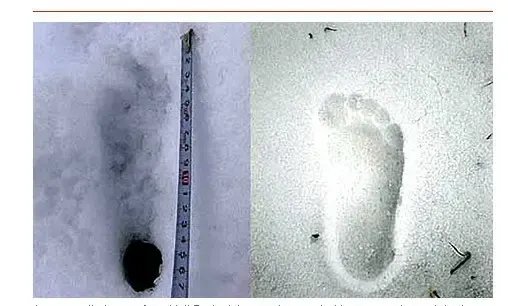
People have said to have witnessed the existence of the famed mountain Yeti, around the Khumbu region (at foothills of the Everest) and described it as a gigantic creature similar to a large gorilla, having a thick, hairy body and four fingers. Sherpa lore holds that seeing a Yeti brings misfortune, which conveniently explains the shortage of reliable witnesses. Expeditions from the 1950s onward, including one sponsored by Sir Edmund Hillary, searched for evidence and found only ambiguous footprints and relics, so the Yeti remains a mystery and one of the Himalaya's most durable legends.
12. A Time Zone of Its Own: GMT+5:45
Nepal Standard Time runs at GMT+5:45, one of only two quarter-hour time zones in regular use anywhere in the world (the other belongs to New Zealand's Chatham Islands). The offset keeps Nepali clocks 15 minutes ahead of India, a small but deliberate marker of independence, and a reliable source of missed first appointments for new arrivals.
13. The Birthplace of the Buddha
Siddhartha Gautama, the Buddha, was born in Lumbini in Nepal's western Terai, a fact recorded on the Ashoka Pillar erected at the site in 249 BCE. Lumbini is a UNESCO World Heritage Site today, with the Maya Devi Temple marking the birth spot and an international monastic zone where countries from Thailand to Germany have built monasteries in their own styles.
14. The Calendar Runs 57 Years Ahead
Nepal's official calendar is the Bikram Sambat, which runs roughly 56 to 57 years ahead of the Gregorian year, so 2026 CE falls across 2082 and 2083 BS. The new year begins in mid-April, dates shift against the Western calendar every year, and official documents, newspapers, and holidays all follow the Nepali system, which is why every Nepali keeps two dates in their head.
15. Eight of the World's Fourteen 8,000-Meter Peaks
Of the fourteen mountains on Earth that rise above 8,000 m, eight stand wholly or partly in Nepal: Everest, Kanchenjunga, Lhotse, Makalu, Cho Oyu, Dhaulagiri, Manaslu, and Annapurna. No other country comes close, which is why Nepal has been the centre of world mountaineering since the first ascent of Annapurna in 1950, and why trekkers can stand beneath multiple 8,000-metre giants in a single two-week walk.
Inspired to explore Nepal for yourself? Start with one of its most iconic routes: the Everest Base Camp Trek, the Annapurna Circuit Trek, or the Langtang Valley Trek. Before you go, explore the top attractions of Kathmandu and read our guide on 18 compelling reasons to visit Nepal in 2026.