
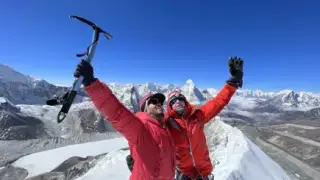
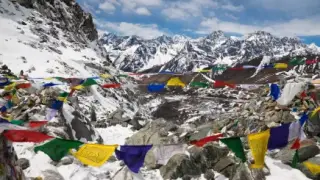


Yes. Nepal works well for families, and it has been peaceful since the 2006 peace agreement. The risks parents should plan for are long road journeys, stomach bugs, temple monkeys and altitude, and a guide and a sensible itinerary handle all four. Children of any age can enjoy Kathmandu, Pokhara, Lumbini and the Chitwan and Bardiya jungles, which all sit below about 1,400 m. School-age children usually manage a short trek such as Poon Hill. Keep preschool children sleeping below about 2,500 m, as the UIAA medical commission advises, and save high treks like Everest Base Camp for fit teenagers.
- Is it safe?Yes for most families. Roads, food hygiene and altitude are the real risks
- Best seasonsOctober to November, and March to April
- Under 5sCity, lake and jungle trips. Sleep below about 2,500 m
- Ages 6 to 12Short treks such as Poon Hill (highest night 2,860 m)
- TeenagersMost teahouse treks, with proper acclimatisation days
- PermitsChildren under 10 don’t need a TIMS card
- SwotahNo fixed family package. Safaris, tours and easy treks can be run as a private trip
Overall, Nepal is a safe travel destination in Asia. Tours in Nepal cover everything from trekking to luxury tours. But you probably knew that right? You want to know whether there are any family tours in Nepal. Tours specifically or which can be easily adapted for children. The short answer is YES! Nepal is a family destination. And yes, it is safe to travel to Nepal with kids!
This guide covers what to expect: which ages suit which trips, how long the journeys take, and the safety questions parents ask us most. For a full list of family-friendly trips with altitudes and prices, see our guide to family trips to Nepal.
Trekking with Kids
Let’s start with what Nepal is most famous for: trekking!
Trekking doesn’t have to mean tramping 12 hours a day over snow and ice and sleeping in a drafty teahouse. There are fantastic treks through gorgeous countryside with comfortable lodges along the way.
The Ghorepani Poon Hill trek comes immediately to mind! Its highest night is Ghorepani at 2,860 m, and the sunrise viewpoint is 3,210 m. Or head up the Kali Gandaki valley to the villages of Marpha, Jomsom, Kagbeni and Muktinath. You can reach these by flight, private jeep or bus. I can also highly recommend the Millennium Homestay Trek, which is interesting, close to Pokhara and stays in village homes. Its highest point is only 1,709 m, and it reflects Swotah Travel’s commitment to sustainable, community-based trips. And plenty of local kids for your kids to interact with while you relax in the late afternoons.
There are easy one, two or three-day treks around the Kathmandu Valley, such as Nagarkot, Balthali and Dhulikhel. And why not spend more time in these places too? Nagarkot and Dhulikhel have deluxe accommodations with spas and bars, which mum and dad will totally enjoy.
I should also point out that the treks and hikes highlighted for younger children are also extremely good for seniors. Bring your grandparents!
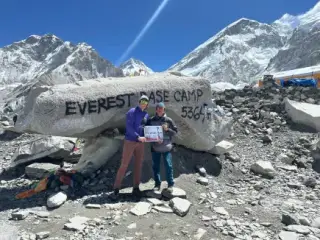
Older kids: Almost all the trekking routes are suitable for young people over, say, 15 years who are fit and have a keen sense of adventure. If they haven’t hiked before, I wouldn’t suggest anything too high or long, but the well-known treks such as Everest Base Camp and the Annapurna Circuit Trek are doable with proper acclimatisation days. Teenagers get altitude sickness as easily as adults, so they need the same slow ascent. But I leave it up to you. You know your child best and their capabilities, mentally and physically.
Young kids: I know people who have taken children as young as 3 or 4 trekking. With children that young, keep to low routes and hire a porter to carry the child in a traditional basket called a doko when they get tired. The child will find that fun also, and it makes for interesting discussion topic photos! But most children traveling with their parents in Nepal fall in the 8 to 14 years category. I certainly don’t suggest you take them to high-altitude places such as the Everest Three Passes Trek or the Limi Valley. My recommendation would be lower Mustang, along the Jomsom and Muktinath route in the Annapurnas. This area is easy to reach from Pokhara. You can fly into Jomsom (2,720 m), then take a jeep or hike up to the fascinating village of Kagbeni (about 2,810 m) and on to Muktinath, a shrine sacred to Hindus and Buddhists, with 108 water spouts and a natural-gas flame that never goes out. Muktinath sits at about 3,710 m, so with younger children visit it as a day trip and sleep lower down in Kagbeni or Jomsom. Upper Mustang, north of Kagbeni, is a restricted area with a permit of USD 50 per person per day, so most families stop at Kagbeni. On the return journey, a couple of hours’ walk down from Jomsom, there is Marpha, which is really interesting and home to many of Mustang’s apple orchards! An educational tour, perhaps?

Which Ages Suit Which Trips in Nepal?
For children, the height you sleep at matters more than the height you walk to. The UIAA medical commission advises keeping preschool children’s sleeping altitude below about 2,500 m where possible, and the CDC notes that children get altitude sickness as easily as adults. Small children also struggle to tell you they feel ill, so watch for unusual fussiness, poor sleep or loss of appetite. Use this table as a starting point and adjust for your own children.
| Age | What works well | Highest night | Leave for later |
|---|---|---|---|
| Under 5 | Kathmandu, Bhaktapur, Pokhara, Chitwan, Lumbini, short valley walks with a doko porter | Below about 2,500 m | Any trek that sleeps above 2,500 m |
| 6 to 12 | Poon Hill, Millennium Homestay Trek, Nagarkot to Dhulikhel, jungle safaris, Jomsom and Kagbeni | Up to about 3,000 m | Everest region, Annapurna Base Camp, high passes |
| 13 to 15 | Most of the above plus Langtang Valley, longer Annapurna treks | 3,000 to 4,000 m with rest days | Treks above 5,000 m for anyone unfit or new to hiking |
| 16 and over | Everest Base Camp, Annapurna Circuit, if fit and keen | As for adults, with acclimatisation days | Remote restricted-area treks without trekking experience |
The 3,000 m line for children up to about 12 is a cautious Swotah suggestion. It is stricter than the UIAA minimum, and many families keep to it on their first trip. For more on route choice, read our guide to trekking in Nepal with children.
Rafting with Kids
Rafting is an exciting adventure trip which involves water, excitement and camping. Everything kids love! Since there is always some risk involved where water is concerned, I would not recommend taking very small children rafting. Although there are some very short trips you could speak to your Nepal tour agency about. Older kids might enjoy the thrill of white water rafting. The Trishuli, the river nearest Kathmandu, has been the usual family choice, with a day on the water, a riverside camp and then a drive on to Chitwan or back to Kathmandu. Its commercial runs were put on hold after the 26 August 2026 flood, so check the current status before you plan around it. Easier rivers such as the Seti, near Pokhara, are open and gentler. Always ask the rafting company about minimum ages and the river level, because you don’t want to come when a river is at its wildest with younger children. And if you are going to Chitwan National Park or Bardia National Park you can take a calm dugout canoe or float trip on the park’s rivers, with life jackets. Opportunity for wildlife spotting!
Wildlife Spotting with Kids
And speaking of wildlife spotting, both Bardia and Chitwan National Park are great for kids. And for parents. Chitwan is definitely easier to reach: 5 to 7 hours by road from Kathmandu, or a 25-minute flight to Bharatpur. And it is more set up for families and kids. Accommodation ranges in price and comfort but almost all have a safe compound for children to run around. Aside from a guided jungle walk or jeep safari through the park, you can visit the government elephant breeding centre near Sauraha, where children can watch the elephants feed. Maybe even a baby elephant! Swotah’s Chitwan safari doesn’t include elephant rides, and our article on the unethical side of elephant rides in Nepal explains why. If you venture over to Bardia National Park, about a 1-hour flight to Nepalgunj plus a 2 to 3-hour drive, or a very long road journey away (which you can break at Lumbini, the birthplace of the Buddha), there will be fewer tourists around, and it retains more of a remote feel to it.
Both parks have tigers, leopards, different deer and a variety of monkeys, etc. Chitwan has a big population of greater one-horned rhinos, 694 in the 2021 count, while Bardia’s 38 were mostly moved there from Chitwan and live in parts of the park that are hard to reach. Chitwan had 145 tigers in the 2026 survey and Bardia 112. But Bardia has a population of wild elephants. And the Karnali river along its edge has rare Gangetic freshwater dolphins, though sightings are never guaranteed! Just relaxing with a picnic on the banks of the river, hoping to see dolphins, but more likely seeing deer coming down to drink, is an easy way to pass the day with children. Fishing is also available. And that float through the park in a raft!

Culture and Heritage
If you want to give your kids a more educational experience, one that doesn’t have to be dull for them. Nepal has tons of interesting culture and heritage spots.
Starting in Kathmandu: the Kathmandu Valley was once three old kingdoms, Kathmandu, Lalitpur (or Patan) and Bhaktapur. In each, there is a Durbar Square (literally Palace Square) where the kings of the past lived. All three Durbar Squares were hit badly by the 2015 earthquake, and the Kathmandu one has taken longest to rebuild, with some work still going on. If you stay in Thamel, you can walk through Thamel and Ason (a very interesting market area) to reach the square. Otherwise, skip that one and head to Bhaktapur for a more authentic experience. Bhaktapur’s old centre is largely closed to cars and gives you a great look at how it would have been hundreds of years ago. Foreign visitors pay an entry fee of about NPR 1,800. With temples to explore, nice restaurants to eat in, potters spinning wheels in the side squares, and plenty of things to buy to take home, Bhaktapur is also very worth an overnight stay. Imagine walking among the temples in the evening or early morning when the square is empty except for locals worshipping or doing their daily business. Since Bhaktapur is on the way to Nagarkot (a hill station at about 2,100 m), you can combine the two.
Patan Durbar Square has an interesting museum that your older kids might be interested in. It is also fairly near the Central Zoo in Jawalakhel, which might be an incentive to get your younger kids to go. The zoo is small and a bit dated. But sometimes, it’s about compromise, right?
Nepal's best travel companies will help you arrange your itinerary for sightseeing around Kathmandu. Not to be missed are Swayambhunath (the Monkey Temple), Boudhanath (a huge white stupa in the Tibetan Buddhist part of town) and Pashupatinath.
Be aware you will probably see open-air cremations at Pashupatinath, so prepare your kids in advance. Swayambhunath has a lovely view and plenty of monkeys. Keep snacks out of sight and don’t let children feed or touch them, because a bite means a course of rabies shots. Otherwise there’s not much more there for kids, and Boudha has great shops and restaurants and plenty of space for the kids to run around. Feeding and chasing pigeons around the stupa is a local pastime for little ones!
Around the Kathmandu Valley, there are many interesting living ancient villages. Often seeing fewer tourists, there are many temples, shrines, nooks, and crannies to explore.
Out with Kathmandu, there are loads of great places which positively scream history. Take Lumbini, the birthplace of the Buddha, for example. Our Golden Circle Trip takes in Lumbini along with Kathmandu, Pokhara and Chitwan. With plenty to see and lots of room to run around, this visit would be suitable for small and older children, though it gets very hot from April to June. Getting a rickshaw ride around the area adds to the fun! Combine this with a trip to either Chitwan or Bardia National Park.
And no doubt you will be heading to Pokhara, the city on the lake. Pokhara is the starting point for the Annapurna treks. But whether you are trekking or not, Pokhara is a great place to visit. The tourist area is called Lakeside and has many good hotels, restaurants, bars, and clubs. On the activity side, older kids can try zip-lining, tandem paragliding and bungee jumping. The bungee tower near Pokhara takes jumpers from age 12 with a parent there in person, and every operator sets its own age, height and weight limits, so check before you promise anything. A little less heart-pounding is boating on the lake, a hike up to the Peace Stupa, a visit to caves, and a visit to the International Mountain Museum. The museum is not some dusty old place but a living museum with lots to see, experience, and touch.

Festivals for You and the Kids
Nepal is certainly a land of festivals. Some weeks it feels as if there is a festival every day. The larger ones can be easily found on the internet, and you can plan your trip around them if you are interested. To name just a few for you to look up: Dashain, Tihar, Gai Jatra, Teej and Chhath. Teej, in late August or September, is a women’s festival, and girls and visiting women are welcome to join the dancing in the streets or around Pashupatinath Temple. Dashain, in October, is when bamboo swings called ping go up in villages and city neighbourhoods, and kids love them. Tihar, Nepal’s festival of lights, runs from 7 to 11 November in 2026. On Laxmi Puja night (8 November) houses are lit with oil lamps and coloured powder patterns, and an evening walk through the old streets of Kathmandu is magical for children. Chhath is best seen in Janakpur, with the main evening offering on 15 November 2026. It involves a short flight, so if you have the time and money it is an interesting trip. There is much to explore in Janakpur, and it is steeped in Hindu mythology. Don’t miss a trip to the Janakpur Women’s Development Centre to learn about Mithila painting, crafts and architecture, the art of the local Maithil people. Children will be able to create their own paintings if you ask nicely. Don’t forget to pass through the gift shop!
But aside from the religious/ cultural festivals, there are numerous art/ film/ theatre/ music festivals to enjoy at a fraction of the price you will pay in your home country.
For my money, Jazzmandu (a jazz festival held in October or November) has something for everyone. It is predominantly about jazz and musicians who come from overseas to perform alone and with local musicians. With kids, the best thing to attend would be the Jazz Bazaar. A whole day of music, jazz, modern and classical Nepali, often held in the beautiful setting of Gokarna Forest Resort. Check the venue each year. Plenty of room for kids to roam around (a small playground also) and food and drink stalls.
If you are here in December, the Kathmandu International Mountain Film Festival (KIMFF) has great documentary films from around the world, focusing on mountain communities. Educational and fun for older kids.
Yes, Nepal, mainly Kathmandu, has an amazing array of talented artists that many visitors never discover! Ask us!
With so much to do with Children in Nepal, which is Best?
I would suggest that a tailor-made private tour would be the best idea. Only you know what your kids are really interested in and their attention span and stamina. If they hate cycling, there is no point dragging them off on a great mountain biking tour in Nepal. Or going on a yoga retreat or spa without knowing your kids will be safely supervised for a few hours doing something they love (Nepali arts and crafts, for example).
A complete package can be tailored to your needs. From pick up at the airport, great accommodation to suit your budget, sightseeing tours designed with kids in mind, to a list of outdoor adventures (camping, heli tours, rafting, trekking, zip-lining, an Everest mountain flight: the list is longer than you think!)
How Long Does It Take to Get Around Nepal with Kids?
Road distances in Nepal look short on a map and take far longer than you expect. Mountain highways are narrow and busy with trucks, and roadworks and landslides add hours. Plan no more than one long travel day in a row, and fly when it saves you a full day in a vehicle.
| From Kathmandu to | By road (approx.) | By air |
|---|---|---|
| Bhaktapur | under 1 hour | No |
| Nagarkot | about 1.5 hours | No |
| Chitwan (Sauraha) | 5 to 7 hours | 25 minutes to Bharatpur |
| Pokhara | 6 to 8 hours | about 25 minutes |
| Lumbini | 8 to 10 hours | Flight to Bhairahawa, then 22 km by road |
| Bardia | a very long day or more | about 1 hour to Nepalgunj, then 2 to 3 hours by road |
Road Time from Kathmandu (Hours, Approx.)
| Destination | Hours | Road time (0 to 10 h) |
|---|---|---|
| Bhaktapur | under 1 | |
| Nagarkot | about 1.5 | |
| Chitwan | 5 to 7 | |
| Pokhara | 6 to 8 | |
| Lumbini | 8 to 10 |
Gold bars are full travel days for young children. Times vary with traffic, roadworks and the season.
Transport can also be designed to suit your budget and available time. While tourist buses are interesting, road travel tends to be long and bumpy in Nepal (don’t be fooled by the actual mileage chart). Private transport or flights are often the best, particularly for young children.
What you won’t find is many play parks. There are only a handful in Kathmandu and Pokhara, and a few hotels have swings for kids. But then you didn’t really come to Nepal for the same stuff you can get at home, did you?
And Finally, Is Nepal Safe to Travel to with Kids?
It’s a question we are often asked. Nepal is a safe destination, and violent crime against visitors is rare. Yes, people fall off mountains and into rivers, but they are the exceptions. Nepalis adore children, and yours will get a lot of friendly attention wherever you go.
The things that actually go wrong on family trips are more ordinary, and you can plan for each one:
- Roads. Road travel is the biggest risk in Nepal. Use a private vehicle with a careful driver, bring a child seat from home if your child needs one, and avoid driving at night.
- Food and water. Don’t drink tap water. Use boiled, filtered or sealed bottled water, keep to freshly cooked food, and pack oral rehydration salts.
- Vaccinations. See a travel clinic six to eight weeks before you fly and ask about hepatitis A, typhoid and rabies for your children.
- Animals. Monkeys at temples and stray dogs can bite. Teach children not to feed or touch them.
- Altitude. Follow the age guide above, and go down at once if a child seems unwell at altitude.
- Insurance. Buy cover that includes helicopter evacuation if you plan to trek.
DISCLAIMER: Naturally, nothing and nowhere is 100% safe, but as a parent, you know that, right?
Planning a Family Trip to Nepal with Swotah
Swotah doesn’t sell a fixed family package. Instead, we build a private trip around your children’s ages, with shorter travel days, family rooms and more rest. A few trips that families often start from, with the lowest current group departure price per person:
| Trip | Days | Good for | From (group departure) |
|---|---|---|---|
| Chitwan Jungle Safari | 7 | All ages, rhinos, canoe rides, no elephant rides | USD 800 |
| Poon Hill Trek | 4 | A first trek for school-age children | USD 300 |
| Golden Circle Trip | 10 | Kathmandu, Pokhara, Chitwan and Lumbini | USD 1,085 |
| Millennium Homestay Trek | 13 | Village life, highest point 1,709 m | USD 1,250 |
Swotah can arrange any of these as a private trip for your family. If you ask, we try to match your guide to what you want, such as experience, language, gender or age. Prices change with the departure, so check the trip page for the current one. For more options, with the altitude of every overnight stop, see family trips to Nepal.
FAQs: Nepal with Kids
Is Nepal safe for children?
Yes, for most families. Nepal has been peaceful since the 2006 peace agreement and violent crime against visitors is rare. Plan around the real risks instead: long road journeys, stomach bugs, monkey and dog bites, and altitude on treks.
What is the minimum age for trekking in Nepal?
There is no legal minimum age for teahouse treks. Toddlers can join low walks with a porter carrying them in a doko. The UIAA advises keeping preschool children’s sleeping altitude below about 2,500 m, and many families keep children up to about 12 below 3,000 m.
Can children go to Everest Base Camp?
Fit teenagers who have hiked before can, with the same acclimatisation days as adults. Base camp is 5,364 m and the trek sleeps above 4,900 m, so it isn’t suitable for young children.
Do children need trekking permits in Nepal?
Children under 10 don’t need a TIMS card. National park and conservation area fees can still apply, so check the rules for your route when you book.
What is the best time to visit Nepal with kids?
October and November bring clear skies and comfortable temperatures, plus the Dashain and Tihar festivals. March and April are good too. The Terai parks are very hot from April to June, and the monsoon runs from about June to September.