

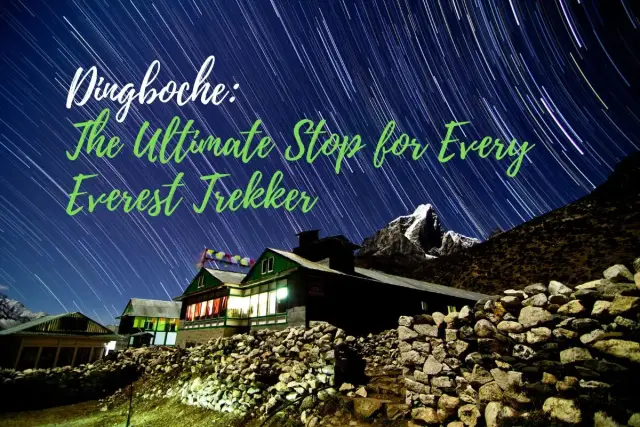

Dingboche (4,410 m) is a Sherpa village in the Imja valley and the second acclimatisation stop on the Everest Base Camp trek. You reach it in five to six hours from Tengboche, spend two nights, and use the rest day to climb Nangkartshang Peak (5,083 m) for views of Makalu, Lhotse and Ama Dablam. It's the first night above 4,000 m, so headaches and poor sleep are common here. The next day you walk on to Lobuche (4,940 m).
- Altitude4,410 m / 14,469 ft
- From Tengboche5 to 6 hours
- Nights on the trek2, with a rest day
- Acclimatisation hikeNangkartshang, 5,083 m
- Next stopLobuche, 4,940 m
- FacilitiesTeahouses, bakeries, Everest Link Wi-Fi, paid charging
Dingboche is a remote village in the Khumbu region of Nepal at an altitude of about 4,410 meters (14,470 feet). It is a popular stopover point for Everest trekkers. The village is situated in a valley surrounded by high peaks and is known for its picturesque views of the surrounding mountains. Dingboche has a number of lodges, teahouses, and guesthouses that cater to travelers, as well as a small number of permanent residents.
Dingboche has a small monastery, chortens and long mani walls, and the stone-walled barley and potato fields that give the valley its patchwork look.
Why Is Dingboche an Ideal Destination for Everest Trekkers?
Dingboche is where most Everest Base Camp trekkers, and many Everest expedition teams on their walk in, take their second acclimatisation day. Dingboche is one of the last Sherpa settlements on the Everest Base Camp route, a summer farming village that now lives largely from trekking. The 1953 expedition that put Sir Edmund Hillary and Tenzing Norgay on the summit passed through this same valley on its way to the mountain.
Trekkers need to gradually acclimate to the high altitude to mitigate the risk of altitude sickness. And Dingboche provides a good acclimatization point. Trekkers generally spend two nights in Dingboche, with an acclimatisation hike on the rest day, before continuing to higher elevations.

Dingboche is also a good place to rest and recover from the physical demands of the trek. It is a small village with a few lodges, teahouses, and restaurants where trekkers can find food and lodging. The scenery in Dingboche is also quite beautiful, with views of the surrounding mountains, including Ama Dablam, Makalu, and Lhotse.
Overall, stopping in Dingboche during an Everest trek is an excellent way to acclimate to the high altitude, rest and recover, and enjoy the region's beautiful scenery.
Highlights Of Your Activities From Dingboche
Amazing Views of Peaks
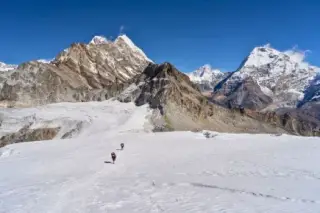
Dingboche is a point from which you can view stunning peaks like Lhotse, Ama Dablam, Island Peak, and Taboche. Climb the ridge above the village and Makalu, the world's fifth-highest mountain, joins the panorama (Everest itself stays hidden behind the Nuptse-Lhotse wall).
The highest viewpoint above Dingboche is Nangkartshang Peak (about 5,083 m), and you can see all the mystic mountain ranges from the spot. It takes two to three hours to climb from Dingboche to the top, and the view of Makalu, Lhotse and Ama Dablam is worth every step.

Mountain ranges are not only the attractions you see from this point. Imja Valley and Imja Glacier are the other main entities that attract tourists annually.
Sherpa Community And Culture At Dingboche Village
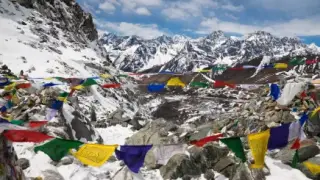
Dingboche is home to the Sherpa tribe. You will be lucky to experience the Native Sherpa culture and tradition here in Dingboche village. There are several gompas and chortens, with prayer flags and mani walls as the main attraction.
Visit To Tengboche
Tengboche is a station before reaching Dingboche, and it is situated at an altitude of 3,867 meters above sea level. The main attraction of this place is the Tengboche monastery.
It takes around 5 to 6 hours to reach Dingboche from Tengboche, and remember, Tengboche itself is a place where you can see the cinematic views of all listed mountain peaks.
Famous Lodges And Hotels In Dingboche For Accommodation
While traveling to Dingboche, your accommodation facility comes as a great need. No need to worry because there are plenty of Lodges and hotels where you can stay safe. Some of them are:
Hotel Bright Star
A popular lodge with climbers heading for Island Peak (Imja Tse) and Ama Dablam, who often use Dingboche for their own acclimatisation.
The hotel sits before the Imja River in the east and is a great place to view the mountain range.
Moonlight Lodge
This lodge is also a great place for mountain viewing and acclimatization. You can get all facilities from Internet service to electricity and hot showers.
There are also several other places for accommodation, such as Sonam Friendship Lodge and Hotel Summit. You need not worry about your lodging and food during your stay, as most lodges offer hot showers, charging and Everest Link Wi-Fi for a fee.
Additional Activities To Do In Dingboche
Visit the local monastery: A small monastery in Dingboche is worth a visit. It is home to several monks and is a peaceful place to sit and meditate.
Take a day hike: There are several day hikes that you can take from Dingboche, including a trip to the nearby village of Pheriche or a hike to the ridge above Dingboche for views of the surrounding mountains.
Visit a traditional Sherpa village: Pangboche, two to three hours below Dingboche on the way in, is home to the oldest monastery in the Khumbu and an excellent place to experience traditional Sherpa culture. You can visit the local monastery, meet the villagers, and learn about their way of life.
Relax and enjoy the views: Dingboche is a beautiful place with stunning views of the surrounding mountains. Take some time to relax, enjoy the scenery, and remember to bring a camera to capture the memories.

Photo: Monastery of Dingboche
How To Get To Dingboche? Step By Step Guidelines
While Dingboche appears to be the ideal destination for many travelers, knowing its route should be the primary focus before planning the tour. We have prepared a short itinerary highlighting how to get to Dingboche.
Kathmandu To Lukla
To start your trip to Dingboche, the first thing to do is fly to Lukla from Tribhuwan International Airport, Kathmandu. In spring and autumn most flights leave from Manthali (Ramechhap), a 4 to 5 hour drive from Kathmandu and a 20-minute flight to Lukla Airport. In the quieter months they fly direct from Kathmandu in about 35 minutes.
Also Read:
How To Get To Lukla Without Flying?
10 Best Things to do in Dingboche
Trek From Phakding To Namche
You will join the trek from Phakding to Namche, which will be the first step of your tour. It takes 5 to 6 hours from Phakding to reach the town of Namche, and you will follow the river and pass through several small villages and forests.
Namche To Tengboche
To reach Tengboche, you will have to follow the trail alongside the Dudh Koshi river. Lucky for you, you will get insights into peaks like Mount Everest, Lhotse, Nuptse, and Ama Dablam in the route.
Also, you will cross the bridge over the river at Phunki Tenga. It takes 5 to 6 hours to reach Tengboche from Namche Bazaar.
Tengboche to Dingboche
Tengboche to Dingboche is the last phase of the Dingboche Trek. You might get involved in visiting Tengboche monastery before setting up for Pangboche village. Along the way, you will see many mani walls, chortens, and prayer flags.
From Pangboche the trail climbs past Somare and Orsho to a fork. The left branch goes to Pheriche in the Khumbu Khola valley. Take the right branch, cross the Khumbu Khola and climb into the Imja valley to Dingboche.
Dingboche To Tengboche
After you complete your trek at Dingboche, you will return to Tengboche, where you will stay overnight after walking for around 4 to 5 hours.
You can visit the monastery again and enjoy a much easier night at 3,867 m.
Tengboche To Monjo
The next stop is Monjo, and reaching there takes around 6 to 7 hours of hiking. You will walk alongside the Dudh Kosi River and cross it before heading to Jorsale.
Monjo To Lukla
To reach Lukla, allocate your hiking time of around 5 to 7 hours from Monjo. Before reaching Lukla Airport, you will pass through the local villages like Chumoa, Benkar, Phakding, and Chuthawa.
Flight Back To Kathmandu
After completing your whole journey, it's time to return to Kathmandu. Get a flight from Lukla Airport, and you should be landing in the capital in around 30 minutes.
Acclimatisation Hikes From Dingboche
On the rest day you climb high and come back to sleep at 4,410 m. The bars show how much height each option gains above the village. Nangkartshang takes you above the altitude of Lobuche, which makes the next day feel easier.
| Hike | Highest point | Gain above Dingboche | Time and notes |
|---|---|---|---|
| Ridge and stupa above the village (approx.) | 4,600 m | +190 m | 1 hour, first view of Makalu |
| Chhukung (walk up the Imja valley) | 4,730 m | +320 m | 4 to 5 hours round trip, gentle |
| Lobuche, the next day's stop | 4,940 m | +530 m | For comparison |
| Nangkartshang Peak | 5,083 m | +673 m | 4 to 5 hours round trip, steep |
Dingboche or Pheriche?
Above Pangboche the valley splits, and some itineraries stop at Pheriche instead of Dingboche. Both rejoin at Dughla before Lobuche.
| Dingboche | Pheriche | |
|---|---|---|
| Altitude | 4,410 m | 4,371 m |
| Valley | Imja, sunnier and more sheltered | Khumbu Khola, windier |
| Lodges | More choice, bakeries | Fewer |
| Best side trip | Nangkartshang, Chhukung | Ridge above the village toward Dingboche |
| Medical help | Nearest clinic is in Pheriche | Himalayan Rescue Association clinic, spring and autumn |
Most trekkers sleep at Dingboche going up and pass through Pheriche coming down.
Tips For Acclimatizing At Dingboche
Acclimatizing to high altitude is an important process when trekking in the mountains, as it can help you avoid altitude sickness. Dingboche is the first place on the trek where you sleep above 4,000 m, so this is where altitude symptoms usually show up. Here are some tips for acclimatizing at Dingboche:
Take it slow: Don't push yourself too hard when arriving at Dingboche. Take your time to adjust to the altitude.
Drink plenty of fluids: Stay hydrated to help your body acclimatize - Drink 3 to 4 litres a day and skip alcohol.
Get plenty of rest: Get enough sleep and rest to allow your body time to adjust to the altitude.
Use medication: If you are struggling to acclimate, you may consider using medication such as acetazolamide (Diamox) to help speed up the acclimatization process. However, you should only use medication under the guidance of a medical professional.
Listen to your body: Pay attention to how you feel, and don't push yourself too hard. If you feel the symptoms of altitude sickness, such as headache, fatigue, or dizziness, it is essential to rest and descend to a lower altitude if necessary.
Bottom Line
Two nights in Dingboche, with a climb up Nangkartshang in between, is what makes the last push to base camp safe.
Dingboche is the standard second acclimatisation stop on the Everest Base Camp Trek, and it also serves climbers heading for Island Peak via Chhukung. Wondering what comes after? Read about Gorakshep, the last stop before Base Camp, and check the full altitude profile in our EBC elevation guide.
Dingboche: FAQs
What is the altitude of Dingboche?
4,410 m (14,469 ft). It's the highest permanent village in the Imja valley and the first night of the trek above 4,000 m.
How many nights should I stay in Dingboche?
Two. Arrive, sleep, climb Nangkartshang or walk toward Chhukung on the rest day, and sleep again before going on to Lobuche.
How long does the Nangkartshang hike take?
Four to five hours round trip. Most trekkers stop at the viewpoint at about 5,083 m, with prayer flags and the full view of Makalu and the Lhotse south face. The true summit is higher and much harder.
Is there Wi-Fi and charging in Dingboche?
Yes, for a fee. Most lodges sell Everest Link Wi-Fi cards and charge a few dollars to charge a phone or battery.