




Pashupatinath Temple: Where Life, Death, and Devotion Meet
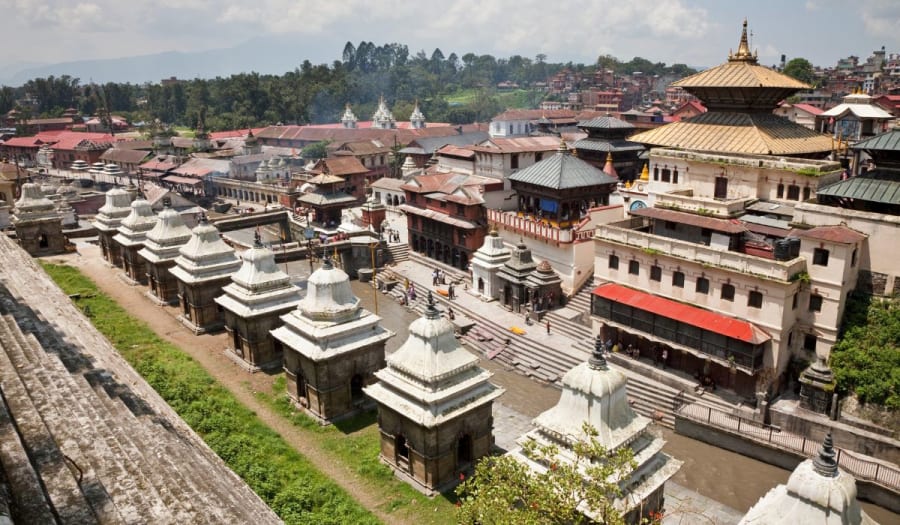
Pashupatinath Temple sits on the banks of the Bagmati River in Kathmandu. Considered the most holy Hindu temple, it was built here because the Bagmati itself is holy. The area covers 246 hectares (2,460,000 m2) with over 500 mini-temples, along with the most holy and principal pagoda-style temple. The main temple is thought to date back to around the 5th century and most of the rest of the complex built around the 15th century. Today, it is a UNESCO World Heritage Site and draws thousands of pilgrims from all over the world, particularly India and Nepal. But what is so special about this place?
The Myths and History of Pashupatinath
It is said that Lord Shiva and his wife, Parvati, came to this area and so fell in love with the forests and the rivers to the extent that they turned themselves into deer and refused to leave. Eventually, the other gods persuaded them to revert to their original forms and leave the area, but they named this deer form of Shiva as ‘Pashupati’, which means Lord of Animals.
Much remains unknown about the early beginnings of Pashupatinath. Excavations and studies have been limited but have uncovered some very interesting facts that have never been fully explored. With over six million pilgrims, sadhus and worshippers visiting every year, and fast urbanisation taking place nearby, the danger is that the archaeological past will be lost, with only the myths remaining.
The main temple is built in Newari (the original inhabitants of the Valley) style with a two-level roof of copper and gold. The four main doors are covered with silver, and the inner sanctum houses idols. Non-Hindus are not allowed into this holy sanctum, but you can observe the golden Nandi (Lord Shiva's vehicle) from near the doorway.
Life and Death at Pashupatinath
It is auspicious to be cremated in Pashupatinath. It is even more auspicious to die there; there are several ashrams for elderly people, which are government-run, providing old people with food and basic necessities. The Pashupati Bridda Ashram not only houses older people, but it also serves those who are alone and/or marginalized. Open only to those with no family they ensure older people have a dignified life and ending.
Traditionally, the dead in Nepal are taken to rivers and cremated on the river banks. It is most auspicious, guaranteeing no more rebirth, to be cremated on the banks of the Bagmati and your ashes thrown into the river. Naturally, these traditions were formed at a time when the population was smaller. Today, with a population of three million living in the valley, there is considerable stress on the ghats and the river. In more recent years the Pashupati Development Trust has opened a crematorium on the outskirts of the temple complex to try and relieve some of this stress.
Foreigners are welcome to observe the death rites and burnings, but from the other side of the river to the ghats. Although death is not as private here as it is in other countries, photographs should not be taken by tourists.
Devotion
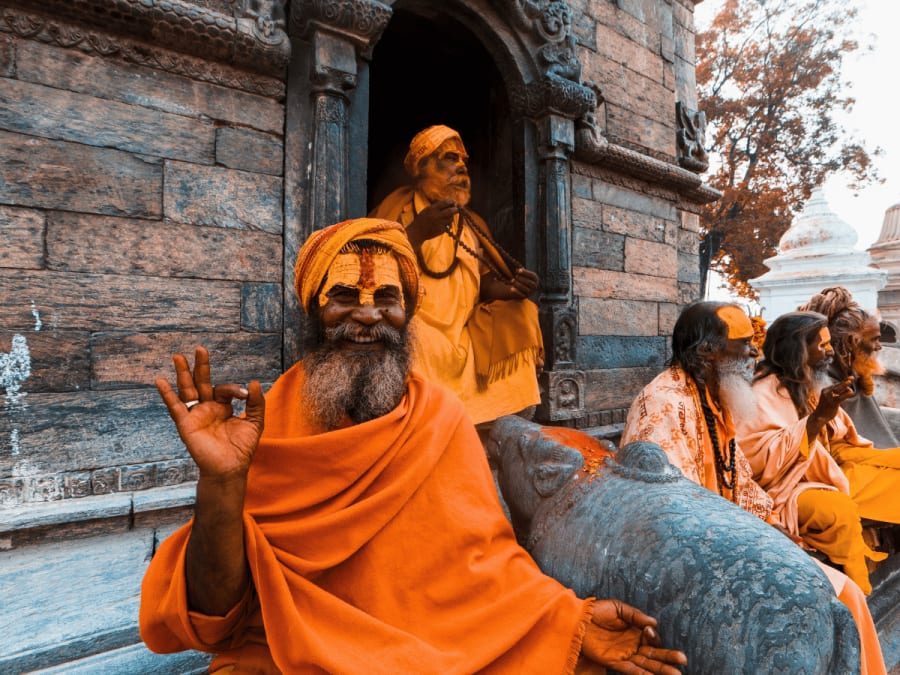
There are pilgrims coming and going every day at Pashupatinath, but perhaps the most interesting gathering is that of the sadhus and holy men from Nepal, India and beyond who come at Maha Shivaratri. Held in February (different date each year, so check the current calendar if visiting), this is the Night of Shiva when fires will be lit, devotional chanting will take place, and Sadhus can be seen smoking hashish and ‘entertaining’ the crowds. Fasting and prayer also takes place over this time by holy men and the general public. The temple complex will be extremely busy with devotees and curious visitors. The celebrations and devotions continue all day and through the night, with the Sadhus and holy men staying around Kathmandu for some days before and after.
Another interesting festival that takes place at Pashupatinath is Teej. Held during the monsoon season, the festival is dedicated to Goddess Parvati and her husband, Shiva. Celebrated mainly by married women and unmarried girls the festival is to pray for the long life of husbands, while the unmarried girls pray for husbands they have not yet met. This is also a time of fasting for women. A lot of dancing, singing and celebration goes on around their homes and in the temple complex. Visiting women are more than welcome to join in the celebrations (and dancing) at this festival.
For daily prayers, each evening at Pashupatinath there is an Aarati ceremony along the ghats. This is a high form of prayer and involves lamps lit with ghee, which are offered to the gods while chanting mantras. Although it is a sacred ritual, it is also very entertaining and visually interesting for those watching. Visitors are welcome to attend this sacred daily event.
Aside from attending these festivals and devotion practices, foreign visitors can walk through the complex, taking in the various temples and shrines that are found there. The only restriction is a ban on their entry to the main temple and to the burning ghats themselves. Don’t worry, there will be someone there to tell you if you overstep your allocated spot!
Visiting Pashupatinath: Entry Fees and Practical Tips
Pashupatinath sits about 5 km east of Thamel, close to the airport, and is easy to combine with Boudhanath Stupa, a short drive further north. Entry to the complex costs NPR 1,000 for foreign nationals, while Nepali and Indian citizens enter free. The grounds are open from early morning until around 9 pm, and the most atmospheric times to visit are early morning, when devotees arrive for puja, and early evening for the riverside ceremony.
The evening Aarati on the ghats usually begins around 6 pm; arrive 30 minutes early for a good viewing spot on the eastern bank. Dress modestly, with shoulders and knees covered. Photography is fine in most of the complex, but never photograph cremations, and expect the colourfully painted sadhus to ask for a small tip if you take their portrait. Most visitors spend one to two hours here, often as part of a day exploring the temples and heritage sites of Kathmandu.
The Future
Nepal is a country that is pushing itself into the future at the expense, perhaps, of its past, while devotees remain devoted to sacred sites regardless of changes. The Bagmati River itself is now extremely polluted, despite decades of efforts by organisations and local communities to clean it up. What is lacking is regulations (upstream, there are factories using the river as a dumping ground), and education.
Take one man seen some time ago throwing a plastic bag into the river. ‘What are you doing?’ ‘This is prasad, he said (prasad being an offering). ‘But you are making the river more dirty’. He remarked, ‘the river is sacred no matter how physically polluted it is’. The same will be said, if we ask, by those who take ritual dips in the visually dirty water!
Faith over science. Belief over physical evidence. Jai Shambho!