


Why Small Group Tours Are the Best Way to Explore Nepal
When it comes to exploring Nepal, the way you travel matters as much as where you go. Large bus-tour groups and fully independent backpacking both have their limitations in a destination as nuanced as Nepal. Small group tours, typically six to twelve travellers, offer something that neither extreme can provide: the depth of a local experience combined with the safety and logistical ease of a guided trip.
Authentic Encounters, Not Tourist Performances
Nepal's most memorable moments happen off the main teahouse trail, a conversation with a yak herder near Gokyo, a spontaneous invitation into a farmhouse kitchen above Ghale Gaun, a shared meal with a family during Dashain. These encounters are far more likely on a small group tour, where your guide has built genuine local relationships over years and knows where to take you for an experience that goes beyond the itinerary.
Large groups attract attention and create a sense of spectacle. Small groups travel more quietly, blend more naturally into local life, and leave space for the kind of spontaneous connection that makes a journey truly memorable.
Environmental Responsibility
Nepal's trails face real pressure from visitor numbers. The Everest region and Annapurna Circuit both show the effects of overtourism in sections, eroded paths, waste at high camps, overcrowded teahouses at peak stops. Small group trekking is part of the solution. Fewer tents, less waste, more distributed spending, and the ability to take alternative routes all reduce the impact on fragile high-altitude ecosystems.
At Swotah Travels, our groups carry reusable water containers, we brief every group on waste management before departure, and we actively choose teahouses owned by local families rather than large franchise operations. The money your trip generates goes directly into the communities you pass through.
Safety Without Sacrifice
Trekking solo in Nepal is legal on most routes, and many experienced trekkers do it successfully. But a small group with a licensed guide provides safety benefits that are difficult to replicate alone. Your guide monitors the group for signs of altitude sickness, knows the evacuation routes, carries a first-aid kit and emergency communication, and has contacts along the route if weather forces a change of plan.
More practically: if something goes wrong on the trail, an injury, a delayed flight, a lost permit, you have people around you. On a solo trek in a remote area, you are handling every problem alone.
The Social Dimension
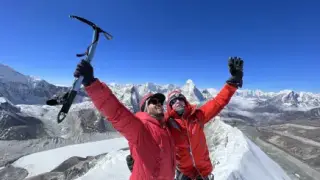
Some of the most enduring friendships are formed on challenging trails. The shared effort of a high-altitude pass, the shared relief of reaching basecamp, the shared silence in front of an extraordinary mountain view, these create bonds between group members that persist long after the trip ends. Travellers who have trekked with Swotah regularly cite "the people I met" as one of the highlights of the experience.
Small groups also allow for genuine flexibility. On a large tour, the slowest person sets the pace for everyone. In a small, well-matched group, your guide can adjust the schedule, add an optional side excursion, or spend an extra hour somewhere unexpected, without disrupting eighteen other people's plans.
Small Group vs Private vs Solo: Which Fits You?
| Small group (6–12) | Private trip | Solo + guide | |
|---|---|---|---|
| Cost per person | Lowest for the service level | Highest | Middle |
| Flexibility | Fixed dates, set route | Total | High |
| Social side | Built in; you arrive alone, leave with friends | Whoever you bring | Your guide's company |
| Pace control | Group pace (groups split with two guides on bigger days) | Yours | Yours |
| Best for | Solo travellers, first Nepal trips, fixed budgets | Families, special occasions, photographers | Experienced trekkers with set goals |
What a Small-Group Trekking Day Actually Looks Like
Tea at six, bags out by seven, walking by half past. The group naturally strings out over the morning, faster walkers ahead with the assistant guide, slower ones setting their own rhythm with the lead, then everyone regathers over a long dal bhat lunch. Afternoons are short by design, two to three hours, so there is time in the lodge village to explore a monastery, play cards, or simply sit with tea and the view. Evenings are the point of the format: eight people from five countries around one stove, comparing blisters and life stories. By Namche or Ghorepani, the group has in-jokes; by the end, a shared photo album and a WhatsApp group that outlives the trek.
Common Questions About Group Treks
I'm travelling alone. Can I join a group?
That is exactly who fixed-departure groups are for: most are majority solo travellers. You share the group's guide, permits, and logistics, and pay a modest single supplement only if you want a room to yourself.
What if I'm slower than the others?
Good operators run two guides on any group bigger than six, so the group can split between viewpoints and rest stops. Nobody gets left, and nobody gets dragged.
What sizes should I avoid?
Above roughly 14 trekkers, teahouses struggle, trails clog, and the trip becomes queue management. If an operator quotes a 20-person departure, that is a bus tour at altitude; keep looking.
What to Look for in a Small Group Operator
Not all small group operators deliver the same experience. Ask these questions before you book:
- How large is "small"? Swotah's groups run 4–12 people. Above 14, the benefits of small-group travel start to diminish.
- Are guides licensed? Nepal requires trekking guides to hold a government licence. Verify this with your operator.
- What is the guide-to-client ratio? One guide per 8–10 trekkers is standard; one guide plus one assistant for groups above 6–8 is ideal on technical routes.
- Who benefits financially? Ask whether the company is locally owned and whether guides, porters, and teahouse owners are paid fairly. Responsible tourism matters.
Exploring Nepal is a privilege. The mountain ecosystem, the communities along the trails, and the guides who make these journeys possible all deserve a tourism model that is sustainable, respectful, and genuinely beneficial. Small group travel is the best way we know to deliver that, for you and for Nepal.
Browse our small group Nepal trips and find the itinerary that matches your pace, your interests, and the kind of Nepal you want to discover.
This is how Swotah has operated since 2016: groups of 2 to 12, guides born in the regions they lead, and itineraries with room to stop when the light is right. Our pieces on what Swotah means and choosing the right agency in Nepal explain what to look for, whoever you travel with.