


Autumn in Nepal (2026): Month-by-Month Weather, Festivals and Best Treks
Autumn (late September to November) is the best time to visit Nepal for trekking. The monsoon usually withdraws by early October, October brings the clearest mountain views of the year and November stays dry but gets colder. It is also peak season, so Lukla flights, lodges and Dashain and Tihar transport book out early. The big exception in 2026 is Langtang, off the table because its access road has been closed since the 26 August flood.
- SeasonLate September to November
- Best monthOctober, then November
- Kathmandu rainHeavy in September, light in October, almost none in November
- Nights at about 4,000 mAround 0°C in September to -10°C in late November
- Festivals 2026Dashain 11-25 Oct, Mani Rimdu 26-28 Oct, Tihar 7-11 Nov
- Book a trek3 to 4 months ahead for October
If you are wondering whether autumn is a good time to visit Nepal, it almost certainly is. September, October, and November form Nepal's peak trekking window for a reason: the monsoon has cleared, the mountain views are at their sharpest, and the entire country feels alive with festivity and energy. Here is everything you need to plan your autumn Nepal trip.
Why Autumn Is Nepal's Best Season
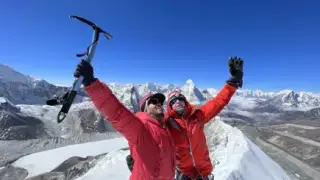
The monsoon that runs from June into late September sweeps the sky clean on its way out. Its normal withdrawal date from Nepal is 2 October, though in 2025 it lingered until 10 October. By October the air over the Himalayas is clear enough that viewpoints such as Kala Patthar above Everest Base Camp, or Poon Hill facing Dhaulagiri and Annapurna South, stay sharp from dawn well into the morning. October is widely considered the single best month for mountain photography in Nepal. The light is golden, the horizons are sharp, and the mountain views are often unobstructed for days at a time.
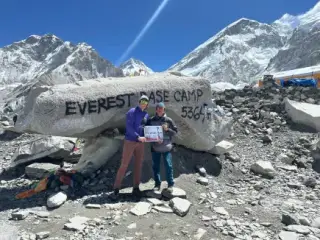
Temperatures are ideal for trekking. Daytime highs in Namche Bazaar (3,440m) sit around 12–15°C in October, and nights drop to around 0°C to -5°C. At Everest Base Camp (5,364m), expect 0–5°C days and -10°C to -15°C nights. Proper layering and quality sleeping bags make these temperatures entirely manageable.
Month by Month: September, October, November
The table gives the short version. Kathmandu figures are typical day and night temperatures. The column for about 4,000 m (Tengboche, Dingboche, Machhapuchhre Base Camp) is our estimate from the Kathmandu averages and the usual drop of about 6.5°C per 1,000 m, so treat it as a guide, not a forecast. Rainfall sources disagree a lot for September, which is why it shows as a range.
| Month | Rain (Kathmandu) | Kathmandu day / night | About 4,000 m day / night | Crowds | Festivals |
|---|---|---|---|---|---|
| September | Heavy early, easing late (Kathmandu often 150-300 mm) | About 28°C / 18°C | About 11°C / 1°C | Moderate | Teej, Indra Jatra |
| October | Light, mostly dry after the first week (roughly 30-120 mm) | About 26°C / 13°C | About 9°C / -4°C | Busiest | Dashain, Mani Rimdu |
| November | Almost none (under 15 mm) | About 22°C / 7°C | About 5°C / -10°C | Busy | Tihar, Chhath |
September
The very start of autumn in Nepal. The tail end of the monsoon means occasional afternoon showers, especially at lower altitudes, but the upper mountain trails are clearing fast. September is a sweet spot for trekkers who want near-peak conditions with significantly smaller crowds. Popular routes like Everest Base Camp and Annapurna Base Camp are busy but not crowded. Accommodation is easier to arrange than in October.
October
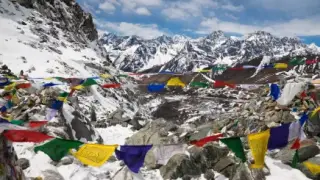
The undisputed peak month. Crystal-clear skies, perfect trekking temperatures, and Nepal's most important festival, Dashain, which falls in late September or October depending on the lunar calendar. In 2026 it ran from 11 to 25 October, with the main Tika day on 21 October. Dashain is a fifteen-day Hindu celebration of the goddess Durga, marked by family gatherings, kite flying, and the ceremonial blessing of vehicles and tools. Trekking during Dashain means passing through villages decorated with bamboo swings, seeing families in their finest clothes, and occasionally being invited to share blessed food with local families. It is a remarkable cultural layer added to an already extraordinary experience.
November
Tihar, the festival of lights, falls in late October or November (7 to 11 November in 2026, with Laxmi Puja on 8 November), transforming Kathmandu and villages throughout the hills into glowing celebrations of colour. Crowds on popular routes begin to thin in the second half of November, temperatures drop noticeably at altitude (pack warmer layers), and the mountain views remain excellent. November is ideal for trekkers who want a slightly quieter experience without sacrificing conditions.
Best Autumn Treks
- Everest Base Camp Trek, The classic. 14 days with us, maximum views of the world's highest peak. Book accommodation early for October.
- Annapurna Circuit, Nepal's most diverse trek, crossing the 5,416m Thorong La pass. Excellent in October and November.
- Langtang Valley Trek, Fewer crowds than Khumbu or Annapurna, and just as scenic. Rhododendron, oak and pine forest below 4,000m, though the rhododendrons flower in spring, not autumn. For autumn 2026 the access road has been closed since the 26 August flood, and we are not running Langtang departures until it reopens. Our flood update has the latest.
- Manaslu Circuit Trek, A wilder, more remote circuit requiring a restricted area permit and licensed guide. Autumn conditions are ideal.
Best Autumn Treks Compared
Days are our trip lengths, door to door from Kathmandu. Prices are the "from" price on each trip's booking card in October 2026. The Annapurna Circuit's departures are priced differently from its listing, so check the trip page for a current figure.
| Trek | Days | Highest point | Permits | Autumn 2026 | From |
|---|---|---|---|---|---|
| Everest Base Camp | 14 | Kala Patthar 5,545 m | Khumbu card + Sagarmatha NP | Best | USD 1,620 |
| Gokyo Lakes and Gokyo Ri | 15 | Gokyo Ri 5,357 m | Khumbu card + Sagarmatha NP | Best | USD 1,675 |
| Annapurna Base Camp | 14 | 4,130 m | ACAP + TIMS | Best | USD 1,000 |
| Ghorepani Poon Hill | 4 | 3,210 m | ACAP + TIMS | Best | USD 300 |
| Annapurna Circuit | 14 | Thorong La 5,416 m | ACAP + TIMS | Best | See trip page |
| Manaslu Circuit | 14 | Larke La 5,106 m | Restricted permit + MCAP + ACAP | Best | USD 1,235 |
| Langtang Valley | - | Kyanjin Ri 4,773 m | Langtang NP + TIMS | Paused | Paused for 2026 |
For a longer list, see our 10 best treks in Nepal, or the season guides for Everest, Manaslu and Mardi Himal.
Practical Planning for Autumn
Book early. Popular teahouses on the EBC route and Annapurna Circuit fill up weeks in advance in October. If you are booking lodges yourself, arrange key nights (Namche, Dingboche, Thorong Phedi) well ahead. If you are travelling with an agency, your accommodation is handled, but the trip itself should be booked 3–4 months in advance for October travel.
Permits. Most treks need a national park or conservation area permit (NPR 3,000, about USD 20). Outside the Everest region and the restricted areas you also need a TIMS card (NPR 2,000), which is issued only through a registered agency. The Everest region uses the Khumbu municipality card and the Sagarmatha National Park fee instead of TIMS. A licensed guide has been required on most trails since 1 April 2023, though the rule isn't enforced in the Khumbu. Our permits guide lists every fee. Restricted routes (Manaslu, Upper Mustang, Nar Phu) require additional special permits with more processing time. Your trekking agency manages all permits as part of the package.
Flights to Kathmandu. International flights to Tribhuvan International Airport run year-round. Emirates, Qatar Airways, Turkish Airlines, and Air India are the most common connection points from Europe, the Americas, and Australia. Book 2–4 months ahead for the best autumn fares.
What Autumn Costs You: Crowds and Prices
Autumn's only tax is popularity. October teahouses on the Everest and Annapurna trails fill by early afternoon, Lukla flights run from Manthali (a 4-to-5-hour drive from Kathmandu) through the season, and good rooms in Namche or Ghorepani are booked weeks ahead. Book treks 8 to 12 weeks out at the latest, build a buffer day around your international flight, and remember the season overlaps Nepal's biggest festivals: Dashain and Tihar fall in October and November 2026, which makes the country wonderful to visit and its buses and domestic flights very full. If quieter trails appeal more than perfect skies, compare the offseason alternative.
Autumn 2026 Festival Calendar
Autumn is also Nepal's festival season, and the 2026 dates line up well with a trekking trip. Dashain ran from October 11 to 25, with the main Tika day on October 21 (the whole country travels home, kites fill the sky). In the Everest region, most operators list the three public days of Mani Rimdu at Tengboche Monastery as October 26 to 28, 2026, timed well for an EBC trek to pass through. Tihar lights every town from November 7 to 11, with Laxmi Puja on November 8, and Chhath follows in the Terai in mid-November. Our festival treks guide pairs routes with these dates. The full verified list is in our 2026/2027 festival calendar.
Late Monsoon Floods and October Storms
Autumn is reliable, but the start of it isn't guaranteed. On 26 to 28 September 2024, three days of late monsoon rain flooded Kathmandu, with about 240 mm falling in 24 hours, and cut all three highways out of the valley. The Associated Press counted 193 dead by 30 September, and a landslide on the highway about 16 km from the capital buried three buses. A year later, on 4 and 5 October 2025, heavy rain set off landslides that killed about 60 people across 11 districts, most of them in Ilam in the east.
Snow can arrive early too. In late October 2025 the remnants of Cyclone Montha dumped snow on the Manaslu Circuit, 128 people were airlifted out, and Larke La only reopened on 2 November. None of this makes autumn a bad bet. Build one or two spare days into your trip, keep an eye on the Department of Hydrology and Meteorology forecast, and don't cross a high pass the morning after fresh snowfall. Make sure your insurance covers helicopter evacuation up to 6,000 m.
Autumn 2026: What's Different This Year
Two things matter this season. Langtang, Gosaikunda and the Tamang Heritage Trail are closed to us for now: the 26 August 2026 flood in Rasuwa took out the bridges at Betrawati and Syabrubesi, and we won't run departures there until the road reopens (details in our flood update). Helambu, reached from Sundarijal on the Kathmandu side, isn't affected.
In the Everest region, most Lukla flights in spring and autumn leave from Manthali (Ramechhap), a four to five hour drive from Kathmandu, then a flight of about 20 minutes. Plan a very early start from Kathmandu and a spare day at the end in case of weather delays, as explained in our guide to Lukla flight disruption.
What to Pack for Autumn
Autumn packing is the easiest of the year: dry trails mean no gaiters, though a light waterproof shell still earns its place in September and for the odd October storm. The season also spans a big temperature range. Below 3,000 metres expect t-shirt days and 10°C evenings. Above 4,000 metres, mornings start below freezing and Gorak Shep nights in November reach -10°C or colder. The core kit is layers (base, fleece, down jacket), a -10°C sleeping bag for the high routes, sunglasses and high-SPF cream for the fierce clear-sky sun, and a headlamp for pre-dawn viewpoint hikes. The complete checklist, including what to leave behind and what to simply rent in Thamel, is in our Nepal packing guide.
Ready to Go This Autumn?
Nepal in autumn is everything the photographs promise, and more. The mountains are vast, the trails are alive with fellow trekkers and local life, and the festival calendar adds a cultural richness that no other season delivers.
Contact our team to plan your autumn Nepal adventure. We handle everything from permits and accommodation to acclimatisation schedules and cultural briefings, so you can focus entirely on the experience.
Autumn in Nepal: FAQs
Is October or November better for trekking in Nepal?
October has the clearest skies and the busiest trails. November is almost as clear, quieter in its second half and colder at night, around -10°C at 4,000 m by the end of the month. If you dislike crowds and pack a warm sleeping bag, November is the better pick.
Is September too early?
Not if you can be flexible. The first half of September still gets monsoon rain, cloud and leeches on the lower trails, and the late September 2024 floods showed how heavy it can be. From about the third week the high trails clear and lodges are quieter than in October.
How cold does it get on an autumn trek?
At Namche (3,440 m) October days reach about 12-15°C and nights fall to around 0°C to -5°C. At Everest Base Camp (5,364 m) nights drop to -10°C to -15°C. A sleeping bag rated to about -10°C covers the high routes.
Can I trek during Dashain and Tihar?
Yes. Trails and lodges stay open, and you may be invited to share food or tika in a village. The hard part is transport: buses and domestic flights fill up as people travel home, and some offices close, so book them early and avoid permit errands on the main festival days.
How far ahead should I book an autumn trek?
Three to four months ahead is safest for October, especially for Everest with its Lukla flights. Eight to twelve weeks is the practical minimum. November departures are usually easier to get.