

Nepal
Land of the Himalaya
Home to eight of the world's fourteen 8,000-metre peaks, the birthplace of the Buddha, and 126 ethnic communities spread across an 800 km Himalayan crescent. Nepal is the world's most concentrated adventure destination.

13 distinct landscapes
Tap a region to filter the trips below.
Why Travellers Come to Nepal
Nepal sits on a 250-km north-to-south transect that drops from 8,849 m (Mount Everest) to 59 m (the southern lowlands). No country on Earth packs as much altitude variation into so little distance — eight climate zones and the world's densest concentration of high mountains.
The country has been an independent kingdom since 1768 — never colonised — and absorbed waves of Hindu, Buddhist, Bon and animist influence over 2,000 years. The Buddha was born at Lumbini in 563 BC. The pagoda architectural style was invented in the Kathmandu Valley. The first ascent of Everest happened from Nepal on 29 May 1953.
Modern Nepal is a federal democratic republic of ~30 million people, divided into seven provinces. For travellers it is the easiest Himalayan country to reach (visa on arrival), with an established teahouse network, government-regulated permits, and the world's most experienced trekking guide community.
- 01Birthplace of the Buddha
Lumbini · 563 BC · one of four holiest sites in Buddhism, now a UNESCO World Heritage Site
- 0210 UNESCO Sites
More UNESCO heritage sites per km² than any country in South Asia — including 7 in the Kathmandu Valley alone
- 03Sherpa Mountaineering
The world's most skilled high-altitude guides — every major Everest expedition since 1953 has been Sherpa-led
- 04Never Colonised
One of only three countries in Asia never under European rule — culture and dynastic continuity unbroken
- 05Teahouse Trekking
~3,500 family-run lodges on the main trails — sleep + eat with a daypack, no camping needed
- 06Visa on Arrival
15/30/90-day tourist visas issued at Tribhuvan Airport · $30–$125 cash
Find your Nepal adventure
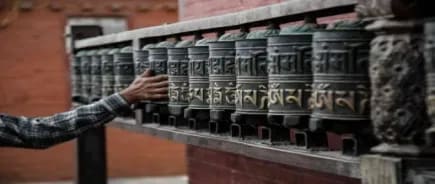
Nepal Exploration
10 daysFrom $1,350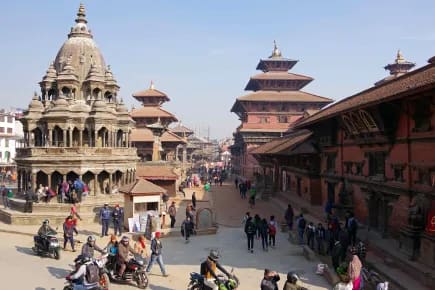
Naturally Nepal
8 daysFrom $750.webp)
Mountain Flight
3 daysFrom $475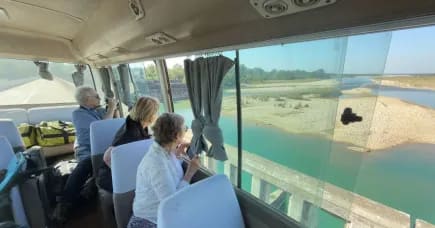
Golden Circle Trip
10 daysFrom $1,085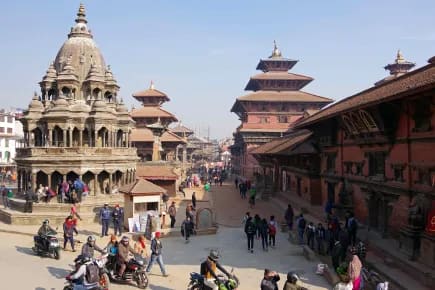
Silver Triangle Nepal
14 daysFrom $1,299.webp)
Rock Climbing in Kathmandu
3 daysFrom $550.webp)
Chitlang Kulekhani Hiking
7 daysFrom $825
Dhulikhel Balthali Hike
5 daysFrom $659
Wonders of Nepal
10 daysFrom $1,799