



Myanmar
The Golden Land
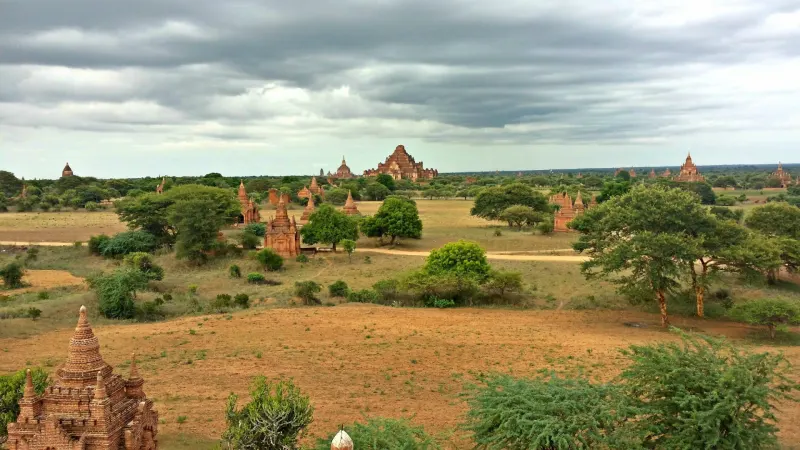
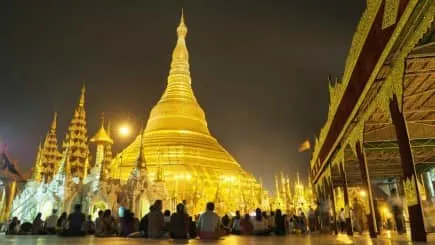
More than 2,000 temples on the plains of Bagan, the gold-leafed Shwedagon Pagoda lighting Yangon's skyline, and the floating villages of Inle Lake. Myanmar's slow re-opening to the world preserves what other Asian countries lost decades ago.
1 distinct landscape
Tap a region to filter the trips below.
Where South-East Asia Stood Still
Myanmar (Burma) — South-East Asia's largest mainland country at 676,578 km² — opened cautiously to tourism only from 2011, after almost 50 years of military isolation. The result is an experience that other regional destinations lost decades ago: functional medieval cities, original colonial architecture, and a deeply Buddhist daily rhythm.
The cultural centrepiece is Bagan, where over 2,200 brick temples and pagodas survive from the 11th–13th-century Pagan kingdom — UNESCO listed since 2019. Yangon's downtown holds the largest collection of British colonial architecture in Asia. Inle Lake in the Shan Hills has 17 floating villages of the Intha people, who row their boats with one leg.
- 01Bagan — 2,200 Temples
UNESCO World Heritage since 2019 · best seen by hot-air balloon at sunrise
- 02Shwedagon Pagoda
99-metre gold stupa enshrining hairs of the Buddha · Yangon's spiritual heart
- 03Inle Lake Floating Villages
17 Intha villages on stilts · leg-rowing fishermen · floating tomato gardens
- 04Yangon Colonial Heritage
Asia's most intact British-era cityscape — 189 listed buildings from 1852–1948
- 05Lacquerware & Longyi
Living craft traditions — silk weavers in Inle, gold-leaf hammerers in Mandalay