

Dolpo Region
Karnali Province, restricted area
Behind Dhaulagiri lies Nepal's most remote inhabited region: a trans-Himalayan desert of Tibetan villages, Bon shrines and the country's deepest lake. Salt caravans still cross the passes, and the Oscar-nominated film Himalaya was shot here.
Trips Starting from Dolpo Region
Hand-crafted itineraries that start in Dolpo Region, from a single sunrise day-trip to multi-week Himalayan expeditions.
.webp)
.webp)
The Last Remnant of Old Tibet
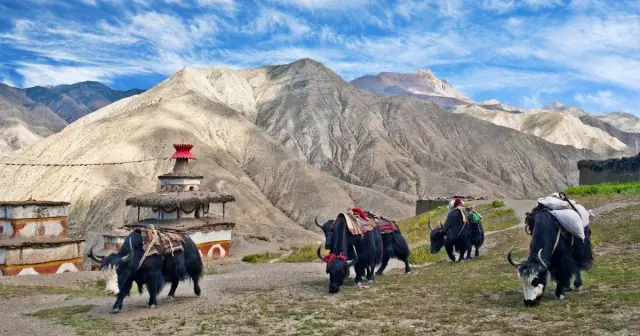
Dolpo sits in Dhaulagiri's rain shadow, where the Tibetan plateau effectively begins inside Nepal. It is remote enough that parts of the economy still run on yak caravans carrying salt south and grain north, much as they did 800 years ago. The 1999 French-Nepali film Himalaya, nominated for an Academy Award, was shot here with Dolpo villagers playing the parts, and it remains the best preparation you can do before coming.
Dolpo holds Nepal's last substantial population of Bon practitioners, the pre-Buddhist religion of Tibet, now close to extinct elsewhere. Bon shrines sit beside Buddhist gompas in villages like Saldang and Dho Tarap, and the difference is visible if you know to look: Bon pilgrims circumambulate counter-clockwise. The region opened to foreigners only in 1989 for Lower Dolpo and 1992 for Upper, and remains restricted, which is precisely why the culture survived.
The centrepiece is Shey Phoksundo Lake, Nepal's deepest at 145 m and a shade of turquoise nothing else in the country matches. Above it stands Shey Gompa, a 12th-century monastery below the sacred Crystal Mountain, which is where Peter Matthiessen was heading in The Snow Leopard. Be realistic about what this asks: 18 days or more, two passes above 5,000 m, full camping support, and no quick way out. Far-western Nepal is the gentler introduction to this side of the country.
Things to do in Dolpo Region
Standout experiences hand-picked by our local guides.
- 01Shey Phoksundo LakeNepal's deepest lake at 145 m, and a turquoise with no equal in the country.
- 02Shey Gompa and Crystal MountainA 12th-century Bon and Buddhist monastery below a sacred peak. Where Matthiessen was walking in The Snow Leopard.
- 03SaldangUpper Dolpo's largest Tibetan village at 3,770 m. Salt caravans still leave for the Tibetan border each spring.
- 04Phoksundo WaterfallNepal's highest at 167 m, just below the lake outflow and passed on the way up.
- 05Dho TarapA trans-Himalayan valley at 4,090 m with flat-roofed villages and a monastery run by women.
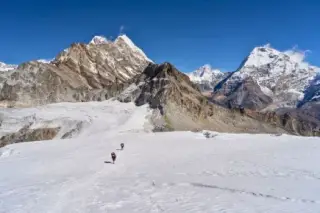
- 06Numa La and Baga LaTwin passes above 5,000 m linking Dolpo to the Tarap valley. The most committing pass combination in Nepal.
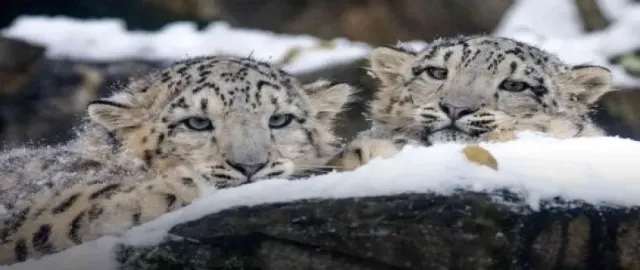
- 07Snow Leopard CountryThe highest density of snow leopards in Nepal. Camera traps near Shey pick them up regularly in winter; you almost certainly won't see one.
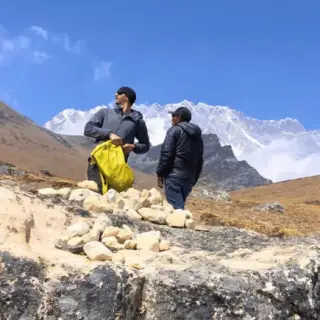
- 08The Salt CaravansYak trains of 50 to 200 animals still cross the high passes each spring and autumn on the way to Tibet.
Best time to visit Dolpo Region
The rain shadow keeps Dolpo walkable through the monsoon, which is rare in Nepal. The high passes still need spring or autumn to be safe.
- ★ BEST SEASONSpringMarch – MaySettled conditions on the passes after winter, and the yak caravans heading north. If your trek crosses one, that is the memory you keep.-5°C – 18°C
- ★ BEST SEASONSummerJune – AugustThe rain shadow keeps Dolpo open while most of Nepal is shut. One of the few places worth trekking in the monsoon, though getting in still depends on flights through the weather.8°C – 24°C
- ★ BEST SEASONAutumnSeptember – NovemberClear high-pass conditions and harvest in the villages. October is the ideal month for the full circuit.-5°C – 16°C
- MONSOONWinterDecember – FebruaryMost of Upper Dolpo closes. Phoksundo and Dho Tarap are cut off by snow, and the villages themselves partly empty out. Lower Dolpo is marginal.-25°C – 5°C