



Vietnam
The Land of the Ascending Dragon
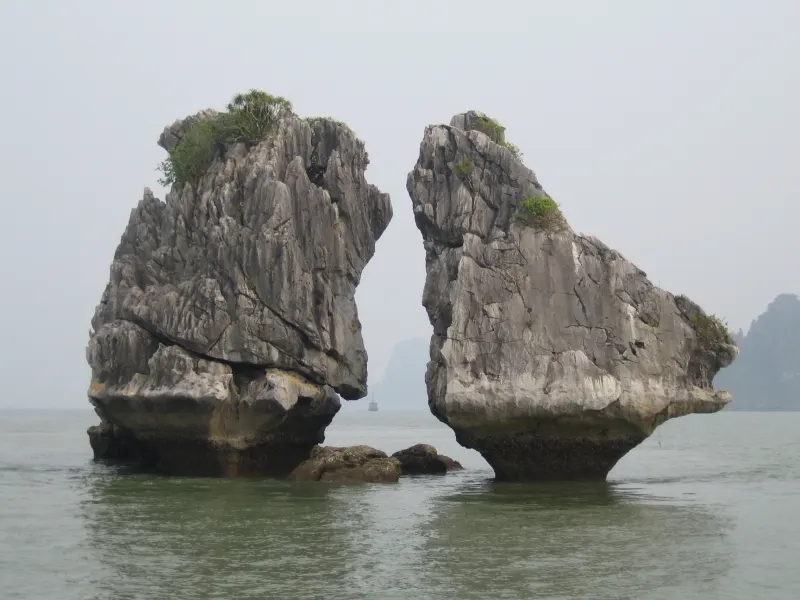
From the limestone karsts of Halong Bay to the rice terraces of Sapa and the Mekong Delta's floating markets, Vietnam compresses South-East Asia's most varied landscapes into a 1,650 km north-to-south country. The food alone is reason to come.
1 distinct landscape
Tap a region to filter the trips below.

South-East Asia's Long, Thin Country
Vietnam stretches 1,650 km from north to south — long, thin and densely populated. The country is home to ~99 million people, divided historically between a Chinese-influenced north (Hanoi) and an Indian-influenced south (Ho Chi Minh City, formerly Saigon). The modern country has been unified since 1975 and is one of Asia's fastest-growing economies.
Vietnam's signature landscapes are dramatic: the limestone karsts of Halong Bay (UNESCO 1994), the rice-terrace amphitheatres around Sapa in the far north, the silk-lantern-lit lanes of Hoi An (UNESCO 1999), the Cham temple complex of My Son, and the floating villages of the Mekong Delta. Vietnamese cuisine — pho, banh mi, bun cha, fresh spring rolls — is one of the world's most acclaimed.
- 01Halong Bay
1,600 limestone islands rising from the Gulf of Tonkin · UNESCO 1994 · overnight junk boats
- 02Hanoi Old Quarter
1,000+ year-old capital · 36-street craft quarter · French colonial heritage
- 03Sapa Rice Terraces
Hmong and Dao villages · trekking routes · world's most photographed paddies
- 04Hoi An Lantern Town
UNESCO 1999 · preserved 15th-century trading port · silk + tailoring capital
- 05Mekong Delta
Floating markets · Cai Be · Vinh Long · home-stays in stilt-house villages
- 06Vietnamese Cuisine
Pho, banh mi, bun cha, ca phe sua da · among the world's best-loved food cultures